















Shazeb Fahim’s second feature, Before We Begin, arrives as a small, talky drama wrapped in an autumnal hush. Boston sits in soft browns and oranges, and the film plants its thesis in the first breath: early adulthood feels like suspended animation. Fahim treats the material as a mood piece. Long takes linger. A minimal, comforting score keeps the air warm. The story follows two people staring down the near future.
Olivia (Yesly Dimate) makes collages while weighing a commitment to Manhattan. Philip (Fahim) is an introspective philosophy PhD student. They meet at a mutual friend’s gathering, and their connection becomes the hinge for Olivia’s quarterlife crisis, pressing her professional wants against an unexpected personal attachment. The film wants to name the precarious uncertainty of this transition, then sit inside it.
Dialogue as Ambiguity and The Vacuum of Intent
The screenplay frames Olivia and Philip’s early relationship as a careful space for curiosity and vulnerability. The feeling, though, stays oddly unoccupied. Chemistry keeps slipping through the fingers. Since dialogue carries almost all the narrative weight, every wobble registers, and the exchanges often wobble.
The talk has the texture of philosophy that has been carried from one medium to another without learning the new grammar. Lines land like recitations, cleanly pronounced and faintly airless, as if each sentence arrived with an invisible citation. When the script reaches for profundity, it circles vague introspection and mistakes repetition for development. The result is a procession of polite conversations that drift without direction, a social dance performed with admirable manners and limited pulse.
That same thinness reaches into character interiority. Olivia and Philip inhabit existential indecision, yet the writing gives them little mess to push against, and the people on screen read as underwritten. They exist mainly in relation to each other and the immediate situation, which makes their moral unease and free will questions difficult to grasp as lived dilemmas.
Family and work come up in conversation, but those anchors feel theoretical, as if they were drafted on a whiteboard and erased before anyone had to carry them. A sharper spark appears in Olivia’s relationship with her friend Madeleine (Monica Giordano). Their dynamic carries a flicker of sincerity that the central romance rarely reaches, and that small inconsistency points to a telling idea: connection feels strongest where loyalty already has history.
Aesthetic Precision and Performative Absence
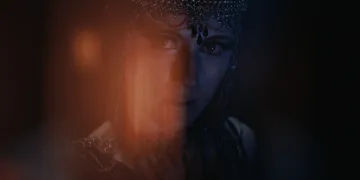
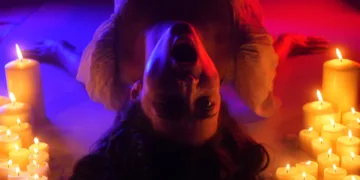
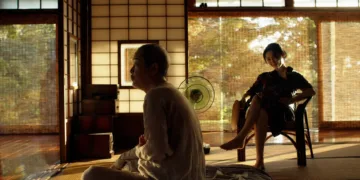
Fahim shows real control as a visual stylist, with Gabriel Carnick’s cinematography giving the film a polish that quietly contradicts its micro-budget scale. Soft lighting shapes a warm, romantic tenor, and Boston becomes a nostalgic surface, a place rendered in gentle gradients rather than hard edges. Carnick leans into expressionistic framing.
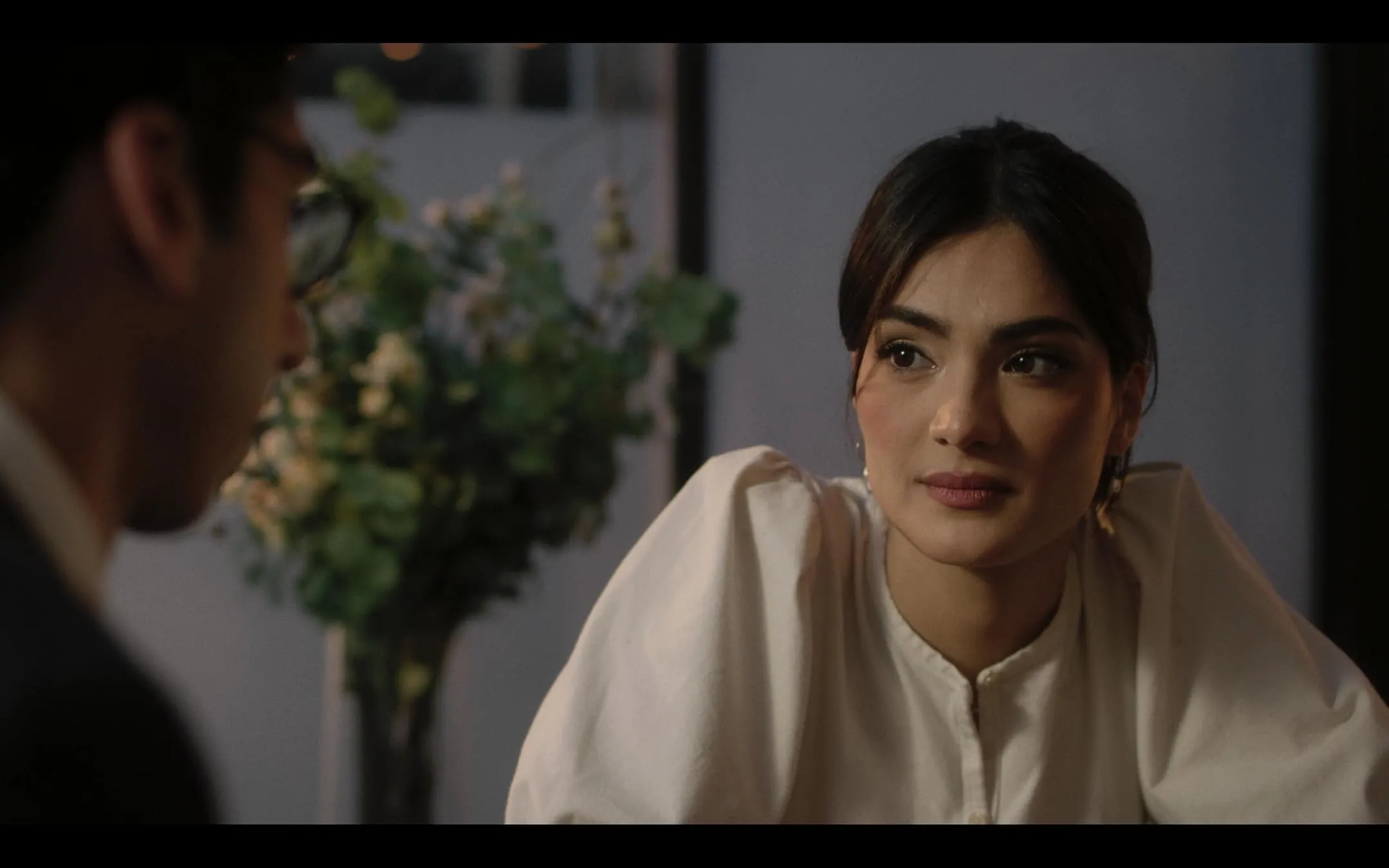
Olivia appears isolated by a window; Olivia sketches alone; the compositions place her inside negative space that seems to press inward. In these wordless passages, the film finds a steadier rhythm. Visual storytelling communicates the quiet the dialogue struggles to earn. This is noir technique translated into domestic stakes: chiaroscuro softened, the world angled toward interior melancholy, the character defined by the room around her and the light that refuses to fully explain her.
The imagery also exposes the shakier parts of the acting, because the camera works harder than the performances at the center. Yesly Dimate’s Olivia plays tentative, with little grounding, and the delivery can sound memorized, flattening dialogue that already sits close to the page. Since the structure rests on Olivia’s perspective and her looming decision, the lack of visible inner life becomes a serious problem. The film wants to examine identity and free will as burdens, and that inquiry needs a person who feels in motion on the inside, even while standing still.
Philip, played by Fahim, fares a touch better. He brings an awkward charm that fits the intellectual character, but charm does not create chemistry on its own. Grace-Mary Burega’s score, genuinely lovely and understated, often carries more emotional pressure in a scene than the actors do. It stays tender and unobtrusive, constantly building atmosphere, like a patient accompanist trying to keep tempo for soloists who keep losing the bar.
The Drag of Resolution
The pacing aims for a deliberate, gentle drift, and the film commits to that sensation with discipline. Momentum pays the price. Scenes float from one exchange to the next, and the viewer can feel the thesis at work, time stretching and decisions hovering, yet the narrative rarely converts that stasis into accumulating tension.
The editing sometimes drops in brief walking snippets between interior scenes. These fragments create an episodic shape without moving a psychological arc forward, a technical flourish that gestures toward motion while the inner narrative remains in place. The mind starts to search for the pressure points the film keeps implying, the crack where indecision becomes choice.
That search turns hardest in the final stretch. Olivia’s decision, to commit to New York or stay, arrives without the emotional architecture that would make it land. The closing beats hit with a muted, unearned thud because transformation has not been built in a way the audience can track, feel, and trust. What remains is a set of beautifully composed, atmospheric fragments, lit with care and framed with expressionistic precision. The visual artistry keeps promising significance. The storytelling stops at the beginning of an idea.
Before We Begin is an independent romantic drama set in Boston, following a young collagist who finds herself at a crossroads regarding her future, complicated by a new acquaintance, a philosophy student. The film, which premiered in late 2025 and is currently seeing limited distribution, is the second feature film from writer-director Shazeb Fahim. Specific streaming platforms for wide audience viewing are not yet finalized, but its current distribution involves companies focused on independent cinema.
Full Credits
Title: Before We Begin
Distributor: Bondit Capital Media, Buffalo 8
Release date: November 21, 2025 (Limited Release)
Running time: 1 hour, 32 minutes (92 minutes)
Director: Shazeb Fahim
Writers: Shazeb Fahim
Producers and Executive Producers: Shazeb Fahim, Chelsea Fenton, Justin San Antonio
Cast: Yesly Dimate, Shazeb Fahim, Jamie Eddy, Monica Giordano, Andrew Fama, Paige Hapeman
Director of Photography (Cinematographer): Gabriel Carnick
Editors: Junaid Khan
Composer: Grace-Mary Burega
The Review
Before We Begin
Before We Begin excels in its visual execution, employing an appealing autumnal aesthetic and sensitive lighting to create a warm, nostalgic mood. The film is technically polished, featuring an unobtrusive score and strong cinematography. However, its ambitions as an intimate drama are undercut by a fragile screenplay. The dialogue is stilted, and the central performances lack the necessary chemistry and emotional grounding. This results in a beautiful-looking film that drifts, ultimately failing to earn its existential themes or its quiet resolution.
PROS
- Exceptionally polished visual presentation with soft, warm lighting and effective autumnal palettes.
- Successfully establishes a quiet, intimate, and nostalgic atmosphere.
- The minimal, tender score is supportive and performs significant emotional work.
- Well-composed shots, particularly those of quiet isolation, convey mood more effectively than the dialogue.
CONS
- The script is underwritten, featuring stilted, unnatural dialogue that lacks spontaneity and emotional progression.
- A significant lack of convincing chemistry between the two leads. The central performance of Olivia lacks a "lived-in" quality.
- The film "drifts" with slow pacing, and the ending feels unearned, lacking meaningful transformation.
- The leads feel underdeveloped, existing in a "vacuum" that makes connecting with their personal struggles difficult.