
























![Kingdom Hearts Collection [I-III] Review](https://gazettely.com/wp-content/uploads/2026/10/Kingdom-Hearts-Collection-I-III-1-360x180.webp "Kingdom Hearts Collection [I-III] Review: KHII Holds Steady as Newer Entries Fluctuate 37")





The second season of Drops of God opens on a familiar legal doorstep: the lawyer Talion arrives with a mysterious box, like a courier hired by the afterlife. This time, the late Alexandre Léger has left behind a bottle with singular importance. He calls the wine perfection, the light in the dark. It lands like a gift and a dare, kicking the story back into motion after what felt like a hard-earned calm.
The premise nudges the series away from the rigid, game-board logic of the previous wine trials and into the shape of a historical detective story. Alexandre admits the origin of this specific red stayed hidden even from him. By ordering his heirs to trace its source, he sets a new benchmark: outdo the teacher.
Camille Léger meets the news with believable fatigue. She has spent three years trying to build a life outside her father’s massive ego, and her resistance reads as earned. Every bottle he chooses feels like a key he still carries. Issei Tomine moves in the other direction. He looks like a man hunting for a frame strong enough to hold his next chapter.
After losing the original competition and inheriting a complicated family history, he treats this mission as a shot at purpose. The hunt for provenance yanks the narrative away from high-end auctions and sterile tasting rooms. The show pivots toward something rougher and more physical, swapping the polished rituals of commercial oenology for a grit-under-the-fingernails trudge through old records and forgotten vines.
Diving for Visions and Harvesting Shadows
Issei’s transformation is the season’s most jarring pivot. He trades tailored suits for a wetsuit, spending his days free diving in the waters of Okinawa and Marseille. He flirts with the void so directly that the hobby starts to look like a confession. The danger reads as a bodily attempt to copy Camille’s synesthesia, to earn the sensory flashes she receives without trying.
The cinematography tracks his descent with cold beauty, the kind that makes you feel pressure in your own lungs. He chases a form of communion he no longer believes wine can provide. That fixation on dark water threads dread through the season, giving the sunlit vineyard scenes a faint tremor.
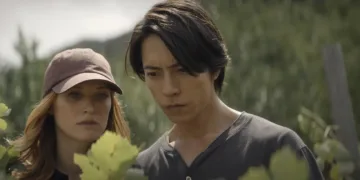
Camille faces a different kind of squeeze at the Chassangre estate in France. She tries to modernize a traditional winery while climate change threatens the very soil under her feet. The struggle plays practical and deeply emotional at the same time: she needs to prove she belongs while Thomas and Philippe watch her every move. The bond between Camille and Issei stays central.
They begin as tentative allies, and the old competitive ghosts keep hovering close. Issei carries a quiet jealousy of her natural talent. Camille freezes under the guilt of her own success. Their relationship rocks between mutual respect and long-stored resentment, a messy portrait of how trauma can turn a sincere sibling bond into something that feels heavy to carry.
The Blood of Georgia
The trail for the mystery wine leads to the Republic of Georgia. The show frames the landscape with reverence that brushes up against myth, presenting the region as the birthplace of viticulture. The setting feels rugged and historical, worlds away from the sleek boutiques of Tokyo.
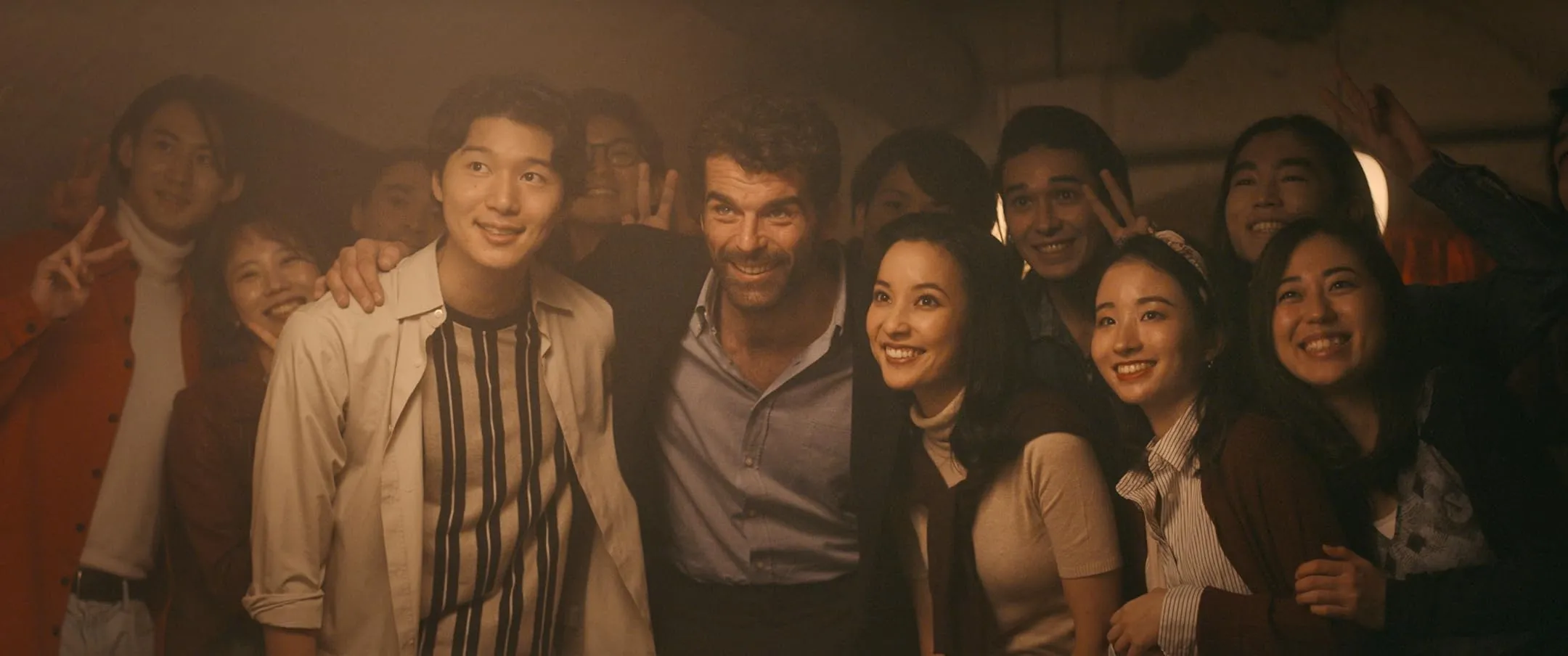
Here, the protagonists meet Tamar and her brother Davit. Tamar runs a small vineyard that supplies a local monastery, keeping ancient methods alive through daily work. Davit approaches the family story like a transaction. He wants to wipe the legacy clean and settle old scores from his youth.
That local conflict mirrors the storm inside the main characters. Davit’s urge to burn down the past echoes the darker impulses Camille and Issei have felt toward Alexandre. Watching these siblings clash over inheritance forces the protagonists to re-measure their own relationship to the Léger name.
The cultural immersion lands with real texture. The dialogue moves through French, Japanese, and Georgian, and the multilingual flow makes the world feel vast and connected. The region’s history adds heft to the chase, hinting that wine can function as a record of human survival.
The Heavy Price of Autonomy
Alexandre Léger remains a stubborn ghost who refuses to leave the room. This final quest plays as his purest act of manipulation. Even after death, his children keep jumping through hoops he sets. Camille sits in a “nepo baby” trap and knows it. She keeps asking herself if her expertise belongs to her or if it exists as a shadow thrown by her father’s brilliance. She wants authority on her own terms, and the world keeps reading her through inheritance.
Issei’s path brings him into direct confrontation with his mother, Honoka. He goes looking for the truth behind her visceral hatred for wine and her hidden past with Alexandre. These scenes carry some of the season’s sharpest intensity, staring straight at the damage family secrets can leave behind.
The story dismisses the fantasy of a clean recovery from a broken childhood. Healing shows up as slow repetition, with progress that sometimes requires stepping back before moving forward. The characters face a hard question: is the hunt for the world’s greatest wine worth the psychological price of reopening old wounds?
A Mature Palette
This season commits to a more grounded visual language. The director shelves the flamboyant “mind palace” imagery from the first year and leans into a mature, realistic aesthetic. The production values stay high, and the attention shifts toward the texture of the world itself.
The camera lingers on the suffocating darkness of Issei’s dives, then opens out to the vast, dusty hills of the Caucasus. The tonal shift tracks the characters’ growth. The cartoon contest energy disappears, leaving a fight for identity with real consequences.
The pacing slows in the middle episodes. The show gives itself room for character beats and historical detail, letting scenes breathe instead of racing to the next bell. Some viewers will miss the old competition format’s ticking clock, since the tempo here asks for patience.
The payoff comes through mood and accumulation. The sound design stands out, using natural vineyard sounds and the muffled silence of the underwater world to shape two distinct atmospheres. The series trusts the audience to sit with a slow-burning mystery, then leaves a final sting of doubt: can anyone truly own a legacy without it owning them right back?
The second season of the International Emmy Award-winning series Drops of God premiered on January 21, 2026, exclusively on Apple TV+. Moving beyond the initial inheritance competition, the new episodes follow Camille Léger and Issei Tomine as they embark on a globetrotting journey to uncover the hidden origins of a legendary, unlabeled wine that stumped even their father. This eight-episode season expands the show’s multilingual and multicultural scope, traveling from the south of France and Tokyo to the rugged landscapes of the Republic of Georgia. Viewers can stream the series on Apple TV+, with the season finale scheduled for March 11, 2026.
Full Credits
Title: Drops of God (Season 2)
Distributor: Apple TV+
Release date: January 21, 2026
Rating: TV-MA
Running time: 45–60 minutes
Director: Oded Ruskin
Writers: Clive Bradley, Sonia Moyersoen
Producers and Executive Producers: Klaus Zimmermann, Alfred Lot, Satch Watanabe, Sam Kozhaya, Kazufumi Nagasawa, Daniel March
Cast: Fleur Geffrier, Tomohisa Yamashita, Tom Wozniczka, Gustave Kervern, Cécile Bois, Makiko Watanabe, Satoshi Nikaido, Antoine Chappey, Ia Shugliashvili, Tornike Gogrichiani
Director of Photography (Cinematographer): Rotem Yaron
Editors: Boaz Mann, Omri Zalmona
Composer: Ian Arber, Kenma Shindo
The Review
Drops of God Season 2
The second season of Drops of God matures into a thoughtful study of legacy and personal identity. It trades the fast-paced competition of the first season for a slower, more psychological investigation. The performances remain exceptional, grounding the story as it shifts from the vineyards of France to the ancient soil of Georgia. It remains a rare example of international television that treats its subject with absolute sincerity. While the pacing slows in the middle, the emotional payoff remains strong. Is the pursuit of a ghost ever truly worth the cost?
PROS
- Captivating performances by the lead actors
- Stunning international cinematography across three continents
- Deeply thoughtful exploration of family legacy and trauma
- Grounded and realistic emotional stakes
- Authentic representation of global wine cultures
CONS
- Occasional slow pacing during the middle episodes
- Reduced focus on the stylized sensory visuals of the first season
- Narrative feels slightly less urgent than the original contest format