

























![Kingdom Hearts Collection [I-III] Review](https://gazettely.com/wp-content/uploads/2026/10/Kingdom-Hearts-Collection-I-III-1-360x180.webp "Kingdom Hearts Collection [I-III] Review: KHII Holds Steady as Newer Entries Fluctuate 37")



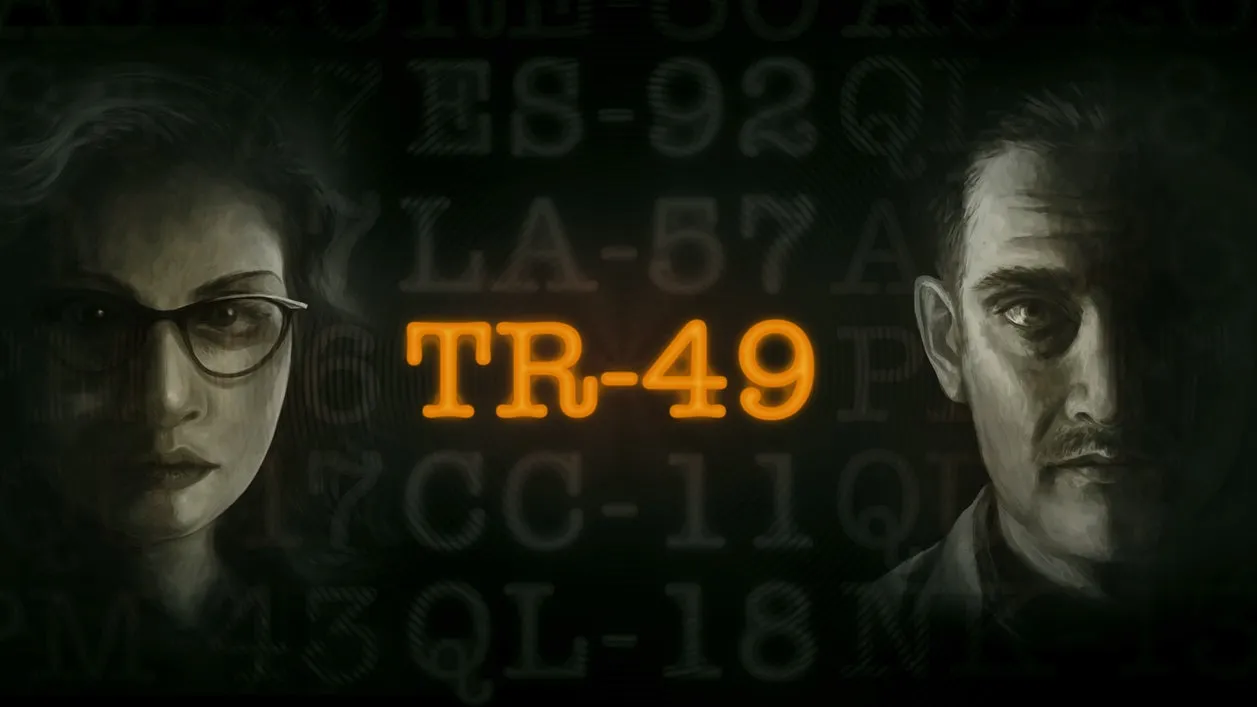

The cold, wet stones of a crypt beneath Manchester Cathedral frame a story steeped in British industrial memory and wartime paranoia. Abbi, a northern woman with a blunt manner, ends up sealed in this underground space while civil conflict tears through the world above. Survival hinges on the TR-49 Textual Reassociator, a piece of World War II technology that carries the air of a neglected Bletchley Park artifact.
The device links the damp basement’s physical misery to a sprawling digital archive of human thought. The pressure stays constant because Abbi is in hiding, pursued by people who treat her work as a danger. Her aim is clear: track down a missing book called Endpeace.
That single target turns the experience into a slow, deliberate excavation of the past. The game plays as a claustrophobic study of how information survives, mutates, and fractures during national collapse. In this setting, archival research becomes a survival skill, and each recovered fragment of text lands like a victory wrestled from the tomb’s silence.
The Tactile Logic of Cryptographic Search
Operating the TR-49 means learning a four-digit code system that echoes early computing. Each query uses two letters and two numbers, an alphanumeric sequence that usually points to an author’s initials and the year their work reached the public. The interface gives research a physical heft. Lever pulls and key presses feel deliberate, with the rhythm of manual labor that suits historical codebreaking.
The opening offers very little guidance, so you begin by feeling your way forward through uncertainty. That scarcity of instruction pushes genuine intellectual engagement with the machine’s logic. You end up testing combinations, following small trails left inside the archive, and adjusting your assumptions as the system answers back. Hidden clues surface during searches, pointing toward fresh codes and new book titles. Matching titles to their entries gradually widens access across the 50-book collection.
An automated journal carries much of the organizational load, sorting authors and tagging entries that still contain secrets with small indicators. It keeps the experience from collapsing into pure note-taking, even if the density of information can still make a real pen and paper appealing. Player agency comes through the option to brute-force codes. Once you identify a two-letter prefix, you can cycle through number combinations without punishment.
The design places the main difficulty in comprehension, in mapping relationships across texts and annotations, and in tracing how one lead reshapes another. The reward arrives when the machine whirs into motion and confirms a match with a mechanical click. That loop sets a steady investigative cadence, and the TR-49 starts to feel like an active participant in the mystery. Physical input and narrative discovery reinforce each other, locking the entire process into a specific historical mood.
A Literary Archive of Scientific Ego and Rivalry
Inside the TR-49 sits a library that mixes authentic historical texts with fictional works circling the edges of 20th-century physics. The archive opens a view into the minds behind the machine, Cecil Caulderly and Beatrice Dooler, whose presence lingers through annotations and margin notes. Personal lives and family secrets leak out through these marks, folding intimacy into what could have been sterile documentation. Many entries capture academic drama at full volume, with scholars trading sharp, biting attacks over theory and prestige.
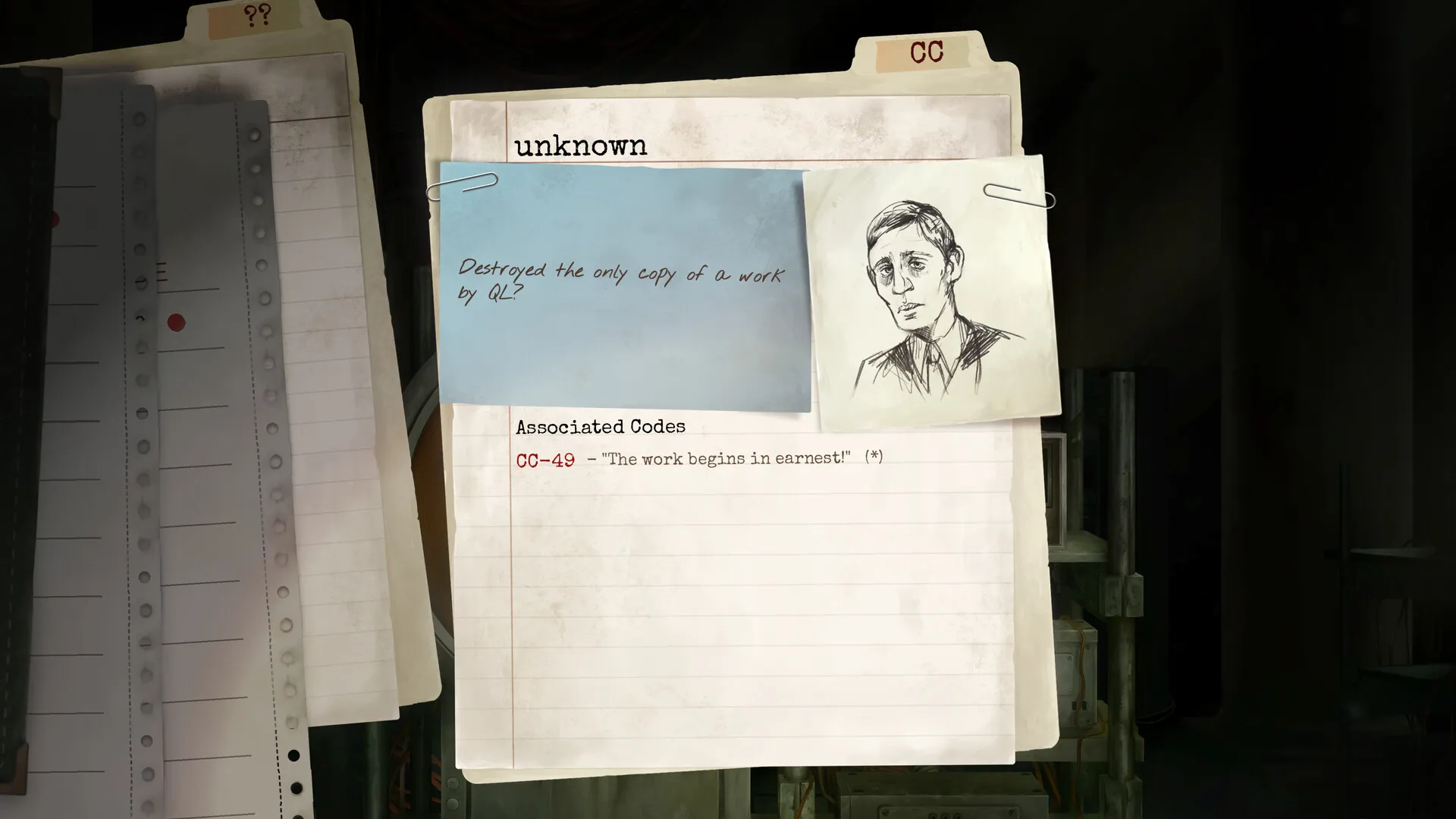
The commentary contains brutal takedowns, including writers dismissing a peer’s work as “a symphony of disgrace.” The “bitchy” edge gives the scientific material a human pulse, making the authors feel present, vain, and petty. Dark matter and the reality-shredding possibilities of technological advancement sit near the thematic foreground, and the machine processes the accumulated record with a suggestive air of awareness, reacting to decades of fed data.
The library’s range runs from dry academic journals to pulp science fiction that vanishes into its own elaborate reasoning. One moment you meet a would-be writer stealing from Jane Austen, the next you run into a romantic leaning on classic adventure stories for comfort. These clashing voices build a sense of a world made from its arguments and consolations. The blend of real and fictional books lends credibility to the alternate history, because the archive reads like a lived intellectual ecosystem.
Progress means reconstructing a social and scholarly circle that splintered under the weight of its own brilliance. Finding a new card opens the door, then the harder work begins: parsing insinuations, subtext, and quiet grudges to grasp what the archivists risked by preserving certain ideas. The story lands because it makes distant scholarly obsessions feel immediate and personal. The TR-49 becomes a container for these ghosts, holding romances and rivalries inside vacuum tubes and transistors.
Sensory Isolation and the Friction of Decay
Sound in the crypt leans hard into melancholic isolation. Piano and strings sit as a constant, somber companion to your research. The music sustains a mood of quiet reflection, and repetition can start to press down with the same stubborn weight as the stone walls. Voice acting supplies needed energy, with performances that capture the pomposity and passion of the writers whose logs you uncover.

These recordings puncture the hush, turning each new entry into an event. Radio conversations between Abbi and Liam sketch the war-torn reality outside, even if their exchanges sometimes break the concentration required for the machine’s puzzles. Tension spikes when the radio begins catching the voices of the people hunting Abbi, and the crypt shifts from refuge to a place of immediate threat.
A major point of friction arrives through text degradation. Late in the game, words begin to flicker and slide, and certain logs become harder to read. The effect mirrors aging hardware on the verge of failure, placing visual strain alongside the most important revelations. It strengthens the sense of a crumbling world, yet it can also frustrate players who need stable, clear text. An entry that read cleanly an hour earlier can become a patience trial once the letters blur and shift.
That decay ties directly to the game’s fixation on entropy, on knowledge slipping away, and on truth becoming harder to hold during crisis. The crypt’s physical isolation, the haunted audio landscape, and the unstable interface combine into a bleak sense of history closing in. The experience stays focused on preserving meaning while the surrounding world, and the machine itself, work against permanence.
The Review
TR-49
TR-49 is a striking exploration of intellectual history and the fragility of knowledge. It masterfully turns the act of archival research into a high-stakes survival tactic. While the interface degradation and lack of direction may occasionally frustrate, the tactile satisfaction of the machine and the richness of the literary mysteries create a profound experience. It succeeds by making distant scholarly rivalries feel deeply human and urgent.
PROS
- Deeply immersive atmospheric design.
- Sophisticated, high-quality voice acting and writing.
- Highly satisfying tactile puzzle mechanics.
- Meaningful synergy between narrative and gameplay.
CONS
- Late-game text flickering can be visually straining.
- Initial learning curve is steep with minimal guidance.
- Musical repetition may feel heavy over long sessions.







