





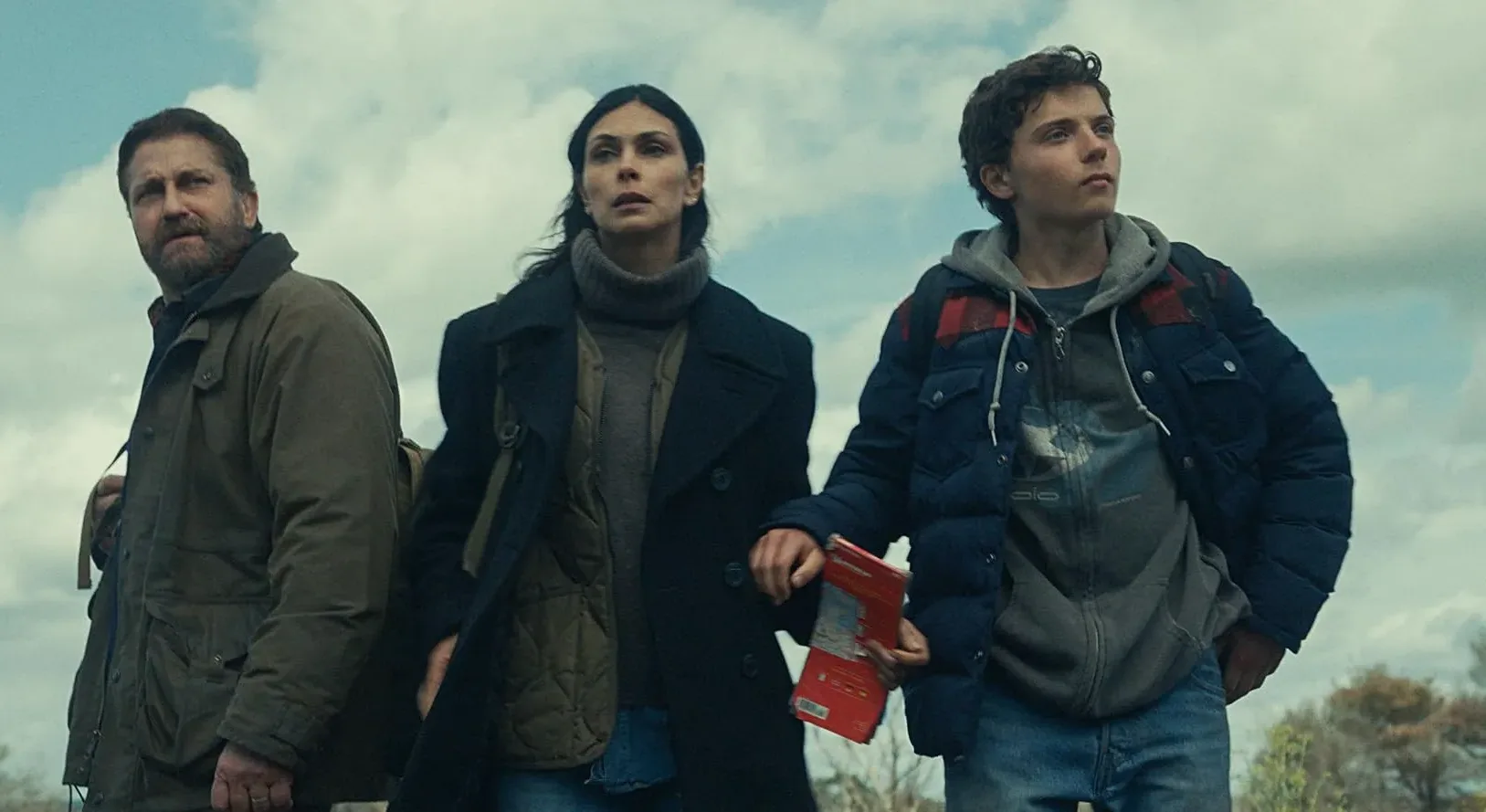

The world ended five years ago, and the Garrity family is still stuck playing the longest survival mode imaginable. This sequel drops John, Allison, and their teenage son Nathan into a Greenland bunker, with the surface above them left as a radioactive wasteland.
Underground life has settled into a punishing loop of rationing and endurance until a tectonic disaster wipes out their refuge. With their shelter gone, the survivors head out on foot across a wounded planet, chasing talk of a sanctuary in southern France.
The scorched remains of Europe frame a story that moves from the immediate shock of catastrophe to the long, grinding burden of living after it. Where the first film ran on urgent countdown energy, this one commits to a slow, dangerous march across continents.
The planet feels hostile in every direction, with an atmosphere as deadly as the comet fragments still falling from the sky. As the family pushes through flooded ruins and hazardous terrain, they run into what’s left of civilization, along with the ethical decay that comes from living too long in crisis.
A Landscape Defined by Ruin
The setting expands from the first film’s suburban panic into a worldwide graveyard. This is a planet that has spent five years stewing in its own ash. The air hangs heavy with toxins. The sky becomes a constant threat, filled with falling debris and unstable weather.
Lightning and radioactive storms behave like predators, pressing in and cutting off routes the way a game’s map hazards force a player into choke points. The tone stays dense and suffocating, with the bunker called Hand-Me-Down Nation functioning as a cramped opening zone. When it collapses, it feels like the story yanking the family out of a familiar enclosure and throwing them into a much larger, harsher arena.
The film’s strongest visual work arrives once the family reaches what remains of Europe. Liverpool plays as a drowned ghost city, the ocean swallowing the streets until only the upper floors of buildings break the waterline. The image sells the scale of loss in a single glance. The English Channel has become a jagged wasteland carved into deep canyons and sharp rock, something that reads like alien terrain even if the name still carries human memory.
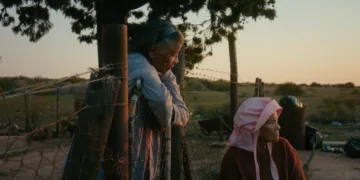
The family keeps moving because of a rumor about The Crater in southern France, a specific impact site that scientists believe can sustain life with breathable air. That goal lands with the right kind of desperation, the kind that turns every mile into a bargain with exhaustion. Icelandic locations give the charred terrain a physical weight, while the gray, dusty palette creates a clear separation from the bunker’s sterile blue lighting.
The Weight of Survival on the Garrity Family
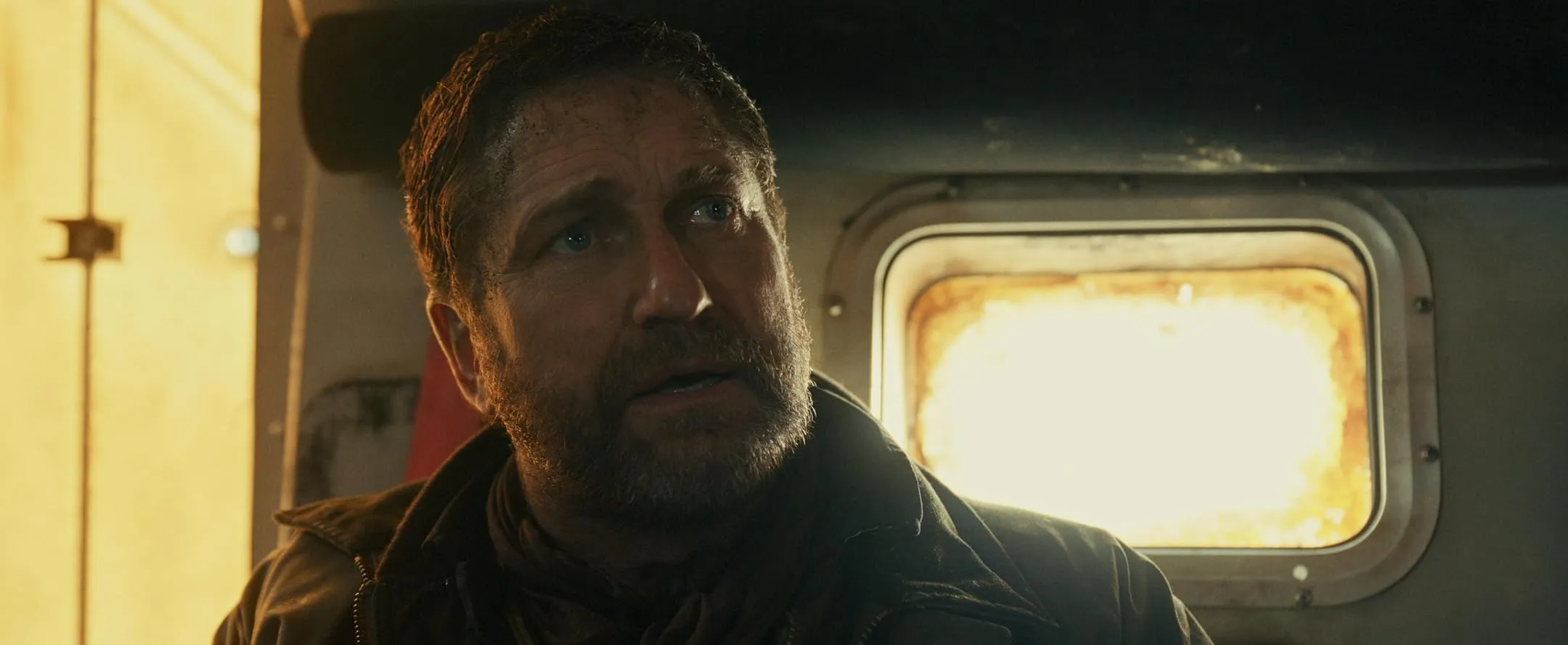
The film’s emotional charge comes from how worn down its leads are. John Garrity feels changed by the years. Gerard Butler plays him with visible physical and mental collapse, carrying the fatigue of leadership and the slow damage of radiation exposure. The performance leans into sadness and quiet persistence, presenting a father pushing forward on fumes, a man who no longer remembers the sensation of safety.
Allison Garrity holds the group together. Morena Baccarin gives her a steady strength that keeps the family from slipping into pure desperation. She serves as the moral compass, and her chemistry with Butler suggests shared history, making the struggle feel intimate rather than abstract. Nathan has grown into a teenager who spent his formative years underground.
Roman Griffin Davis captures a hard mix of depression and survival-minded toughness, embodying a generation with only fragments of “normal” left in memory. The story returns to his insulin, keeping the tension grounded in something painfully practical. The bunker’s stockpiling explains how he has made it this long, and that detail keeps the danger tied to biology instead of spectacle.
The Rhythm of a Broken World
Ric Roman Waugh pushes the series toward a larger scale, and the bigger budget shows through the CGI and the widened scope of the set pieces. The structure takes on a picaresque shape, with the family moving from one obstacle to the next in a steady cadence, like a campaign built out of linked encounters. A rope bridge sequence over a French canyon stands out as a peak moment. The editing creates a real bodily dread, using the canyon’s vertical drop to make every step feel unstable.
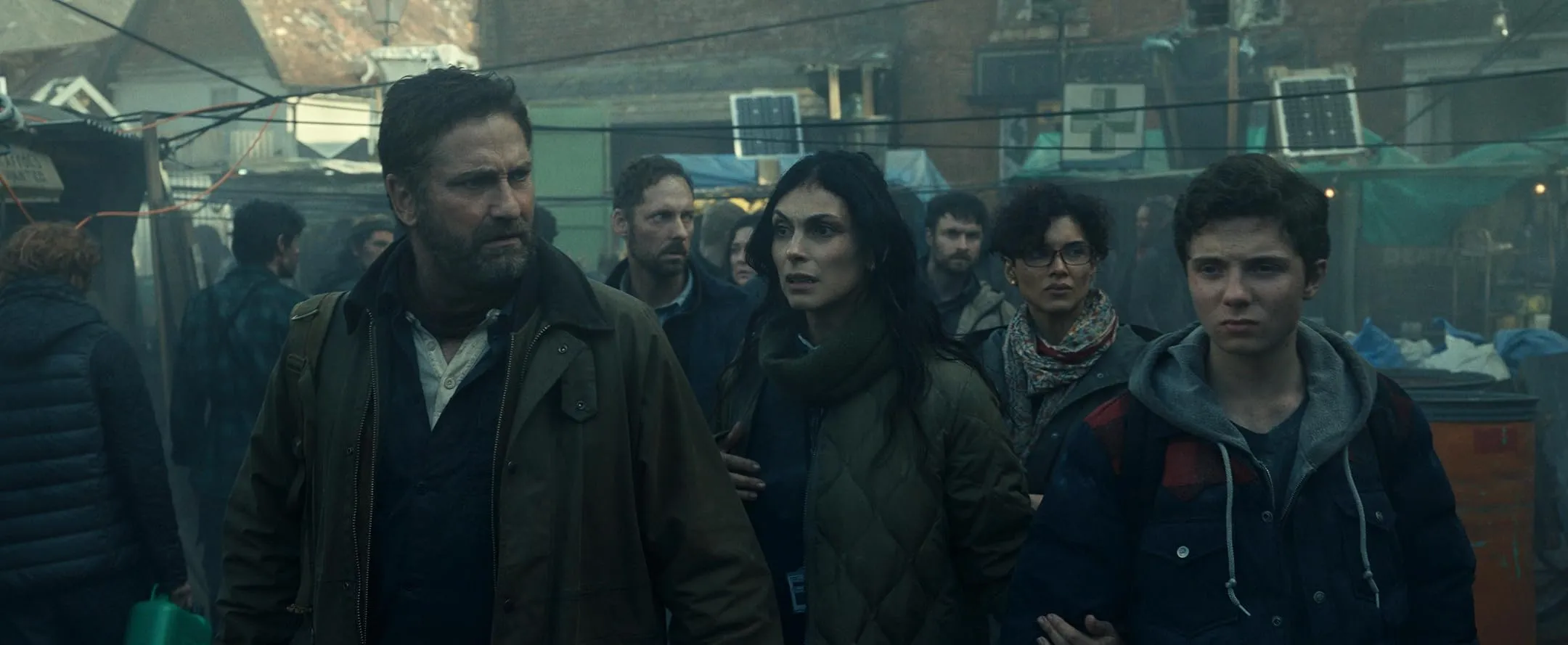
Waugh pairs those loud beats with quieter, watchful images. Frame-within-frame compositions underline how small the family is inside these ruins, and the stillness gives the tragedy room to settle. Meteor showers and tectonic shifts slam into the travel as sudden, lethal interruptions, keeping the pace moving while preserving the mournful mood. The film plays like a post-apocalyptic road movie, driven by motion through war zones and natural disasters, with the narrative momentum coming from the simple demand to keep going.
The Moral Cost of the Trek
The film treats the family’s passage as a stand-in for displaced people, with the title pointing to movement across borders that have lost their meaning. Safe zones become pressure points for violence, and the story watches what happens after the social contract collapses. The survivors they meet split into two forces. Raiders embody a ruthless survival ethic, using brutality to defend scraps of food and water.
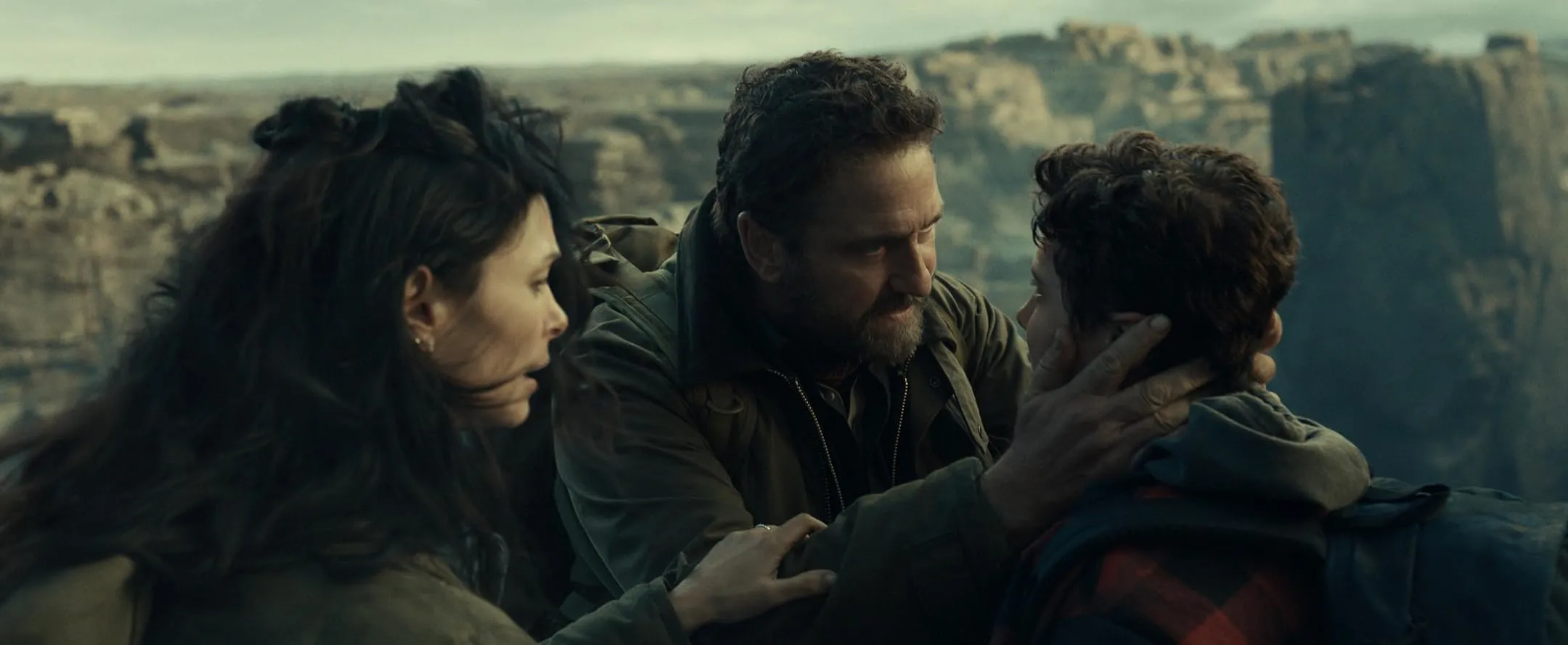
The film also makes space for people who still choose to help. The Nigerian van driver and the French family at the mail center operate as reminders that community remains a condition of survival. That thread carries a post-lockdown sensibility, asking how people act when they finally step outside their shelters and find a world that no longer behaves like the one they remember. In the final stretch, the story turns toward rebuilding, suggesting survival as the first step toward creating a livable future for the next generation.
Greenland 2: Migration premiered in theaters on January 9, 2026, marking a somber return to the disaster-stricken world established in the 2020 original. Set five years after the initial comet impact, the story follows the Garrity family as they are forced to leave their underground sanctuary and trek across a decimated European landscape toward a rumored safe haven. The film is currently available for viewing in theaters worldwide, with a digital release through Lionsgate Home Entertainment anticipated for late January 2026.
Full Credits
Title: Greenland 2: Migration
Distributor: Lionsgate, STX Entertainment
Release date: January 9, 2026
Rating: PG-13
Running time: 98 minutes
Director: Ric Roman Waugh
Writers: Mitchell LaFortune, Chris Sparling
Producers and Executive Producers: Basil Iwanyk, Erica Lee, Gerard Butler, Alan Siegel, Sébastien Raybaud, John Zois, Brendon Boyea, Ric Roman Waugh
Cast: Gerard Butler, Morena Baccarin, Roman Griffin Davis, Amber Rose Revah, Sophie Thompson, Trond Fausa Aurvåg, William Abadie, Gordon Alexander, Peter Polycarpou, Nelia Valery Da Costa, Tommie Earl Jenkins, Alex Lanipekun
Director of Photography (Cinematographer): Martin Ahlgren
Editors: Colby Parker Jr.
Composer: David Buckley
The Review
Greenland 2: Migration
This sequel transforms the series into a grim trek that favors atmospheric weight over the high-octane panic of the original. The film succeeds by grounding its spectacle in the weary eyes of the Garrity family. While the logic of their travel occasionally falters, the emotional resonance of their persistence stays firm. It provides a somber look at what remains after the world ends.
PROS
- Strong, weary performances from Gerard Butler and Morena Baccarin.
- Haunting visual design of flooded and scorched European cities.
- Effective tension in localized set pieces like the bridge crossing.
- Focus on regular people rather than typical action archetypes.
CONS
- Occasional wobbly logic regarding resource availability and insulin.
- The plot can feel mechanical in its progression between locations.
- Some secondary characters lack depth and feel like tropes.