

























![Kingdom Hearts Collection [I-III] Review](https://gazettely.com/wp-content/uploads/2026/10/Kingdom-Hearts-Collection-I-III-1-360x180.webp "Kingdom Hearts Collection [I-III] Review: KHII Holds Steady as Newer Entries Fluctuate 37")





Ponies is set in Moscow in the late months of 1976 and the opening weeks of 1977. The central narrative follows Beatrice “Bea” Grant and Twila Hasbeck. Both women live in the Soviet Union because their husbands work for the CIA. Their lives change after Chris and Tom die in a plane crash. Bea and Twila suspect the crash hides a larger secret. They persuade the CIA station chief to employ them as operatives.
Their designation as “Persons of No Interest” allows them access where male agents cannot. Bea speaks Russian and has immigrant roots. Twila arrives from Indiana with a blunt, risk-taking temperament. Together they move through Cold War Moscow in search of answers about their husbands. The series pairs espionage stakes with the development of their friendship and registers the 1970s through two women who the state and rivals often overlook.
Shadows of the PONI Strategy
The narrative foregrounds the PONI acronym, Persons of No Interest. That concept echoes social realism in Indian parallel cinema, where ordinary domestic lives can conceal political force. The CIA expects Soviet authorities to ignore American wives and treats them as invisible domestic figures. That invisibility becomes a tactical advantage. Bea and Twila decline to return to the United States after the plane crash and choose to remain in the USSR. They pursue a set of answers that official reports do not supply.
Moscow in 1977 reads as a chilly, oppressive setting. The KGB enacts steady surveillance. The series conveys the constant sensation of being watched on city streets. This environment produces dread while the protagonists begin with limited tradecraft. The training scenes record their passage from housewives to operatives.
They commit amateur mistakes, for example Bea falling into a dumpster and Twila struggling with basic asset management. Such errors anchor the plot in human fallibility. The show resists superhuman spy tropes common to many Western thrillers and instead stages a gradual learning curve in a hostile city. That grounded approach makes each small success feel earned.
Contrast and Connection in Character Dynamics
Emilia Clarke portrays Beatrice Grant as a disciplined, educated woman who adheres to rules. Her Wellesley background and Russian language skills position her as the operation’s intellectual anchor. Her grief for Chris propels her and exposes vulnerability. She enters the series as a quiet secretary and slowly acquires a commanding presence. This arc recalls transformations in Indian social dramas where female leads shed traditional expectations in order to survive.
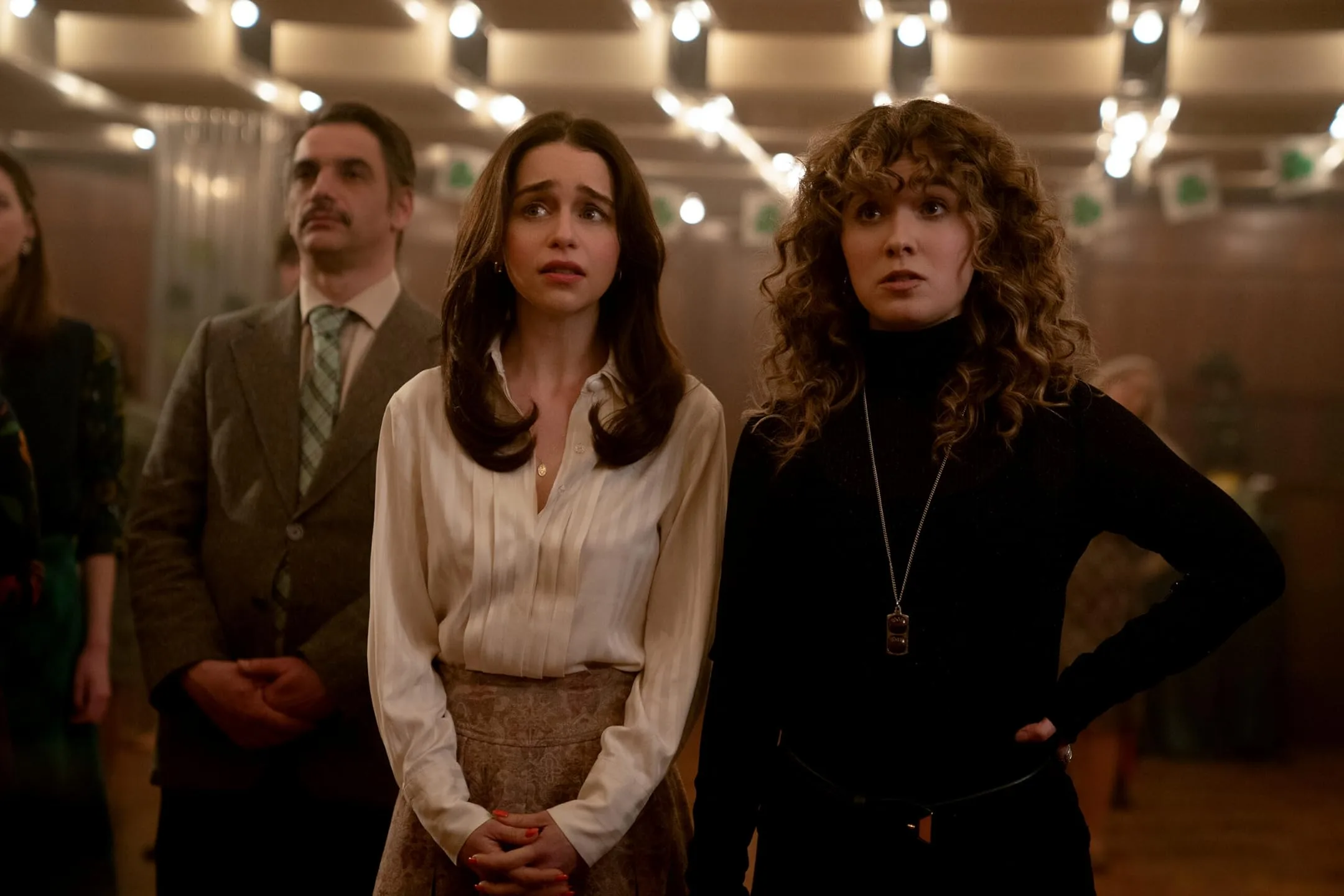
Haley Lu Richardson plays Twila Hasbeck with a prickly, defensive energy. Raised in a hard-edged environment in Indiana, she uses abrasiveness to mask insecurity. She lacks Bea’s formal education and language fluency, yet her field instincts are acute. She moves into espionage because she perceives no future in America.
The partnership between Clarke and Richardson supplies the show’s emotional center. Their chemistry converts a conventional spy premise into a focused study of female bonding. The pair’s differing temperaments create balance: Twila’s impetuousness prompts risk taking, while Bea’s steadiness supplies counterweight.
Their friendship functions as the series anchor. They step away from the roles defined by Chris and Tom and begin to name themselves. Growth operates on two registers, personal and collective. They find purpose in an environment that had treated them as appendages to powerful men. The series emphasizes how shared trauma forges a bond stronger than professional obligation. That focus on friendship recalls the camaraderie that makes ensemble films memorable.
The Visual Language of the Cold War
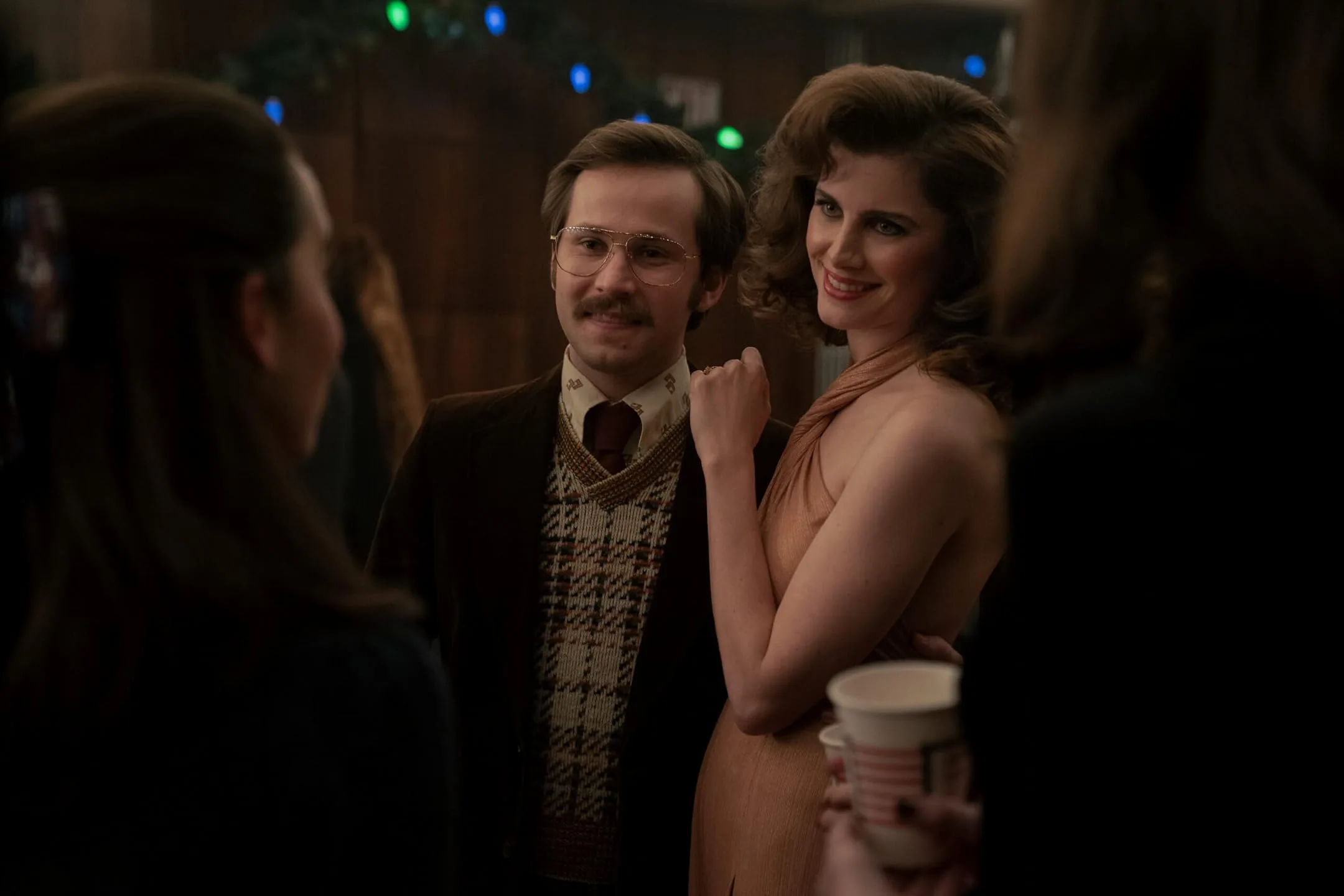
Production design by Sara K. White establishes atmosphere through 16mm-style grain and split screens. Those visual choices call the look of 1970s television and grant the show a recovered quality. The color scheme leans on mustard yellow, teal, and dark mahogany brown. These tones suggest stagnation and layered history. Costume designer Anastasia Magoutas signals Twila’s rebellious streak through shag coats and flared trousers that stand out against drab Soviet architecture.

Cinematography carries much of the tension. Quiet moments receive tight, stable framing. During field work the camera opens up and becomes less steady. That move positions the viewer as witness to private acts. Close-ups on small exchanges register the possibility that any look or gesture might yield intelligence. Split screens let the audience observe multiple facets of an operation simultaneously, raising suspense.
The soundtrack deploys period music to root mood. Frequent selections by Fleetwood Mac and Boney M insert Western sound into Soviet space. The use of these songs sometimes threatens distraction, yet the tracks also fix the story firmly in its decade. Music and visuals combine to mark cultural division during the Cold War. The whole sequence often reads like an artifact recovered from the era it depicts.
Tonal Shifts and Narrative Momentum
Ponies mixes buddy-comedy banter with action-thriller pressure. The script contains wry exchanges and absurd situations, for instance an assignment that brings the protagonists into a men’s bathhouse. Those comic beats break the tension created by an underworld conspiracy. The series retains a serious core while allowing moments of levity to coexist with danger.
Pacing shows unevenness across the season. Early chapters move deliberately, lingering on grief and embassy routine. As the plane crash mystery deepens the narrative quickens. The latter half of the season becomes a propulsive search for truth. Twists and revelations arrive more rapidly and make loyalty difficult to judge. That acceleration holds attention even when the spy framework begins to feel familiar.
Romance introduces another narrative layer. Bea’s relationship with Sasha, an electronics technician, supplies warmth. Their connection raises ethical questions about her role as an operative. She must weigh personal attachment against professional duty. These subplots humanize the leads and ensure stakes remain intimate. Emotional threads push action toward a climax that leaves outstanding questions for a possible second season.
The Ensemble and the Soviet Backdrop
The supporting cast deepens the Moscow milieu. Adrian Lester appears as Dane Walter, a weary, irritable bureau chief. His choice to employ Bea and Twila originates in desperation. His interactions with them record a shifting view of their usefulness. Artjom Gilz plays Andrei Vasiliev, a menacing KGB presence whose social encounters with Bea carry threat.
Harriet Walter appears as Manya, Bea’s grandmother. Her history as a Holocaust survivor adds weight to family scenes. She offers a portrait of resilience shaped by earlier violence and by more recent conflict. The domestic life of the Szymanskis runs parallel to the spy plot. Ray and Cheryl encounter marital strain while living abroad.
Such figures populate the world and show how Cold War pressures reached from officials to ordinary households. Performances across the ensemble make 1970s Russia feel inhabited and specific. Each role contributes to the sense of a society held between two superpowers.
Ponies premiered as a Peacock Original series on January 15, 2026, dropping all eight episodes of its debut season simultaneously. Set against the atmospheric backdrop of 1977 Moscow, the show follows two American embassy secretaries who transition into CIA operatives after the suspicious deaths of their husbands. The series is currently available for streaming exclusively on the Peacock platform, offering viewers a binge-ready experience of this high-stakes, 1970s-era espionage thriller.
Full Credits
Title: Ponies
Distributor: Peacock
Release date: January 15, 2026
Rating: TV-MA
Running time: 47–53 minutes per episode
Director: Susanna Fogel, Viet Nguyen
Writers: Susanna Fogel, David Iserson
Producers and Executive Producers: Emilia Clarke, David Iserson, Mike Daniels, Susanna Fogel, Jessica Rhoades, Alison Mo Massey, Katherine Bridle
Cast: Emilia Clarke, Haley Lu Richardson, Adrian Lester, Artjom Gilz, Nicholas Podany, Petro Ninovskyi, Vic Michaelis, Harriet Walter
Director of Photography (Cinematographer): Anna Patarakina, Callan Green
Editors: Debra Shibuyama Simone, Tuan Quoc Le, Jacob Craycroft, Craig D. Tollis
Composer: Jung Jae-il, Christopher Willis
The Review
Ponies
Ponies succeeds because of the chemistry between Emilia Clarke and Haley Lu Richardson. The 1970s Moscow setting feels vivid and tense. While the pacing fluctuates in early episodes, the second half delivers high stakes and emotional depth. It presents a refreshing perspective on the Cold War by focusing on the invisible figures of the era.
PROS
- Strong lead chemistry between Clarke and Richardson.
- Detailed 1970s production design and costumes.
- Refreshing "Person of No Interest" perspective.
- Strong supporting performances from Harriet Walter and Adrian Lester.
CONS
- Uneven pacing in the first half of the season.
- Overuse of 1970s needle drops in some scenes.
- Predictable spy tropes in certain plot points.







