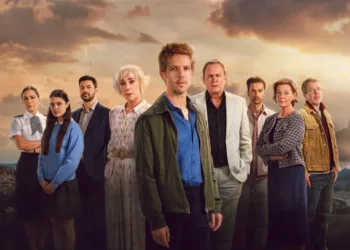


























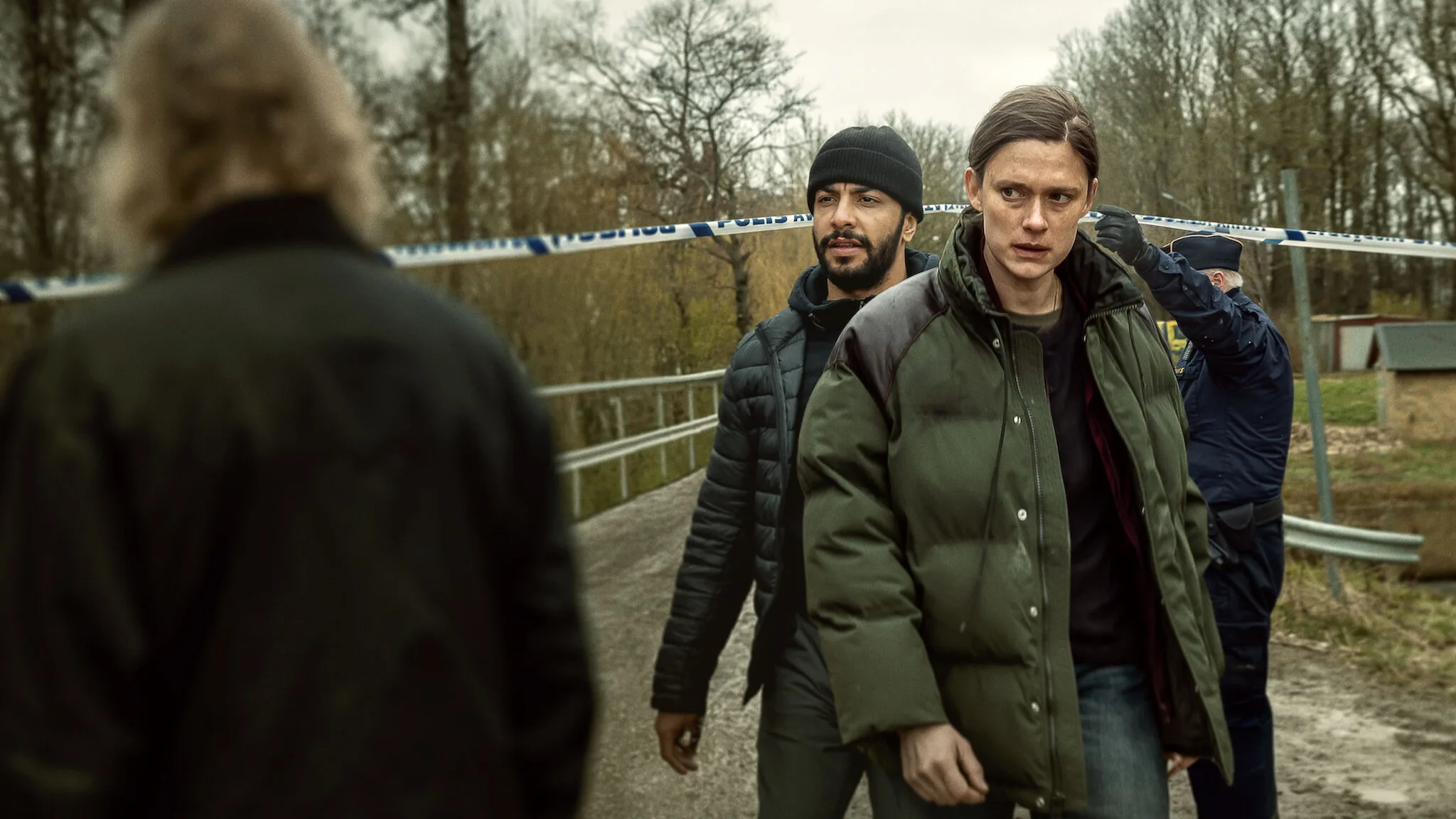

Land of Sin lands on Netflix as a severe portrait of the Swedish countryside, miles away from the sleek Scandinavian image that so often gets exported. The story follows Detective Dani Anttila back to the Bjäre peninsula after a dying man’s urgent plea. Silas, a teenage boy from a farming family, has disappeared into a community shaped by suspicion of state intervention.
Dani arrives carrying baggage that the locals refuse to ignore: she once served as Silas’s foster mother, and that history turns her into a convenient villain in a place that already treats outsiders like an occupying force. When Silas is pulled from a river dead soon after Dani’s return, the case becomes less a puzzle box and more a cold dig through family history. This five-part series values old wounds and local memory over procedural momentum.
It watches how a single decision can stain an entire village, then linger across generations. Action beats stay minimal, giving space to grief that sits in rooms and hallways like damp air. In biting cold and rural poverty, the episodes track survival as daily labor and accountability as something the community negotiates, resists, and weaponizes.
The Architect of Her Own Isolation
Dani Anttila reads like a sharper, tougher evolution of the familiar female detective template. She moves through the series with a stoic posture, a brittle temperament, and an exterior that refuses polish. Her messy ponytail and bare face work as a quiet statement about performative femininity and the punishments attached to refusing it. The look connects to something deeper than style: exhaustion, hardened into habit, after years of failing the people closest to her.
That failure has a name. Dani is a mother stuck with the knowledge that she could not reach her son, Oliver, and his addiction has torn a permanent rift through their relationship. The pain does not stay private. It pushes her toward the Silas case with a desperation that feels personal long before she admits it. Her past as Silas’s temporary guardian tightens the knot further. In Bjäre, that role does not read as protection. The locals treat her as someone who steals children, and the stigma sticks to her every question, every visit, every attempt to do her job.
Dani’s approach to policing carries the same refusal to play along. She sidesteps protocol and takes control of an investigation where her conflict of interest sits in plain view. Her sense of debt to Silas’s family turns into a driving force, and she keeps pushing even as legal guardrails close in around her. She can be rude. She keeps people at a distance as a default setting. Silence becomes one of her main tools, used to drain bluster from a room and to make others fill the space with admissions they did not plan to share.
Also Read






The result is a protagonist who stays hard to “like” in the approved, marketable way, and the show treats that as the point. Dani’s agency comes across raw and unapologetic, a stance that calls out an industry habit of sanding down complicated women until their sharp edges stop making anyone uncomfortable.
Landscapes of Decay and Silent Pressure
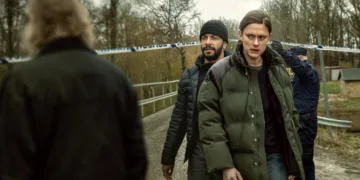
Bjäre functions as an antagonist that never needs dialogue. The Scanian landscape has its pastoral postcard moments stripped away, leaving brown mud, empty fields, and a coastline framed as vast and indifferent. The direction leans on distance and scale. Wide shots turn rural life into a visual study of isolation, with the environment pressing in even when nobody speaks. Close-ups shift the pressure onto bodies, lingering on the physical traces of age, stress, and wear, catching every twitch with clinical clarity. Whites and browns dominate, locking the series into a palette that feels stalled, as if time itself has trouble moving here.
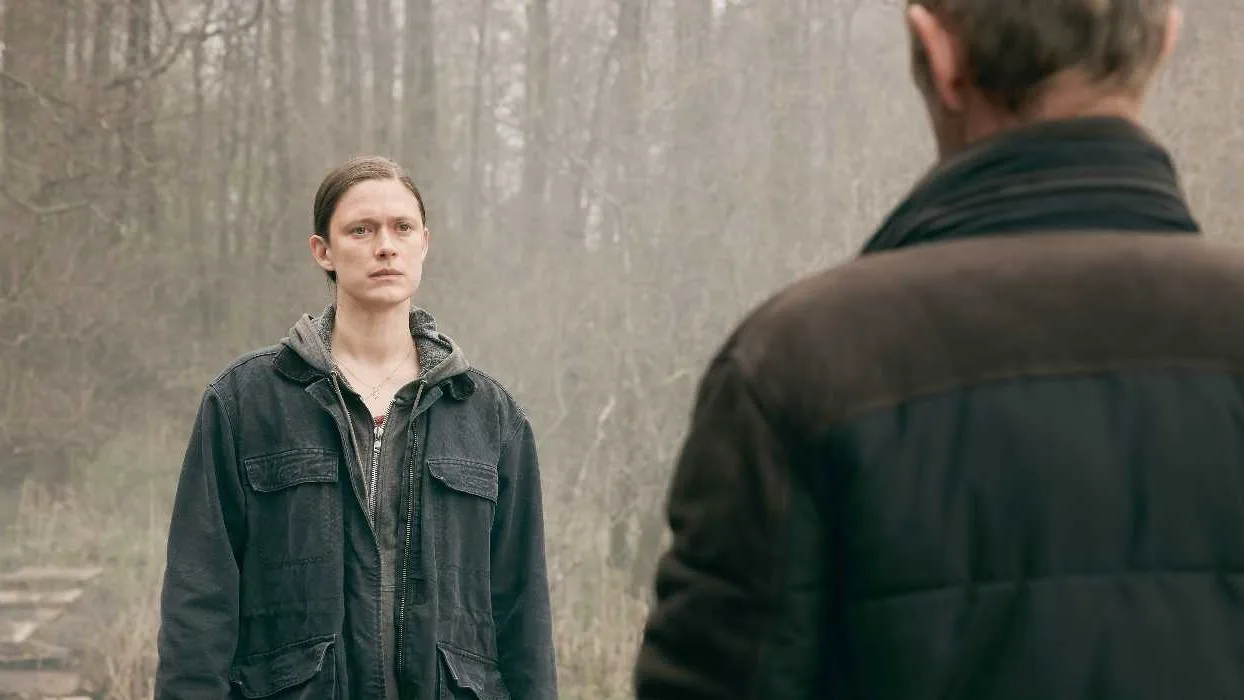
That stalled feeling carries indoors. The cluttered, aging houses look tired to the bone, and their decay mirrors the residents’ inner states. These homes suggest a community stuck inside patterns that do not leave room for renewal. Nature joins the pile-on. Cold sits over everything, forcing characters into thick wool and synthetic layers that read as armor. The river that takes Silas becomes a site of shadow and depth, framed as something that holds onto what it is given. The land feels protective of its secrets, and the show films that protectiveness with patience.
Silence does much of the heavy lifting. Long stretches play without a conventional score, letting wind, footsteps, and squelching mud take over the soundtrack. The choice turns restraint into tension. Anxiety builds through absence, through pauses that last a beat too long, through spaces where the show refuses to tell viewers what to feel. In a streaming environment that often treats constant noise as a requirement, Land of Sin trusts quiet as a pressure system, and it pays off.
The Fractured Social Contract
Land of Sin takes a hard look at what grows in the gap when the state gets treated as an enemy. In Bjäre, the social contract has frayed past repair, replaced by a private idea of justice that answers to family, fear, and reputation. Elis, Silas’s uncle, embodies that local authority. He carries power without theatrics, speaking in a chilling, melodic monotone that makes threats feel casual. When he gives Dani a one-week deadline to deliver results, he asserts the community’s claim to control the terms of law. The ticking clock comes from social friction, from a town deciding how long it will tolerate outside oversight.
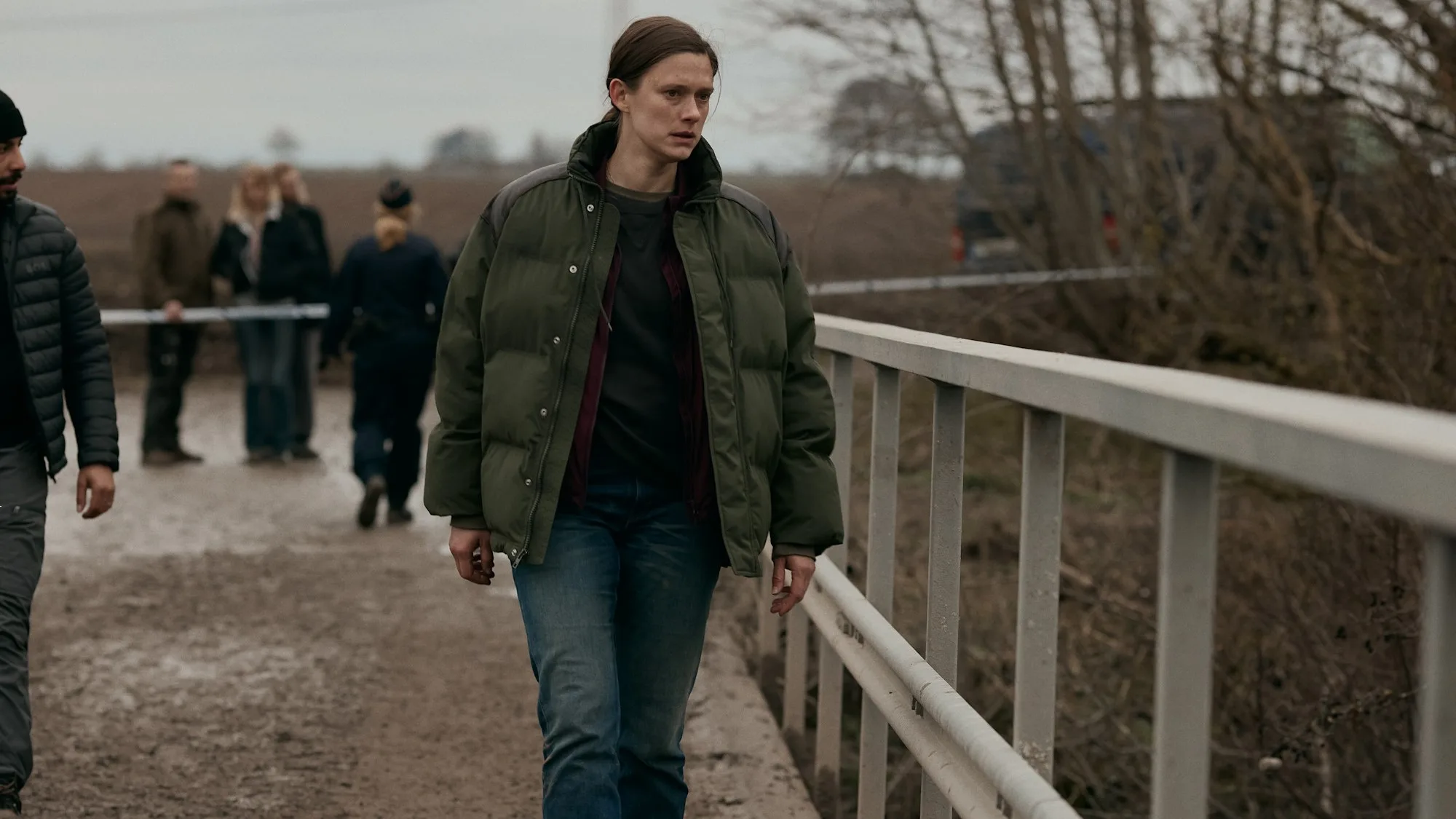
Malik, Dani’s partner, stands as the clearest counterweight to this local rulemaking. He believes in procedure and legitimacy, and he brings a steadier logic into a place drowning in cynicism. Their partnership runs on tension that stays professional. Dani treats him like a trainee and keeps him at arm’s length. Malik’s methodical work keeps producing what her instincts miss, and the series lets that difference sit there without forcing a buddy-cop rhythm. The lack of easy chemistry fits the show’s interest in friction as a working reality, not a cute character trait.
The hostility they face also carries cultural meaning. Locals read Dani and Malik as invaders, and the police as a colonial presence arriving to impose values from elsewhere. That mistrust points to class struggle: a community convinced it has been ignored by urban centers, left to rot in poverty while distant institutions talk about care and accountability. The response is a turn inward, toward violent codes and tribal loyalty. It keeps people protected and it keeps them trapped. It makes truth feel secondary to allegiance, and it turns secrecy into a community service.
Cycles of Trauma and the Hope for Rupture
The series commits to slow-burn storytelling, favoring emotional weight over rapid-fire streaming twists. The pace gives grief room to exist as something lived, not something resolved within an episode’s runtime. Loss becomes communal weather, and the investigation acts as a path into inherited trauma rather than a clean route to closure. Violence gets framed as something that can pass through generations, handed down alongside land and family names. Silas is presented as the product of systemic failure stretching back decades, a boy caught in a structure that keeps repeating its damage.
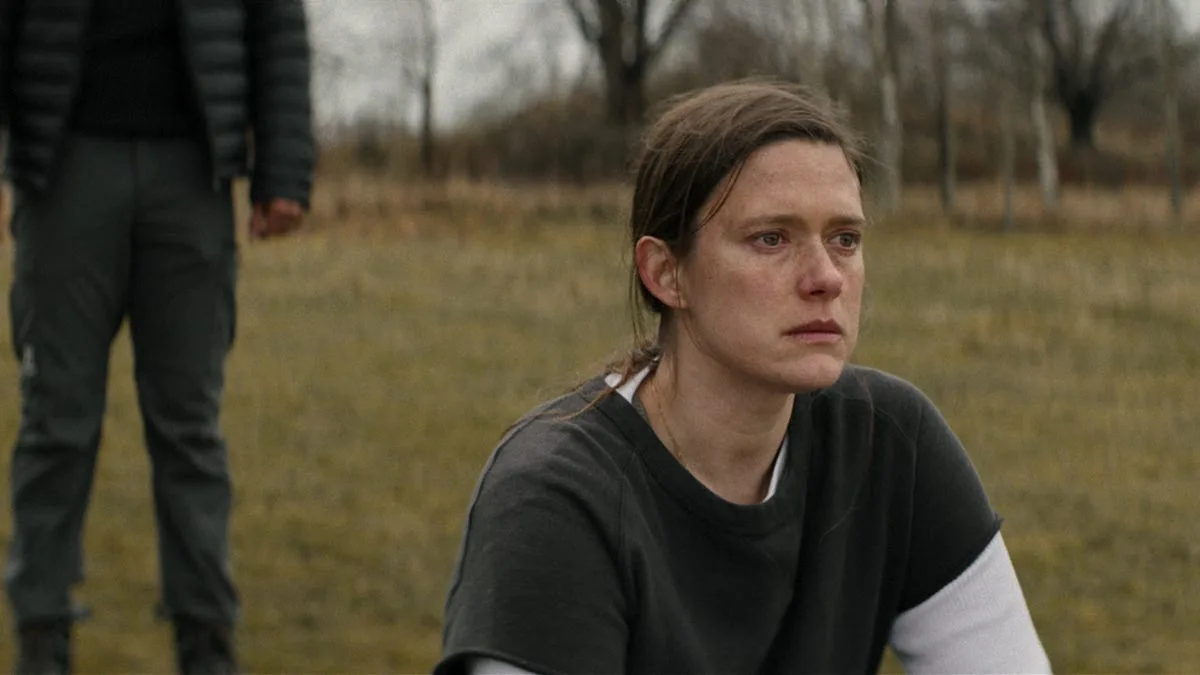
That structure depends on silence. The story points to a local culture that values preservation of the status quo above the safety of vulnerable people. In that environment, death stops reading as an isolated tragedy and starts reading as an outcome that the community has been rehearsing for years. The show keeps returning to the same question in different forms: what happens to children in a place where adults treat secrecy as loyalty?
The final movement refuses pure cynicism and still avoids any easy triumph. Redemption arrives in small actions, painful ones, rooted in people choosing to break patterns that have protected them and harmed them in equal measure. The series frames loyalty as a cage, something that can trap families inside reputations they keep feeding. Protecting the family name through silence guarantees the next generation inherits the same damage. Land of Sin closes by asking viewers to weigh the price of belonging in a community that demands sacrifice, then to sit with the answer as something messy, unresolved, and very human.
Land of Sin is a dark Swedish crime drama that premiered on Netflix on January 2, 2026. Set against the bleak and muddy landscape of the Bjäre peninsula, the five-part miniseries follows an experienced but troubled investigator, Dani, and her rookie partner, Malik, as they look into the death of a local teenager. The show explores deep-seated family feuds and the weight of inherited trauma within a rural farming community. You can currently stream the entire series exclusively on Netflix.
Full Credits
Title: Land of Sin (Original Title: Synden)
Distributor: Netflix
Release date: January 2, 2026
Rating: TV-MA
Running time: 42 minutes per episode
Director: Peter Grönlund
Writers: Peter Grönlund
Producers and Executive Producers: Bonnie Skoog Feeney, Mattias Arehn, Peter Grönlund
Cast: Krista Kosonen, Mohammed Nour Oklah, Peter Gantman, Lisa Lindgren, Mats Mårtensson, Alexander Persson, Ceasar Matijasevic
Director of Photography (Cinematographer): Mattias Rudh
The Review
Land of Sin
Land of Sin serves as a powerful reminder that the most harrowing mysteries are often those buried within our own histories. While it adheres to the established tropes of its genre, the series distinguishes itself through a raw and empathetic focus on social stagnation. Krista Kosonen provides a performance of immense weight, anchoring a story that values psychological depth over rapid plot progression. It is a demanding watch that requires patience, yet it offers a rewarding exploration of redemption. This production is a essential entry for those seeking a mature look at the complexities of rural life.
PROS
- Krista Kosonen delivers a raw and layered portrayal of internal agony.
- The visual language effectively communicates isolation and decay.
- The story offers a nuanced look at inherited trauma and class friction.
- The five-episode format ensures the story remains focused and impactful.
CONS
- The slow narrative speed may lose viewers accustomed to faster thrillers.
- The show relies heavily on the "damaged detective" and "rookie partner" archetypes.
- Malik and other secondary characters lack the focus given to Dani.
- The unrelenting grimness can feel oppressive without frequent emotional relief.