
























![Kingdom Hearts Collection [I-III] Review](https://gazettely.com/wp-content/uploads/2026/10/Kingdom-Hearts-Collection-I-III-1-360x180.webp "Kingdom Hearts Collection [I-III] Review: KHII Holds Steady as Newer Entries Fluctuate 40")
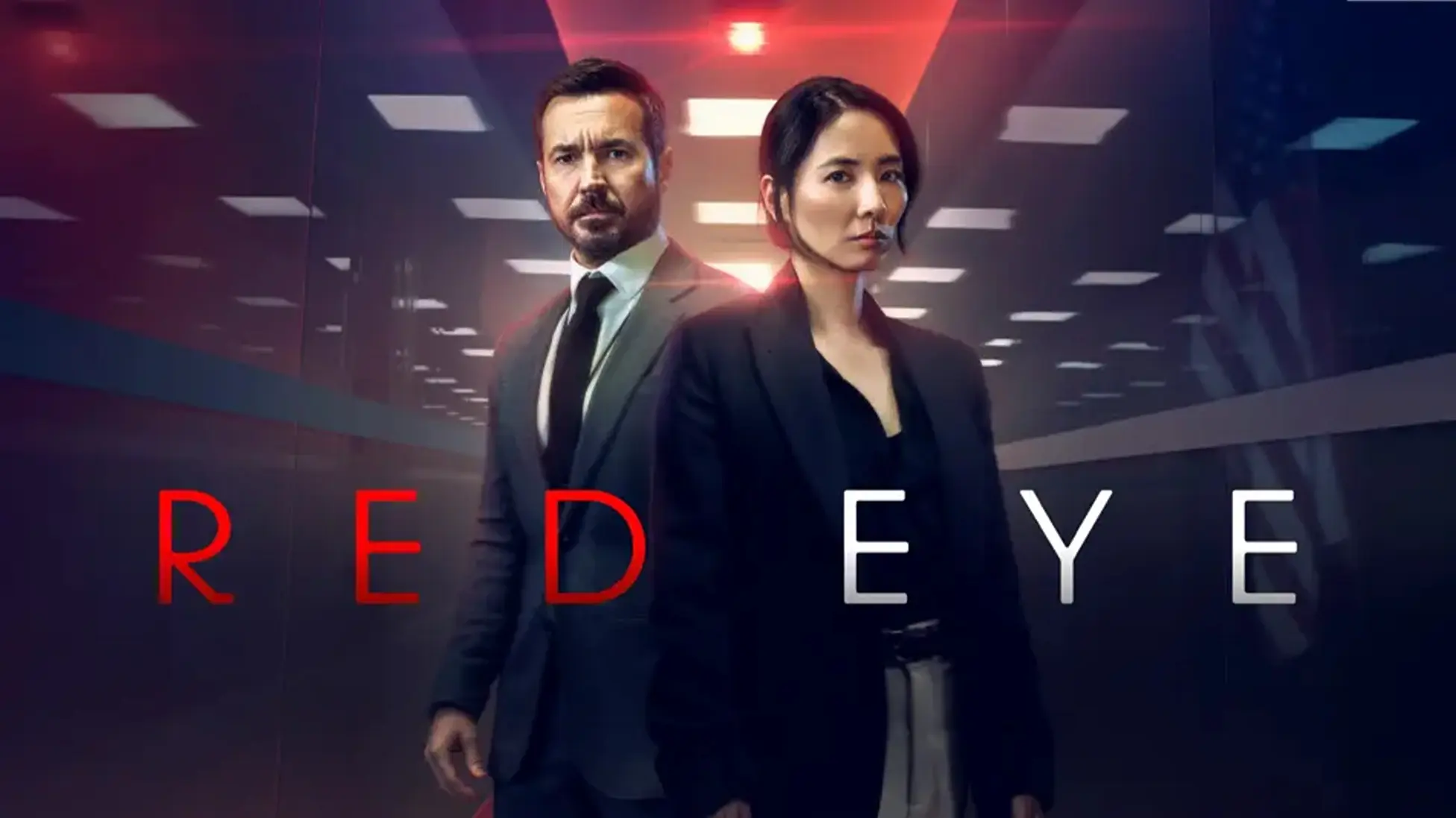

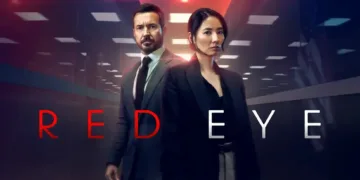
The second series of Red Eye moves its central arena from a commercial flight to the high-security world of the United States Embassy in London, and the shift immediately changes the shape of the suspense. The season opens with a violent incident involving an RAF D-300 prototype plane that crashes into the Atlantic. Eighteen months later, DS Hana Li returns to the foreground as she investigates the murder of a diplomatic courier at Heathrow Airport.
The courier carried a bag intended for the American Ambassador. The bag is stolen, and the theft signals the start of a coordinated attack on diplomatic security. At the same time, Madeline Delaney, now serving as the MI5 Director General, finds herself trapped on a private flight to London alongside the Secretary of Defence.
A bomb threat tied to a Russian code phrase forces the plane to remain at high altitude, and the story commits to a dual crisis. The narrative quickly pushes into a lockdown at the embassy, where an assassin remains at large among guests and staff. The result is a tense framework where diplomacy and personal survival sit on the same fault line from the start.
Bilateral Peril and the Architecture of Entrapment
Series one used the cabin’s physical limits as its main narrative constraint. Series two swaps that tight rectangle for an embassy that feels sprawling, fortified, and carefully zoned, then treats it as a locked-room structure scaled up for statecraft. The American Embassy is presented as a fortress, and the writing gets a sting from watching that confidence fail.
The assassin exploits the building’s layout to stay close to the action without drawing attention, using routine movement and familiar sight lines as camouflage. Internal security systems become part of the threat, and the corridors become a practical maze that turns safety architecture into a hunting ground. The setting allows more movement than the first series, and it keeps the same trapped feeling by making every route feel monitored, gated, or compromised.
A second strand mirrors that pressure through the “Speed” style plot in the air. Delaney and Minister Peterson face technical constraints that keep the plane above 20,000 feet to avoid detonation. The altitude rule becomes a clock with a very specific number on it. The flight is isolated, and its occupants rely on intelligence relayed from the ground in fragments that arrive late, incomplete, or contradicted. Their survival depends on developments they cannot see, which keeps authority feeling remote and reactive.
The two tracks connect through the “Crimson Icarus” code. The phrase links the Heathrow murder to the bomb threat on the plane, and it ties the embassy’s lockdown to the aircraft’s predicament. The gunman uses his position inside the building to issue demands, so progress on the ground turns into life support for the people in the sky. Coordination between MI5, the police, and American security teams exposes the friction inside international partnerships. Each agency guards its priorities and procedures, and the script keeps tightening the screws by making every gain in one arena create a new complication in the other.
The Friction of Shared History and Volatile Leads
Martin Compston joins the cast as Clay Brody, the Head of Regional Security at the embassy, and he arrives with a personality that feels tightly coiled. Brody carries a history of aggression that makes his presence unpredictable, because scenes can swing from controlled authority to physical escalation with minimal warning. His status as a dual citizen places him between two worlds: he serves the Americans and lives in London. That background gives him perspective inside the embassy’s culture and invites suspicion from British counterparts who read him as an unpredictable variable. He carries himself with authority that feels earned, and his volatility makes that authority feel like it comes with a risk assessment attached.

Jing Lusi returns as DS Hana Li, and the series presents her as more seasoned and confident than before. She functions as MI5’s eyes and ears during the embassy crisis, and her detective work often plays out through cameras, timestamps, and grainy footage that has to be read like a second script. Hana shows persistence when tracking the assassin through Heathrow and embassy surveillance, focusing on details that other people miss. She pays attention to the movement of a cleaner and the timing of a security scan, treating small actions as story beats that can reveal intent. Her instincts feel sharper, and she challenges Brody when his methods tilt toward brute force.
The relationship between Hana and Brody supplies the series with its emotional ballast. They were police training partners at Hendon, and their shared history is shaped by trauma. A past training exercise went wrong, and the fallout left a rift that has lasted for years. That unresolved past becomes immediate tension in high-pressure scenes, since professional stress keeps dragging personal history to the surface. Their rivalry spills into petty arguments, and the bickering works as a release valve for a plot that rarely lets anyone breathe. They still have to rely on one another, and the show keeps testing their ability to function as a unit when every instinct pushes them toward old resentments.
Supporting players keep the story’s logistics and politics in motion. Delaney maintains the cool-headed direction needed to manage a crisis from the air, and she acts as the connective tissue between the two storylines. American officials such as Cece Redding and Ambassador Tillman add extra complication through bureaucracy and diplomatic protocol that Hana and Brody have to clear before they can act. The leads chase the physical threat. The supporting cast manages the political consequences that follow each tactical decision.
Pacing, Exposition, and the Mechanics of Tension
The storytelling moves at relentless speed, and the pace serves a clear purpose. It keeps the viewer running alongside the characters, leaving little room to pause and interrogate the logic behind every call made under pressure. The script uses frequent twists to shift the identity of suspects. Each time a lead seems ready to settle on a culprit, the narrative redirects attention and exposes another piece of the conspiracy. Action and movement stay dominant. Character reflection is trimmed because the plot has no patience for it when a bomb is ticking and an assassin is moving through vents.

Dialogue follows the same functional approach. Characters explain actions and backstory in blunt exchanges that keep the audience informed and the plot legible as complications stack up. Technical jargon helps ground the high-concept premise, even if some security beats feel questionable for anyone watching with a professional eye. The assassin’s metal detector bypass plays as almost too simple, landing with a flicker of unintended humour, then the episode moves on. These moments register as small wobbles inside a machine that prefers momentum to plausibility audits.
The season’s technical execution leans on the visual divide between its two primary spaces. The embassy interior feels sterile, expansive, and cold, built from glass walls and modern furniture that make people look exposed even in a secure environment. The plane remains a site of quiet, accumulating dread, where every update arrives like a threat dressed as information. Surveillance footage becomes a key narrative tool, since much of the investigation happens on screens as Hana and her team scrub through pixels for proof. The camera functions as witness and target, and the series treats that idea as a core mechanic of its thriller logic.
Geopolitical Chess and the Path Forward
The background includes diplomatic expulsions and Russian submarine activity, giving the personal danger a wider scale. The assassin’s identity stays ambiguous for long stretches, and that uncertainty becomes part of the tension. The code words point toward a specific nation, and the show hints at a larger cover-up operating behind the visible attack. Real-world political anxieties power the fiction here, especially the fragility of alliances and the ease with which a single act of violence can trigger an international incident.

The series also links its seasons through a specific plot callback. The reference rewards viewers who watched the first series, and the new story still functions as a standalone thriller. The narrative has moved from a personal story focused on a single accused man to a conspiracy involving state actors, and the shift signals an intent to expand the show’s scope. The RAF plane crash mystery operates as the anchor for the present-day crisis, providing motive for the embassy attack and the threat hanging over the flight.
The ending sets up clear implications for Hana Li and Clay Brody. Their partnership has been tested under fire, and the end of the immediate crisis leaves their professional relationship in a different place. The narrative closes the loop on the present threat and leaves threads that point toward further international emergencies. Red Eye knows its job is high-stakes entertainment, and it delivers the thrills it promises without overstaying its welcome.
Red Eye Season 2 premiered on January 1, 2026, as a cornerstone of the New Year’s television lineup. The series follows a dual-track conspiracy involving a high-stakes lockdown at the American Embassy in London and a perilous flight carrying British government officials. In the United Kingdom, viewers can stream all six episodes on ITVX or watch via ITV1, while international audiences in the United States can access the series through Hulu. Australian viewers can watch the thriller on Stan, with a subsequent release expected on Paramount+ for the Canadian market.
Full Credits
Title: Red Eye Season 2
Distributor: ITV1, ITVX, Hulu, Stan, Paramount+
Release date: January 1, 2026
Rating: TV-MA
Running time: 60 minutes
Director: Kieron Hawkes, Camilla Strøm Henriksen
Writers: Peter A. Dowling, Jingan Young
Producers and Executive Producers: Julie Gardner, Lachlan MacKinnon, Peter A. Dowling, Chris May, Kristian Dench, Letitia Knight
Cast: Jing Lusi, Martin Compston, Lesley Sharp, Jemma Moore, Nicholas Rowe, Trevor White, Danusia Samal, Isaura Barbe-Brown, Guy Williams, Jonathan Aris, Robert Gilbert, Cash Holland, Steph Lacey, Tom Forbes
Director of Photography (Cinematographer): Oli Russell
Editors: Josh Cunliffe, Emma Marie Cramb
Composer: Ian Arber
The Review
Red Eye Season 2
Red Eye Season 2 functions as a high-speed machine that values momentum above logic. The shift to an embassy lockdown provides a fresh canvas for suspense. Martin Compston brings a volatile energy that keeps the narrative anchored when the script leans on heavy exposition. While the plot contains noticeable gaps in security realism, the dual-track structure maintains a steady pulse. It remains a functional piece of genre entertainment that prioritizes immediate thrills over lasting impact.
PROS
- Martin Compston provides a magnetic, intense performance.
- The dual-track plot effectively maintains tension in two locations simultaneously.
- Rapid pacing prevents the viewer from dwelling on logic flaws.
CONS
- Dialogue often relies on heavy, blunt exposition to explain the plot.
- Some security protocols feel unrealistic or convenient for the narrative.
- Character interactions can feel repetitive during the lockdown phase.