

























![Kingdom Hearts Collection [I-III] Review](https://gazettely.com/wp-content/uploads/2026/10/Kingdom-Hearts-Collection-I-III-1-360x180.webp "Kingdom Hearts Collection [I-III] Review: KHII Holds Steady as Newer Entries Fluctuate 37")



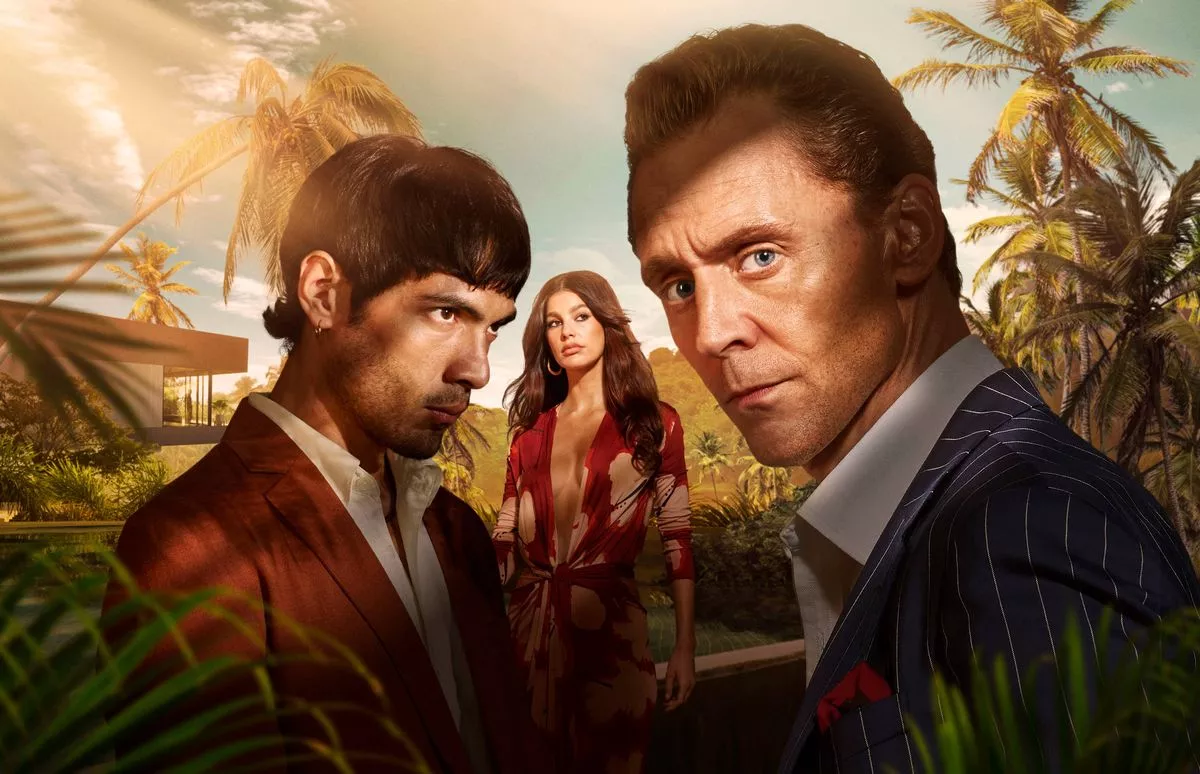

The Night Manager returns close to a decade after its first outing, trading John le Carré’s source material for an original narrative from screenwriter David Farr. Jonathan Pine, played by Tom Hiddleston, steps out of the Cairo past and into a quieter London present. He lives under the alias Alex Goodwin inside a low-level MI6 surveillance unit called the Night Owls, watching high-end hotels through CCTV. It is a comedown from the earlier work of slipping inside Richard Roper’s orbit.
The series stitches the distance between then and now, framing a protagonist who wants calm and still carries the habits of international espionage. A familiar face surfaces on Pine’s monitors and the quiet life collapses. He is drawn back into arms dealing and a global conspiracy that runs from London streets to the hills of Colombia. The rules have changed, the stakes feel reweighted, and Richard Roper’s absence still shapes the air like an old wound that never closed.
The Fragility of the Curated Self
Jonathan Pine lives as a self-made apparition. In London’s grey, rain-slicked streets, he wears Alex Goodwin like a second skin: cardigan as shroud, spectacles as a kind of intellectual armor. The routine becomes a practiced form of emptiness. Inside the Night Owls, exiled from the grandeur of River House, he watches the wealthy move through silent corridors, reduced to flicker and pixels. Surveillance carries its own metaphysics here. He sits in the posture of a spectator, pressed against glass, looking in on a life that once felt reachable.
His past does not loosen its grip. Trauma stays in his chest like a cold weight that refuses warmth. In mandatory therapy he offers porcelain stillness, calling himself the man who will not explode. The line sounds like a vow spoken for survival, not truth. His mind reads like a private gallery of ghosts, haunted by two lives he took in cold blood in service of a mission that still feels unfinished. He becomes pressure in human form, sealed tight, waiting for a crack to reveal what has been held back.
Then the past stops being an idea and becomes an image. A face from the Roper era appears and the spark lands hard. The Goodwin persona drains away, replaced by another construction: Matthew Ellis. Ellis lives on the opposite side of the room from the quiet watcher. He is a high-rolling entrepreneur, a hard-partying creature of the light, built to draw eyes and keep them. Hiddleston plays the shift with shivering precision, letting the hollowness show first, then the predator’s grace that arrives once the scent of a trail returns. The transformation carries a bleak question about identity: how many masks can a person wear before the mask becomes the person.
Disciples of the Void
Richard Roper’s absence leaves space, and that space fills with Teddy Dos Santos, a man who treats atrocity like high-stakes philanthropy. Diego Calva gives Teddy a different kind of menace, one that reads as contemporary in posture and presentation. Roper carried old-world cynicism with the certainty of entitlement. Teddy arrives as a savior figure who sells annihilation with the calm assurance of a benefactor. He calls himself Roper’s true disciple and adopts the same sun-bleached luxury, the same aesthetic of absolute power, as if style can certify legitimacy in a trade built on harm.
Pine and Teddy meet with a thick, dark charge between them. Each man performs. Each man sells a version of himself designed to be believed. Their scenes carry a homoerotic tension that feels less like flirtation than recognition, a mutual awareness of how easily desire can be used as camouflage. The dance between them plays on the lip of a precipice where intimacy and execution blur into the same impulse, as if closeness itself is another weapon.
Camila Morrone enters Teddy’s orbit as Roxana Bolaños, a woman whose beauty functions as currency inside the brutal machinery of global shipping. She arrives as a classic archetype: the villain’s partner who might become the hero’s route to salvation.
Ambiguity becomes her sharpest instrument. She sits at the tip of a dangerous triangle, loyalties moving like tides under a ship’s hull, treacherous and difficult to chart. In Pine’s presence she stands for connection, and connection carries a cost he cannot pay cleanly. He keeps reaching toward her anyway, as if the body remembers tenderness even after the mind has tried to outlaw it.
The Cold Architecture of Betrayal
British power is rendered with frosty, clinical distance, a world where control feels sterile and human warmth reads as a threat. Indira Varma’s Mayra Cavendish embodies bureaucratic ice, an unreadable master of the surveillance state who demands submission to the code. She represents the institutional indifference Pine must move through, an apparatus that treats people as assets and liabilities, never as souls.

Sally, played by Hayley Squires, stands as a different presence: grounded, urgent, alive. She brings a human pulse to a landscape of digital shadows, and she follows Pine out of the watching room and into fieldwork with him, stepping toward danger with a steadiness that refuses glamour.
The past keeps puncturing the present. Angela Burr appears briefly and sharply, the sort of entrance that carries history inside it. Olivia Colman returns as a woman who has earned peace, and who still feels like the author of Pine’s current inner life. She remains the maker of his espionage self, felt even in the margins.
Rex Mayhew also reappears, carrying the memory of a moral compass Pine has discarded for years. These figures become markers, measuring how far Pine has traveled from the original hotel desk, and how far he has drifted from the simple idea that there is a stable line between watcher and watched. The show treats that line as a comforting myth, one that collapses as soon as the gaze becomes a form of power.
Aesthetics of the Scuffed Surface
Georgi Banks-Davies brings a new visual language, closer to modern cinema’s appetite for physical immediacy. The direction lets go of the earlier season’s poetic stillness and leans into a glamour that asks something from bodies. The world looks expensive, and grit sits under the polish like residue that cannot be scrubbed away. Luxury wears scuffs here, and the scuffs feel honest. They mirror the moral decay of the people who inhabit these rooms, people who have learned to treat ruin as routine.
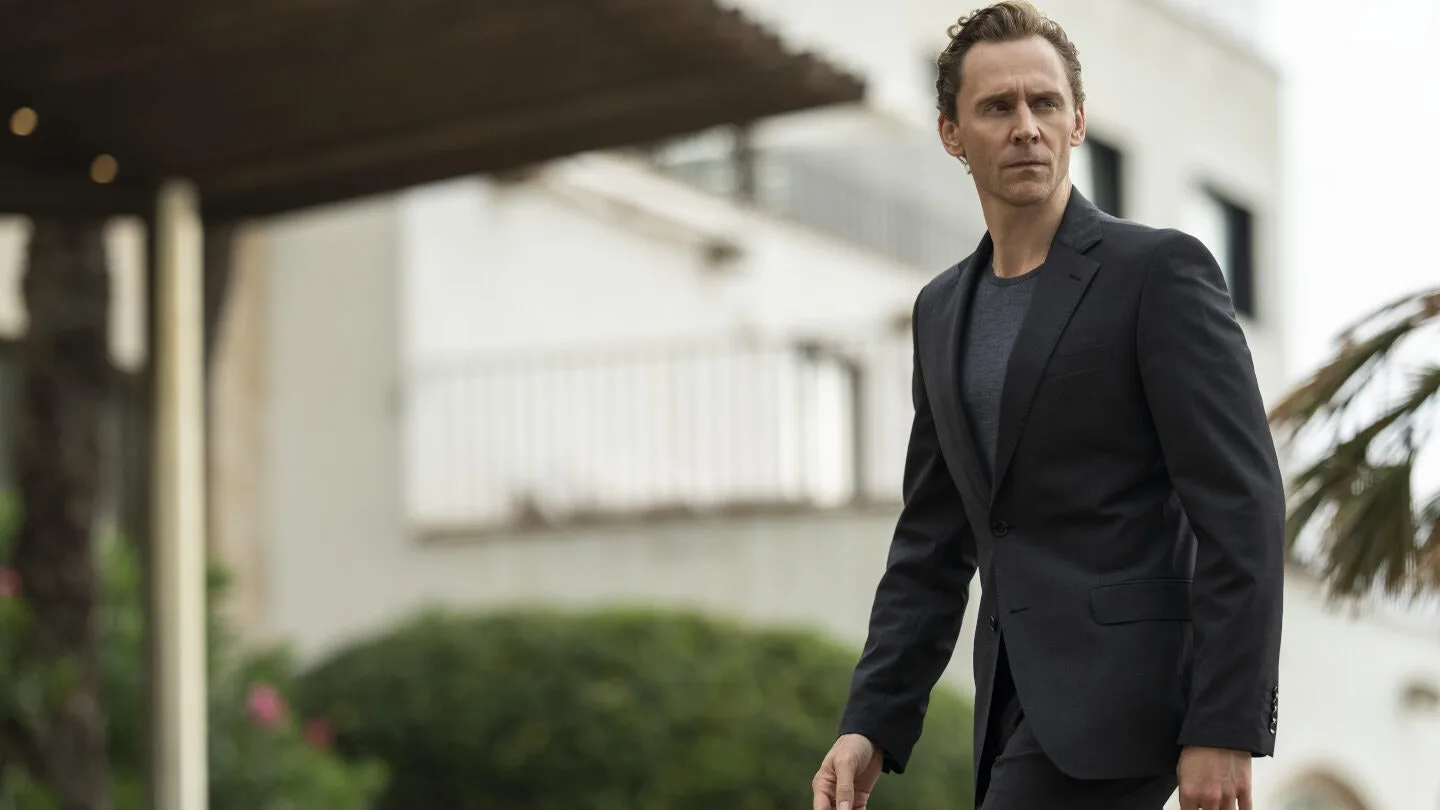
Setting becomes a deliberate exercise in mood. The London surveillance rooms carry sterile silence, packed with tech and drained of sunlight. Spain and Colombia arrive with bright heat that feels dangerous, even seductive, as if the air itself tempts violence. These locations function as living presences rather than scenery.
They embody human achievement pressed into service of cruelty, beauty used to transport harm. When the explosions and high-octane set pieces arrive, they land as earned releases, a discharge after long stretches of quiet observation where tension accumulates in the body.
This remains a serious, strait-laced drama. It rejects the current fashion for cynical, sarcastic spy thrillers. Grotesque humor has no space here. The show honors le Carré’s spirit by keeping its gaze on the erosion of the self and the corruption of the elite. It carries the bones of an old-fashioned thriller, convinced that the darkness in the human heart is a global currency, exchanged across borders without translation.
The Echo of the Unseen
The narrative turns into a meditation on memory’s persistence. Richard Roper has vanished from the board, and his influence still pulls at everyone like gravity. He becomes the invisible sun that bends the paths of the living. Pine cannot escape that pull. The story circles a fundamental question: who exists behind the mask. Teddy and Pine read as performers on a stage built for death, and each hides a core that may have emptied out long ago.
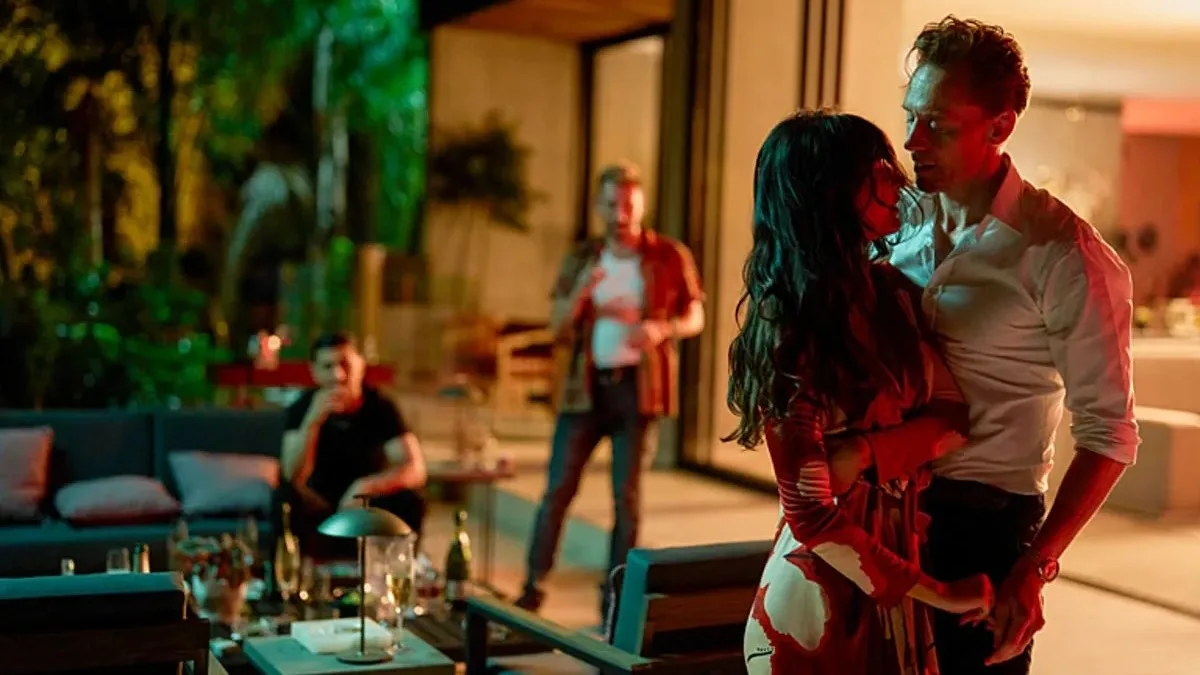
David Farr’s script moves with predatory speed. It sacrifices pieces of logic to keep the pace relentless. Tension grows from the narrow rope Pine walks, a life balanced between exposure and success. He must persuade a monster that he belongs among monsters, and the performance corrodes the performer. He keeps asking himself, silently, if the act has become his reality. His attraction to Roxana complicates every calculation. It threatens to expose the humanity he has tried to bury, the part of him that still wants to be seen as a person rather than a weapon.
The story rests on the impossibility of returning to light after living in shadow. Pine’s quiet life ends because it was built on a denial that could not hold. Jonathan Pine was never a night manager. He belongs in darkness, watching, waiting, listening for the moment the world catches fire and forces him to move.
The Night Manager Season 2 premiered on January 1, 2026, on BBC One and BBC iPlayer in the United Kingdom, followed by a global release on Prime Video on January 11, 2026. This long-awaited second installment picks up eight years after the events of the first season, following Jonathan Pine as he is drawn back into the world of international espionage. Viewers in the UK can stream the series on BBC iPlayer, while international audiences can watch it exclusively on Prime Video.
Full Credits
Title: The Night Manager Season 2
Distributor: BBC One, BBC iPlayer, Prime Video
Release date: January 1, 2026
Rating: TV-14
Running time: 60 minutes
Director: Georgi Banks-Davies
Writers: David Farr
Producers and Executive Producers: Stephen Garrett, Stephen Cornwell, Simon Cornwell, Michele Wolkoff, Tessa Inkelaar, Joe Tsai, Arthur Wang, Adrián Guerra, Georgi Banks-Davies, Hugh Laurie, Tom Hiddleston, William D. Johnson, Nick Cornwell, Susanne Bier, Chris Rice, Gaynor Holmes, Frank Murray, Frida Torresblanco, Matthew Patnick, India Gibbs, Rhiannon Jones
Cast: Tom Hiddleston, Olivia Colman, Diego Calva, Camila Morrone, Indira Varma, Paul Chahidi, Hayley Squires, Alistair Petrie, Douglas Hodge, Michael Nardone, Noah Jupe
Director of Photography (Cinematographer): Michael Snyman
Editors: Ben Jasper, Parikshhit Jha
Composer: Victor Reyes
The Review
The Night Manager Season 2
This second outing is a haunting, visceral meditation on the erosion of identity. While it lacks the singular focus of its predecessor, the series replaces it with a desperate, high-stakes energy and a fascinating exploration of psychological trauma. Jonathan Pine remains an enigma, a man lost in a sea of masks, yet the journey through his internal and external ruins is undeniably gripping. It is a rare sequel that honors the gravity of its origins while forging a darker, more kinetic path through the shadows of global corruption.
PROS
- A masterful portrayal of a man fractured by his own history.
- Georgi Banks-Davies creates a visual world that is both opulent and gritty.
- The dynamic between Pine and Teddy Dos Santos offers a fresh, charged antagonism.
- A refreshing commitment to the high-stakes, strait-laced espionage tradition.
CONS
- Certain plot points prioritize momentum over narrative consistency.
- Some new figures, particularly Roxana, begin as familiar genre tropes.
- The absence of Hugh Laurie’s physical presence is felt despite the strong new cast.







