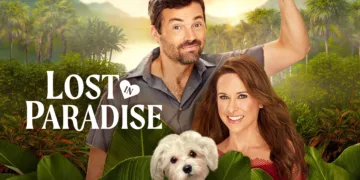














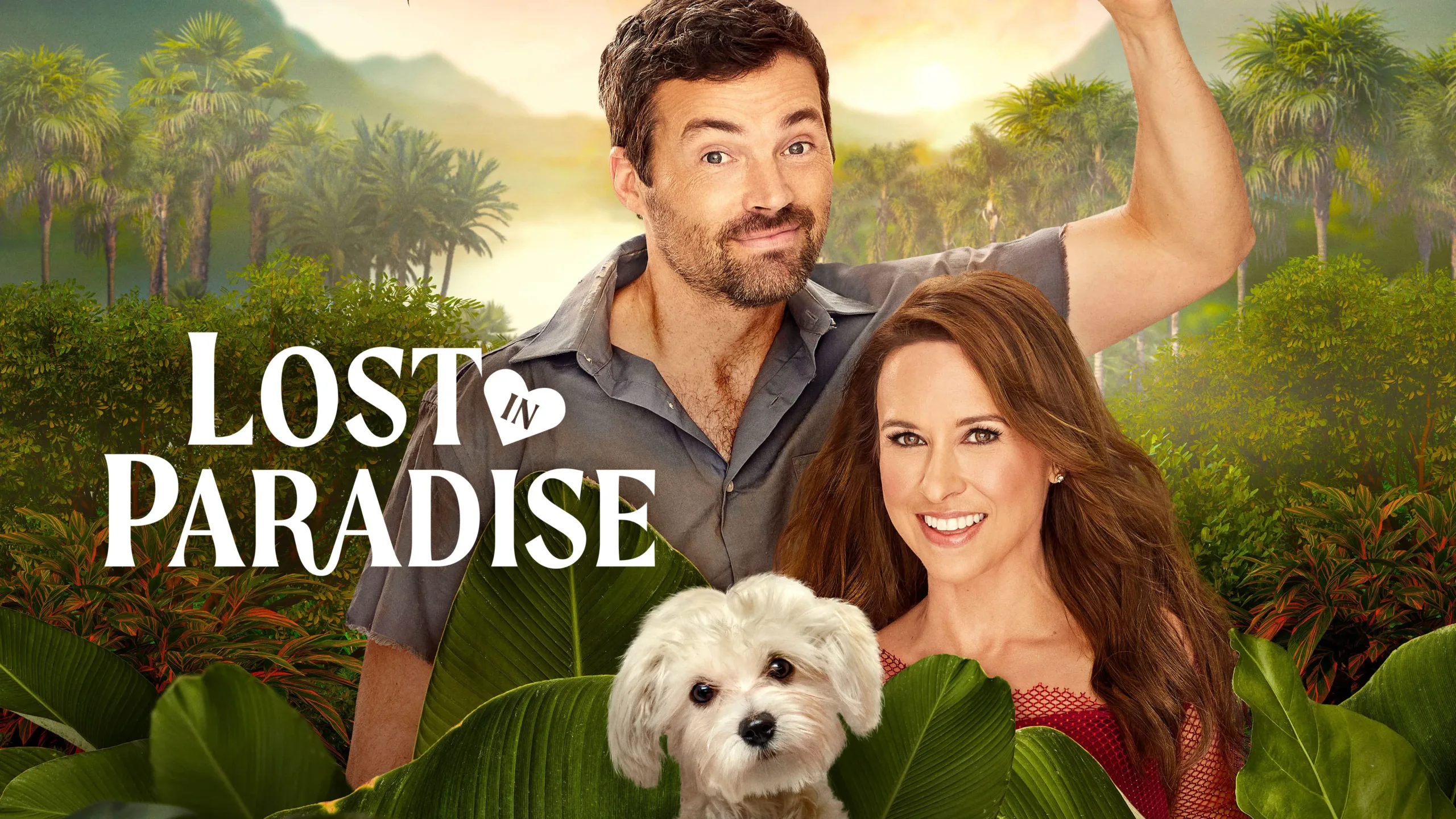

Lost in Paradise opens the 2026 Winter Escape sequence with a premise that wears its polish like a tailored suit. Sophia Tierra, a luxury fashion architect, makes a last-ditch play to keep her creative sovereignty intact. Her ex-husband Mario holds a board seat and pushes to liquidate the brand, forcing Sophia onto a high-stakes flight to Fiji to court a decisive shareholder. Sharing her private cabin is Max, a sous chef posing as a flight attendant in hopes of intercepting a potential investor. For Max, the deception serves as his final gamble for professional independence.
A mechanical failure sends the plane into a Pacific splashdown. Sophia and Max wash up on a secluded shore with their pilots, Julian and Lance. The screenplay pivots from corporate pressure to a sunlit survival drill. Julian and Lance head out to seek extraction, leaving the designer and the chef to meet the archipelago’s demands with whatever knowledge they carried out of Los Angeles. Forced proximity peels away their professional masks, and competence becomes the first language they share. Primitive threats and strange jungle phenomena press in as they build a bond grounded in shared capability.
Archetypes of Ambition and the Softness of Power
Lacey Chabert plays Sophia Tierra with a curated warmth that tempers the familiar “boss lady” silhouette. Her effort to protect her legacy gives the story its moral anchor, even as Mario’s Machiavellian tactics tighten the screws. Sophia stays fundamentally decent, a pointed choice inside a milieu that rewards cynicism. The character’s resilience reads as principle, and it keeps her from sliding into the ruthless template the premise seems to invite.
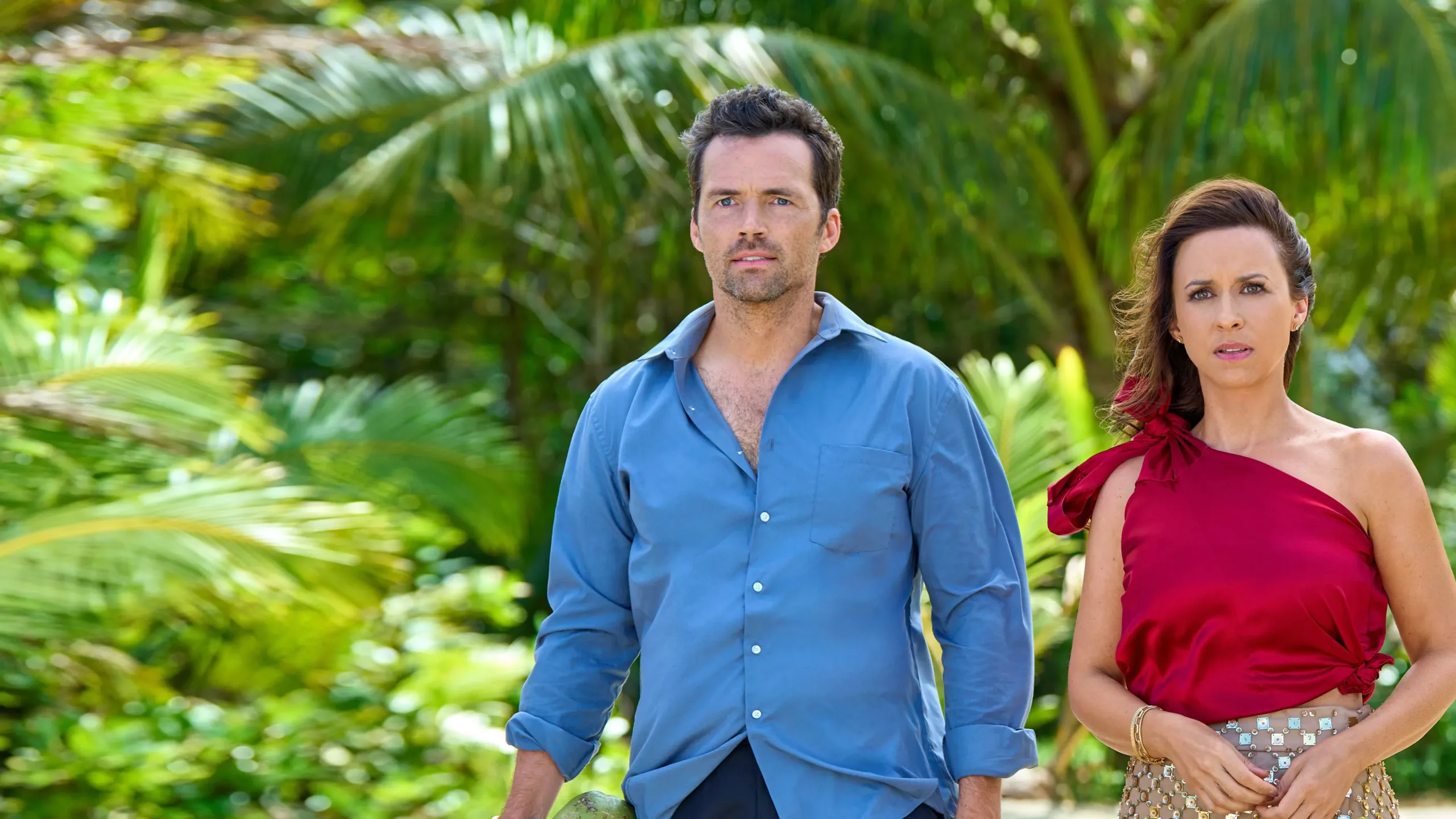
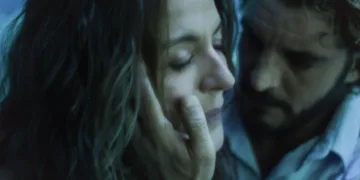
Ian Harding’s Max arrives exhausted by the ego culture of celebrity kitchens. The flight attendant ruse stems from a lack of capital, a bruise left by a disastrous pop-up venture that cratered his confidence. His deception sets up the film’s sharpest ethical gray zone, since his bid for independence hinges on misleading someone who never consented to the game. The chemistry between Chabert and Harding avoids the weary “enemies to lovers” cadence. They choose collaboration. Their dialogue reflects mutual recognition of skill, and it replaces bickering with quiet efficiency.
James Trevena gives Julian a sturdy screen presence, and his rescue mission supplies a secondary engine. Paul Hughes plays Mario as the cold, transactional face of the fashion world, a shadow that makes Sophia’s luminous integrity register in higher relief.
The Practical Existentialism of the Shoreline
The survival mechanics double as a test of character utility. Sophia uses structural knowledge of textiles to convert aircraft wreckage into functional protective gear, treating the island like a raw atelier. Max approaches the beach as a dismantled kitchen, foraging with a chef’s eye and even crafting cocktails from local flora. Their identities travel with them in the form of practiced skills, and the film frames that portability as an existential question about what remains when the usual markers of status fall away.
External pressures keep the pulse steady. Sharks and serpents provide physical threat, and the discovery of mysterious “pirates” in the jungle adds psychological unease, training the audience to scan each patch of green for movement.
The pacing builds tension through escalation and timing, with the distant rescue effort functioning as a ticking clock. Sound design matters through implication here, because isolation amplifies each cue and each lull. Julian and Lance attempt a dangerous raft trip toward civilization, reach a nearby port, and trigger a search party that turns waiting into its own kind of stress.
This stretch of isolation invites the leads to interrogate their prior lives. The frantic pace of Los Angeles begins to feel alien next to the brutal clarity of the island, and the film lets that shift register without speeches. Free will gets squeezed between boardroom maneuvering, a broken aircraft, and the demands of basic survival, then it reappears in smaller decisions: cooperate, improvise, stay decent.
Chiaroscuro in the Tropics: The Visual Design
Director Dustin Rikert avoids the flat lighting common to television romance. He uses the Fijian landscape to stage a visual dialogue between expansive ocean and claustrophobic jungle, with expressionistic framing that turns foliage into a kind of architecture.
Early Los Angeles scenes rely on sharp lines and cold palettes, a corporate geometry that cages Sophia inside her own brand. After the crash, the cinematography shifts to saturated golden-hour light that sells the winter-escape fantasy and turns the shoreline into a bright stage for private reckonings.
Costume designer Keith Nielsen dismantles status through fabric and damage. Sophia’s high-fashion silhouette gets cut, hacked, and refashioned into survival attire, a physical corollary to the characters shedding societal armor. The camera lingers on natural textures in deep focus, holding beauty and latent danger in the same plane.
Lighting keeps the romantic atmosphere intact while preserving the clarity of action beats, and that calculation keeps the film legible on a home screen. Noir technique surfaces in the chiaroscuro tucked into leaves and the way composition pins the characters between open sky and enclosing green.
The Role-Play of Reality and the Absence of Malice
The third act flips perspective when the “pirates” turn out to be employees of a neighboring high-end resort. They have been staging an elaborate live-action role-playing event for tourists. The menace evaporates into a comedy of proximity, and the film offers a wry comment on wealth that can purchase curated peril and call it “adventure.” The first reaction can be annoyance. A beat later, the reveal reads as the point.
Kindness shapes the film’s temperament. The conflict arises from circumstance and internal change, and that choice keeps the audience focused on the lead duo’s evolution. Chabert and Harding carry the narrative with charisma and calm competence, and the setting provides the rest: a vacuum of stress designed for escapism, where cooperation supplies the forward motion.
Lost in Paradise premiered on January 3, 2026, as the lead film for the Hallmark Channel’s Winter Escape programming event. The movie follows Sophia, a high-end fashion executive, and Max, an aspiring chef, who find themselves stranded on a Fijian island after their private jet crash-lands. As they await rescue, the duo must rely on their professional instincts—Sophia’s design skills and Max’s culinary expertise—to survive the tropical elements. Viewers can currently watch the film on the Hallmark Channel or stream it on the Hallmark+ platform.
Full Credits
Title: Lost in Paradise
Distributor: Hallmark Channel, Hallmark+
Release date: January 3, 2026
Rating: TV-G
Running time: 81 minutes
Director: Dustin Rikert
Writers: Stephanie Jackson, Zack Lewis
Producers and Executive Producers: Lacey Chabert, Dustin Rikert, Hallmark Media
Cast: Lacey Chabert, Ian Harding, James Trevena, Paul Hughes, Sean Miguel Perez, Lance Strauss
Director of Photography (Cinematographer): Kim Nunneley
Editors: Derek Hui
Composer: Peter Kam
The Review
Lost In Paradise
This film offers a serene departure from the standard corporate drama. It leans on the natural charm of its leads and the lush Fijian scenery to create a low-stress adventure. The script prioritizes cooperation over conflict, making the survival elements feel like a collaborative puzzle rather than a grim struggle. While the final twist pivots the story toward a lighthearted reality, the emotional growth remains grounded. It stands as a bright, aesthetically pleasing entry for those seeking visual and narrative warmth during the winter season.
PROS
- Strong chemistry between Lacey Chabert and Ian Harding.
- Creative use of character professions in survival scenarios.
- Vibrant cinematography that highlights the tropical setting.
- A refreshing lack of interpersonal cruelty or forced drama.
CONS
- The pirate reveal significantly lowers the narrative stakes.
- Some survival threats feel easily resolved.
- The transition from the island back to reality feels rushed.