















![Kingdom Hearts Collection [I-III] Review](https://gazettely.com/wp-content/uploads/2026/10/Kingdom-Hearts-Collection-I-III-1-360x180.webp "Kingdom Hearts Collection [I-III] Review: KHII Holds Steady as Newer Entries Fluctuate 33")








Patrick Dempsey stars in Memory of a Killer as Angelo Flannery, a man living inside a carefully maintained split. In the pastoral quiet of Hudson Springs, New York, he reads as a devoted father and soon-to-be grandfather, a copier salesman with khakis and a sensible hatchback. That suburban presentation conceals a second identity: Angelo Boyle, a high-level contract killer operating in the sleek and brutal New York City underworld with direction from his handler, Dutch.
This adaptation, based on the Belgian property De Zaak Alzheimer, runs on an early-onset Alzheimer’s diagnosis. Cognitive decline functions as the main adversary, threatening to erode the separation Angelo depends on to survive. As his grip on reality loosens, his family becomes exposed to the fallout of what he has done. A man linked to his wife’s death leaves prison.
A mysterious stalker begins a campaign of intimidation against Angelo’s daughter, Maria. The series reaches for a knotty mix of neurodegenerative tragedy and high-octane thriller beats, building momentum through the fear that memory loss can turn a controlled life into an active threat.
Subverting the Pedigree of the Leading Man
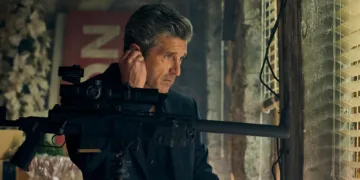
Dempsey plays against his “McDreamy” legacy with deliberate restraint, swapping romantic ease for a chill, surgical efficiency. He gives Angelo a stillness that reads like a lifetime of emotional containment, turning everyday objects into tools of violence, including paper towel dispenser rods used to execute targets. The performance leans on presentation as identity.
Angelo’s fatherly look arrives through “Suburban Normcore” details like a puffy vest. His professional persona arrives through tailored black suits, perfectly sculpted silver hair, and the polished confidence of someone who relies on routine. Those rituals read as survival tactics, a way to impose order through vanity and repetition as his mind begins to fail.
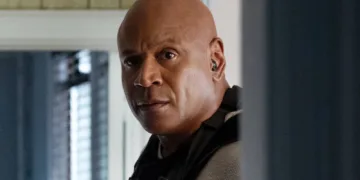
The clearest pulse of humanity comes through Dempsey’s scenes with Michael Imperioli. Imperioli’s Dutch carries a familiar simmering menace that places the show inside the lineage of prestige crime drama. Their time together, including a rehearsal for a surprise party, briefly reveals a strange camaraderie built inside a violent line of work. The series uses Dutch to embody danger while the family provides the stakes.
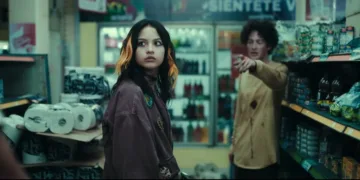
Odeya Rush plays Maria with an innocent brightness, though the writing holds her in place without much movement. Daniel David Stewart’s Jeff, the suspicious son-in-law, becomes the engine of tension. His distrust grows in response to Angelo’s erratic behavior, positioning him as the closest observer of a secret turning rancid in real time.
In that dynamic, the show brushes against questions of representation through presence and function. Maria is framed as innocence that needs protection, then left static while the men trade in suspicion and control. Linda Grant enters with professional authority and sharp intuition, then the narrative measures her value through pursuit of Angelo. The series gives women visibility in key positions, yet it often treats them as stakes, threats, or moral mirrors for the male antihero’s collapse. That choice lands as a familiar industry habit, even while the premise invites sharper attention to the people forced to live around the damage.
The Aesthetics of a Fractured Reality
The series’ visual language heightens the gap between Angelo’s environments. Hudson Springs appears in warm, bucolic light, stocked with the cues of middle-class stability and the steady rhythms of a family procedural. New York City arrives through cold vertical geometry, paired with the “Bat Cave,” a space that signals secrecy, power, and self-mythologizing.

High-end design glamorizes the assassin lifestyle, treating Angelo’s Porsche and luxury apartment with the reverence of a car commercial. The approach echoes a television habit of aestheticizing the antihero, and here it sometimes tips toward satire, as if the show can see the contradiction while still indulging it.
Editing turns craft into metaphor. The audience gets “missing moments,” where Angelo suddenly has a weapon in hand or discovers an injury he cannot explain. These ruptures can read as high-concept storytelling that puts the viewer inside his disorientation.
The series carries a push-and-pull between that risky device and the glossy finish of its presentation. Directors such as Daniel Minahan are part of the package, yet the show repeatedly returns to a sanded-down look associated with standard network broadcast. The result is a persistent strain: a premise that suggests grit and dread, filtered through a surface that keeps sanding away the mess.
That strain connects to a larger shift in how television packages darkness for broad consumption. The show wants the immediacy of a thriller and the gravity of illness. It also wants the clean readability of mainstream broadcast style. That balancing act becomes part of the text, even when it feels unintentional, because the illness-driven disorientation clashes with the show’s need to keep scenes legible, brisk, and marketable.
The Fragility of the Professional Code
The plot steps away from a “hit of the week” rhythm and leans into decay as catalyst. Memory loss drives suspense through small, frightening errors. A gun left in a refrigerator. A forgotten jacket carrying incriminating papers. Those mundane lapses generate dread that can outpace the choreographed action sequences, turning domestic space into a minefield. The series uses these failures effectively to show how a life built on precision cannot coexist with a mind sliding out of focus.
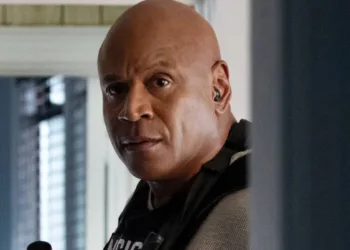
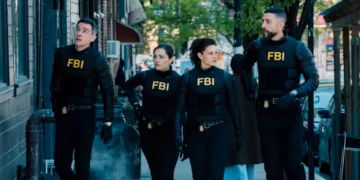
Angelo faces pressure from three directions that tests his “killer with a code” posture. FBI Agent Linda Grant, played by Gina Torres with sharp intuition, embodies the institutional threat closing in on someone who cannot reliably remember his own alibis. Earl Hancock’s return tightens the noose from another angle. A mysterious sniper adds a further external squeeze.
Around them, characters repeatedly mock Angelo’s moral framework, treating his ethical reasoning as a house of cards. That skepticism takes aim at the “noble assassin” trope and gives the narrative a colder edge, arguing that his discipline depended on mental stability and on the illusion that rules can sanitize violence.
This is where the show’s interest in social change and cultural norms shows up in the simplest way: it frames vulnerability as the new test of masculinity. Angelo’s identity rests on competence, secrecy, control, and mastery. Alzheimer’s attacks each of those values. The series uses that collapse to ask what remains of a man whose power depended on memory and precision. It is a grim idea packaged as entertainment, and the packaging matters, because it shapes how audiences are taught to empathize with a killer while watching his illness turn him into a danger to his family.
The Paradox of Medical Tragedy as Entertainment
The series wrestles with the ethical and structural problem of turning neurodegenerative disease into a primary plot mechanism. Alzheimer’s carries real human weight, and the show risks treating it like a convenient gimmick used to pace a character’s downfall, instead of grounding it as tragedy. That risk is baked into the format’s long-term demands. A broadcast series built for multiple seasons faces a “ticking clock” dilemma. A terminal condition has a trajectory, and the story must choose between honoring that trajectory or leaning on contrivances to keep Angelo in motion.
Behind-the-scenes showrunner changes point to a production searching for balance between family drama and pulpy thriller. Early episodes lean hard on leaden exposition and obvious foreshadowing, which can blunt the sophistication of Dempsey’s performance. The show follows the “struggling professional” procedural model while trying to sharpen it through the fear of cognitive mortality.
Its staying power rests on craft choices it has already placed in tension: brisk pacing, the pull of antihero glamour, and a serious illness that resists tidy serialization. If the series holds that tension without flattening the loss into plot fuel, it positions itself as an attempt to recalibrate the network antihero for a moment that prizes vulnerability alongside violence.
The high-stakes psychological thriller Memory of a Killer premiered on January 25, 2026, on Fox, following the NFC Championship game. Starring Patrick Dempsey in his return to broadcast television, the series explores the double life of a professional hitman whose precision is threatened by a diagnosis of early-onset Alzheimer’s. Viewers can watch the show weekly on Fox, with episodes becoming available for streaming the following day on Hulu.
Full Credits
Title: Memory of a Killer
Distributor: Fox Network, Hulu
Release date: January 25, 2026
Rating: TV-14
Running time: 60 minutes
Director: Daniel Minahan, David Petrarca
Writers: Ed Whitmore, Tracey Malone, Heidi-Marie Ferren
Producers and Executive Producers: Aaron Zelman, Glenn Kessler, Patrick Dempsey, Martin Campbell, Arthur Sarkissian, Cathy Schulman, Daniel Minahan, David Schulner, Ed Whitmore, Tracey Malone, Peter Bouckaert, Bonnie R. Benwick
Cast: Patrick Dempsey, Michael Imperioli, Richard Harmon, Odeya Rush, Daniel David Stewart, Peter Gadiot, Michaela McManus, Gina Torres
Director of Photography (Cinematographer): Michael Snyman, Kristin Fieldhouse
Editors: Aaron Marshall, Nicholas Wong
Composer: Siddhartha Khosla, Jeff Garber
The Review
Memory of a Killer
Memory of a Killer is an ambitious, if uneven, attempt to bridge the gap between high-concept prestige drama and the familiar rhythms of broadcast television. Patrick Dempsey delivers a career-redefining performance that finds genuine pathos in the intersection of criminal lethality and cognitive vulnerability. While the series occasionally stumbles over overstuffed subplots and the inherent constraints of the network format, its central premise provides a uniquely haunting tension. It is a stylish, provocative thriller that succeeds when it focuses on the internal erosion of its protagonist rather than the external mechanics of the genre.
PROS
- A compelling subversion of his established screen persona that anchors the show's emotional weight.
- Using Alzheimer’s as a narrative driver creates a psychological stakes rarely seen in the hitman genre.
- The natural, relaxed dynamic between Dempsey and Michael Imperioli provides the series with much-needed authenticity and grit.
- High-end visual design and effective mise-en-scène clearly differentiate the protagonist’s fractured worlds.
CONS
- The pilot episodes struggle to balance too many competing plot threads, leading to a sense of exhaustion.
- The "sanded down" broadcast style occasionally undercuts the darker, more visceral potential of the source material.
- Significant questions remain about how a progressive disease can be sustained over multiple seasons without becoming a repetitive gimmick.
- Leaden dialogue in early episodes sometimes prioritizes plot delivery over organic character development.