





















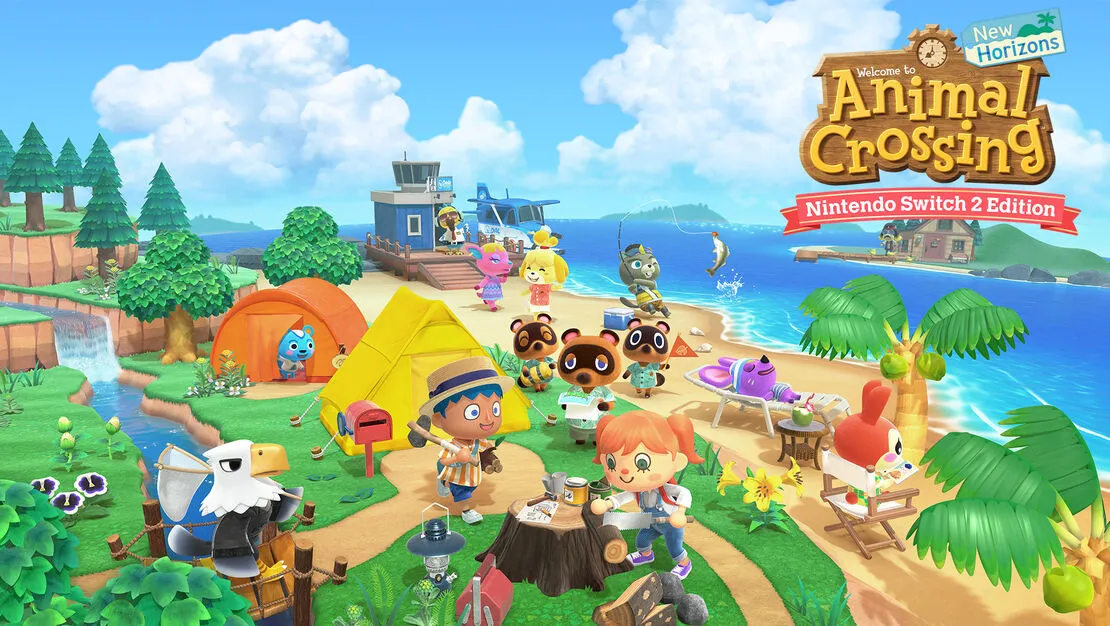

Animal Crossing: New Horizons lands on the Nintendo Switch 2 with a warm sense of familiarity and a clear set of technical revisions. The premise keeps its pull: you step onto a deserted island and slowly shape it into a home, building a community from bare ground. The central loop of crafting, decorating, and getting to know animal neighbors remains the same, carrying the soft emotional lift that helped turn the game into a 2020 phenomenon.
This release positions itself as Nintendo’s flagship social sim for the new hardware, arriving alongside a major 3.0.0 content update. The 3.0.0 features roll out to all players as a free expansion, and the Switch 2 Edition layers console-specific upgrades on top for people making the jump. Played in 2026, the island still runs on a calm rhythm that rewards check-ins over time, where pulling weeds or placing a chair can feel like a small act of ownership and care.
Sensory Refinement and Technical Anchors
New hardware changes how the island’s quiet charm reads moment to moment. Handheld play now targets a crisp 1080p, and docked play reaches 4K, which immediately improves clarity. Small environmental touches stand out with more intent, and the color presentation feels richer.
The distracting banding that used to show up in water shadows has largely faded away, so shorelines and reflections look cleaner during long, slow walks. Some textures show softer edges that suggest modern upscaling at work, yet the presentation carries more snap than before.
Performance choices stay conservative. The game holds to 30fps, which gives movement and camera pans a steady, measured feel instead of the smoother motion seen in other modern titles. The extra horsepower shows up in responsiveness: transitions in and out of buildings, or trips between areas, load faster than before.
The exact wait still shifts based on how densely your island is packed with items. That caveat matters, since this is a game where many players treat every open tile as usable space. Even so, the shorter pauses help the island feel more continuous, smoothing the path from pier to town center and keeping the atmosphere intact.
Tactile Changes and Social Expansion
Switch 2 support adds new ways to physically interact with your island, and the most meaningful change is mouse control. In design mode, clicking and dragging furniture or pattern elements brings a level of precision that calls back to PC simulation classics.
That precision changes the texture of play. Decorating shifts from nudging objects through a grid one step at a time into a more direct, hands-on placement process. Menus still lean on standard button navigation, so the input upgrade does not rewrite every interface choice, yet interior work feels faster and less fussy.
A familiar tool returns with hardware support: the megaphone. Holding a button and calling a villager by name lets you track them down across the island. Voice recognition can misread you, especially with similar names, and that inconsistency creates occasional friction. The idea still fits Animal Crossing’s tone, since it turns a practical function into a small social gesture, like you are reaching out to the community you built.
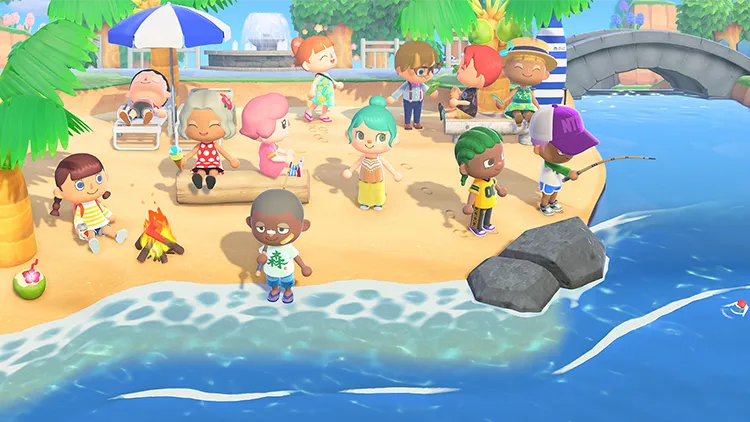
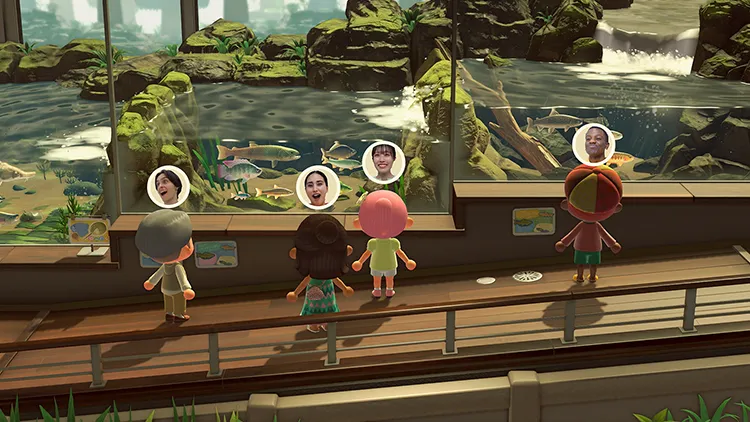
Multiplayer expands in a more straightforward way. Online play now supports up to 12 people at once, up from the previous cap of eight, which changes the energy of hangouts. Larger groups make the island feel busier, and they better match the game’s role as a shared space. New features such as GameChat and CameraPlay try to connect real-world friends to their in-game presence by placing small video feeds over characters’ heads.
It is a direct attempt to keep the social layer front and center, especially for players who treat Animal Crossing as a weekly meeting spot. Smaller mechanical refinements help solo play too. The new strafe option offers tighter control during terraforming, which makes each shovel strike or path tile placement land where you meant it to land, cutting down on the tiny errors that can slow creative momentum.
The Creative Freedom of the 3.0 Expansion
The 3.0 update carries the real weight for returning players, with its biggest gains aimed at creative expression and structure. Kapp’n’s Resort Hotel stands out, positioned at an expanded pier. Here you take on design jobs, styling rooms around specific themes and earning Hotel Tickets that unlock distinct catalog items.
The loop frames creativity as a series of focused assignments, echoing the directed challenges seen in earlier expansions. That structure matters for pacing. It gives you clear goals, then sends you back to your island with new ideas and new objects, creating a steady cycle of inspiration and payoff.
For players who hesitate to experiment on their primary island, Slumber Islands provide a safer playground. These dream-state sandboxes let you test ambitious layouts and new item combinations without permanent consequences. That freedom helps creativity feel playful again, especially after hundreds of hours where any big change can feel risky.
Quality-of-life updates also sharpen the daily routine. Bulk crafting reduces repetitive steps, and pulling materials straight from home storage removes a constant back-and-forth loop. Landscape management gets practical support from familiar faces: Resetti can clear large furniture sections, and Leif can handle weed removal, freeing you to focus on the story you are telling through your island’s evolution.
Fresh catalog goals arrive through new items, including collaborations with Zelda and LEGO, which add new visual targets for decorators chasing a specific look. Taken together, the expansion keeps the core loop rewarding, and it strengthens the social pull that keeps people returning to compare islands, trade ideas, and spend time in a space that feels personally authored.
The Review
Animal Crossing: New Horizons - Nintendo Switch 2 Edition
The Nintendo Switch 2 Edition of Animal Crossing: New Horizons is a polished, though iterative, step forward. It excels as a sensory upgrade, offering stunning 4K visuals and smarter quality-of-life tools that respect your time. While the 30fps limit and inconsistent voice controls feel like tethered remnants of the past, the sheer volume of the 3.0 content makes the island feel more alive than ever. It remains a masterclass in low-stress social simulation, perfect for newcomers and dedicated fans seeking a crisper paradise.
PROS
- Sharp 4K docked resolution and vibrant handheld display.
- Major quality-of-life additions like bulk crafting.
- Creative freedom via the new Slumber Island sandbox.
- Engaging new hotel design activities.
CONS
- Performance is still restricted to 30fps.
- Voice recognition for the megaphone is unreliable.
- Mouse controls have limited menu integration.