

























Linda Liddle occupies a barely registered corner of the Strategy and Planning department at a high-stakes consulting firm. Seven years of steady labor have left her a footnote among colleagues. Bradley Preston sits in the CEO chair because he is his father’s son. He greets Linda with a casual, biting arrogance. He rewards his golf companions with promotions while Linda receives the crumbs of corporate promise.
A business trip over the Gulf of Thailand ruptures that arrangement. Their private jet falls from the sky in a chaotic spray of metal and salt water. Linda and Bradley wash up alone on a tropical beach. The boardroom code dissolves under the sun.
Bradley arrives at the sand with a severe leg wound and no practical skills to match his title. Linda produces a hidden history of survivalist preparation. She becomes the competent authority of this new world. Their professional masks come off and the hierarchy reorders itself around immediate need.
The Reversal of the Meritocratic Myth
Linda Liddle appears at first as a figure of quiet desperation. She favors drab sweaters and clumsy shoes (an aesthetic I will label cubicle-beige). Her social life is threaded around a cockatiel. A humiliating episode with a tuna sandwich signals her low status. Bradley regards her with the disgust of a man who equates inherited wealth with inherent value.
Nature issues a harsh correction. On the sand, Linda’s clumsiness dissolves. She builds fires and locates water with mechanical efficiency. That change functions as competence-reclamation. She discovers a calm pleasure in being useful. Bradley moves through a status-collapse. He expects service while his leg festers. He issues orders from a position of practical weakness.
The island evokes historical moments when aristocracies met sudden overthrow. Survival becomes a single, austere currency. Linda carves her name into wooden cups to claim a small sovereignty. She offers Bradley distant, clinical care. She refrains from deliberate public humiliation, yet she recognizes his subordinate place.
The development here is spiritual as well as physical. Her Survivor obsession stops being hobby and becomes salvation. Bradley’s entitlement stands as his primary handicap. He attempts to trade his former title for favor. Titles wash away against the tide. Power slides from master and servant to provider and parasite. Linda changes slowly and with an inner light. Bradley collapses quickly and pitifully. The environment sets the measure of worth. Capitalist forms lose traction in the jungle. Resourcefulness decides who persists.
The Aesthetic of Physical Suffering
The film’s visual program is aggressive. The director relies on extreme close-ups to create visceral-proximity. We see pores and drops of sweat with forensic insistence. The island is sunlit and beautiful, yet the camera treats it like a crime scene. High-key light sits oddly beside dark deeds.
The lens lingers on physical imperfections. A beauty mark, a festering leg wound, receive invasive attention. Call this a grotesque-microscopic approach. The plane crash registers as a kinetic masterpiece. Bodies are torn into the sky and ties become nooses. The sequence reads as the director’s return to high-octane horror.
Physicality dominates. A wild boar sequence functions as gore-humor. Blood and other fluids explode in an excess that insists on our fragile biology. Somatic-shocks bridge laughter and revulsion. The film uses bodily fluids as a syntax. Vomit and blood stand for loss of control.
Tonal balance teeters. Slapstick comedy surfaces during acute danger. The effect is manic-dissonance: cartoon logic applied where consequences remain permanent. Hallucinations and jump scares mark fractured mental states. A hand pushing from the dirt or a ghoulish figure among trees punctures isolation. These images read as psychological embodiments of guilt and dread. The picture rejects a clean surface and prefers the grime of reality. Each frame smells, as it were, of salt and decay.
The Satire of the Empty Suit
The script zeroes in on nepotocracy within modern business. Bradley embodies the hollow void of inherited power. He confuses fortunate birth with skill. Office scenes sketch a world organized by quiet sexism and loud egos. The island performs a social-reset and strips off suits and titles.
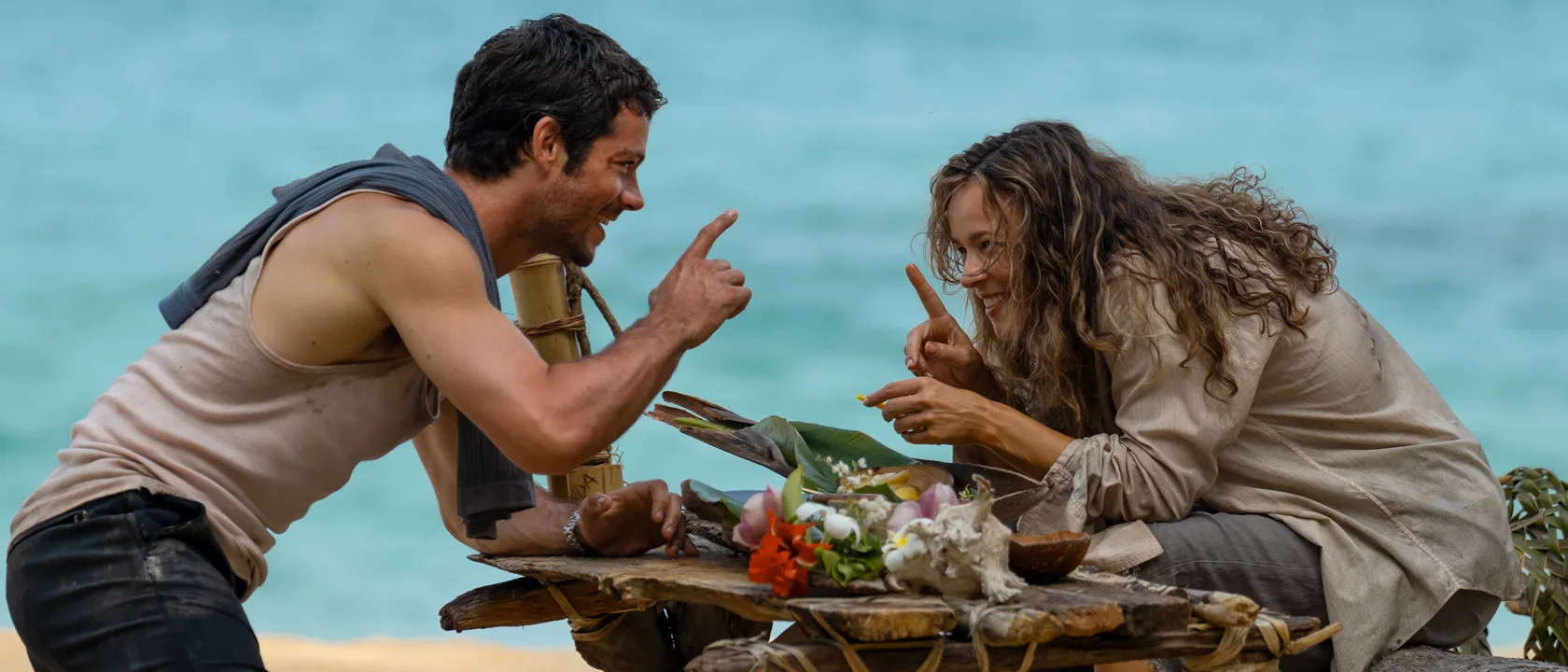
Gender roles invert in blunt terms. Linda becomes hunter and builder. Bradley waits for rescue. The film lands its critique on the C-suite-coward. Revenge appears here as a route toward self-actualization. Linda refrains from immediate killing. Her aim is exposure: to render Bradley irrelevant.
Pacing moves deliberately from the sharp chatter of the office to the slow, grinding days on the beach. The two-hander format concentrates attention. We remain trapped with these two figures and their small ecosystem. Their external isolation mirrors the psychological isolation of the modern worker.
Dream sequences offer peeks at Bradley’s former life. We glimpse his fiancée and his comforts. Those moments feel thin and artificial set against island reality. The film refuses to canonize Linda. She displays calculated-cruelty and at times enjoys Bradley’s suffering. That moral ambiguity roots the tale. Bradley attains moments of self-awareness. He recognizes his vanity. Those realizations land because they are paid for by pain. The script proposes that character emerges when external scaffolding collapses.
Performance in the Crucible
The lead actress delivers a study in physical-translation. She starts as a shrinking violet in grey wool and finishes as a tanned, fierce predator. Her performance commits to dirt and heat. She embraces foolishness and frenzy when the scene demands it. The lead actor approaches Bradley with an admirably shameless lack of vanity. He renders the role as a sniveling, entitled wreck and captures pathetic-privilege with precise nastiness.
Their chemistry registers as a kind of choreographed distrust. They move between hatred and necessity. Technical aspects cross eras. Digital wildlife effects register as occasionally obvious and lack the tactile heft of the practical gore. That difference produces a small visual glitch.
Practical effects work better. Makeup for wounds attains a gruesome specificity. The score remains serviceable; it punctuates high-tension moments without lingering in the memory. It lacks the bombast of the director’s earlier pictures. Editing sustains momentum into the final act. Lingering shots underline the comedy of Bradley’s failures. The film reads as a mid-budget genre exercise returned to a familiar mode. It presents a mean-spirited-meritocracy tale. The performers lift the material with sheer grit. They sell hunger and heat. The final moments land with dry, cynical wit.
Send Help premiered at the TCL Chinese Theatre on January 21, 2026, and is scheduled for a wide theatrical release across the United States on January 30, 2026. This darkly comedic psychological thriller, which marks director Sam Raimi’s first R-rated feature in over two decades, follows the shifting power dynamics between a marginalized office worker and her entitled boss after a plane crash leaves them stranded on a remote island. Audiences can catch the film in theaters nationwide starting this Friday.
Full Credits
Title: Send Help
Distributor: 20th Century Studios
Release date: January 30, 2026
Rating: R
Running time: 113 minutes
Director: Sam Raimi
Writers: Damian Shannon, Mark Swift
Producers and Executive Producers: Sam Raimi, Zainab Azizi, Jonathan Hook
Cast: Rachel McAdams, Dylan O’Brien, Edyll Ismail, Dennis Haysbert, Xavier Samuel, Chris Pang, Thaneth Warakulnukroh, Emma Raimi
Director of Photography (Cinematographer): Bill Pope
Editors: Bob Murawski
Composer: Danny Elfman
The Review
Send Help
The film functions as a jagged "ego-dissection." It strips away corporate vanity to reveal the raw mechanics of physical survival. Though the middle act occasionally loses its rhythm, the lead performances anchor the cynical narrative. It lacks the refinement of high-budget drama, yet it finds its strength in the filth of its own satire. This is a blood-soaked, necessary correction of the meritocratic lie.
PROS
- Grit-filled lead performances.
- Imaginative practical gore.
- Sharp critique of executive entitlement.
CONS
- Low-quality digital effects.
- Uneven narrative pacing.
- A forgettable musical score.