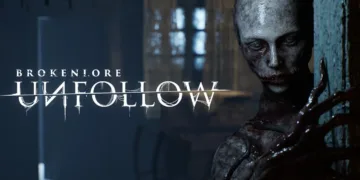




















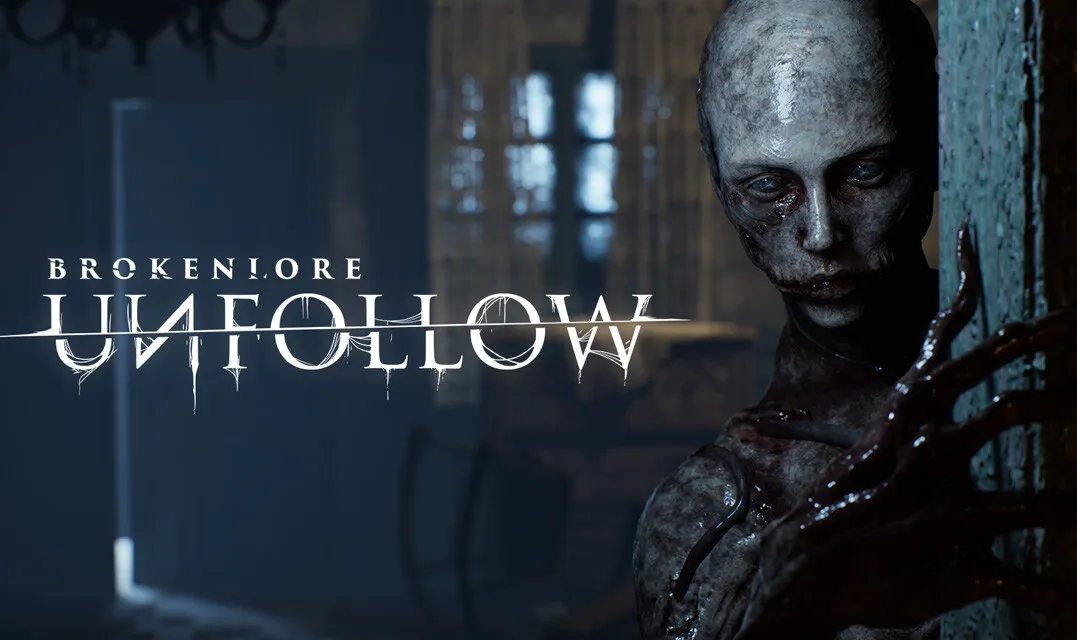

BrokenLore: UNFOLLOW puts players in control of Anne, a young woman trapped in a nightmare dimension that reflects her internal struggles. The place she’s stuck in externalizes her history: school bullying, an abusive home life, and the long shadow those experiences cast into adulthood.
Her self-esteem is tightly connected to her appearance and to the attention she hopes to gain online. The story unfolds across seven chapters, with each chapter anchored to a specific traumatic event from her teenage years. The game turns those memories into literal threats. Past pain takes shape as monsters that stalk the player, and Anne’s demons often resemble the people who hurt her.
That setup gives the horror a clear purpose. The shifting spaces mirror a self-image that keeps warping under pressure. Social media validation sits in the foreground as a driving theme, pushing Anne toward approval inside a world that keeps trying to break her down. The player learns how body image anxiety and parental pressure feed the monsters she has to survive. The result is a story focused on the psychological toll of constant scrutiny, of living under eyes that judge and measure every perceived flaw.
Visuals of a Fractured Mind
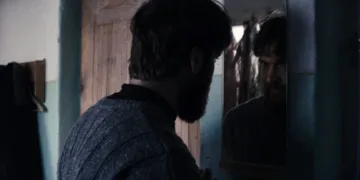
The game’s visual identity shifts hard across its seven chapters. Early areas lean on cramped domestic spaces, then the scenery veers into abstract horror, including a prison made of flesh. Lighting carries a lot of the emotional weight. Dim hallways and flickering bulbs sell isolation, and the move from grounded locations to surreal spaces lands with a sharp snap that keeps the player uneasy.
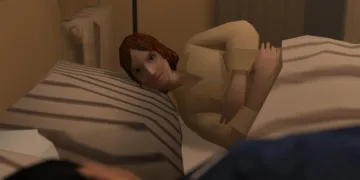
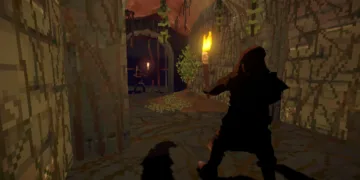
One chapter pivots into a polygonal style that echoes the look of horror games from original 32-bit consoles. That stylization changes the texture of fear: less about fine detail, more about angular shapes and harsh silhouettes. Environmental design does careful work with object placement to build dread, and shadows contribute heavily to the mood. Some shadow effects look pixelated or blocky in spots, and those rough edges can interrupt the atmosphere when you notice them.
Collectibles provide key context. Comic panels and handwritten notes scattered through the environments spell out how Anne’s past connects to her present. They ground the nightmare in specific details of school life and the cruelty of her bullies, giving the player something concrete to hold onto inside the surreal spaces. Performance holds steady on PS5, with a stable frame rate. Visually, the game sticks to a consistent B-movie horror look that matches the story’s darkness and leans into its unsettling tone.
The Mechanics of Survival and Avoidance
Play follows a tight loop: exploration, stealth, simple puzzles, and threats that force movement through narrow corridors. Monsters pressure you into chase sequences where Anne runs through maze-like layouts. Those moments highlight the controls. Anne’s movement feels heavy, and turning is slow. When a creature closes in, that turn speed makes quick course corrections difficult, so the chase tension often comes from wrestling with momentum instead of clean, responsive dodges.

Anne’s smartphone acts as her main tool. It can fire an electrical jolt to stun mannequins, and it can activate certain objects. Functionally, it becomes the rare exception to the game’s helplessness, giving you one small way to interrupt danger rather than only fleeing. Enemy behavior ties to line of sight, so hiding matters. Crouching behind tables and furniture can keep you unseen, and the spaces are built to encourage quick reads of cover and angles.
Progress often hinges on locating key items in dark rooms, then returning to earlier areas to use a newly found object on a locked door. That backtracking structure reinforces the feeling of being trapped in repeating patterns. Survival pressure comes from several small systems working together. The game uses a three-hit health setup, so a single mistake does not end the run. Enemies tend to knock Anne back on contact, which opens a window to escape if you can regain control quickly.
Interaction friction becomes part of the stress. Item prompts demand precise positioning, and the prompt sometimes fails to appear when you stand slightly off the intended spot. In slower moments that reads as clunk. In chase sequences it raises the stakes, because a missed interaction can cost precious seconds. Flashlight battery management adds another layer of urgency. Light is a resource with a limit, and the game pushes you to move decisively through darkness instead of lingering to feel safe.
Digital Toxicity and Sensory Horror
Social media is built directly into the interface. A follower counter stays visible, reacting to actions and story progress. Text comments pop up during play to mimic a live-stream chat. Many of those comments are vicious, reflecting internet cruelty and the way that constant feedback erodes Anne’s mental health. As a mechanic, it frames the player’s movement through the world as a performance under judgment. The horror becomes social pressure you can’t pause, because the game keeps reminding you that someone is watching.

Audio supports that pressure with clear signals. Loud music kicks in to mark the start of chases, using high-intensity orchestral tracks and sharp horror stings to spike adrenaline. Jump scares show up frequently in the early chapters, keeping tension high through repetition and timing.
PS5 DualSense features contribute tactile detail. The controller can communicate small sensations like the steady vibration of a sleeping cat, and the speaker can carry sounds like a phone ringing. Those touches make the fear feel closer to the player’s hands, adding physical presence to scenes that might otherwise stay on the screen.
The game also approaches eating disorders with care in its dialogue, using audio cues and visual symbolism to communicate pain. Runtime sits around three hours, which keeps attention on the central message and prevents the themes from getting diluted through padding.
The Review
BrokenLore: UNFOLLOW
BrokenLore: UNFOLLOW succeeds as a psychological study of modern trauma and the weight of digital eyes. It handles sensitive topics like body image and bullying with genuine care. The game is less successful as a mechanical experience. The clunky movement and frequent jump scares occasionally hinder the atmospheric tension. Players who value a meaningful narrative will find plenty of reasons to stay. Those who require polished survival systems might feel frustrated by the execution. It remains a brave attempt to use horror as a tool for empathy.
PROS
- Impactful exploration of social media toxicity and childhood trauma.
- Creative visual shifts and varied environmental design.
- Effective use of the follower counter to build psychological pressure.
- Strong DualSense integration that enhances physical immersion.
CONS
- Heavy and imprecise movement controls during chase sequences.
- Overreliance on loud jump scares in the early chapters.
- Technical inconsistencies with shadow quality and item interaction.
- Backtracking can feel repetitive due to narrow level layouts.