

























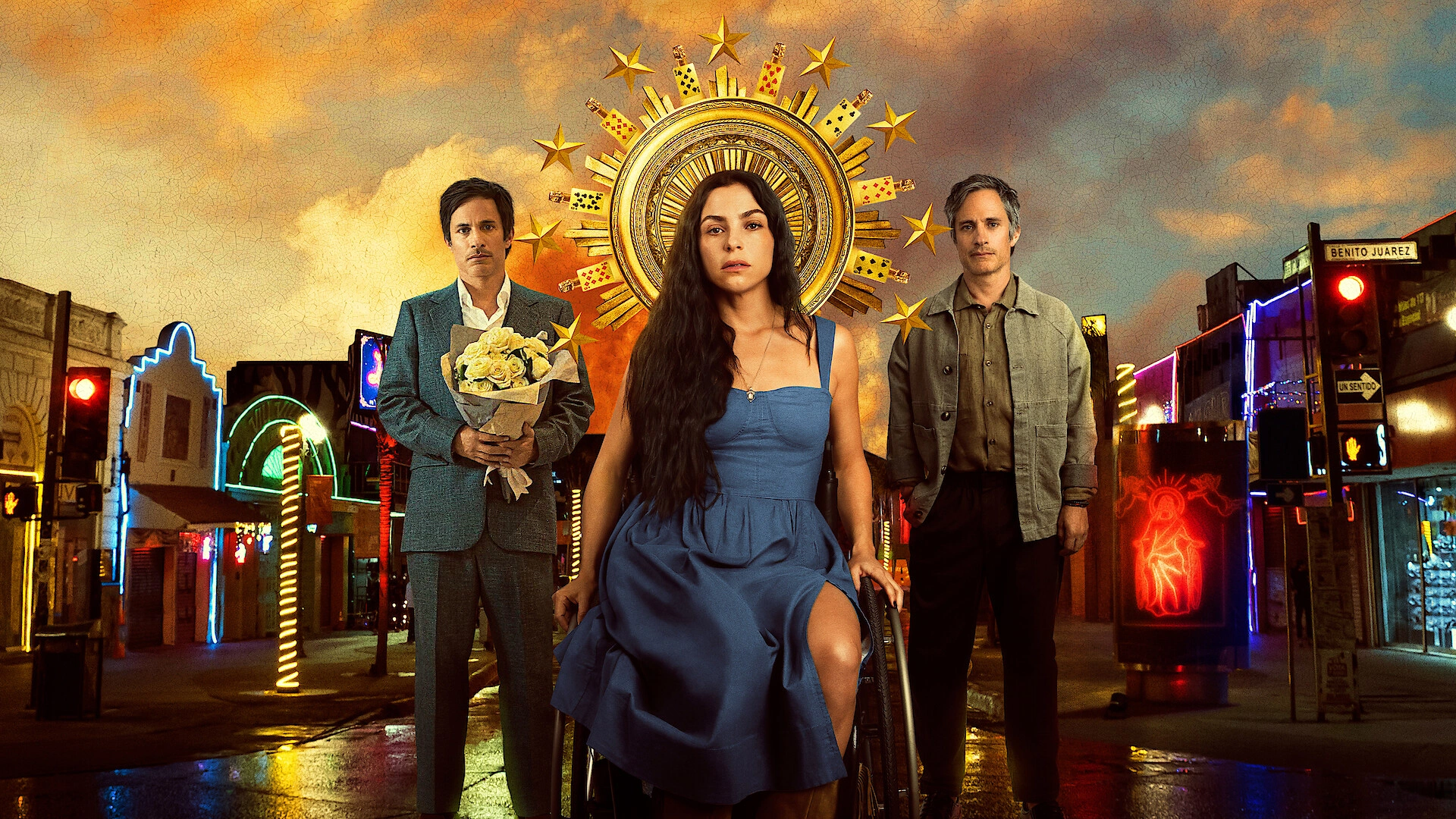

Television loves a disabled protagonist it can polish into virtue. Santita rolls in from the opposite direction, usually with a debt, a drink, a bad decision, or an excellent insult close behind. The seven-episode Mexican Netflix series, created by Luis Cámara and Gabrielle Galanter and directed by Rodrigo García, gives María José Cano a nickname loaded with irony.
Played by Paulina Dávila, she is a Tijuana gynecologist known as Santita, a “little saint” whose work often earns the title and whose private life keeps trying to get it revoked. She helps a Haitian woman give birth on the side of the road. She also gambles, drinks, sleeps with the hospital administrator Mauricio, and performs illegal abortions when desperation, compassion, and cash all arrive at the same appointment.
That last part matters. The series never asks viewers to admire Santita by sanding her down. Her clinic is financially strained because she treats women who need care and cannot always pay. Her gambling addiction is not a cute quirk. Her sarcasm is funny until it becomes a weapon. This is character writing with teeth, which is always preferable to the inspirational poster version. Those posters never have racetrack debt.
The Body as Plot, Joke, and Argument
Santita’s wheelchair is part of her daily reality, yet the show refuses to make it her entire dramatic purpose. Before the accident, friends remember María José as careful, demure, rule-following. Afterward, she becomes sharper, riskier, and harder to place inside anyone else’s comfort zone. The show knows the usual trap here: turn disability into either tragedy or nobility, then call the job done. Santita is allergic to that trap, possibly because she would rather bet against it.
The series is at its strongest when it treats access as a practical issue before it becomes a speech. A coffee machine placed too high, a clinic space that requires adjustment, a public environment that makes her movement harder than it needs to be, these details do quiet work. They show how the world inconveniences disabled people and then acts surprised when those people develop a short temper.
Its frankness around sex gives the show its sharpest nerve. Santita’s spinal injury has changed her relationship with pleasure, and her pursuit of orgasm is written with a rare mix of comedy, frustration, and emotional exposure. Her scenes with Mauricio are funny because they are transactional and uncomfortable in ways both characters understand.
He wants romance, or at least the promotion package that comes with repeated intimacy. She wants control over a body that has already been transformed without her permission. The bedroom, for once, gets to be a medical, emotional, and comic space at the same time. Television should try that trick more often and panic less.
The Ex at the Worst Possible Time
The melodrama engine arrives through Cecilia, a wealthy patient who comes to Santita seeking an abortion. Santita hesitates because the request feels risky, then agrees when the money becomes useful and Cecilia’s situation becomes harder to dismiss. An allergic reaction sends Cecilia to Sacred Heart hospital, and there the old wound walks back into the frame: Alejandro, Santita’s former fiancé, now Cecilia’s husband.
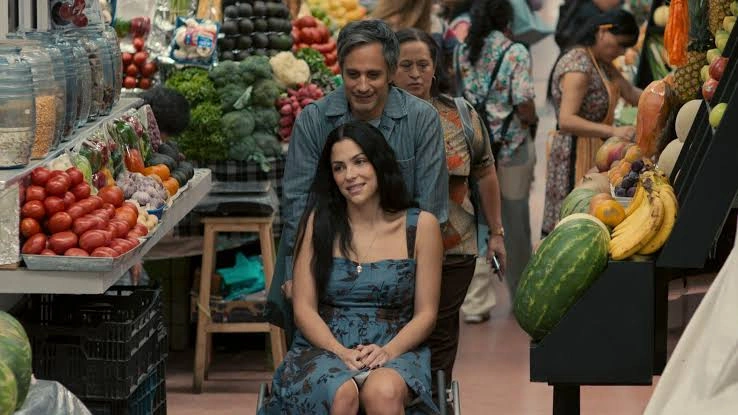
Gael García Bernal plays Alejandro as a man whose body has already started lowering its voice. He looks gaunt, tired, gray around the edges, and his speech has the careful rhythm of someone saving energy. His return carries the obvious charge of lost love, since Santita left him at the altar after her accident with only a letter behind her. The better twist is that he has not returned simply to ask for another chance. He has a terminal illness, and what he wants from Santita is help dying with dignity.
That request gives the series its real pressure. Abortion and assisted death are not placed into the story as debate-club topics. They arrive through bodies in crisis, laws that lag behind suffering, and doctors asked to carry moral weight with a straight face. Santita has helped rape survivors and young girls when the legal line failed to match the human emergency. Alejandro’s request forces the same question from the other end of life: who gets final say over a body when pain has taken the microphone?
The romance is tender, but it is also the show’s least consistent thread. Dávila and Bernal have warmth together, and their shared regret gives their scenes a bruised softness. Still, the series sometimes explains the ache better than it makes us feel it. For a story about the one who got away, the one occasionally remains within reasonable commuting distance.
Performances That Refuse the Halo
Dávila carries Santita with a performance full of quick turns. Watch how she shifts from clinical authority with a patient to defensive comedy with her family to panic when Alejandro reappears. She never plays Santita as a symbol. She plays her as a person who has learned that charm can buy time, sarcasm can end a conversation, and recklessness can impersonate freedom for a while.
The preparation shows without announcing itself. Dávila’s physical work in the wheelchair feels lived-in rather than decorative, and her northern Mexican accent gives Santita a local texture that keeps the character from floating in generic streaming-land. Her best scenes are not the big emotional ones, useful as those are. They are the smaller beats: the way she tests a room before deciding how cruel to be, or the half-second after a joke when the pain underneath almost gets caught on camera.
Bernal gives Alejandro a muted gentleness that works against the easy version of the role. Ilse Salas, as Cecilia, avoids turning the wife into an obstacle with nice hair, which is harder than it sounds. Erik Hayser’s Mauricio brings a needy impatience to Santita’s present-tense life, making him less a romantic rival than a reminder that desire does not automatically become intimacy. Very annoying for him. Very useful for the show.
García’s direction lets scenes breathe. The camera often holds on faces after the clean dramatic beat has passed, catching embarrassment, irritation, or relief in the little pause afterward. The dream sequences, especially Santita roller-skating to Donna Summer’s “I Feel Love,” externalize feelings she would sooner mock than confess. It is an unsubtle song choice, sure, but sometimes the subconscious hires a DJ.
Tijuana Without the Tourist Brochure
The series uses Tijuana as social terrain, not scenery. Migration, reproductive rights, class division, corruption, border anxiety, family gossip, and medical precarity all press against Santita’s work. The show is careful to avoid the laziest outside view of the city as either cartel backdrop or adult-playground cliché. Its Tijuana has clinics, racetracks, hospitals, family property disputes, rich patients with limited options, poor patients with none, and a doctor whose ethics often look suspiciously like improvisation.
Some subplots fight for air, especially the family land conflict and the gambling spiral, which both deserve more room than a seven-episode season can comfortably give them. The pacing also asks for patience, particularly when the romance slows the sharper medical and social material. Yet the series keeps finding strong scenes because its central character keeps making choices that cannot be filed neatly under good or bad.
Santita is at its best when it lets its heroine misbehave without turning misbehavior into branding. She is generous, selfish, reckless, skilled, wounded, funny, and frequently one bad idea away from needing her own intervention. Finally, a little saint with terrible timing.
The Mexican television drama series Santita premiered globally on Netflix on April 22, 2026. This seven-episode miniseries follows María José “Santita” Cano, a doctor left wheelchair-bound following a car accident who walked away from her wedding day. Two decades later, her former fiancé unexpectedly returns to her life with a disruptive request that forces her to reexamine past choices. You can stream the complete first season exclusively on Netflix.
Where to Watch Santita Online


Full Credits
Title: Santita
Distributor: Netflix
Release date: April 22, 2026
Rating: TV-MA
Running time: 46 minutes per episode
Director: Rodrigo García
Writers: Luis Cámara, Gabrielle Galanter
Producers and Executive Producers: Gerardo Gatica, Leandro Halperin, Rodrigo García, Luis Cámara, Gabrielle Galanter
Cast: Paulina Dávila, Gael García Bernal, Ilse Salas, Erik Hayser, Harding Junior, Hector Kotsifakis, Mauricio García Muela, Ana Layevska, Álvaro Guerrero
Director of Photography (Cinematographer): Marc Bellver
Editors: Yibrán Asuad
Composer: Tomás Barreiro
The Review
Santita
Santita gives its title character the rare courtesy of being messy, horny, funny, selfish, brilliant, and deeply wounded in the same half hour. Paulina Dávila carries the series through its bolder swings, from roadside childbirth to gambling debts to medical choices nobody gets to make cleanly. The romance with Alejandro sometimes lacks the ache it keeps promising, but the show’s sharpest scenes treat the body as a battleground of law, desire, memory, and control. Small miracle: it makes moral ambiguity look like appointment television.
PROS
- Paulina Dávila’s layered lead performance
- Bold disability and sexuality writing
- Strong ethical medical dilemmas
- Tijuana shown beyond cliché
- Dark humor with bite
CONS
- Romance sometimes feels underpowered
- Some subplots feel crowded
- Slow pacing may test patience
- Alejandro’s illness can feel familiar