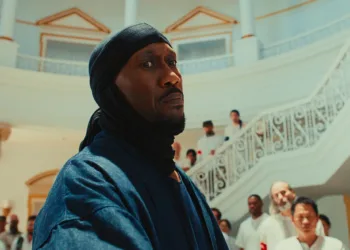









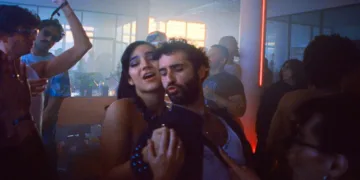



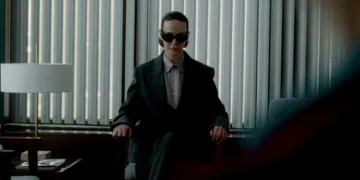















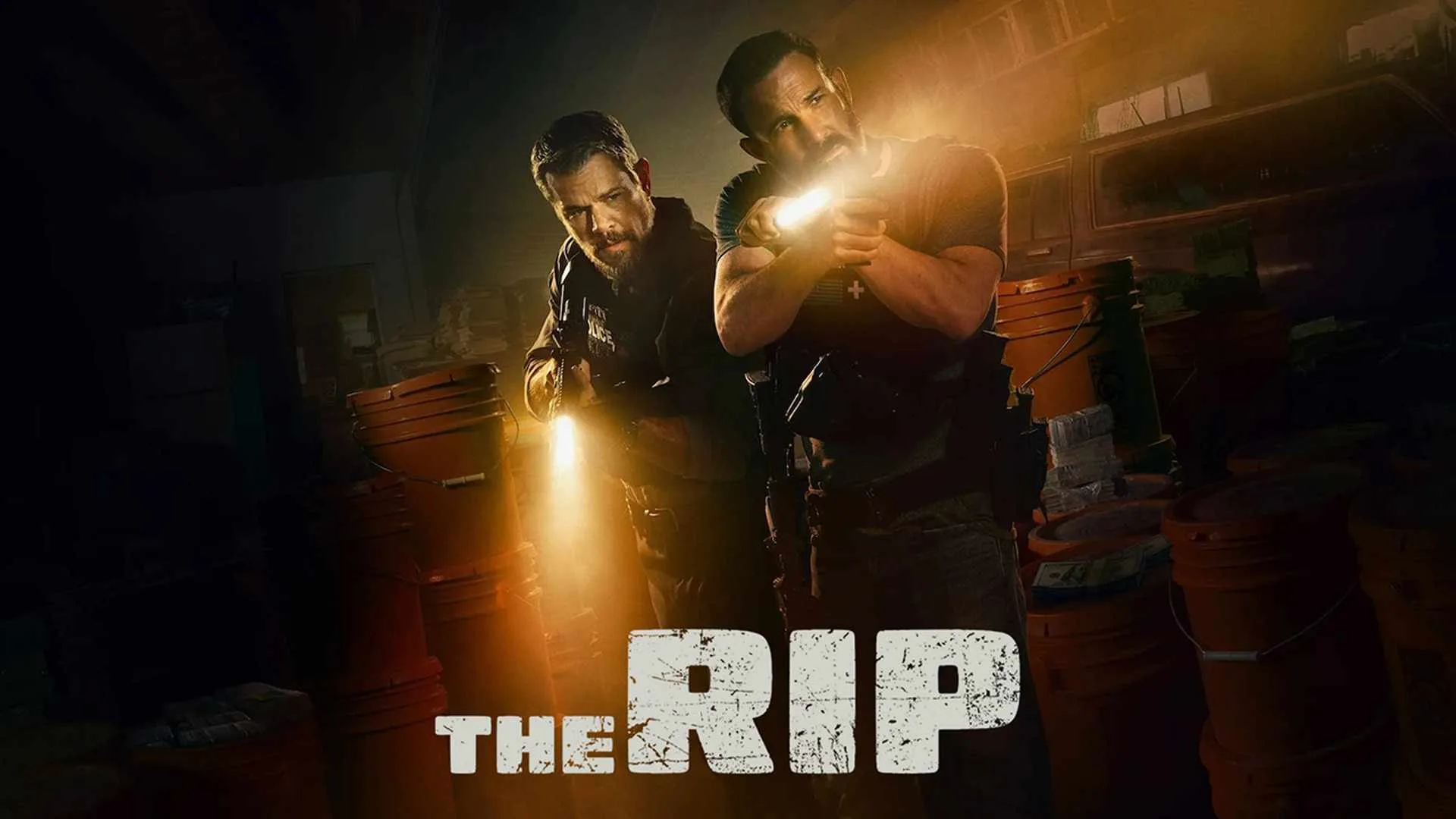

Joe Carnahan stages a collision between professional duty and private desperation in The Rip. The screen feels damp with Miami heat. An abrupt execution removes Captain Jackie Velez from play. That rupture leaves the Tactical Narcotics Team rudderless. Lieutenant Dane Dumars assumes command of a squad weathered by endless urban operations.
Their procedure is blunt: seize the cash. Leave the bodies. A stash house in Hialeah becomes the fulcrum. Finding twenty million dollars in a dusty attic turns ethics into a problem of arithmetic. The money waits. It exerts a gravity. Each officer reads a different exit in the same pile.
The Architecture of a Siege and the Ticking Clock
The raid proceeds with clinical detachment. Juan Miguel Azpiroz records the entry in wide, expressionistic frames. Camera movement is economical; shots combine distance and precision to map the terrain of the house. Wilbur, the narcotics dog, signals a concealed void in the attic. The discovery of twenty million dollars recalibrates group dynamics. The house compresses into a cage. Cartel soldiers form a perimeter. The light grows denser. A procedural rule compels officers to count the cash before leaving. That requirement produces a lethal pause. Time becomes an accomplice. Greed takes shape in the silence.
The counting room converts into a chamber of calculation. Quiet makes room for calculations of betrayal. Paranoia circulates like a contagion. Each officer begins to tally shares. They set the value of a badge beside the heft of the bills. Desi sits and watches. She functions as witness and archivist. She knows the house and the people who pass through it. Her guarded posture implies a history of surviving near the edges of legality.
Pressure builds from outside. Local Hialeah police arrive with territorial questions. Federal agents Del and Matty Nix appear as an additional hazard. These external presences heighten the risk of exposure. The team conceals intent and rehearses deception as time runs down. The house acquires the tone of a tomb for integrity. Every knock takes on judicial cadence. Opportunity becomes a trap.
Blood Ties and the Physicality of Exhaustion
The partnership of Dane Dumars and J.D. Byrne supplies the film’s emotional ballast. Their shared history feels dense. It began in the Boston Police Department and carries into Florida humidity. Dane won the promotion J.D. once sought; that grievance hums beneath their dialogue. Matt Damon renders Dumars with a hollow, controlled stillness. He is a man shaped by the loss of his son. Leadership arrives in methodical gestures. Grief informs hesitation.
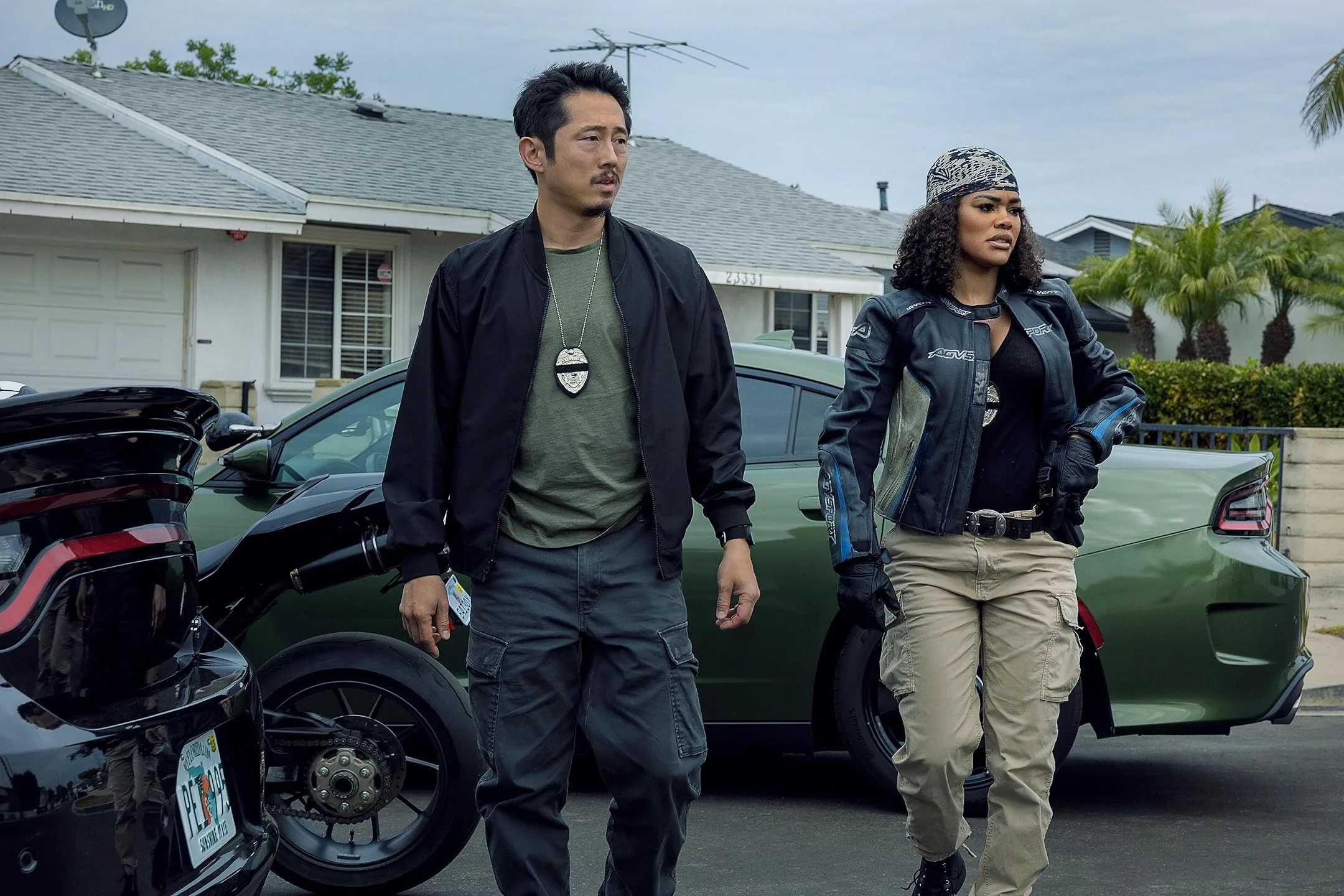
Ben Affleck furnishes Byrne with combustible motion. He moves in jagged arcs and erupts in sudden bursts. His secret involvement with the murdered captain gives his anger a private edge. He functions as the unit’s volatile center. The supporting ensemble—Mike Ro, Numa Baptiste, Lolo Salazar—supplies tonal variety. They register different textures of desperation. Underpay and lack of recognition thread through their silences. Bills stack behind their faces.
Physical rapport anchors the film. Damon and Affleck occupy shared beats with practiced synchronization. Their bodies carry the memory of long service. They argue like brothers. Their chemistry matters. It lends weight when trust frays. A single look communicates decades of mutual history. Betrayal reads as tragedy because the unit has been domestic in its rhythms. It is a family. That family is poised to consume itself.
Neon Shadows and the Lineage of the Thriller
Carnahan draws from 1970s neo-noir grammar. The film summons blue-tinged nightscapes that recall Michael Mann’s work. Street lamps flicker with intention. A pulsing synth score supplies a constant low-frequency anxiety. These elements make shadows tactile. The cinematography favors wide framings during violent set pieces. Removing the camera from the immediate carnage forces attention on tactical geometry and composition.
Wide perspective emphasizes character isolation. Men become small figures inside a vast, indifferent cityscape. Dialogue adheres to a terse, aggressive register. Speech comes in short bursts. Posture and chest-forward stance articulate an inherited masculinity. That performance functions as a shield against recognition of moral decay.
The final act moves away from the counting room’s claustrophobia and into a conventional action arena. Car chases substitute for the earlier psychological focus. Violence broadens in scale. Pacing shifts. Depth yields to kinetic release. The transition reads abrupt. It resembles a concession to familiar genre momentum. Visual rigor persists. Light remains cold; the camera holds its angles. The escalation tracks the unpredictability of choices made in the house. The controlled architecture of the raid dissolves into messy street reality.
The Acronyms of Survival and Systemic Decay
Letters tattooed across Dane’s fingers function as a private moral ledger. The ink poses a question for which the film offers no easy solution. The unit debates the theft with pragmatic clarity. They cite low wages. They register public disrespect. They describe themselves as a barrier between order and chaos. That self-image rationalizes transgression. A sense that the system has already failed them underwrites justification.
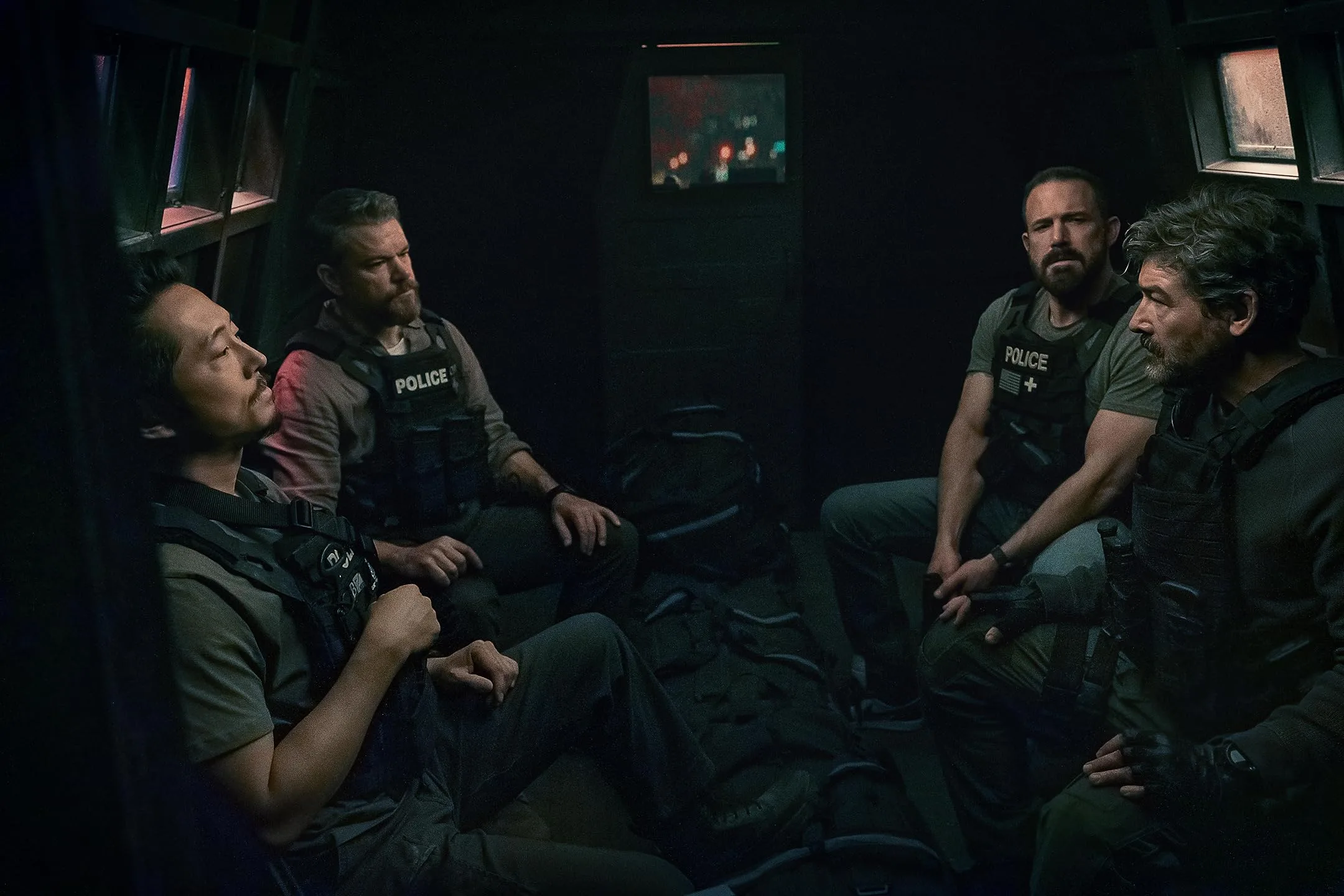
The boundary between law and cartel blurs. The TNT unit mirrors the tactics of the criminals they pursue. They apply identical force. They exhibit the same appetite for gain. The suggestion of an internal killer frames corruption as embedded rather than exceptional. It operates like an institutional habit. Budget cuts and internal probes cultivate a feeling of abandonment. The characters sense the game is rigged.
They elect to author their own rules. The film examines the price exacted by that decision. Corruption appears as an adaptive mechanism in a compromised structure. Each choice pushes the officers further from light. The badge shifts from armor into exposure. The movie renders law as a malleable instrument. It becomes something wielded by those who possess the leverage to do so.
A whispered aside: the whole enterprise treats morality as accounting. It is bleak. It is precise. And it asks the viewer to reckon.
The Rip is an intense crime thriller that premiered globally on Netflix on January 16, 2026. Directed by Joe Carnahan, the film follows a group of Miami narcotics officers whose internal loyalties fracture after discovering a massive stash of hidden cartel cash. This high-stakes drama marks a significant reunion for Matt Damon and Ben Affleck, who also served as producers through their company, Artists Equity. As of today, January 23, 2026, the film is available for streaming exclusively on Netflix, where it has quickly ascended the platform’s Top 10 list following its debut last Friday.
Full Credits
Title: The Rip
Distributor: Netflix
Release date: January 16, 2026
Rating: R
Running time: 133 minutes
Director: Joe Carnahan
Writers: Joe Carnahan, Michael McGrale
Producers and Executive Producers: Matt Damon, Ben Affleck, Dani Bernfeld, Luciana Damon, Michael Joe, Kevin Halloran, Peter Luo
Cast: Matt Damon, Ben Affleck, Steven Yeun, Teyana Taylor, Sasha Calle, Catalina Sandino Moreno, Scott Adkins, Kyle Chandler
Director of Photography (Cinematographer): Juan Miguel Azpiroz
Editors: Kevin Hale
Composer: Clinton Shorter
The Review
The Rip
The film operates as a biting exercise in claustrophobic ethics. The rapport between Damon and Affleck provides a gravity that anchors the narrative. Joe Carnahan honors the 1970s aesthetic while exposing the rot behind the badge. The shift into generic action feels like a surrender. Still, the precise performances and chilly atmosphere make this a worthy entry.
PROS
- Lead chemistry
- House-bound tension
- Moody lighting
CONS
- Conventional finale
- Wasted supporting cast