
























![Kingdom Hearts Collection [I-III] Review](https://gazettely.com/wp-content/uploads/2026/10/Kingdom-Hearts-Collection-I-III-1-360x180.webp "Kingdom Hearts Collection [I-III] Review: KHII Holds Steady as Newer Entries Fluctuate 40")
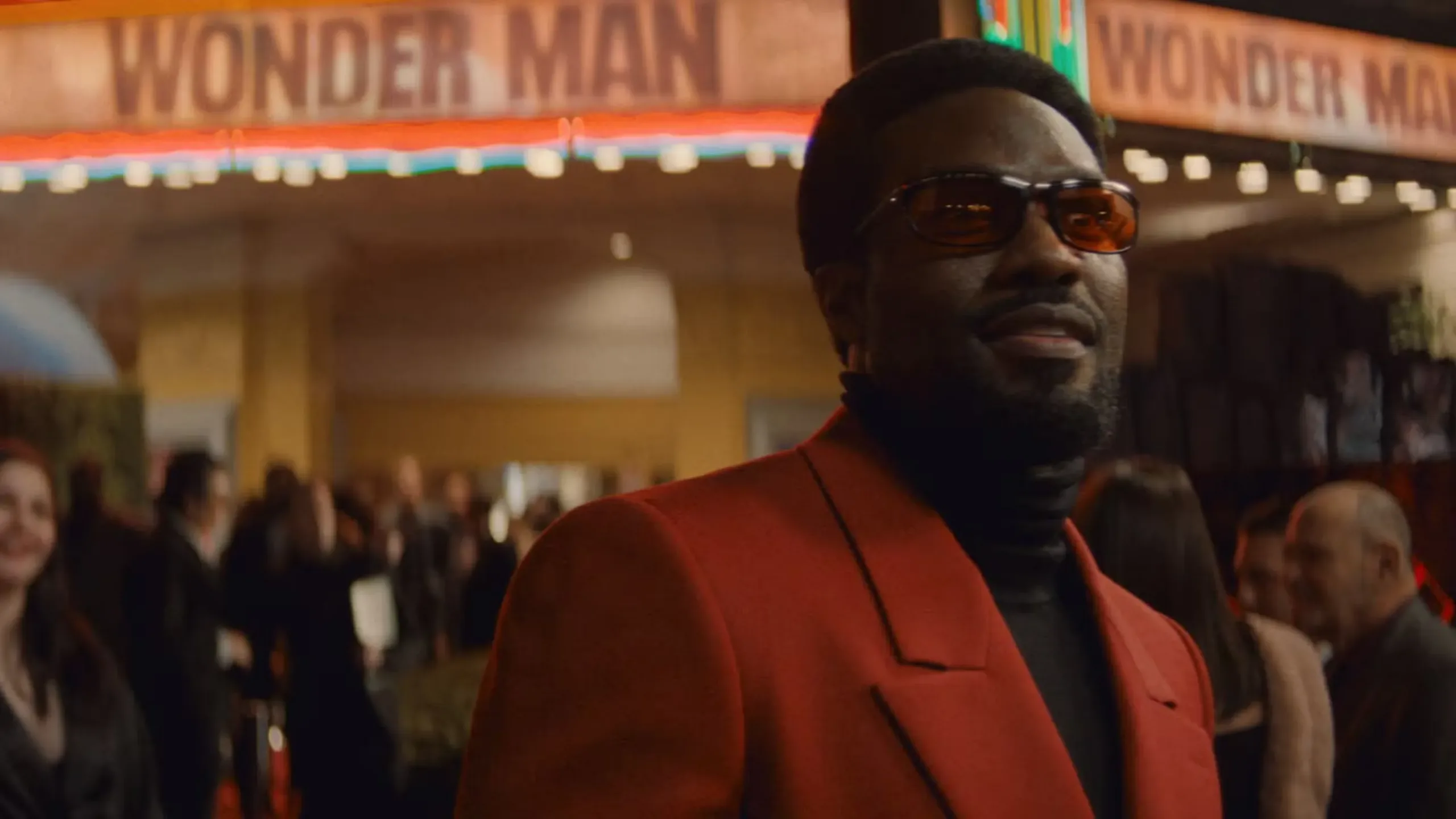

Wonder Man plants its flag in an MCU corner that feels almost suspiciously terrestrial. Simon Williams (Yahya Abdul-Mateen II) is an aspiring actor with secret ion-based abilities, and the series treats that power less like a gift and more like an HR issue with sparks. Los Angeles becomes the real arena: auditions, cheap trailers, stale coffee, and the private dread of being seen at the wrong moment by the wrong person (or worse, by someone with a badge and a form to file).
The Marvel Spotlight banner matters here because the season keeps returning to personal stakes and character dynamics. Eight episodes, half-hour chapters, and a steady refusal to pretend that cosmic scale is the only kind of scale that counts. Simon wants a breakout role in a remake of a cult classic. He also wants to stay out of federal custody. These goals do not harmonize.
Trevor Slattery’s arrival (Ben Kingsley) turns the story into something stranger and sweeter than expected: a mentorship built on performance as a survival skill, with the looming sense that every line reading is also a liability assessment.
The Burden of the Internal Earthquake
Simon suffers from what I’ll call Thespian Dysphoria, a condition in which the mind gets so cluttered with Method-acting debris that simple existence becomes a rehearsal. His ion abilities are the worst kind of superpower: the kind that ruins your day. Mood swings trigger Los Angeles into localized baby earthquakes, which is either a brilliant literalization of the “sensitive artist” trope or a very expensive cry for help (the city’s insurance adjusters deserve their own spinoff).
In another genre, this would make him a demigod. Here, it makes him a walking violation. He sees his power as a hurdle to professional dreams, and the show treats that belief with a mix of empathy and quiet mockery. Simon wants “Acting” with a capital A, and the capital letters weigh him down like stage sandbags.
He’s also a textbook overthinker. He demands script changes for two-line roles. He builds elaborate backstories that make casting directors look at him the way you look at a stranger who starts a conversation by explaining their dreams in detail. His greatest antagonist may be himself, though the Department of Damage Control stays close enough to feel like a second heartbeat.
His personal life is similarly cracked. His relatives dismiss the acting path as laziness, which is its own small tragedy: the ancient misunderstanding that creative work is either effortless or fraudulent. His relationship with his girlfriend (Olivia Thirlby) becomes a quiet casualty of his self-obsession, the kind of slow fade that doesn’t require a big fight to qualify as a breakup.
Simon’s secret identity conflict plays like anxiety with paperwork attached. This is not the romanticized hero burden. It’s the crushing fear that one public outburst could end his career and his freedom in the same breath. He performs in audition rooms, and he performs normalcy in daily life, as if “being fine” is the toughest role in town. Every audition becomes a physics gamble.
The Veteran and the Bromance of Survival
Trevor Slattery returns as something more interesting than a callback. Kingsley plays him as a man who has survived the industry’s most brutal cycles and learned to treat performance as a flotation device. Trevor is no longer a punchline. He’s a veteran who understands that reinvention is less a choice than a necessity (Hollywood forgives many sins, then invoices you for the privilege).

Their relationship becomes a true Two-Hander, grounded in a shared devotion to the craft that borders on religious. Watching them trade monologues in a dingy apartment is one of the season’s best ideas: two lonely actors using language as shelter, turning a cramped room into a stage because the alternative is silence.
Trevor’s approach to life is equal parts charm and scar tissue. Accents and eccentricities are not mere quirks. They are a psychological shield. He teaches Simon a harsh lesson dressed up as acting advice: authenticity can be dangerous; a good performance keeps you alive. It’s funny in the way grim truths sometimes are (the laugh catches in your throat, then pretends it didn’t).
And then the rot reveals itself. Trevor is secretly working with the Department of Damage Control to monitor Simon. The mentorship becomes tragic irony: he finds something like genuine connection, then learns it’s wired for surveillance. Their bond turns into Codependency in a Cage, two performers hunting for an audience without realizing the most attentive audience is a group of federal agents with a warrant and a budget line.
I admired how this twist reframes earlier warmth, then I resented it for poisoning the sweetness. Then I admired it again for being honest about how systems operate. Affection can exist inside exploitation. The show doesn’t let you keep a clean opinion.
The Doorman Clause and the Blacklist
The series introduces The Doorman Clause, a legal barrier that keeps superpowered individuals out of major productions. It’s an idea with historical teeth, echoing the Hollywood Blacklist where performers were barred for political affiliations. Here, an Ion Scare replaces the Red Scare, and the substitution lands because fear doesn’t require originality. It only requires a target.
A standout black-and-white flashback episode gives the clause a genealogy, with Byron Bowers and a surprisingly cynical Josh Gad anchoring the sequence. The aesthetic shift does more than look cool. It suggests a repeating cycle: culture panics, institutions codify panic, artists pay the price, and the public tells itself it’s all for safety.
Back in the present, Simon’s Audition Grind is depicted with unromantic patience. Cramped hallways filled with rivals who look exactly like him. The agent Janelle, a whirlwind of exasperation and encouragement, trying to keep Simon functional without endorsing his worst impulses. The glamour myth is replaced by cheap trailers and coffee that tastes like regret.
Then the show turns the knife toward IP filmmaking through the fictional Wonder Man reboot inside the show. Director Von Kovak stands in for a certain species of “visionary,” the kind who hides behind buzzwords while manufacturing corporate product. The series takes a swing at the Superhero Industrial Complex from the inside, questioning why audiences worship the mask while the people building the work remain disposable.
It’s meta-commentary that stays sharp without turning smug, which is harder than it sounds (self-awareness has a way of becoming self-congratulation). Still, I caught myself wondering if the show enjoys the critique a little too much, like a studio executive laughing at a joke made at their expense because it still sells tickets.
Systemic Detention and the New Panopticon
The Department of Damage Control operates as the season’s primary antagonist, and that choice is quietly chilling. Arian Moayed plays Agent Cleary with smarmy bureaucratic coldness, the kind that makes cruelty feel like procedure. The DODC treats security as a commodity. They want enhanced individuals in a state-of-the-art prison because the prison needs bodies to justify the budget. The parallel to real-world systems that prioritize incarceration over safety is hard to miss.
This conflict is systemic, not physical. There are no sky-beams. No galactic fistfights. Physical fights are rare, and that restraint becomes a statement: the real violence happens in interrogation rooms, legal loopholes, and the slow tightening of policy. The “villain” is a government agency following a spreadsheet, which might be the most plausible monster in the franchise.
Simon becomes a target less for what he does and more for what he is. The show humanizes the Other by making the threat feel mundane. A badge, a quota, a polite tone that never rises while it ruins your life. The DODC can feel like a Narrative Parasite, a shared-universe requirement that intrudes on the character study, and yet it also supplies the season’s sharpest dread.
I wanted the story to stay purely personal. I also liked how the intrusion argues that personal life is rarely allowed to stay personal. Institutions love a special case. They love it enough to build a cage around it.
Intimate Spectacle and the Arrogance of Success
Destin Daniel Cretton brings intimate drama to the foreground, favoring character study over blockbuster spectacle. The show has a “prestige” sensibility without insisting on prestige posture (no one seems allergic to a joke, which helps). Each half-hour episode plays like a diary chapter, paced with sitcom rhythm while carrying something closer to tragedy underneath.
That tonal tension is the season’s engine. Los Angeles as a stage. Simon as a man split into performances, trying to keep one mask on while another slips. The series keeps asking what happens when a person becomes their own brand, then becomes trapped inside it.
Midway through, Simon’s arc makes a turn that’s unpleasant in a purposeful way. As he gains a taste of success, his idiosyncrasies harden into arrogance. He grows self-absorbed, demeaning, harder to root for. The show toys with the audience’s empathy: after investing in his struggle, you’re asked to sit with the possibility that success might make him someone you can’t stand. That choice risks alienation, and it also feels truthful (fame doesn’t invent flaws; it funds them).
The season stays mostly standalone until the final stretch, keeping wider MCU connectivity minimal until the last fifteen minutes. It lets the story breathe, focused on Simon’s growth, or lack of it, rather than serving as a setup machine. The ending does feel slightly rushed, though, as if the narrative suddenly remembers it has a shared universe to report back to.
And yet the quieter moments linger: the apartment monologues, the audition corridors, the ever-present threat of discovery, the way performance becomes both salvation and trap. A Micro-Epic, then, calibrated to the space between takes, where the applause isn’t loud enough to drown out the shaking ground.
Marvel Television’s Wonder Man is set to premier as a complete eight-episode miniseries on January 27, 2026, exclusively on Disney+. Shifting away from the high-stakes multiverse battles of its contemporaries, the series operates under the Marvel Spotlight banner, offering a grounded and satirical look at the film industry through the eyes of an aspiring actor with hidden superpowers. It marks a significant tonal departure for the MCU, blending a workplace comedy vibe with a character-driven drama.
Full Credits
Title: Wonder Man
Distributor: Disney+
Release date: January 27, 2026
Rating: TV-14
Running time: 30–35 minutes per episode (8 episodes)
Director: Destin Daniel Cretton, James Ponsoldt, Tiffany Johnson, Stella Meghie
Writers: Andrew Guest, Paul Welsh, Madeline Walter, Zeke Nicholson, Anayat Fakhraie, Roja Gashtili, Julia Lerman, Kira Talise
Producers and Executive Producers: Kevin Feige, Stephen Broussard, Jonathan Schwartz, Louis D’Esposito, Brad Winderbaum, Destin Daniel Cretton, Andrew Guest, Brian Gay, Jennifer Booth, Trevor Waterson
Cast: Yahya Abdul-Mateen II, Ben Kingsley, X Mayo, Zlatko Burić, Arian Moayed, Shola Adewusi, Demetrius Grosse, Béchir Sylvain, Kameron J. Meadows, Olivia Thirlby, Byron Bowers, Joe Pantoliano, Josh Gad, Ed Harris
Director of Photography (Cinematographer): Brett Pawlak, Armando Salas
Editors: Gina Sansom, Nena Erb, Cassie Dixon
Composer: Joel P. West
The Review
Wonder Man
The series functions as a pointed autopsy of the celebrity apparatus. It captures the human pulse within a corporate machine that often prefers pulse-less spectacle. By treating superpowers as a workplace hazard, the story achieves a sincerity missing from most modern myths. It serves as a necessary critique of our own obsession with the curated image.
PROS
- Bold subversion of typical genre tropes.
- Excellent chemistry between the lead performers.
- Sharp, biting satire of the industry.
- Intimate focus on character psychology.
CONS
- Slower pacing during the middle chapters.
- Simon’s shift toward arrogance can feel alienating.
- Lack of traditional action for certain viewers.