




























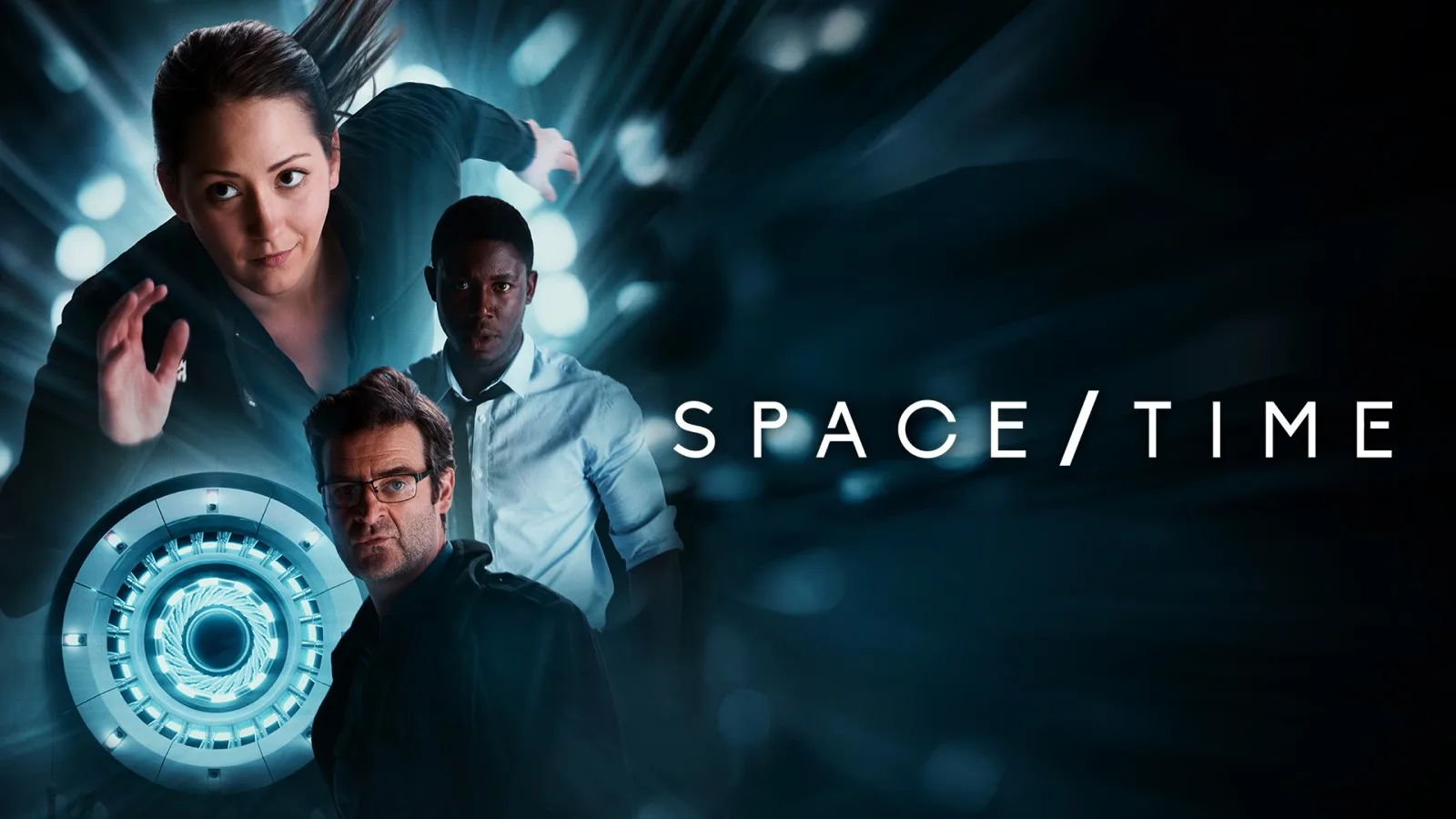

The year 2033 opens on a planet close to environmental collapse. Michael O’Halloran’s Space/Time stages humanity’s future on a single technological wager: perfect an engine that bends physics to permit interstellar travel. The film starts with a high-stakes experiment on remote Rice Island that ends in a catastrophic energy surge.
The project leader is presumed dead. Remaining scientists, including the brilliant Liv, endure legal repercussions and professional ruin. Three years pass. Liv lives quietly with Harris until her former mentor Holt returns. Holt survived the Rice Island disaster. He obtained illicit funding from a reclusive benefactor and rebuilt the device in a secret warehouse.
The narrative traces their covert attempts to succeed after the earlier failure. That setup creates a tense atmosphere in which a literal rush to save the species collides with the risks of operating outside legal and institutional frameworks. The film examines the price of scientific ambition when planetary options are exhausted.
The Human Cost of High Science
Ashlee Lollback centers the film as Liv. Her performance anchors the piece intellectually. She balances a strong desire to preserve humanity with a commitment to ethical standards. Her intellect functions as the principal tool for survival as she shifts from government research into a shadow operation. The camera often isolates her within the warehouse, framing her resolve against cold machinery and bare metal.
Hugh Parker’s Holt presents a messianic intensity. He embodies a science-first creed that privileges results over moral restraint. The friction between Liv and Holt supplies much of the story’s pressure. Holt regards Earth as effectively spent and treats the engine as a means of personal redemption. His arguments for survival articulate a chilling logic that prompts viewers to reassess limits. Pacharo Mzembe’s Harris supplies emotional ballast.
Harris carries the trauma of Rice Island and brings a cautious protectiveness to his relationship with Liv. The film reverses a familiar genre pattern by positioning Harris in a domestic, supportive role while Liv leads the scientific effort. That role reversal adds a contemporary social layer to the drama. The ensemble grounds the high-concept premise in human reality.
Industrial Aesthetics and Practical Physics
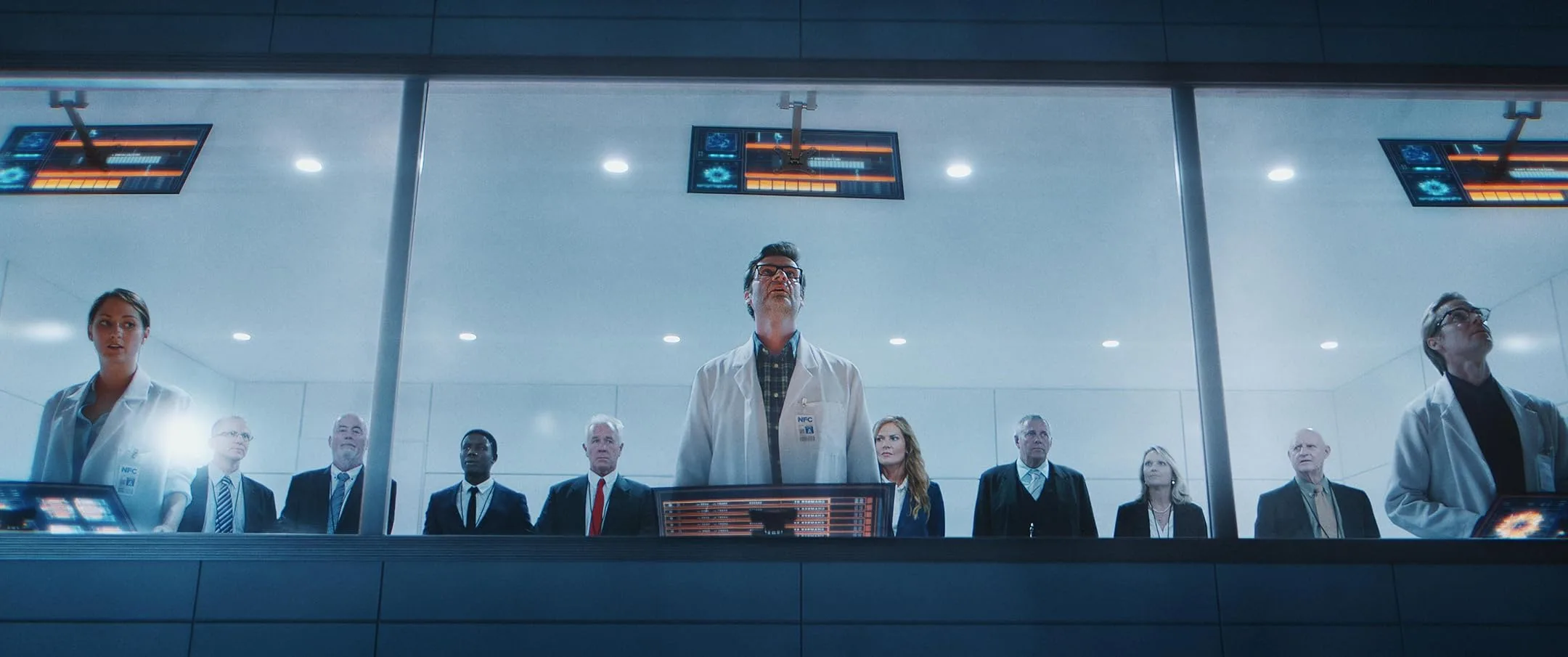
The production confines itself largely to a single warehouse that doubles as a high-tech facility. That choice produces a claustrophobic mood matched to the characters’ urgency. The technology favors a lived-in, heavy, and functional appearance instead of sleek surfaces.
Machinery reads as practical and weighty, which helps the theoretical science feel tangible. Cinematography raises the kinetic energy of sequences devoted to technical argument. Quick camera moves and sharp edits during experiment scenes turn scientific complexity into a felt physical experience. Lighting establishes a clear distinction between the sterile Rice Island past and the gritty, dim warehouse present.
Visual effects show the folding of space with a clarity that belies the modest budget. Sound design gives the engine a physical heft as noise vibrates through the setting. The score expands at moments of tension to mark stakes. The film’s reliance on tactile textures over digital gloss aligns it with low-budget Australian genre cinema.
Temporal Logic and the Pivot to Action
The script treats time as a manipulable resource. The story uses a non-linear structure that reveals the Rice Island disaster through fragmented memories, which keeps the cause of failure uncertain. The narrative omits the immediate aftermath of the explosion and concentrates on long-term psychological damage.
Technical language underlines the theoretical stakes; the device follows a logic expressed as $E \propto \Delta \tau$. The film frames those variables as physical hazards. In the final thirty minutes the tone shifts from slow-burn drama to thriller, introducing direct physical conflict and higher kinetic stakes.
The climactic sequences unfold among the wreckage of prior attempts, turning the set into a museum of failure that visually records the risks of obsession. The mechanical fit between plot and set design produces a sense of inevitable collision.
The Ethics of the Clean Slate
Space/Time asks what society will sacrifice for a fresh start. The engine functions as a vehicle for a clean slate, implying that technological effort could erase historical mistakes. Scientists’ descent into illegality signals that when public institutions fail, criminal measures appear as the only available path.
The film keeps environmental collapse mostly offscreen, registered through news audio and the erratic behavior of the leads. Holt’s bleak appraisal of Earth drives the experiment’s momentum and contrasts with Liv’s orientation toward a sustainable future.
The film treats time travel as a resource to harvest through mechanical labor and rejects polished genre tropes in favor of processual grime. The final result demonstrates what an ambitious creative team can produce with limited means and stands as a forceful contribution to independent science fiction.
Space/Time is an ambitious independent Australian science-fiction thriller that premiered internationally throughout late 2025 and arrived on Video on Demand in North America on January 13, 2026. The narrative explores the moral boundaries of scientific progress, following a disgraced team of researchers who turn to the criminal underworld to fund their clandestine experiments with a time-bending engine. The production is currently available for streaming, rent, or purchase on digital platforms including Amazon Video, Fetch TV, and Apple TV.
Full Credits
Title: Space/Time
Distributor: Epic Pictures Group, Umbrella Entertainment
Release date: January 13, 2026
Rating: M, Unrated
Running time: 90 minutes
Director: Michael O’Halloran
Writers: Michael O’Halloran, Adam Harmer
Producers and Executive Producers: Michael O’Halloran, Adam Harmer, Jai Hogg
Cast: Ashlee Lollback, Hugh Parker, Pacharo Mzembe, Rob Horton, Sophia Emberson-Bain, Erin Connor, Loretta Kung, Cate Feldmann
Director of Photography (Cinematographer): Daniel Maddock
Editors: Michael O’Halloran
Composer: Adrian Diery
The Review
Space/Time
Space/Time succeeds as a grounded look at scientific desperation. The film avoids the polish of big-budget rivals to focus on the weight of ethical compromise. Michael O’Halloran uses limited resources to build a heavy, tactile world. Lollback and Parker provide the necessary friction to keep the narrative moving through its slower stretches. While the global stakes remain vague, the human cost feels real. This production stands as a smart example of independent cinema that prioritizes ideas.
PROS
- Tactile and grounded production design
- Strong lead performance by Ashlee Lollback
- Authentic approach to theoretical physics
- Effective use of a single location to build tension
CONS
- Vague depiction of the global environmental threat
- Methodical pacing that slows the middle section
- Intrusive score that sometimes overpowers the dialogue