



















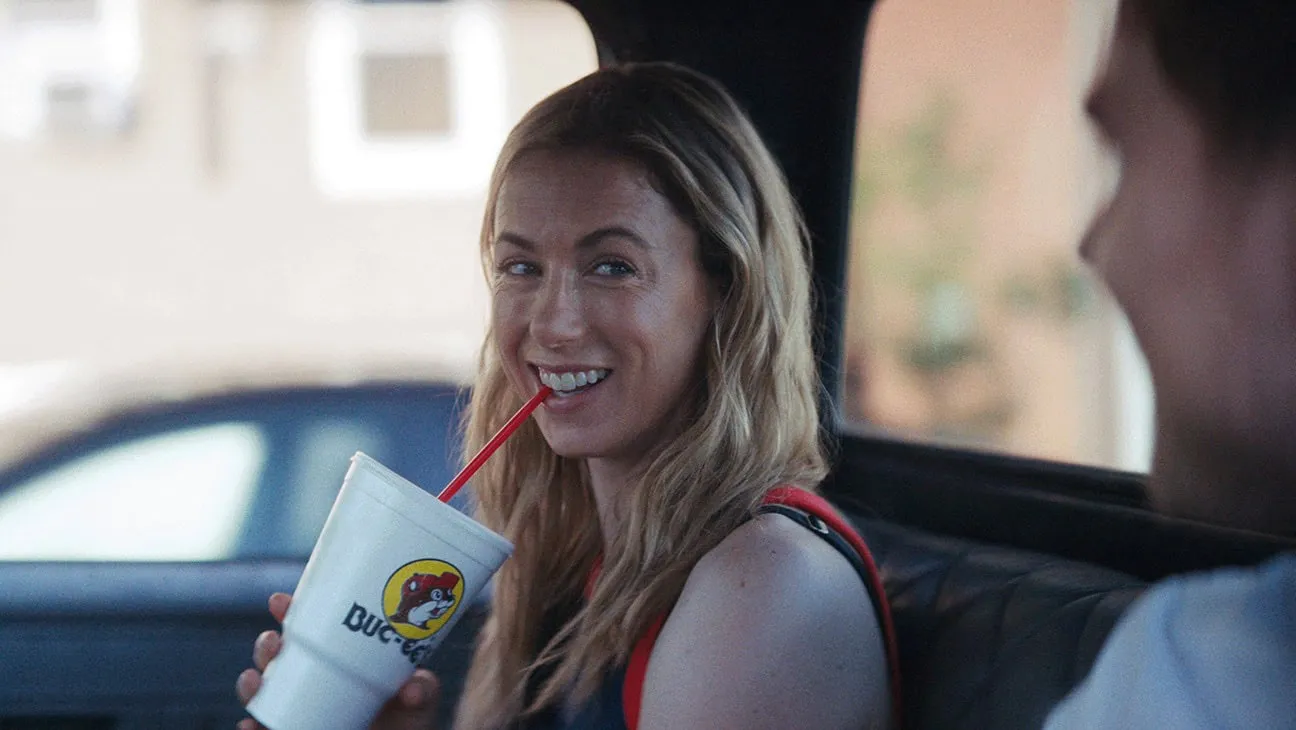

Jamie moves through the world like an engineer sent to stabilize other people’s catastrophes, then clocking out to a private ruin. The film frames her as a specialist in triage whose own interior remains untriaged. Even in the opening rupture, the staging has the chill of a procedural: her long-term partner replaces her with someone younger, the shared space becomes someone else’s territory, and Jamie is pushed into a limbo where an assignment to Jakarta feels like the last thin thread of identity she can still hold.
That waiting period forces her back to a childhood home in a Dallas suburb, and the narrative makes a clean, unsettling move: the woman who can repair collapsed infrastructure cannot repair a family system that refuses the premise of repair. Her body language reads like drafted blueprints. Precise entrances, measured gestures, a gaze that scans rooms as if searching for structural stress. Inside, she carries cluttered trauma with the stubborn permanence of rebar.
The script keeps insisting on the contradiction: technical mastery paired with emotional free fall. Jamie treats her hometown like a hazard zone, and the camera tends to agree. Even ordinary interiors acquire the geometry of threat. Doorways become narrow funnels. Hallways turn into pressure corridors. The film’s moral questions begin here, in the gap between competence and control. Jamie can rebuild a broken world on contract. She cannot undo the rumor she fled, and she cannot persuade time to return what it took. Free will starts to look like a workplace myth.
Suburban Chiaroscuro Under a Noon Sun
Back in Texas, domestic life plays like absurdist theatre with a suburban paint job. Her parents, played by Megan Mullally and Jeff Perry, misname Jamie’s work locations with cheerful confidence. The joke lands, then keeps landing, until it begins to feel less like comic relief and more like a haunting. Misnaming becomes erasure. A professional identity built in far-flung crisis zones gets rubbed out by the family’s small talk, as if adulthood is a typo they refuse to correct.
The suburb itself is filmed with the kind of clinical exactness noir once reserved for alleyways. There is a classic chiaroscuro idea hiding in plain sight: the town’s terrifying normalcy functions like shadow. Bright lawns. Flat streets. Even lighting. Then a face turns, and you catch the hard edge of something unspoken.
Jamie’s sister runs a decaying roller rink, a local relic where nostalgia has gone tacky and damp. Jamie patches a ceiling leak with the same brisk practicality she brings to disaster relief, and the gesture carries the bleak comedy of a sandbag placed against the tide. The leak keeps returning, patient and indifferent. So does memory.
Then Chase arrives, no longer the mythic teenage figure in her head, now a mundane father. The film treats that shift as its own slow-burn thriller beat. Jamie’s trauma stays sharp; the town has grown blunt through forgetting. The past becomes a ghost visible to one person. Everyone else is busy polishing the present. The rink stands as a monument to her impulse to fix and her failure to finish. Noir loves a protagonist trapped by prior choices. This story adds a sour wrinkle: Jamie was trapped by other people’s cowardice, and she still has to pay the rent on it.
Heat, Hunger, and the Ethics of Escape
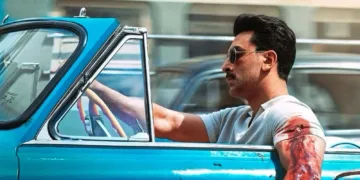
Jamie’s regression begins like a tactical maneuver. At a pool party, she meets Colby, twenty years old and vibrating with the careless confidence of someone whose mistakes still feel temporary. She resists him, then lets the distraction in, and the film treats that surrender with a mixed gaze: tender, skeptical, slightly amused at how quickly adulthood can bargain away its principles for a few hours of weightlessness.
Their relationship becomes a way to postpone the looming departure. The Jakarta deadline ticks like a noir time bomb, except the explosion is bureaucratic: flights, assignments, another temporary life. The generational gap creates a physical and ethical barrier they try to cross through hedonism.
The erotic charge in their scenes carries real gravity, in part because it is fueled by contradiction. Jamie seeks vitality and refuge at once. Colby offers devotion with the untested earnestness of youth. Jamie, seasoned in emergency logistics, handles affection the way she handles temporary structures: build quickly, stabilize enough, leave before the weather changes.
This is where the film’s moral ambiguity sharpens. Jamie is neither predator nor innocent. She is a woman trying to reclaim agency from a past that stole it, and she is also someone using a younger person’s devotion as insulation against her own fear. The romance poses an existential question that noir has always adored: if you act from need, do you still own your choices.
The film toys with answers, then backs away, letting the discomfort remain. Even Jamie’s confidence shifts mid-scene at times, a flicker of power followed by the awareness that power has an expiration date. Dry humor sneaks in through the setting’s oblivious cheer. Nothing like a sunlit pool party to stage a quiet crisis of self.
Handheld Fever Dreams and Sun-Scorched Noir
Josephine Decker rejects the stable, sitcom-clean compositions a premise like this could have worn. The camera behaves like a mind under strain, and Eric Branco leans into long takes and handheld drift that generate a constant, low-grade vertigo. Movement becomes emotional weather. The frame searches, corrects, swerves, then settles for half a second before it starts doubting itself again. It is a visual language that turns ordinary suburbs into psychological terrain.
The lighting is the film’s slyest noir trick. Classic noir hid danger in darkness. Here, danger sits under bleached sun. Overexposure becomes confession. There is nowhere to hide because the image refuses to provide hiding places. Shadows turn short and sharp, like cutouts. Faces look flattened against heat haze. The bright suburb starts to feel as ominous as a back alley, which is funny in a grim way. A villainous streetlamp would at least have the decency to make dramatic shadows.
Disaster footage appears in montages of wildfires and storms, an external index of Jamie’s internal volatility. Editing pushes with rhythmic urgency, and sound design works like misdirection: nostalgia slams into the visceral roar of weather systems gathering off-screen. Sum 41 and Blink-182 anchor the late-1990s loop in her head, pop-punk as memory trap, anthem as recurrence.
The film slides from rom-com beats into something more sensuous and experimental, borrowing thriller tools to examine a romantic entanglement from a female vantage point. Tension is shaped through pacing, then punctured by humor, then reassembled. Perception gets manipulated with a light touch and a firm grip. The camera keeps moving, even when Jamie tries to stand still.
Chasing Summer premiered to significant buzz at the Sundance Film Festival on January 26, 2026. Directed by Josephine Decker and written by stand-up comedian Iliza Shlesinger, the film serves as a sharp, millennial-focused exploration of homecoming and professional burnout. As of today, the film is concluding its initial festival run in Park City and remains available for online viewing through the Sundance platform for credentialed attendees until February 2, 2026. While it is currently being represented by major sales agents, a global streaming or theatrical distributor has not yet been officially announced, though industry interest following its premiere suggests a wide release later this year.
Full Credits
Title: Chasing Summer
Distributor: UTA Independent Film Group, Cinetic Media (Sales Agents)
Release date: January 26, 2026
Running time: 98 minutes
Director: Josephine Decker
Writers: Iliza Shlesinger
Producers and Executive Producers: Kara Baker, Rob Guillermo, Houston King, Ray Maiello, Nihaar Sinha, Sam Pressman, Paula Paizes, Iliza Shlesinger, Bianca Rusu, Jack Masterson, Andre Eanes, Rhodes McKee, Louis Krubich, Christopher Schwarzenegger, Dan Fried
Cast: Iliza Shlesinger, Garrett Wareing, Lola Tung, Cassidy Freeman, Tom Welling, Megan Mullally, Jeff Perry, Aimee Garcia
Director of Photography (Cinematographer): Eric Branco
Editors: David Barker
Composer: Tamar-kali
The Review
Chasing Summer
Chasing Summer exists as a fascinating, if uneven, experiment in genre collision. The film attempts to graft the feverish, handheld aesthetics of an experimental auteur onto the skeleton of a mainstream homecoming comedy. This results in a work that feels intellectually restless. While the central performance offers a sharp look at midlife stagnation, the narrative often retreats into the safety of the tropes it aims to subvert. It remains a humid, sensory experience that thrives in its intimate moments while stumbling over its own cynical humor.
PROS
- Visually arresting cinematography that captures the heat and chaos of suburban Texas.
- A raw, charisma-driven lead performance that avoids easy likability.
- Sensuous and mature depiction of age-gap romance.
- Effective use of nostalgic sound design to evoke the protagonist's inner world.
CONS
- Tonally inconsistent, often oscillating between farce and psychological drama.
- Relying on thin, cartoonish side characters that undermine the film's emotional weight.
- Use of a predictable, late-stage narrative twist that feels unearned.
- Over-reliance on the "disaster worker" metaphor which becomes heavy-handed.