












![Kingdom Hearts Collection [I-III] Review](https://gazettely.com/wp-content/uploads/2026/10/Kingdom-Hearts-Collection-I-III-1-360x180.webp "Kingdom Hearts Collection [I-III] Review: KHII Holds Steady as Newer Entries Fluctuate 33")







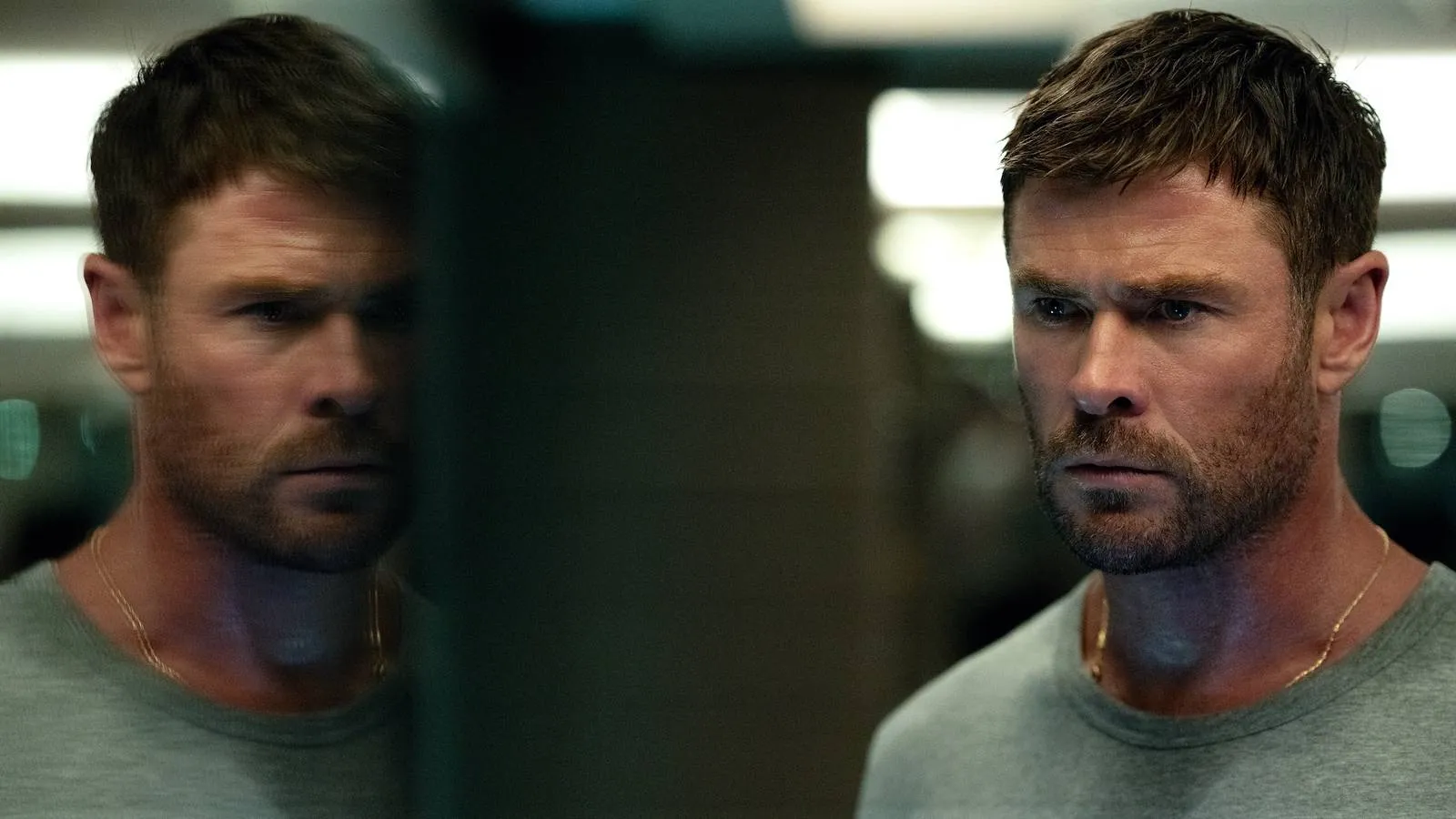
The film introduces Mike Davis as a man who treats theft like a controlled experiment. Every choice is designed to erase the human element. Masks, colored contacts, cropped hair, a process that leaves nothing behind but absence. That discipline is the point. The story frames his expertise as a kind of self-erasure, a life reduced to repeatable steps that keep him safe and keep him alone.
Then the script does the smartest thing it can do for a character like this. It lets the system wobble. A heist that nearly goes sideways does more than raise the stakes, it exposes the cost of a routine built on perfect execution. Mike’s reaction matters because it is not melodramatic. The shake is internal. The film understands that for someone this rigid, fear shows up as recalculation.
On the other side of the chessboard, Detective Lou Lubesnick starts seeing the shape of the robberies. His colleagues miss the geographic logic because they seem trained to look for headlines, not patterns. Lou reads the city like a map of habits. He also reads as someone out of sync with the department around him. The film positions him as a veteran with a stubborn streak, the kind of guy whose instincts are treated like a workplace nuisance until they become useful.
Sharon Coombs enters as the narrative hinge. As an insurance broker dealing with wealthy clients, she sits close to the money without sharing any of its power. Her frustration is not abstract. She feels ignored, boxed in, professionally stalled. The story makes her ambition a pressure point rather than a personality quirk, and she looks at Mike as a door out of her corporate cul-de-sac. It is a clean triad setup: a thief trying to stay invisible, a detective trying to make people look, and a broker who has spent too long being looked through.
The Architecture of Professional Loneliness
Chris Hemsworth plays Mike as a man who has replaced identity with competency. His performance leans into a specific kind of social awkwardness, the kind you get when someone has spent years treating every interaction as a risk assessment. Mike is not “cool” in the movie-star sense. He is efficient, guarded, and a little vacant by design. That vacancy becomes the character’s most telling feature, because it is clearly constructed rather than innate.
The opening near-miss does important performance work. Hemsworth lets anxiety leak through the cracks without changing Mike into a different person. You can see the mental math speeding up, the instinct to retreat into procedure, the dawning awareness that procedure might not always be enough.
His scenes with Maya, played by Monica Barbaro, function as the story’s brief permission slip for normality. The relationship is not presented as a magic fix. It reads as a rare window into what Mike has traded away to maintain control. Maya’s presence makes the cost legible, and it makes Mike’s isolation feel like an active choice he has kept choosing for years.
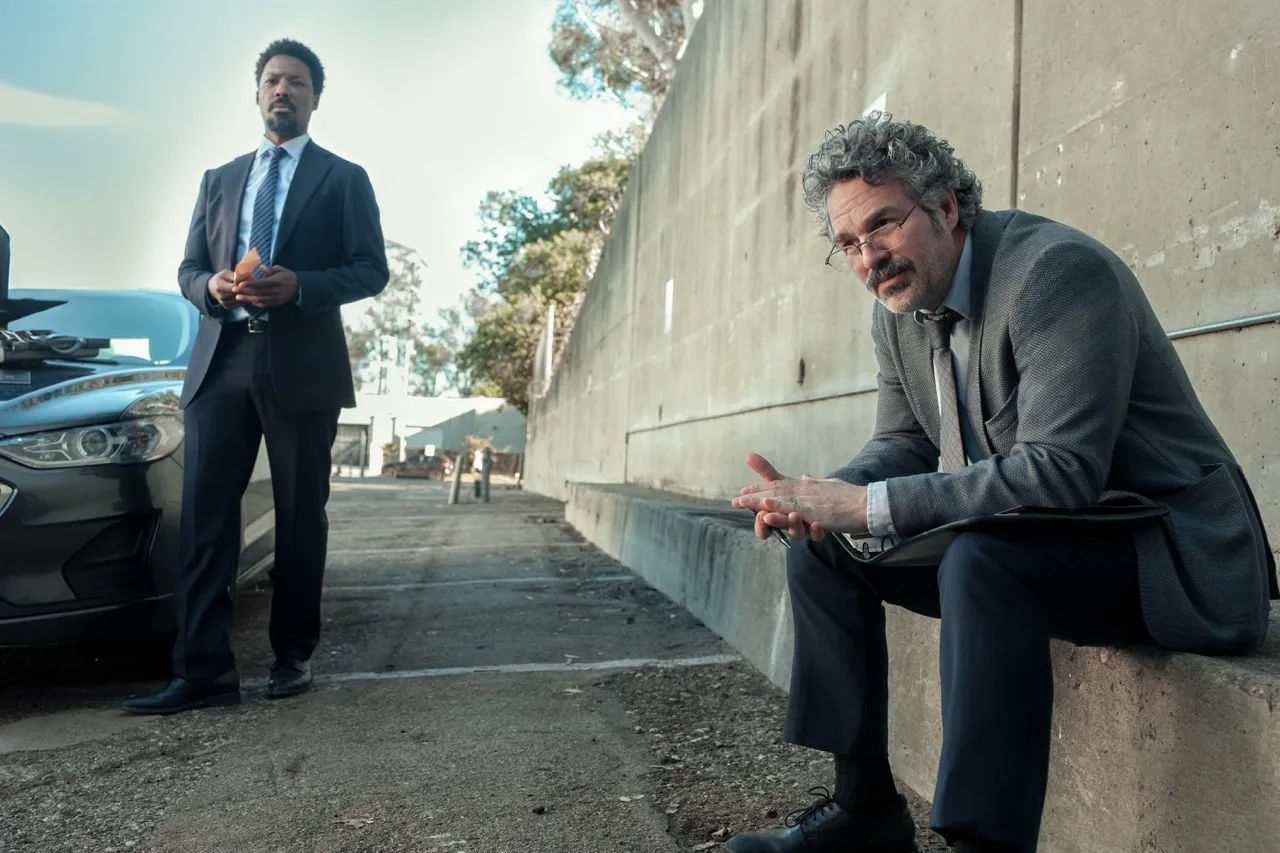
Mark Ruffalo’s Lou is built as Mike’s mirror image. If Mike survives by being unseen, Lou survives by being dismissed. Ruffalo leans into the “schlubby” exterior, the disheveled integrity, the sense of a man who does not market himself well in a department that seems to reward polish and quick wins. The film adds bite by letting Lou’s personal life fall apart early. His girlfriend, played by Jennifer Jason Leigh, leaves him, and the story does not treat that as a side quest. It is part of the portrait: a man who can read a case better than he can manage himself.
Halle Berry’s Sharon carries a different type of isolation, and Berry plays it with an undertow of anger that never feels decorative. Sharon is competent, experienced, and stuck under superiors who treat her as expendable. The sexism and ageism she faces give her decisions an edge that the film does not soften.
She is not written as an innocent pulled into crime by romance. She is written as someone ready to bend rules because the rules have been bending her for a long time. As a narrative function, she is also the connective tissue between Mike and Lou, the person whose proximity makes collision inevitable.
The Fracture of Methodical Control
The supporting cast externalizes the film’s central argument: order is a fantasy, chaos is always applying for the job. Nick Nolte’s Money, the crime boss who mentored Mike out of the care system, represents the old guard. Nolte’s rasp feels like history made audible. Money has patience for results, not rituals. He does not share Mike’s reverence for caution, and that impatience becomes a narrative solvent. The more Money pushes, the more Mike’s immaculate method starts to look like a fragile shell.
Then Barry Keoghan shows up as Ormon and kicks that shell like it owes him rent. Ormon is the antithesis of Mike’s precision. He is messy, violent, prone to panic, and Keoghan plays him with physical twitchiness that signals danger before he even speaks. The dyed blond hair and biker gear make him read like a walking disruption, someone who does not worry about leaving traces because he does not plan to stick around long enough to care.
The script sharpens the contrast by making their philosophies practical instead of philosophical speeches. Mike believes in non-violent precision. Ormon relies on trigger-happy chaos. The Santa Barbara jewelry store robbery becomes the hinge point, and it works because it is a decision, not an accident. Mike refuses because the risk is too high. Ormon takes it and leaves a violent mess. That mess forces Mike into motion, not because he suddenly becomes reckless, but because he can no longer pretend the world will cooperate with his rules.
It is a classic crime-thriller move, and the film handles it with clarity: a life built on control does not collapse from a grand betrayal, it collapses from one reckless actor who does not care about the same constraints.
The Geography of the Concrete Void
Bart Layton’s transition from documentaries to a stylized fictional feature carries real confidence. He does not cling to documentary mannerisms as a security blanket. The direction is direct, clean, and committed to genre mechanics. That commitment matters because the film wants to be a heist thriller with style, not a heist thriller apologizing for being entertaining.
Los Angeles is treated as a physical expression of the characters’ inner lives. Drone shots widen the frame and make the city feel sprawling and segmented, a collection of concrete hiding places where people can vanish in plain sight. The research grounding comes through in the specificity of locations and in how the film uses geography as a storytelling tool rather than a postcard.
Erik Wilson’s cinematography helps sell the mood as something cold and precise. The night scenes are the standout, using light to carve out dark voids that echo the characters’ isolation. The contrast between Malibu wealth and downtown grit is not subtle, but it is purposeful. The film wants class to be visible in the streets and the rooms, not delivered through speeches.
The action staging follows the same principle. The major car chases aim for realism and decision-driven tension rather than showpiece stunts. Successive cuts reveal information at the pace of the drivers’ choices, which keeps the suspense rooted in problem-solving instead of spectacle. Blanck Mass’s score acts like a modern pulse, pushing the momentum during high-speed sequences and giving the film a sonic identity that feels current even as the story nods to crime thrillers from the 1990s.
Masks Off at the Beverly Wilshire
The climax at the Beverly Wilshire Hotel is a dense piece of narrative engineering, built on layered deception and false identities. The film earns the complexity because it has been training the audience to watch surfaces. Mike’s disguises, Lou’s underestimation, Sharon’s corporate mask, they are all variations on the same theme. The finale simply turns that theme into plot mechanics.
Mike and Lou finally share the screen, and their brief exchange lands with a nod to Steve McQueen that feels organic rather than name-droppy. It is a moment of recognition between two men built on discipline, each in his own lane, each convinced the other is playing a different game. The shootout that follows is staged to reveal character, not just to deliver noise. The violence is a stress test that shows what each person becomes when there is no room left for performance.
The film reaches for social commentary by placing homelessness alongside extreme wealth in Los Angeles. Those beats are present, though they carry less weight than the character-driven material. The stronger thematic thread is the one the story has been feeding all along: lost professionals trying to impose order inside systems that do not care about them. Mike, Lou, and Sharon are linked by that need, even when their ethics diverge.
At 140 minutes, the pacing does sag in stretches. Some passages feel like the script is buying time before the next necessary turn. Still, Sharon’s resolution provides a genuine cathartic hit, especially in her monologue to someone who has been overlooking her with practiced consistency. The ending ties plot threads tightly, maybe a touch too neatly for a story this gritty, yet the film has earned the right to close doors after spending so much time showing how these people get trapped behind them.
Crime 101 premiered in London on January 28, 2026, and arrives in United States theaters tomorrow, February 13, 2026. Distributed by Amazon MGM Studios, this heist thriller will also be available to stream on Prime Video following its theatrical window. The narrative explores the high stakes world of a jewel thief operating along the Pacific Coast Highway and the veteran detective determined to end his streak. It features an ensemble of seasoned stars and rising talent against the sun bleached backdrop of modern Los Angeles.
Where to Watch Crime 101








Full Credits
Title: Crime 101
Distributor: Amazon MGM Studios, Sony Pictures Releasing International
Release date: January 28, 2026 (London Premiere), February 13, 2026 (United States)
Rating: R
Running time: 140 minutes
Director: Bart Layton
Writers: Bart Layton, Peter Straughan, Don Winslow
Producers and Executive Producers: Tim Bevan, Eric Fellner, Derrin Schlesinger, Dimitri Doganis, Bart Layton, Shane Salerno, Chris Hemsworth, Benjamin Grayson, Bergen Swanson, Sarah Jane Wright, Amelia Granger, Joely Fether, Peter Straughan
Cast: Chris Hemsworth, Mark Ruffalo, Barry Keoghan, Halle Berry, Monica Barbaro, Corey Hawkins, Jennifer Jason Leigh, Nick Nolte, Tate Donovan, Paul Adelstein, Devon Bostick, Payman Maadi, Babak Tafti, Deborah Hedwall, Drew Powell, Matthew Del Negro
Director of Photography (Cinematographer): Erik Wilson
Editors: Jacob Secher Schulsinger, Julian Hart
Composer: Blanck Mass
The Review
Crime 101
Crime 101 serves as a sturdy, star-driven procedural that succeeds by focusing on the friction between its characters. While the 140-minute runtime occasionally wanders and the social commentary feels light, the central performances from Hemsworth, Ruffalo, and Berry provide a compelling emotional anchor. It is a polished, methodical piece of genre filmmaking that respects the intelligence of its audience, even when it relies on familiar tropes. It offers a stylish, adult thriller that prioritizes character motivation over empty spectacle.
PROS
- Strong, nuanced performances from the lead trio
- Realistic and gripping car chase sequences
- Atmospheric and authentic Los Angeles location work
- Propulsive and modern musical score
CONS
- Overlong runtime leads to pacing issues
- Shallow attempts at social commentary
- Some plot resolutions feel a bit too tidy
- Relies heavily on established genre archetypes