

























![Kingdom Hearts Collection [I-III] Review](https://gazettely.com/wp-content/uploads/2026/10/Kingdom-Hearts-Collection-I-III-1-360x180.webp "Kingdom Hearts Collection [I-III] Review: KHII Holds Steady as Newer Entries Fluctuate 37")



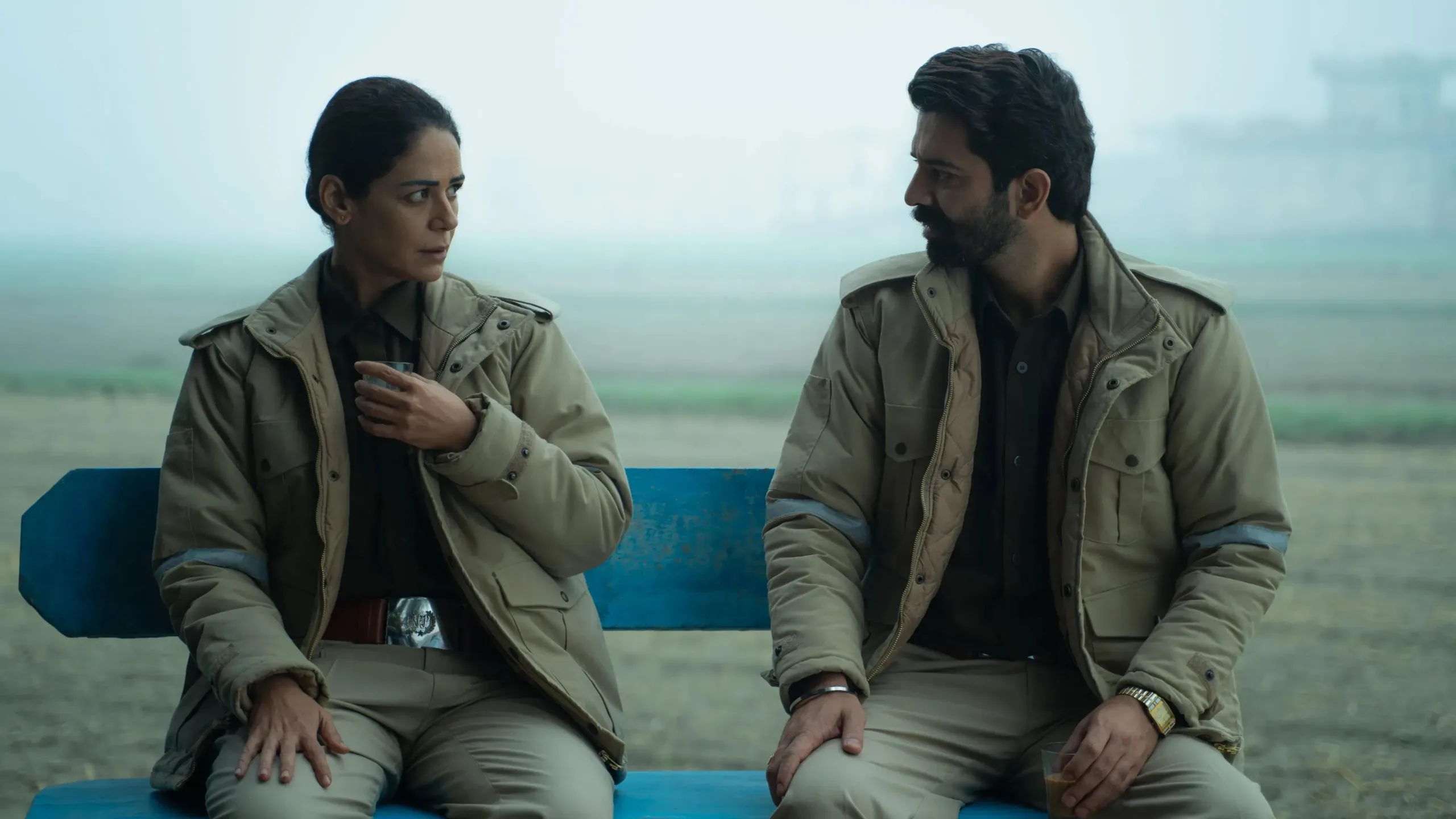

The story opens on a cold morning in Punjab. A religious procession moves past a quiet home, then a grim discovery reorders the day. Preet Bajwa, a social media influencer and NRI who came back to escape a failing marriage, is found dead in a family barn.
That first shock draws the narrative into the fictional town of Dalerpura. The case brings two police officers into uneasy alignment. Sub-Inspector Dhanwant Kaur is a seasoned professional carrying fresh personal grief. She works with Assistant Sub-Inspector Amarpal Garundi, a returning presence from the previous season who is trying to build a new life. As they sort through evidence, they uncover a family splintered by secrets and financial pressure.
Preet’s brother, her estranged husband, and a local dance teacher each draw police attention. Through a single death, the series studies fractures in the region’s social fabric. The show rejects the postcard version of rural life and frames Punjab through industrial smoke, unresolved pain, and long shadows.
The Preet Bajwa Case and the Web of Suspicion
The investigation into Preet Bajwa’s death becomes a lens on the pull between modern ambition and inherited constraints. Preet fits a recognizable contemporary figure: the influencer whose polished online identity covers a personal life in turmoil.
She returned to India from the United States to get away from a collapsing marriage with Sam, then found her family home offered little safety. The crime scene is blunt and physical. Her body is discovered impaled on a grass cutter in the barn. That image pins the series to a grim realism that recalls Nordic noir, where violence is shown as something that stains a place and lingers in its air.
Suspicion fans out through the men orbiting Preet. Her brother Baljinder Atwal carries a quiet desperation. He runs a poultry farm while drowning in debt, and he is entangled in an extramarital affair with Mahi Verma. Johnny Malang, a local dance teacher, appears as Preet’s lover. His sudden disappearance, paired with the discovery that he coerced large sums of money from her, points to a relationship shaped by exploitation. Sam, left behind in America, hangs over the case through threatening voicemails that suggest a volatile temper and a lasting grip on her life.
The procedural work keeps a sharp focus on detail. Police follow bloodied footprints and trace digital evidence, including Instagram reels used to reconstruct Preet’s final days. The bright energy of those dance clips lands as a jarring shift when placed beside the morgue’s silence.
The series uses a non-linear structure and frequent flashbacks to reassemble Preet’s life piece by piece. These scenes keep her from shrinking into a single label. She comes across as a person with agency and flaws, moving through a difficult passage between two worlds. The writing trusts the audience to connect fragments at a measured pace, mirroring how memory and truth surface in uneven, incomplete bursts.
The Interior Lives of the Investigators
Much of the series’ force sits with its two leads. Sub-Inspector Dhanwant Kaur is defined by professional control. She works in a male-dominated environment with a hard exterior that shields deep sorrow. Home offers its own grinding tension. She mourns a son lost in a road accident while living with Jagdish, an alcoholic husband whose resentment of her authority keeps the household cold. Her competence as a cop becomes a form of protection, a way to keep her footing in a world that already took her closest bond.
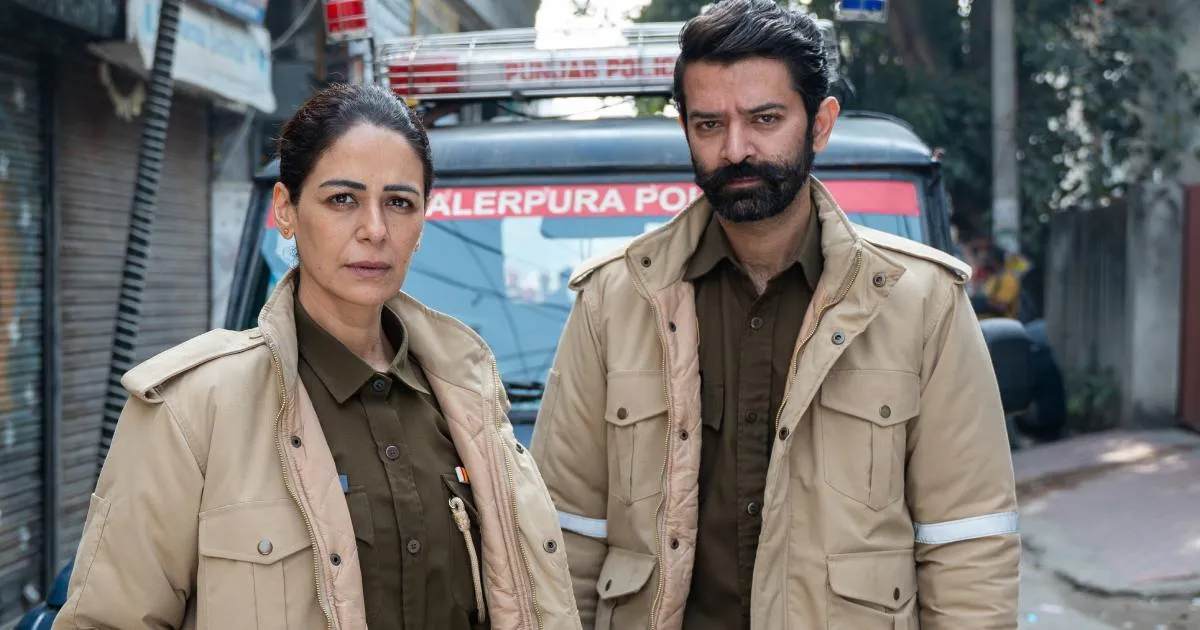
Assistant Sub-Inspector Amarpal Garundi stands beside her with a different kind of damage. After leaving the shadows of his past in Jagrana, he presents himself as a married man committed to rules and routine. His wife Silky brings real warmth and hope into his life, yet the past continues to press on his present. The return of his brother Jung, along with his pregnant sister-in-law Rajji, forces an encounter with a shared secret. The discovery that Rajji’s child is Garundi’s threatens the stability he has fought to assemble.
Their partnership studies power in motion. The dynamic differs from the prior season’s mentor-and-protege pattern, and this shift brings gender and rank into open friction. Garundi reacts sharply to taking orders from a woman, exposing a cultural discomfort that runs deeper than personality. Over time, the case pushes them toward mutual respect.
They learn each other’s rhythms through fatigue, persistence, and a shared demand for truth. Their scenes carry a worn understanding that the law often functions as the last barrier between fragile order and the chaos gathering around them. This attention to the “sad cop” mode places the series alongside global prestige dramas, while the pressures on Kaur and Garundi remain tied to the specific anxieties of Punjabi middle-class life.
The Social Fabric and the Migrant Experience
The series widens its focus to show systemic failure across the region. A parallel storyline follows Arun, a young man from Jharkhand who arrives in Punjab holding a faded photograph and a desperate hope. He is searching for his father, a man who vanished two decades earlier after leaving home for work. Arun’s search exposes the realities facing migrant laborers, people treated as invisible within narratives of economic progress. He meets daily discrimination, dismissed with the slur “bhaiya” and pushed to the edges of social life.
The series confronts bonded labor through direct, horrifying detail when police uncover workers held in chains at Baljinder’s poultry farm. A fire at a cottage kills several North Indian laborers. The event lands as a devastating portrait of industrial exploitation. The powerful treat these workers as disposable property, and the tragedy reads as a predictable outcome of a system that prizes profit and disregards human dignity. The show gives these characters weight and presence, avoiding a treatment that would reduce them to narrative tools.
Patriarchy moves through the story as a constant pressure shaping nearly every character’s choices. It appears in Baljinder’s attempt to control his sister’s property, and in the silence forced onto Charu, Preet’s friend, whose husband bars her from helping the police.
The “kohrra” of the title operates both literally and symbolically. It names the fog on the ground, and it also signals the haze of tradition, corruption, and prejudice that blocks clear sight. By showing how the underprivileged absorb the consequences of the elite’s actions, the series places itself in a tradition of social realism. It portrays a society where the most vulnerable are crushed under unaddressed history and institutional decay.
Visual Atmosphere and Performance Excellence
Visually, the series rejects the idealized Punjab often marketed through commercial cinema. The cinematography leans into muted greys and muddy browns. The camera lingers on industrial chimneys pumping smoke into a heavy sky, and on rusted gates at forgotten godowns. Fog stays present as a constant force, swallowing space and tightening the frame into claustrophobic corridors of air. This visual approach communicates mourning and stagnation, suggesting a land worn down by the weight of its past.
Mona Singh anchors the series with restraint. Her eyes carry haunted vulnerability that dialogue never needs to spell out. Her Kaur conveys the quiet strength required to endure personal loss alongside professional hostility. Barun Sobti matches her with a performance that balances his character’s history of volatility with a weary maturity. He finds brief moments of levity through throwaway remarks while keeping the edge that marks Garundi as a serious investigator. The supporting cast, including Anuraag Arora and Priyanka Charan, strengthens the sense of community and consequence that surrounds the case.
The six-episode format keeps the pace tight and purposeful. Each episode opens with a flashback that adds context to the present-day investigation, stacking information in a way that builds toward a payoff that feels earned. The score stays haunting and atmospheric, and it often places somber passages beside the upbeat music from Preet’s dance reels to intensify unease.
Historical texture enters through subtle references to 1990s militancy, gestures that help explain the hardened posture of the older generation and the cycles of violence still felt in the present. The series plays as a disciplined noir, using a sharply defined local setting to examine grief, guilt, and the stubborn search for light inside a landscape built from shadow.
Kohrra Season 2 premiered on Netflix on February 11, 2026, marking a powerful return to the fog-drenched landscapes of Punjab. This season shifts the focus to the town of Dalerpura, where a fresh murder investigation brings together returning lead Barun Sobti and new commanding officer Mona Singh. The series continues its legacy of gritty social realism, moving beyond the drug trade to explore themes of bonded labor, deep-seated patriarchy, and the lingering scars of regional history. Viewers can watch the entire second installment exclusively on the Netflix streaming platform.
Where to Watch Kohrra Season 2


Full Credits
Title: Kohrra Season 2
Distributor: Netflix
Release date: February 11, 2026
Rating: TV-MA
Running time: 6 episodes, Approximately 45–50 minutes per episode
Director: Sudip Sharma, Faisal Rahman
Writers: Gunjit Chopra, Diggi Sisodia, Sudip Sharma
Producers and Executive Producers: Saurabh Malhotra, Sudip Sharma, Manuj Mittra, Tina Tharwani, Randeep Jha, Karnesh Sharma
Cast: Barun Sobti, Mona Singh, Rannvijay Singha, Pooja Bhamrrah, Anuraag Arora, Prayrak Mehta, Muskan Arora, Ekta Sodhi, Mandeep Kaur Ghai, Pradhuman Singh Mall, Priyanka Charan
Director of Photography (Cinematographer): Isshaan Ghosh
Editors: Sanyukta Kaza
Composer: Benedict Taylor, Naren Chandavarkar
The Review
Kohrra Season 2
This season successfully avoids the typical pitfalls of a sequel by expanding its thematic reach into the darker corners of industrial exploitation and systemic neglect. It serves as a somber meditation on how personal trauma and societal rot are inextricably linked. While the dense web of characters occasionally feels crowded, the emotional payoff remains profound. The performances are exceptional, grounding a bleak narrative in genuine human feeling. It is a haunting, necessary piece of television that demands attention.
PROS
- Mona Singh and Barun Sobti provide deep, nuanced portrayals of complex police officers.
- The visual style effectively uses the landscape to mirror the internal states of the characters.
- The script addresses serious issues like bonded labor and patriarchy with sensitivity and grit.
- The six-episode format ensures the story remains focused without unnecessary filler.
CONS
- The large cast and multiple subplots can sometimes make the narrative feel slightly overstretched.
- The frequent use of flashbacks might be challenging for viewers who prefer a straightforward timeline.







