



























Milestone comes back to the track with Ride 6, and it plays like a wide-open archive built for motorcycle fans. The studio leans on years of racing-sim experience to shape a package that treats bikes as machines with personality, history, and craft. The numbers tell part of that story: more than 340 bikes across 21 manufacturers, paired with 45 tracks. Moving to Unreal Engine 5 gives the game a newer technical base, and that support shows up in the range of spaces on offer, from real circuits to fictional stops in places like Hawaii and Japan.
That sense of scale feeds into the game’s structure. Street racing remains a pillar, yet Ride 6 brings dirt tracks and off-road disciplines into the mix for the first time, expanding what “Ride” can hold inside one career. The design aims at two audiences at once: players who already speak the language of sims, and newcomers who need room to learn. Across both groups, the game’s main idea stays consistent. Progress is built around the bond between rider and machine, with presentation that highlights the look, legacy, and feel of the bikes. A deep historical framing paired with a massive roster turns the experience into a big, well-stocked celebration of the sport.
Balancing Precision and Accessibility on the Knife-Edge
Ride 6 builds its moment-to-moment identity on two physics presets: Arcade and Pro. Pro is the one that asks for respect. Weight transfer and momentum sit at the front of every decision, and cornering lives or dies on lean control.
Bike handling also changes the rhythm you bring from many racing sims: braking needs to happen early, throttle inputs need care, and tight apexes punish rushed lines. The game also uses platform hardware for communication. On PS5, the DualSense triggers push back to signal grip changes and shifts in surface feel, turning traction into something you sense in your hands instead of reading only through a UI element.
Arcade exists as a friendlier entry point, keeping the core feeling of riding intact while smoothing the first hours for players who are new to motorcycle physics. Accessibility options reinforce that goal, including one-handed control layouts and the option to slow the game down. Under the hood, there’s still a layer for players who enjoy tuning as a form of expression.
Gear ratios and suspension stiffness can be adjusted, and those choices give the bike a clearer identity in motion. The classes also separate cleanly through feel. A Bagger carries heavy power and demands patience; a 600cc sportsbike answers with quick responsiveness and sharper changes of direction. The result is a mechanical foundation that stays engaging across skill levels, with player control settings functioning as meaningful choices that shape how the game reads moment by moment.
Mastering the Fundamentals at Bridgestone Racing School
The Bridgestone Racing School acts as the game’s main teaching system, and it treats instruction as part of the experience rather than a quick obstacle before “real” play begins. It offers 21 challenges across three courses, and the drills focus on specific skills, including separating front and rear braking.

The structure also gives players a clear feedback loop: chase instructor times, earn gold medals, and unlock exclusive bikes and rider gear. The Mugello circuit module adds another layer by pushing players to understand track layout in detail, with an emphasis on efficient lines through complex sequences of corners.
The school also anchors mechanics to history through a set of historical videos, tying practice back to real racing heritage. Its lessons cover wet-weather control and chicane handling, which helps players prepare for the situations the career mode will throw at them.
One gap stands out: there’s no dedicated tutorial for high-power launches. That absence can turn the starting line into a frustration point, especially when front-wheel lift becomes the problem players need to solve on their own. Even so, the school provides a steady path toward competence. It also explains electronic rider aids in a way that gives players reasons for the inputs they’re making, helping the controls feel intentional instead of mysterious.
Climbing the Ranks through the RIDEFest Festival
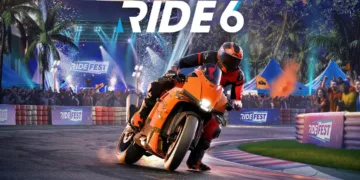
Career mode is organized through the RIDEFest festival, a central hub that packages events into themed championships. Progress runs on stars and points, and the ladder covers a wide range of racing types, from scooter events to high-pressure superbike tournaments.

The structure matters because it encourages players to sample different disciplines, including the new Maxi Enduro and Bagger categories. That variety turns progression into a string of choices with practical consequences: the discipline you pick changes how your bike behaves, how you approach tracks, and what skills you need to sharpen next.
There’s also an economy layer that gives the garage its own decision-making loop. A used bike market offers another route to building your collection, letting players spend credits with more intention while searching for specific vintage models. The system feeds a steady sense of forward motion, and it keeps rewards flowing in a way that supports long-term play rather than quick completion.
RIDEFest also frames progression with ten real-life racing legends, including Casey Stoner and Guy Martin. Each one represents a discipline and arrives with a personalized intro montage designed to establish status. Reaching the end of a legend’s chapter typically leads to a one-on-one showdown, and the game treats that moment like a thematic boss fight, giving the career a sense of stakes beyond pure leaderboard climbing. Wins land as small steps closer to motorcycling history, and that framing gives the progression system a narrative payoff that complements the mechanical one, with new bikes and licensed apparel arriving as tangible proof of growth.
Sensory Fidelity and the Creator’s Toolkit
Ride 6 supports its mechanical ambitions with strong presentation. The game targets 4K at 60 FPS, and improved lighting adds clarity to the bike models. The fictional tracks show careful environmental detail, with the Japanese circuits leaning into autumn colors and Hawaii capturing a coastal mood. Sound design does its own heavy lifting. Engine notes shift dramatically across classes, from the guttural roar of a Bagger to the high-pitched scream of a superbike, which helps bikes feel distinct even before you start tuning them.
Customization tools expand that identity work. Players can modify bikes with licensed performance parts and create custom liveries, shaping both performance and visual style. Rider gear supports that same authenticity, with apparel from brands like Arai and Alpinestars. Creator Mode then extends personalization into sharing, giving the online space a community-driven look. Multiplayer rounds out the package with two-player split-screen and 12-player cross-platform races, serving local play and competitive crowds.
A few areas don’t match the bike models’ polish, including some environmental textures and the menu music, yet the presentation keeps its attention on the machines. The presence of off-road circuits alongside traditional road racing also helps maintain variety, giving players a loop that shifts terrain, handling demands, and the kinds of mastery the game asks for from one championship to the next.
The Review
Ride 6
Ride 6 represents a mature evolution for the series. It balances deep simulation with helpful onboarding tools. This entry creates a space for every type of rider through flexible physics and a massive garage. While some technical aspects feel inconsistent, the sense of speed remains peerless. Milestone provides a complete package that honors the sport with sincerity. It offers an experience that rewards patience and respects the mechanical soul of the machinery.
PROS
- Massive roster of bikes and tracks
- Flexible Arcade and Pro physics models
- Deep mechanical customization
- Comprehensive training school
- Smooth performance on modern consoles
CONS
- Inconsistent visual quality
- No training for high-power bike launches
- Cluttered menu interface
- 12-player multiplayer limit