











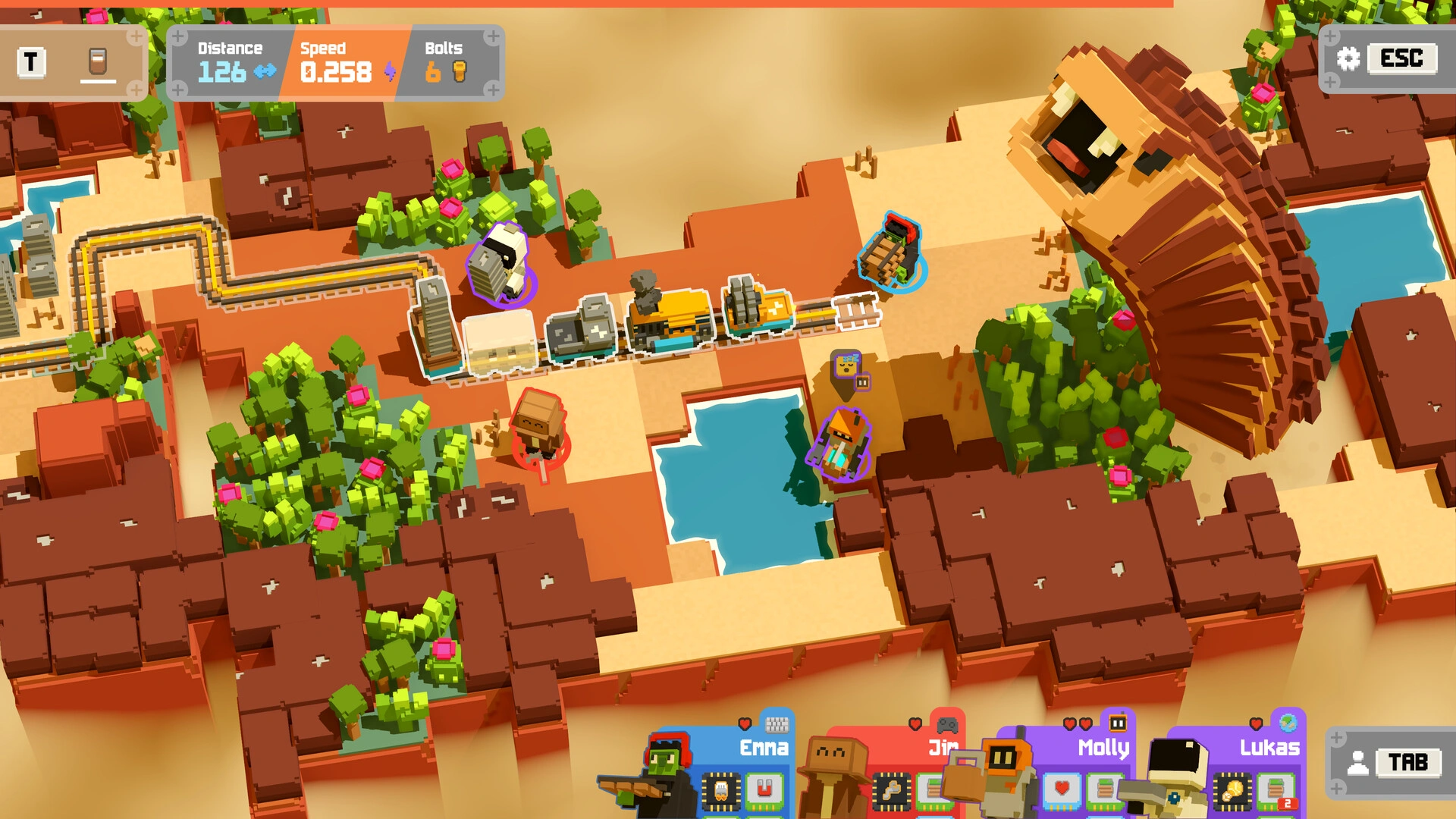

Unrailed 2: Back on Track takes one of the cleanest co-op premises in recent party game memory and stuffs it with new systems until the whole thing rattles like a toolbox in a runaway carriage. Indoor Astronaut’s sequel still centers on a beautifully cruel idea: a train moves forward, and players must build the track in front of it before it derails. Wood must be chopped, stone must be mined, rails must be crafted, gaps must be bridged, and the locomotive must be cooled before it turns into a very small industrial tragedy.
That simple loop remains the game’s strongest asset. Anyone can understand the objective within seconds, yet the actual act of keeping the train alive demands fast communication, messy improvisation, and a willingness to laugh when the plan collapses.
This sequel expands the formula with bosses, biomes, upgrades, character perks, cosmetics, and better solo tools. It is fuller and busier than its predecessor, sometimes to the point of overload, but its best moments still come from friends shouting over a bucket, a bridge, and one tragically misplaced rail.
Simple Jobs, Immediate Panic
The genius of Unrailed 2 lies in how ordinary its tasks sound before the clock starts biting. One player chops trees, another mines rocks, someone delivers materials to the crafting wagon, someone picks up fresh rails, and another player tries to place the track fast enough to keep the train moving. On paper, it sounds like a workplace training exercise with a cute art style. In practice, it becomes a compact disaster simulator where every small delay multiplies.
The game’s task design has the same broad appeal as Overcooked, Moving Out, and other co-op games built around routine jobs under absurd pressure. The difference is that Unrailed 2 gives the chaos a constant forward motion. The train never waits for the team to get organized. It does not care that someone dropped stone in a narrow path or that the axe is on the wrong side of the map. It simply advances, quietly judging everyone.
Tools create roles naturally. The axe user becomes the wood specialist. The pickaxe user becomes the stone supplier. The bucket carrier has the thankless job of watching the engine temperature. The track layer becomes a kind of battlefield engineer, deciding where the route should go while everyone else feeds the system.
Since tools are limited, players cannot pile onto the same task whenever panic sets in. That restriction gives the game its social bite. A weak team repeats jobs, blocks routes, and floods the map with clutter. A strong team divides labor, calls out problems early, and still somehow forgets the bucket.
The overheating system gives the rhythm an extra point of pressure. The locomotive can become dangerous if nobody cools it, turning water management into a moving emergency. Poor resource placement can be just as damaging. Wood and stone left in the wrong spot can block movement. Players can trap each other in tight passages. The train itself can become an obstacle, especially in narrow maps where one blocked tile can ruin a careful route.
Failure stays funny because the game rarely hides what went wrong. Someone carried the wrong item. Someone built rails in the wrong direction. Someone stood in the way at the exact worst second. Someone watched the smoke rise from the engine and made the bold tactical choice to panic. Unrailed 2 turns these mistakes into stories, which is the lifeblood of a good party game.
Progression Gives The Chaos A Spine
The sequel’s biggest structural change is its stronger progression layer. Runs now feed into a reward economy built around collectible currency earned through completed stages, hidden items, optional objectives, and tougher routes. This gives each session a clearer sense of forward movement. Surviving a stage still feels good on its own, yet the added rewards make failure feel less empty and success feel less temporary.
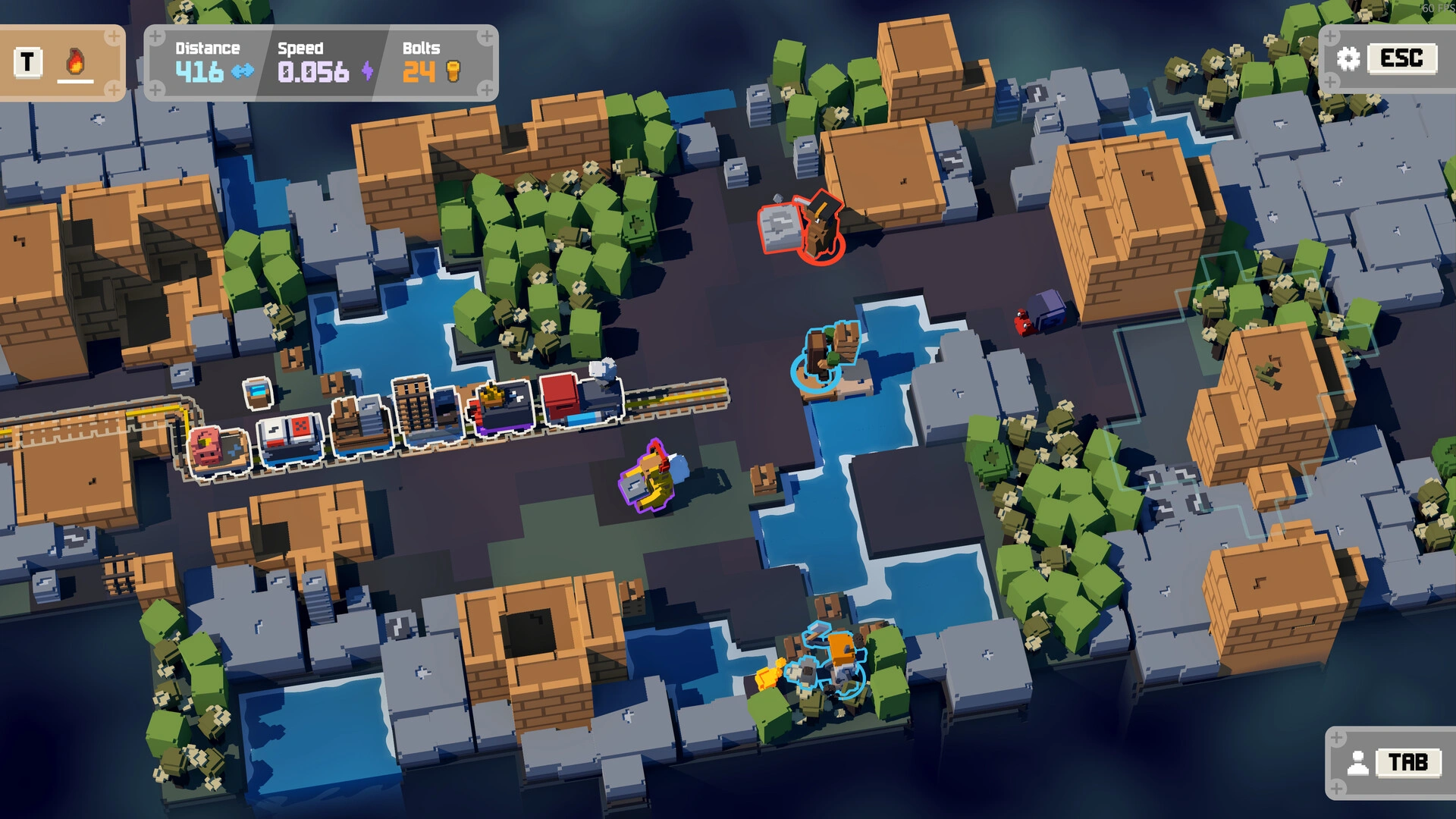
Train upgrades are central to that improvement. Players can unlock or improve wagons that process resources faster, store extra materials, clear terrain, or solve specific movement problems. Ghost-style cars that allow passage through the train can be especially useful in cramped layouts, where one blocked route can turn teamwork into a human traffic jam. Utility and offensive wagons bring their own trade-offs.
A powerful car that clears obstacles quickly may need attention, cooling, or smarter placement, which means the team gains strength while picking up another responsibility. That is good sequel design: the game adds tools that solve problems while creating new decisions.
Character perks give players another way to shape their role. Faster chopping, stronger mining, grappling tools, and resource-handling bonuses all encourage specialization. The system stops short of locking players into strict classes, which suits the game’s improvisational nature. A wood specialist may still need to grab the bucket. The track layer may still need to mine stone if the route dries up. Perks make players feel distinct without freezing the team into a fixed formation.
Cosmetic customization adds personality without interfering with clarity. Hats, glasses, backpacks, odd avatars, and creature designs give the railway crew a playful toy-box quality. The sight of a bizarre little worker carrying rails through a collapsing plan has its own comic charge.
The station-to-station route system adds a light roguelike flavor. Players choose their next destination, weigh difficulty against potential rewards, and face procedurally generated layouts that refuse to settle into a single pattern.
The option to save and quit during a run makes this structure friendlier than stricter roguelike formats. The trade-off is early complexity. New players may feel hit by too many upgrade options before they fully understand how each system connects. Once the pieces click, the progression layer gives Unrailed 2 a stronger long-term pull than the original.
Biomes That Fight Back
Unrailed 2 understands that variety needs mechanical purpose. Its biomes are not decorative skins pasted onto the same challenge. They change how players move, route, gather, and react. Swamps can slow the team with webs. Rivers force bridge planning. Forest-heavy areas demand aggressive clearing. Narrow spaces transform simple track placement into a traffic puzzle where every player becomes both helper and hazard.
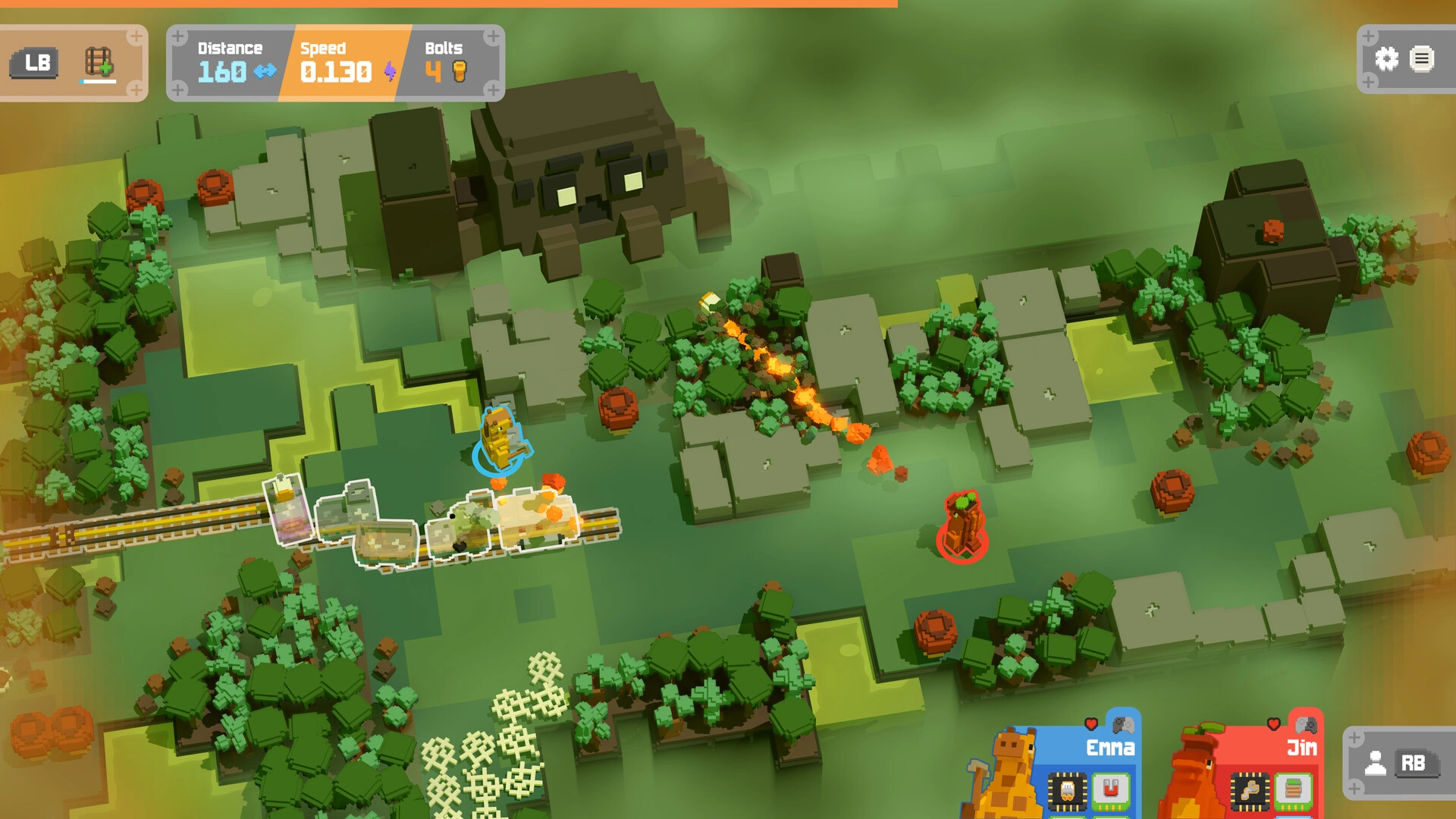
Weather, shifting terrain, and random obstacles help keep the maps lively. The procedural generation works best when it creates problems that feel legible at a glance. A good Unrailed 2 map tells the team what is wrong immediately, then gives them far too little time to fix it gracefully.
Wildlife adds another unpredictable layer. Cows can be useful, then become obstacles or eat resources left carelessly on the ground. Moles can disrupt route planning by appearing where the team hoped to build. Spiders lay webs that slow movement and make every errand feel twice as long. These creatures are funny because they are functional. They are not background gags. They force decisions, steal attention, and create those little spikes of irritation that make co-op sessions memorable.
Boss encounters add a stronger sense of occasion to route endings. They are less about direct combat than problem solving under pressure. A boss might flood the field with obstacles, force the team to reroute, or create hazards that must be handled while the train keeps rolling.
Some boss mechanics can even be used to the team’s benefit, such as explosives that clear terrain if players are quick enough to turn danger into labor. That design choice fits the game well. Unrailed 2 is rarely about defeating a threat in a traditional sense. It is about surviving the logistics of a threat while the railway project continues anyway.
The constant reshuffling of biomes, hazards, objectives, bosses, and upgrade choices keeps repeated sessions from becoming too predictable. There is no perfect train composition for every run, no permanent solution that erases the need to adapt. That uncertainty gives the game its staying power, especially for groups that enjoy improving together across repeated failures.
The Best Co-op Is Controlled Nonsense
Local and online co-op remain the clearest reasons to play Unrailed 2. The game is built for people who can laugh through mild betrayal. Roles appear quickly, but good teams know those roles must bend. The player gathering wood may need to drop the axe and cool the train.
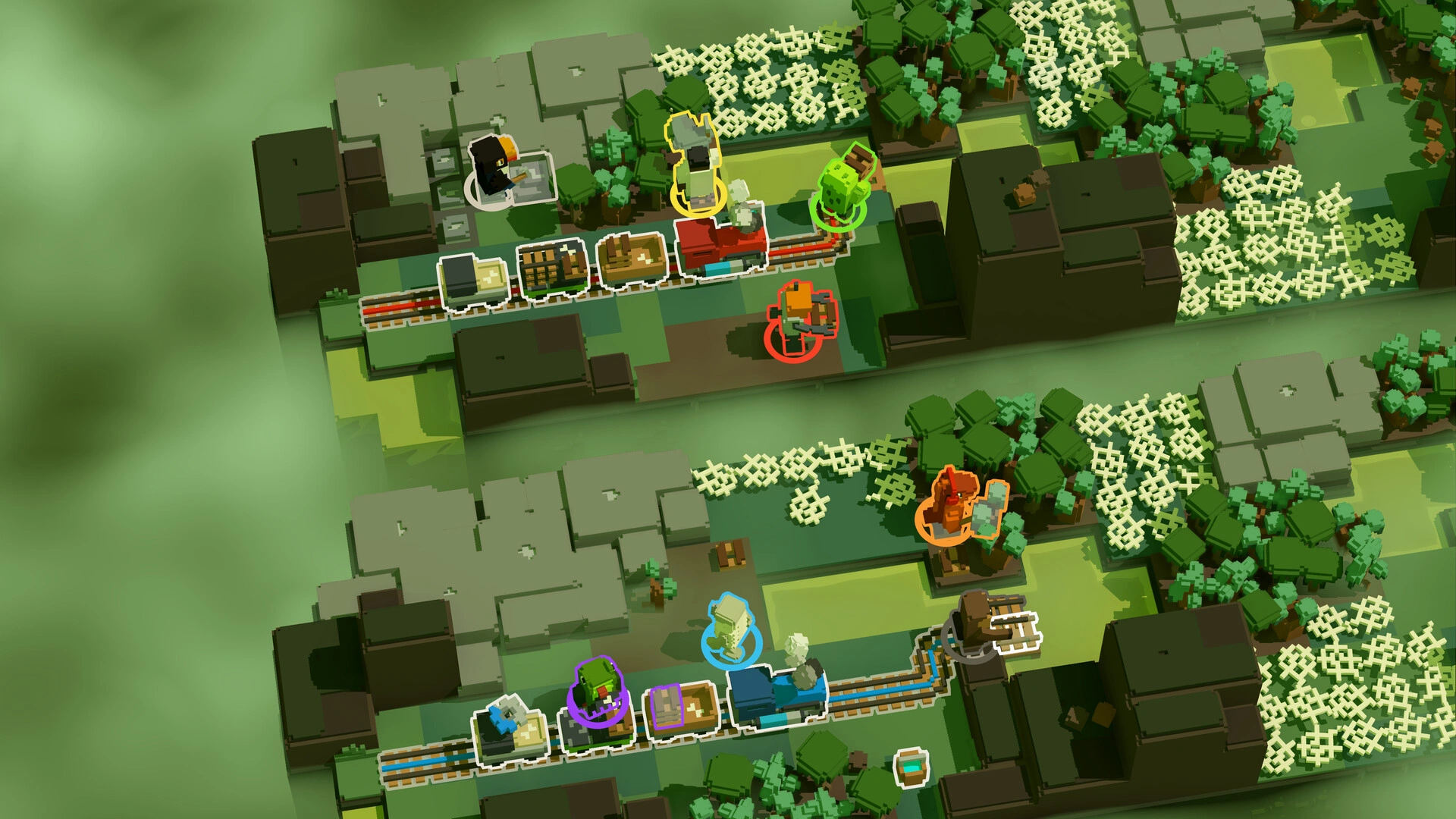
The track layer may need to abandon the ideal route and accept the ugly route that keeps everyone alive. The best sessions have a rhythm: a quiet plan, a smooth first minute, one unexpected hazard, three contradictory instructions, then laughter as the whole operation limps into the station.
Cross-play helps the game fit modern multiplayer habits, and local play gives it the couch-party energy that suits it best. The shared screen, the crowded paths, the frantic pointing, the accusation that someone definitely moved the bucket even if nobody did, all of that gives Unrailed 2 its social texture. It is at its strongest when friends are helpful enough to progress and chaotic enough to ruin everything in interesting ways.
Solo play has improved, which matters. The bot companion can chop wood, mine stone, gather resources, and follow commands through a radial menu. The player can even take direct control when needed. This makes solo play viable in a way that feels more considered than before. The assistant is competent enough to reduce the sense that the game is punishing players for lacking a group.
Yet solo play cannot fully recreate the social engine that powers the design. Managing the train, the route, the resources, the hazards, and the bot’s instructions can become tiring on harder stages. In multiplayer, a mistake becomes a shared joke. Alone, the same mistake can feel like paperwork. The bot solves practical problems, but it cannot replace the comedy of four people realizing at once that nobody brought wood.
Versus mode shifts the pressure into a race, asking players or teams to reach the station faster than their opponents through efficient routing and resource management. It can be exciting, especially for groups that enjoy turning co-op skills into direct competition.
The drawback is screen readability. With too many players, animals, resources, hazards, and trains competing for attention, the mode can become visually noisy. Map creation helps extend the package, giving players a way to build their own little nightmares and share them with others. Naturally, some people will use this power responsibly. Many will not. That is probably the point.
A Cheerful World Built For Mayhem
The voxel art style remains one of the game’s smartest presentation choices. It is colorful, exaggerated, and readable, which matters in a game where players must identify tools, resources, hazards, and pathing options within seconds. The sequel sharpens the look with richer textures, smoother animation, and more detailed environments. Ducks drift through rivers, animals wander through maps, biomes carry clearer identities, and the avatars have a goofy handcrafted charm.
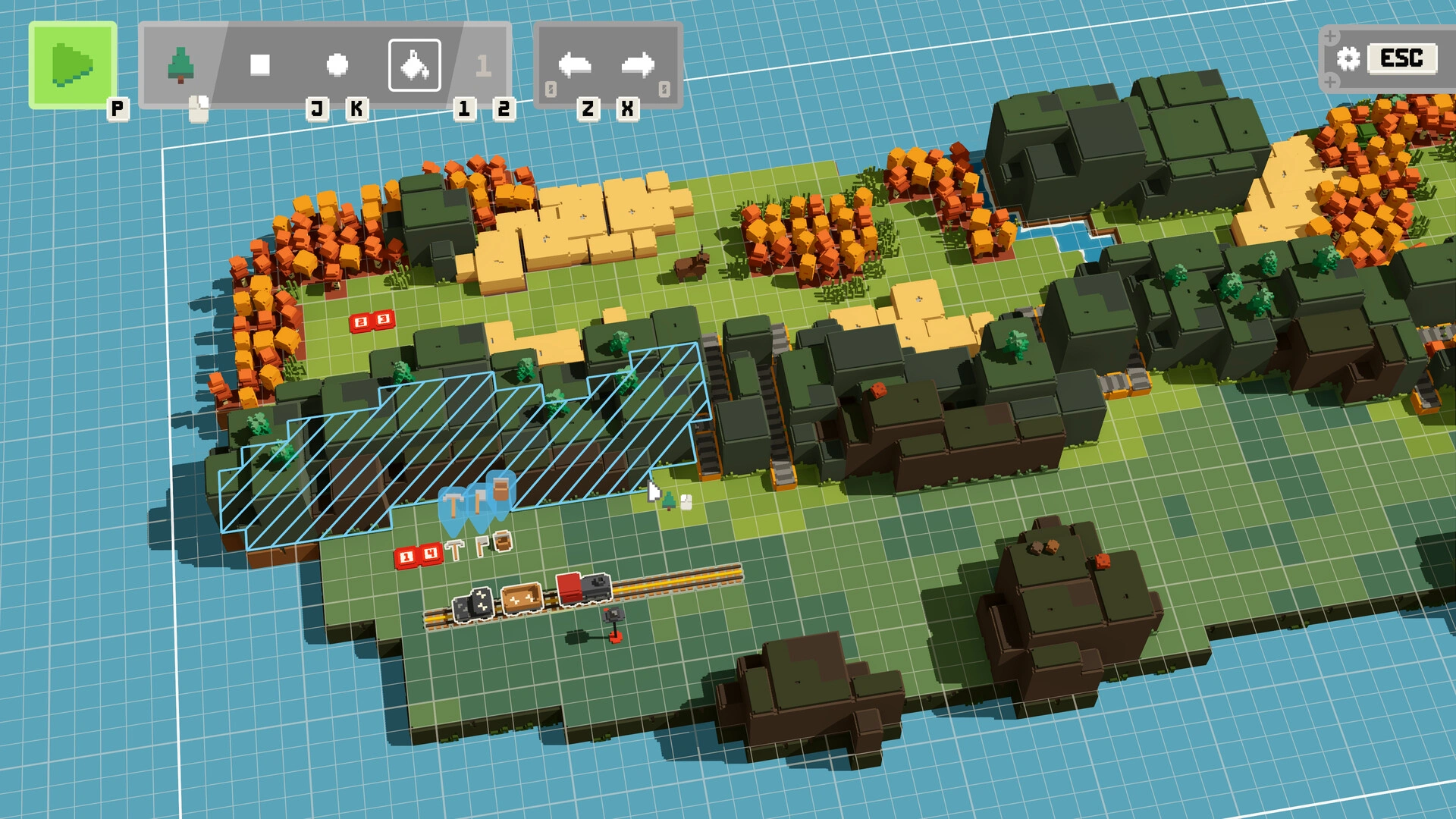
The visual design does important mechanical work. Trees, rocks, water, track pieces, wagons, and hazards need to be readable at speed, and most of the time they are. The one recurring issue is crowding. When the screen fills with players, resources, wildlife, boss effects, and environmental hazards, clarity can suffer. This is especially noticeable in competitive play or busier late-stage scenarios. The art remains charming, but charm does not always prevent a screen from becoming a small moving garage sale.
The soundtrack matches the tone well. It is light, catchy, and energetic without smothering the action. Its cheerful pulse softens the sting of repeated failure, which is useful in a game where disaster is less an accident than a scheduled event. The music keeps the mood playful while the mechanics tighten the screws.
Controls work well once learned, especially during regular gathering and placement. The early learning curve can be bumpier than it should be, particularly on controller and during solo play with bot commands. The tutorial could do a better job explaining finer details, including assistant control and some interface behavior. After that initial awkwardness, the game settles into a responsive flow.
Performance is steady, which is vital for this kind of co-op design. Once a stage loads, the action runs smoothly even when the screen becomes crowded with movement and mistakes. A party game built around timing cannot afford technical hiccups, and Unrailed 2 mostly keeps the track clear where it counts.
The Review
Unrailed 2: Back on Track
Unrailed 2: Back on Track is a sharper, busier, and funnier sequel that turns railway construction into beautifully organized panic. Its co-op loop remains the main attraction, strengthened by smarter progression, expressive biomes, boss challenges, and playful customization. Solo play is better than before, though it still lacks the spark of shared chaos. With charming visuals, steady performance, and a few tutorial rough edges, this is an excellent party game for groups who enjoy teamwork under pressure.
PROS
- Excellent co-op gameplay loop
- Stronger progression and upgrade systems
- Varied biomes with meaningful hazards
- Funny, memorable multiplayer chaos
- Charming voxel visuals
- Improved solo bot support
- Stable performance during busy moments
CONS
- Solo play still feels secondary
- Tutorial could explain key systems better
- Screen can become cluttered in hectic modes
- Upgrade options may overwhelm new players early on