
























![Kingdom Hearts Collection [I-III] Review](https://gazettely.com/wp-content/uploads/2026/10/Kingdom-Hearts-Collection-I-III-1-360x180.webp "Kingdom Hearts Collection [I-III] Review: KHII Holds Steady as Newer Entries Fluctuate 37")




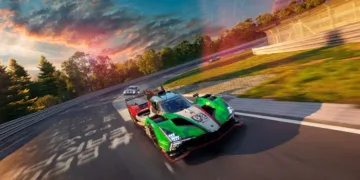
To understand Project Motor Racing, it helps to start with what the team is trying to build. This is a simulation that puts technical purity ahead of accessibility, created by a group of veterans focused on motorsport. They have little interest in chasing graphical spectacle for its own sake. Their aim is a new reference point for demanding physics and competitive integrity inside sim racing.
On PC in particular, players have many choices, yet a clear benchmark for multiplayer competition has remained elusive. The game enters that space with 70 licensed race cars, from historic prototypes to modern GT machinery, and 18 carefully modeled real-world circuits. It treats every driver as a committed racer, never as a casual tourist, and it expects focus and study before it hands out any sense of mastery or speed.
Dynamics and the Geometry of Loss
Project Motor Racing builds its identity on the physics engine, which behaves like the game’s main storyteller. Many racing titles present a polished, ideal version of car behavior. This one leans into the demanding reality of vehicle dynamics. The code spends effort on mechanical details, from chassis torsion and complex weight transfer to the shifting pressure of aerodynamic load at every moment on track. That foundation produces a driving model that rewards deliberate inputs and punishes guesswork.
Players treat every movement of the car as part of a conversation: tire scrub, body roll, and small shifts in balance all ask for quick, informed responses. The margin for error is razor-thin, so success comes from disciplined technique and a clear understanding of how each car runs at its limits. It feels similar to learning a difficult raiding rotation in an MMO, where timings and sequences define success and spectacle fades into the background.
This sharp vision does not carry through the entire garage. Some classes and specific cars feel well weighted and communicate their grip and balance with clarity. Many others feel unpredictable and uneven. In several of the top-tier racing categories, players describe cars that lose rear grip under braking with little warning, or that snap into unrecoverable slides as soon as power returns on corner exit. The result is a routine that feels closer to firefighting than racecraft. Newcomers and veterans spend large amounts of time on basic setup work, trying to push default configurations into something that simply feels drivable.
Another issue sits at the class level. In certain groups of vehicles, the physics model flattens personality and fails to express it. Licensed machines that should feel distinct often share a similar handling profile, which undercuts the fantasy of moving between different eras and philosophies of race car design and drains some of the sense of mechanical variety in the garage.
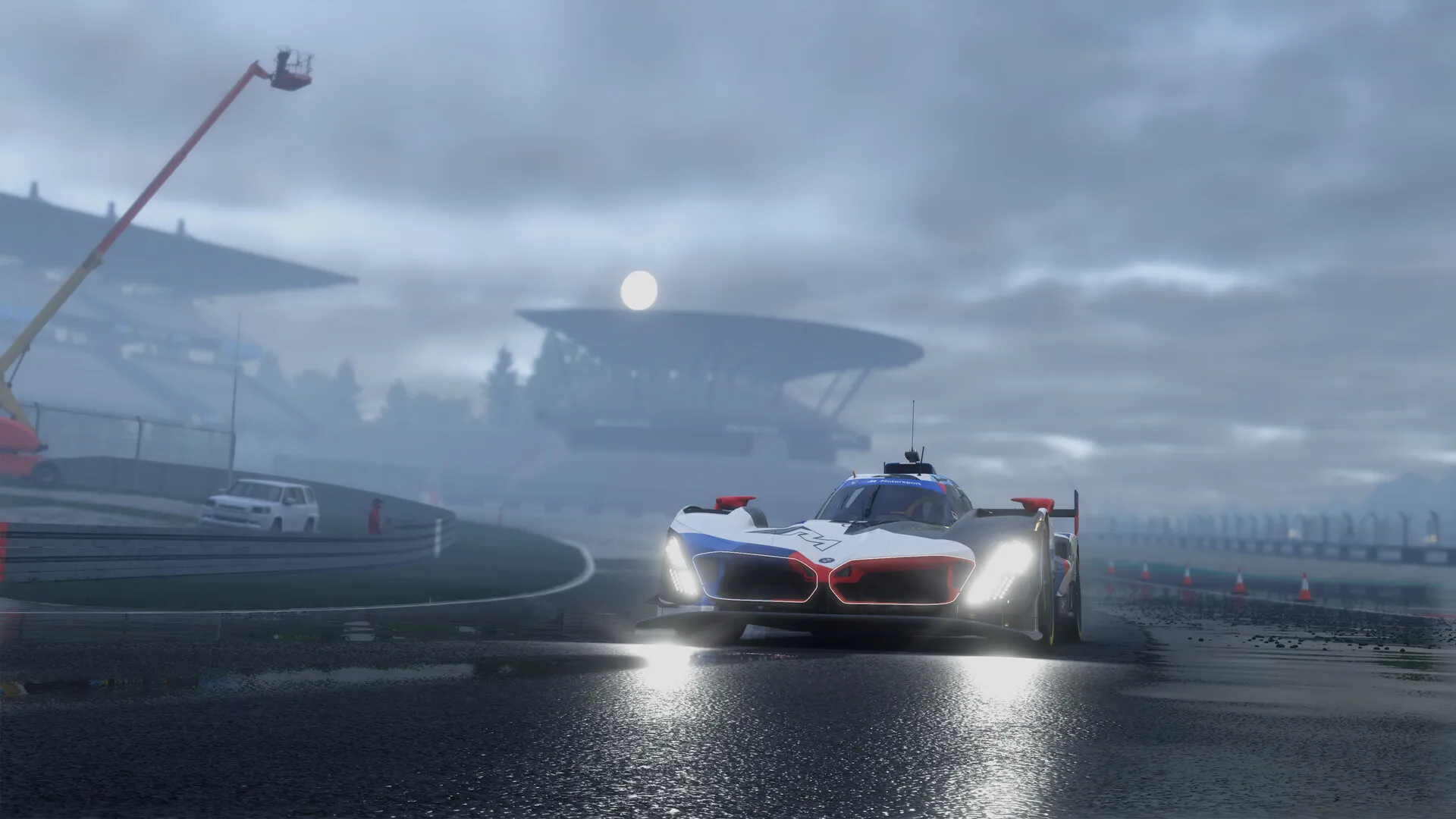
The systems that model the environment tell a stronger story. The tire model reacts convincingly to temperature swings and wear, and grip shifts in ways that feel tied to clear causes, with little sense of randomness. Track surfaces change across a race distance as rubber builds up on the optimal line. In the wet, water pools into believable puddles that change braking points, throttle habits, and racing lines. The track feels alive, and the driver has to keep learning its state from lap to lap.
This harsh simulation mindset creates a predictable problem for accessibility. With a force feedback wheel, there is room to read the physics through your hands. With a standard gamepad, the experience drops in quality and consistency. Many of the faster cars feel close to undriveable on a controller, at least without serious tinkering.
The developers supply a range of assists and input customization tools, but turning those options into a workable setup eats time and patience. When everything lines up, the haptic feedback is excellent, capturing details like the buzz of a rumble strip or the onset of tire slip in a way that helps players who do not own a wheel. Yet this feedback can cut out without warning, closing off an important sensory channel right when the physics ask for calm, precise reactions.
The Technical Debt of the Giants Engine
The biggest obstacle between players and Project Motor Racing’s strongest ideas sits at the technical level. Performance optimization is in rough shape. Many players point to the Giants Engine and its heavy CPU load as the main culprit. Even high-end rigs with many cores struggle to hold a stable frame rate once a full grid of AI cars is present.
Lowering graphical options barely relieves the pressure. Players can strip away detail and still see little improvement, which forces an awkward compromise. Visual quality goes down, while performance refuses to climb in a satisfying way. Time trials with a single car on track can run well. The instant the sim tries to stage a full race weekend with a packed field, the frame rate often collapses into stutter and hitching. The physics model asks for deep concentration and consistency, yet the engine under it keeps interrupting rhythm. For a game that positions itself as a platform for high-level competition, this level of instability at release feels hard to accept.
Technical issues reach beyond frame rate. Players report random pauses, sudden crashes in performance, and odd behavior where the entire simulation speeds up for stretches of time. A day-one patch arrived, yet early impressions from the community suggest that the key problems remain in place. The central optimization issues persist, and the weak AI and unreliable penalty system continue to shape races in frustrating ways.
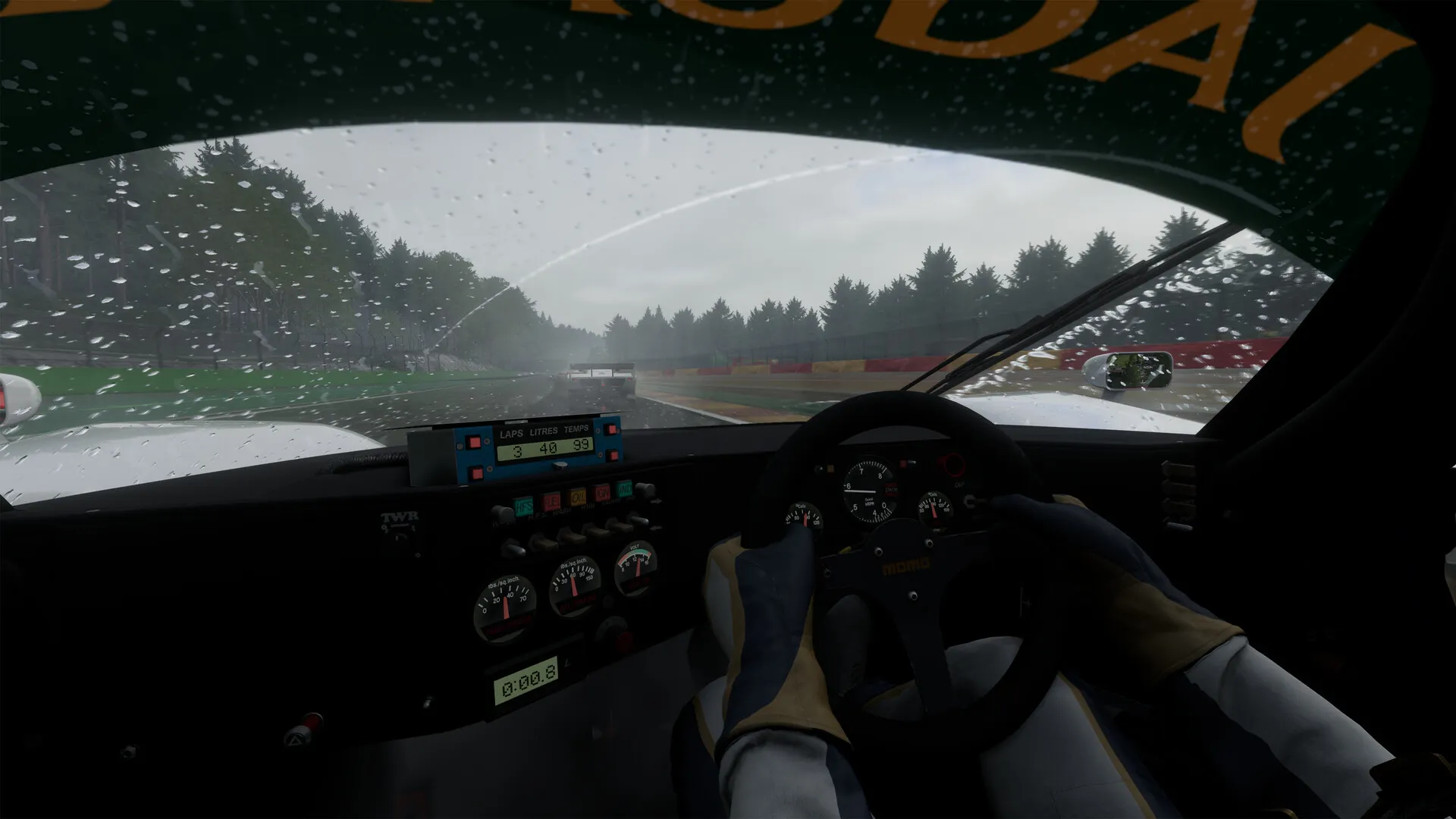
Visually, the game clearly favors clarity over loud spectacle. Car interiors show plenty of detail, and dynamic weather effects carry a sense of physical texture that points to an engine capable of high-quality scenes. Those highs often remain theoretical, because the performance situation pushes many players toward lower settings to keep races playable. Sound design tells a different story. The audio mix is raw, sharp, and aggressive, with engines and road noise combining into something that feels violent and immediate from inside the cockpit. That layer does a great deal of work for immersion and helps the physics feel material even when the frame rate stumbles.
Content Library and Aesthetic Compromise
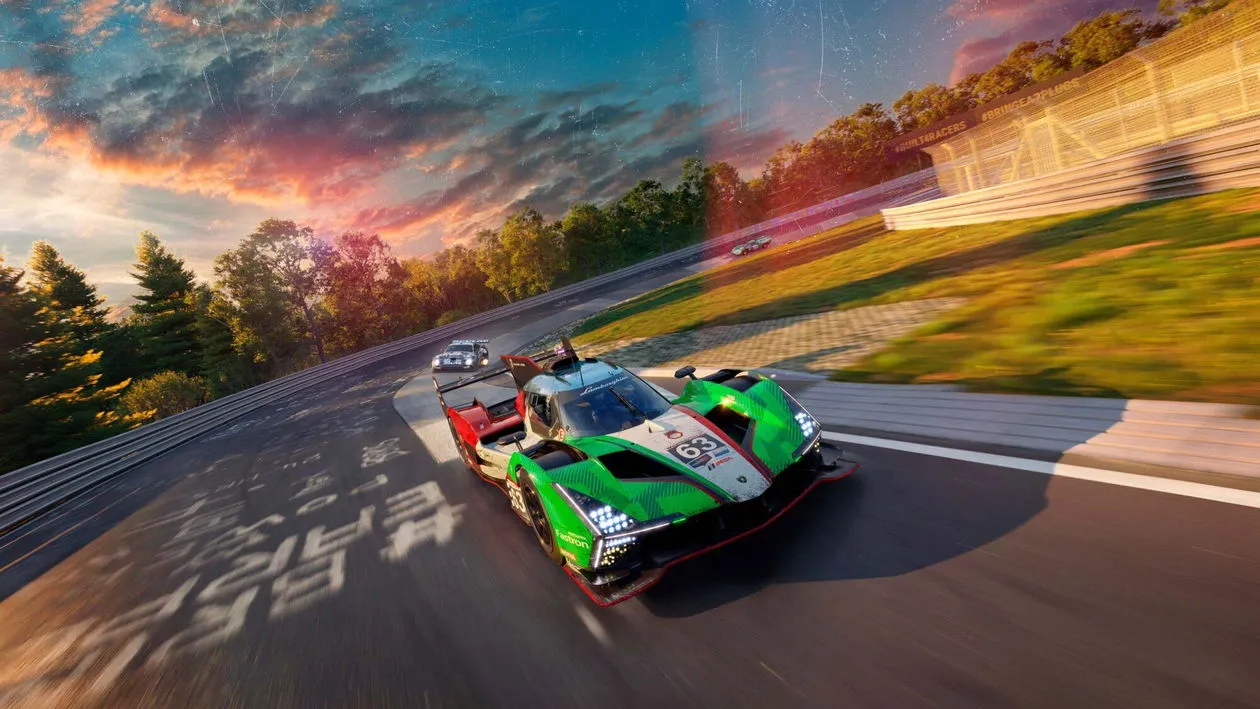
From a systems perspective, the content package offers a strong base for long-term play. The 70 licensed cars cover a spectrum from classic endurance machinery to present-day GT3 and LMDh entries, and the modeling quality is high both inside and out. Every cockpit and body carries careful visual work that fits the simulation-first mindset.
The track set follows the same philosophy on paper. There are 18 track locations and 28 layouts in total, including major venues like Spa-Francorchamps, Daytona, and Mount Panorama. These circuits carry different technical demands and form a logical stage list for a serious sim racer.
The visual delivery of these tracks tells a less flattering story. Circuit detail sits a step behind the car models. Many environments look dated and fall short of the photorealistic standards set by modern rivals. That gap creates a strange pairing: highly detailed cars charge through scenery that often feels plain and old-fashioned. The clean presentation does assist competitive play by keeping sightlines and braking markers clear, yet the look of the trackside world rarely matches the intensity of the driving model.
Career Mode: Consequence without Narrative Cohesion
The single-player career mode aims to turn pure racing into a story about survival and management. The developers label it “Survival-Style,” and the system ties financial risk directly into the racing loop. The mode replaces a simple sequence of championships with a structure that asks players to treat their team like a limited resource. Sponsor money arrives, entry fees go out again, and crash damage becomes a line item that can threaten the entire run.
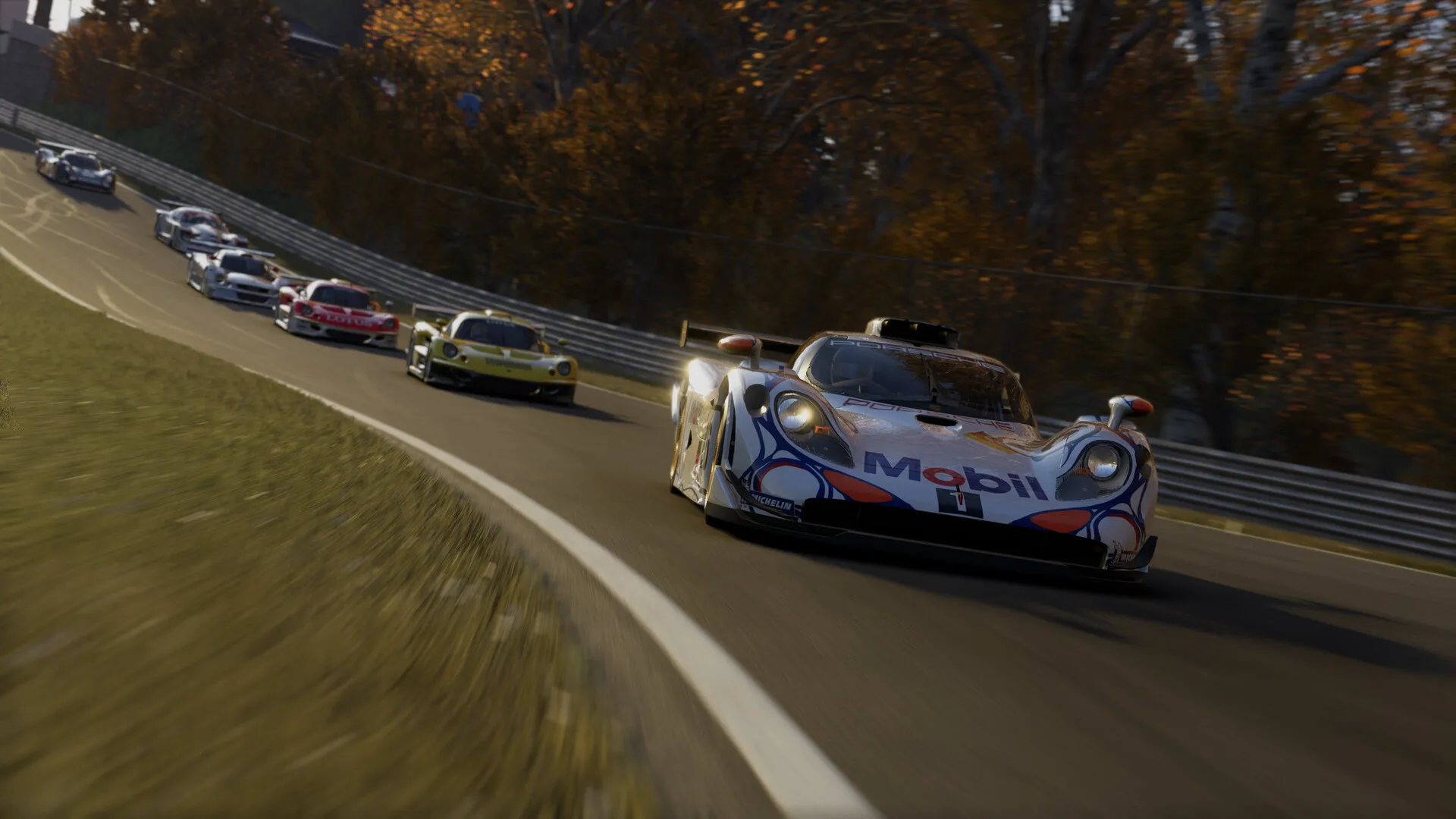
On paper, this aligns with design traditions from RPGs and indie simulations that hook narrative stakes to resources. Every shunt becomes a plot beat. When a driver misjudges a move and wrecks a car, the repair bill pulls money straight from a fragile budget. That pressure turns each on-track decision into something with real weight. The system sketches an arc of a small outfit climbing the ranks, one careful weekend at a time. A single big accident can throw that arc into crisis. When repair costs exceed the cash on hand, the career hits a kind of soft “game over,” and progress stalls until the player can grind out more funds elsewhere.
In practice, the support systems refuse to hold up their side of this contract with the player. Artificial Intelligence remains the biggest structural flaw. AI drivers often treat the track like a set of rails. They cling to predetermined racing lines with little awareness of the player’s position. Pace varies from car to car in strange ways, so the field stretches and compresses like a loose chain. Contact feels harsh. AI opponents cut across the player’s nose or tap the rear bumper with little concern for fairness or racecraft, and the physical model appears to favor them. Their cars seem less affected by the traction problems and handling quirks that human drivers spend so much time managing.
The penalty system makes the situation worse. It watches for a single rule: leaving the defined track surface. It cannot tell the difference between a driver who runs wide to gain time and a driver who gets pushed off the road after contact. Penalties frequently land on the wrong car, punishing players for incidents that clearly began with AI aggression. The financial structure of the career tries to tell a story about responsibility and consequence, yet the rules engine regularly assigns blame in ways that feel arbitrary. Expensive crash damage starts to look like the product of poor tools, not driver error. Presentation does little to soften this impression. Outside the spreadsheets and budgets, the mode supplies very little narrative framing or personality.
The Future Hinge: Multiplayer and Community Potential
Project Motor Racing’s long-term life will depend on how well its competitive multiplayer layer comes together. At launch, the central feature set for that layer remained missing. Ranked races, strong matchmaking tools, and behavior-based rating systems had been promised, but they were not yet active. A game built from the ground up for serious online competition currently feels like a set of systems waiting for their main stage.
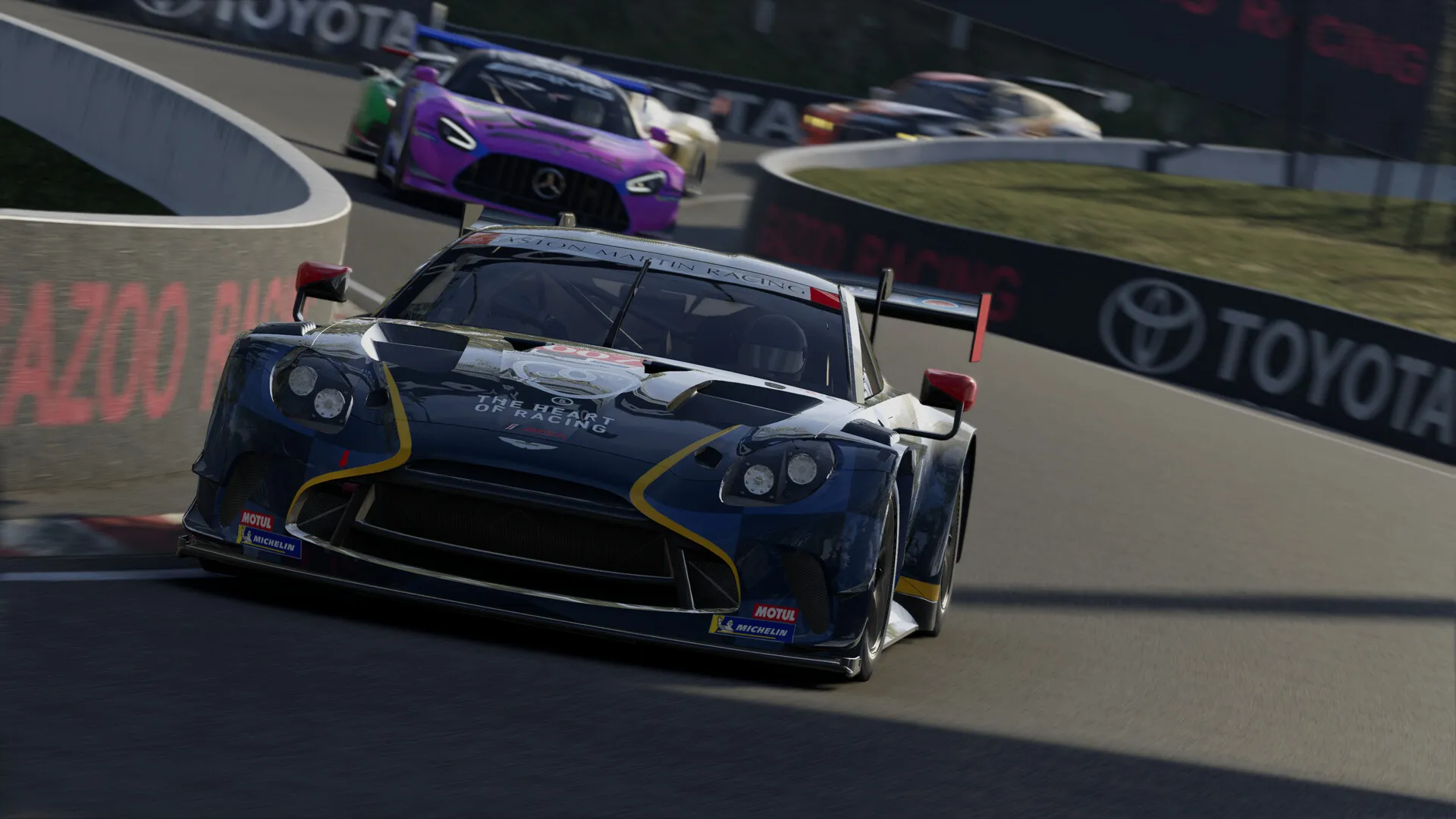
There are encouraging signs inside the design. Cross-play between PC and console gives the future player base a better chance at healthy lobbies and consistent race starts once the competitive layer arrives.
Modding support holds the greatest promise from a systems and narrative perspective. If the underlying structure is truly open and the creation tools remain practical for hobbyists, the community gains a way to respond to weaknesses directly, without waiting passively for patches.
Players can attempt to fill content gaps with new cars and tracks, and they may be able to rework or augment pieces of the experience that feel broken right now, such as AI behavior or penalty logic. In that scenario, Project Motor Racing can shift from a product with a rough launch into a platform that a dedicated community shapes over time, much like many beloved PC sims and indie sandboxes.
A Brilliant, Flawed Thesis
Project Motor Racing arrives as a sharp technical statement. The physics engine and the larger structure around it give the game real potential as a demanding, uncompromising simulation. The financially charged career framing and the detailed tire and surface modeling show a commitment to consequence-driven design, where numbers on a spreadsheet and grip at the contact patch both feed into the story the player tells with each race weekend.
These strengths sit under a heavy layer of execution issues. Severe performance troubles, erratic handling across much of the car list, and unreliable AI and penalty tools pull attention away from the parts that work.
The game keeps pulling itself between two goals: unflinching simulation purity and the basic stability required for serious competition. Until the team can align performance, handling consistency, and race control with that vision, Project Motor Racing will stand as a demanding and often exasperating example of how ambitious systems design can clash with technical reality, and it will keep asking its most dedicated players for a level of patience that few racing games demand.
The Review
Project Motor Racing
The foundation of Project Motor Racing is a strong, ambitious physics model paired with a compelling budget-management career system. However, its immense potential is currently neutralized by severe, unpolished technical issues. Catastrophic optimization, coupled with broken AI and an inconsistent handling roster, prevents the game from delivering a reliable competitive experience. It is a brilliant simulator concept trapped within a problematic launch state. Wait for critical performance patches.
PROS
- Dynamic modeling of load transfer, chassis torsion, and tire fidelity is demanding and rewarding.
- Engine sounds are aggressive, raw, and highly immersive.
- Budget management and financial consequences add strategic depth.
- 70 licensed cars and 28 track layouts offer excellent variety.
- Community tools and console cross-play provide a pathway to longevity.
CONS
- Extremely high CPU demands make full-grid racing unstable on most systems.
- Many vehicles are unpredictable at default settings, requiring mandatory, extensive tuning.
- Opponent intelligence is poor, and track limits apply unfair penalties regardless of fault.
- Environmental graphics and circuit presentation are aesthetically underwhelming.
- Ranked multiplayer was unavailable, and controller implementation is poor for higher-class cars.