

























![Kingdom Hearts Collection [I-III] Review](https://gazettely.com/wp-content/uploads/2026/10/Kingdom-Hearts-Collection-I-III-1-360x180.webp "Kingdom Hearts Collection [I-III] Review: KHII Holds Steady as Newer Entries Fluctuate 37")




The sharpened image of the Shea Stadium concert, suddenly clear and fierce, finally lets the band’s live power feel as raw and wild as their legend suggests. That surge of restored electricity sits inside The Beatles Anthology, first broadcast in 1995, which functions as the comprehensive, authorized biography of the group and a cultural document that fixed their story for a new generation. Arriving three decades after the first wave of Beatlemania, it provided an essential, official record of how four young musicians from Liverpool altered popular culture.
The series follows the band’s full, volatile trajectory, from their earliest days in Liverpool through the grueling, formative nights in Hamburg, the dizzy rise to global stardom, the experimental focus of the studio years, and the painful breakup in 1970. Its historical shape emerges through direct, extensive, and often frank retrospective interviews with the three surviving members, Paul McCartney, George Harrison, and Ringo Starr.
Their voices combine with a large archive of footage and interviews featuring John Lennon, so that the people at the center of the story narrate their own shared history. The original series placed the musicians’ viewpoints alongside those of close collaborators, including producer George Martin and road manager Neil Aspinall. The newly remastered and expanded edition, strengthened by an important ninth episode, keeps this official source of the Beatles story in place as the defining account of their rise, fracture, and enduring connection.
Technical Brilliance and Sonic Clarity Re-examined
Decades of cultural weight rest on this material, which makes the technical restoration feel like a vital act of preservation. The experience of watching it again gains new force from the painstaking work poured into the renewed audio and visual presentation.
Co-director and editor Matt Longfellow supervised the visual overhaul with careful attention, while Giles Martin, son of the band’s late producer George Martin, handled the demanding audio repair. Their task relied on the same advanced AI and machine learning technology used for the Get Back project. The software isolated voices and stripped away background noise from recordings nearly fifty years old, reaching a level of clarity once treated as impossible.
That technological intervention changes the texture of the piece. Footage drawn from many different sources and resolutions now appears with a consistent, brilliant sharpness that had vanished in aging home video and television editions. The work pulls the sprawling running time, nearly twelve hours, into a unified viewing experience. The documentary draws its force from the depth of its archive, presenting near-complete live performances instead of a quick collage of brief extracts.
The scale of the technical achievement becomes most vivid in the sequences devoted to the frantic early period. The transformed Shea Stadium material, for example, finally allows viewers to feel the ferocity of the group’s live presence. The music’s definition, once buried under thin, tinny sound, now supports the reputation of the early band as a fierce live act. Cleaning the historical record in this way reshapes how the past reaches the ear.
The Intimacy of the 1990s Reunion
The new ninth episode forms the most emotionally charged element of this rerelease, serving as a kind of “documentary about the documentary.” This additional chapter offers a rare, candid view of McCartney, Harrison, and Starr together again in the mid-1990s. The cameras observe the three men as they revisit archival material, sit for joint interviews, and share time in the studio. 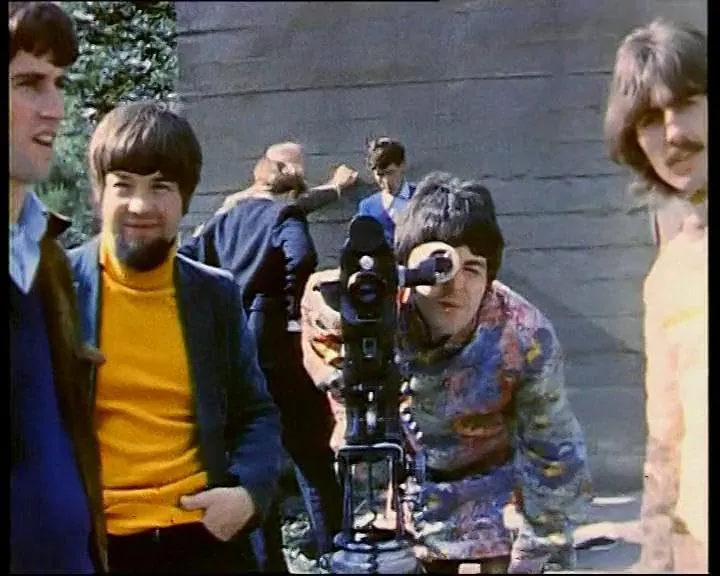 They are shown working on new songs constructed from John Lennon’s unfinished demos, specifically “Free as a Bird” and “Real Love.” The technology used to isolate Lennon’s voice for these recordings becomes a symbol of their continued creative commitment to one another and to the music they began together.
The simple act of seeing the trio in the same space, twenty-five years after their official split, reveals the patterns that still shaped their relationships. McCartney naturally assumes the role of energetic, eager leader. Harrison, long the least enthusiastic participant in looking back, appears guarded yet sharp, with a dry wit that cuts through his comments on their shared past. Ringo Starr emerges as the link between them, a genial presence whose humor and straightforward emotional reactions hold the group together.
This episode is dense with small human exchanges. They revisit old decisions, joke about earlier mistakes, and display the easy familiarity of long acquaintances who have survived conflict. The most affecting moments arrive when their musical chemistry returns. A brief instant in which McCartney and Harrison share harmonies on the chorus of “Real Love” shows how quickly that spark can flare again, even with only three Beatles in the room.
The reunion works as a process of healing, giving them space to reconnect after the bitterness of their breakup. Starr’s plain, heartfelt observation about how “nice” and “moving” it felt simply to be with his old friends captures the warmth that still existed among them. The later deaths of Harrison and George Martin lend this material heavier emotional weight, since the footage preserves an encounter that can never recur.
Four Humans Behind the Myth
The guiding strength of The Beatles Anthology lies in its treatment of the four members as ordinary men who found themselves facing an extraordinary level of cultural impact. The project avoids outside commentators and keeps its attention on the personal, middle-aged reflections of those who experienced the eye of the Beatlemania storm from inside.
That choice brings out the everyday friction of working life alongside the depth of their connections. The series speaks candidly about small disputes and lingering tension, including Harrison’s view that the Apple venture was shaped by “John and Paul’s egos” and McCartney’s brief irritation over perceived slights in the historical record.
The material returns, again and again, to the strain and isolation produced by fame. Harrison describes feeling completely “worn out” by the unrelenting demands and pressure of the touring years. The episodes stress that only the four of them could fully grasp the experience they had shared, which created a bond that extended beyond their professional disagreements. The documentary presents them as layered, fallible people who could be “narky” or difficult, rather than distant cultural monuments.
The tone stays somewhat diplomatic and rounds off the sharpest historical clashes, yet the sheer range of archival footage and the directness of the personal testimony combine to create an intimate and absorbing portrait of their lives. Lennon’s archived statement, “Nothing will ever break the love we had for each other,” gives that portrait its final shape, a declaration of enduring connection that steadies the entire project.
The Beatles Anthology is a comprehensive documentary series on the career of the iconic band, spanning their earliest days through their ultimate dissolution. The original series was broadcast in 1995 on ITV in the UK and ABC in the US. A restored and expanded nine-episode edition, featuring a new, intimate ninth episode, is set to premiere on Disney+ starting November 26, 2025. The episodes are being released over three consecutive days, making the complete, over eleven-hour history of the Fab Four available for streaming.
Full Credits
Title: The Beatles Anthology
Distributor: Disney+ (for the 2025 restored and expanded release), ABC, ITV (original broadcast)
Release date: November 26, 2025 (Disney+ premiere of restored version)
Rating: TV-14
Running time: Approximately 600 minutes (Total duration of the original 8-episode series, 67 minutes per episode listed on IMDb Pro. The 2025 version is 9 episodes, totaling over 11 hours).
Director: Geoff Wonfor, Bob Smeaton, Oliver Murray (new 9th episode)
Writers: Bob Smeaton
Producers and Executive Producers: Chips Chipperfield, Paul McCartney, Ringo Starr, George Harrison, Yoko Ono Lennon, Olivia Harrison, Jeff Jones, Jonathan Clyde, Ken Kamins, David Solomini
Cast: John Lennon, Paul McCartney, George Harrison, Ringo Starr, George Martin, Neil Aspinall, Mal Evans, Derek Taylor
Director of Photography (Cinematographer): Geoff Wonfor
Editors: Matt Longfellow, Geoff Wonfor, Andy Matthews
Composer: The Beatles, George Martin (Theme music)
The Review
The Beatles Anthology
The Beatles Anthology is an essential cultural document, elevated by a magnificent technical restoration that lends new clarity to both the band's sound and their extraordinary history. The series masterfully balances the legendary status of the group with the candid humanity of its members, particularly in the intimate, reflective moments of the new reunion footage. It succeeds as both a comprehensive historical record and a moving portrait of enduring artistic connection.
PROS
- Brilliant remastering, utilizing AI to achieve stunning audio clarity.
- Unprecedented depth, featuring near-complete performances and extensive archival access.
- Intimate, authorized account told directly by the surviving members.
- The ninth episode offers moving, candid footage of the reunion and recording process.
CONS
- Some lower-quality archival footage remains, despite best efforts.
- The original series narrative is decades old; no major historical revision is offered.
- The perspective is diplomatic, deliberately softening some historical conflicts.
- The series length (11-12 hours) requires a significant viewing commitment.







