
















![Kingdom Hearts Collection [I-III] Review](https://gazettely.com/wp-content/uploads/2026/10/Kingdom-Hearts-Collection-I-III-1-360x180.webp "Kingdom Hearts Collection [I-III] Review: KHII Holds Steady as Newer Entries Fluctuate 37")



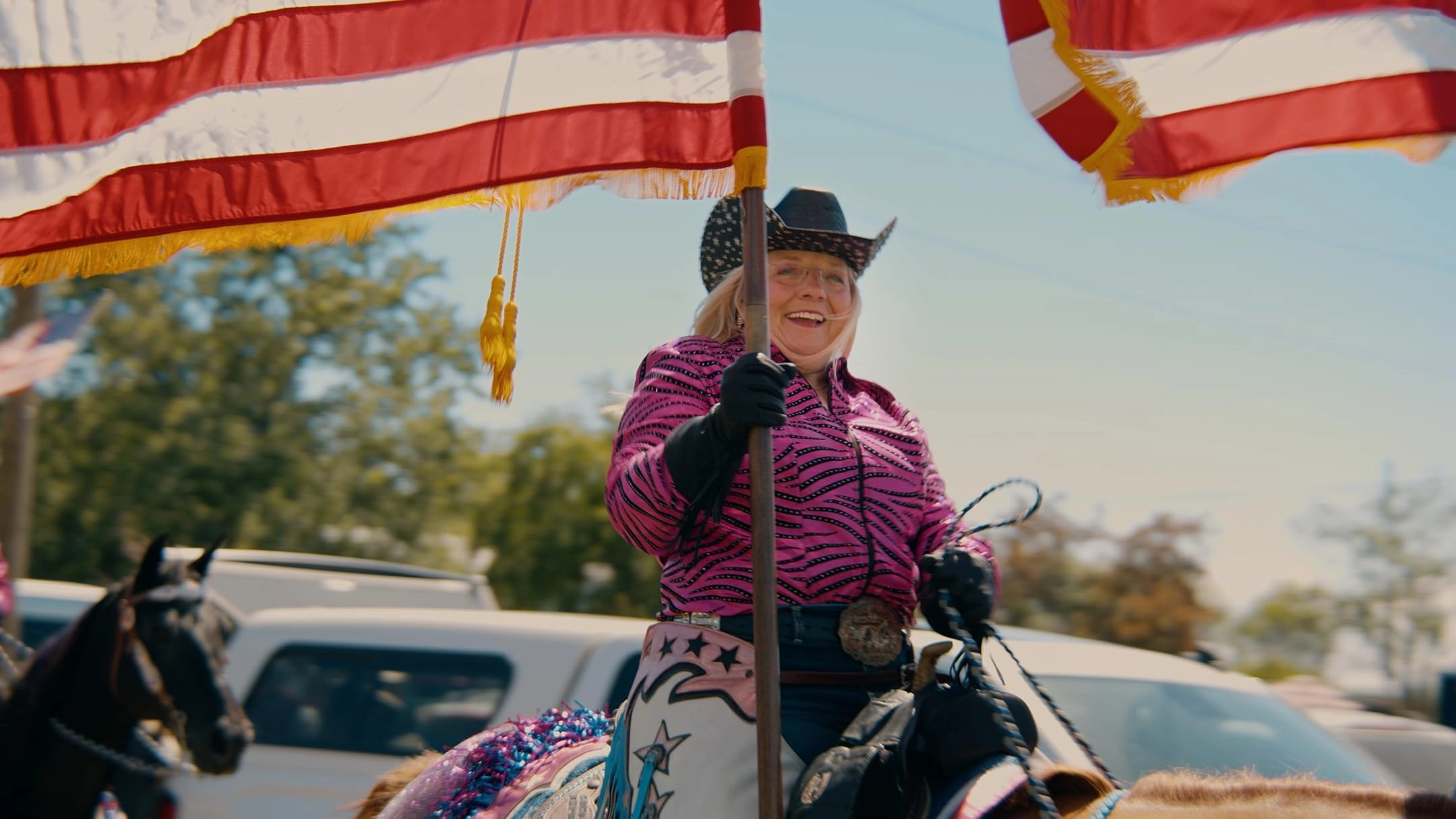

Flag Day turns a modest civic ritual into a revealing portrait of American identity in miniature. Set in Three Oaks, Michigan, Andrew and Melissa Shea’s observational documentary follows a town that treats June 14 as its signature holiday, with the annual parade serving as a kind of public diary.
The event is billed locally as the largest Flag Day celebration of its kind, yet the film’s real interest lies far from record-breaking claims. Its attention belongs to the residents who polish tractors, rehearse routines, adjust gowns, honor veterans, and keep the ritual moving year after year.
The film has a warm, curious temperament. At roughly 75 minutes, it moves with the lightness of a summer afternoon, never forcing grandeur onto material that works best through small gestures. Pageant winners, shop owners, veterans, drill-team members, families, and volunteers speak through behavior as much as words.
The American flag becomes a shared town symbol, carrying pride, nostalgia, performance, contradiction, and neighborly affection. It is patriotic cinema at sidewalk level, where national feeling is filtered through candy tossed from floats and lawn chairs arranged along the curb.
People Before Pageantry
The Sheas build Three Oaks through faces, routines, and social texture rather than explanatory narration. The town feels almost novelistic in its interconnections: generations overlap, old school memories still circulate, and civic life appears stitched together through church, family, local business, service, and habit. The parade itself has an appealing comic clutter. Vintage tractors roll past with ceremonial seriousness.
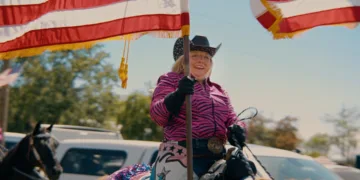
Beauty queens ride themed floats. Baton twirlers, horses, bagpipers, Shriners on tiny motorcycles, baseball kids with water guns, candy throwers, and local volunteers create a procession that resembles a folk mural assembled one moving piece at a time.
The strongest emotional thread comes through Albert Brayboy Jr. and his father. Their presence gives the film a tenderness that keeps it from becoming a simple small-town postcard. Albert Jr., a Navy veteran caring for his elderly father, sees the flag as a symbol that should belong to everyone. That belief carries real dignity, yet the film does not pretend belonging is uncomplicated. Race sits inside the frame, sometimes quietly, sometimes with startling clarity.
The Soul Steppers, a mostly Black drill team from Michigan City, Indiana, expand the film’s cultural field. Led by the firm, generous Lyn Isbell, they bring discipline, rhythm, and urban energy into a rural celebration. Their performance is welcomed, yet their distance from Three Oaks remains visible. They are part of the day, while also set apart by geography, race, and social habit.
Small details matter here. A pageant participant has her tattoo covered before wearing her gown. Residents speak of months of preparation. Veterans mark memory with ritual. Tradition, in Flag Day, is labor. It survives because people keep showing up.
Watching the Drama Inside the Parade
The film’s documentary method is patient and mostly effective. Andrew and Melissa Shea avoid a heavy guiding voice, relying on casual conversations, preparation scenes, direct encounters, and parade-day fragments. Their camera watches behavior with the attentiveness of good street photography. People adjust costumes, tend to parents, tease one another, rehearse, reminisce, and perform civic pride in ways that feel both sincere and slightly theatrical.
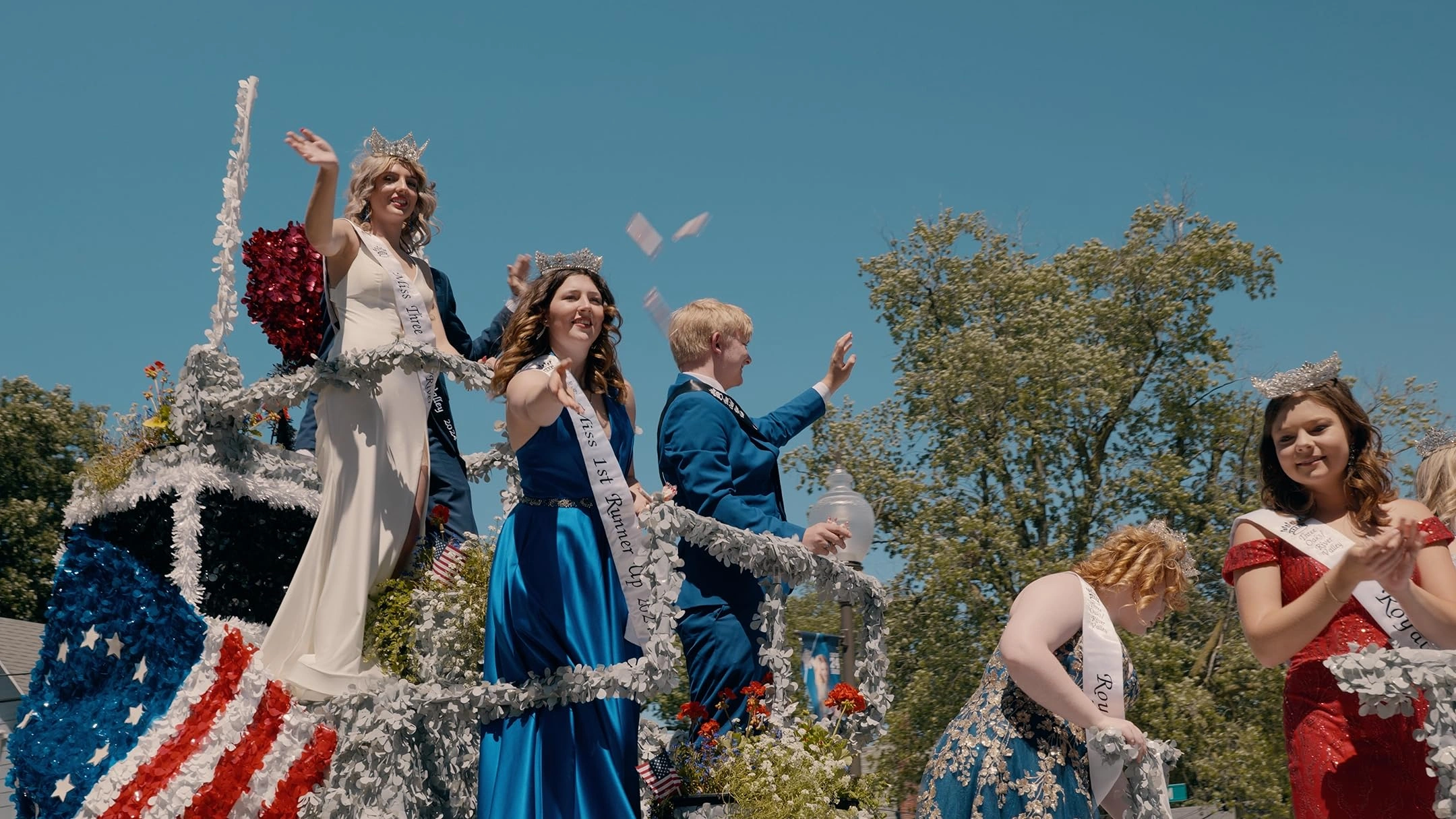
This fly-on-the-wall style gives Flag Day its intimacy. The documentary never quite feels like a tourism ad, since awkwardness is allowed to remain in view. Old-fashioned attitudes surface. Social divisions linger. Some participants seem aware of the camera, but that self-consciousness can be useful. Public ritual always has an element of performance, and the film seems to understand that a parade is both celebration and stagecraft.
The pacing is one of the film’s smartest choices. At 75 minutes, Flag Day has enough room to sketch the town’s customs, personalities, and tensions without exhausting its subject. A longer version might have inflated the charm until it thinned out.
The music is a mixed pleasure. John Mellencamp’s “Small Town” fits so neatly that it risks feeling pre-selected by the universe itself. Gentler Americana choices work better, especially when they let the images breathe. The film occasionally leans toward familiar rural iconography, but its best passages are observant enough to resist empty sentiment.
Patriotism, Memory, and the Shape of Belonging
Flag Day is most interesting as a study of patriotism at ground level. The flag here passes through many hands: veterans, immigrants, pageant queens, farmers, hobby farmers, children, visiting performers, and older residents guarding local continuity. It means gratitude to one person, family memory to another, identity to someone else, and social performance to nearly everyone. It can unite, comfort, decorate, and obscure.
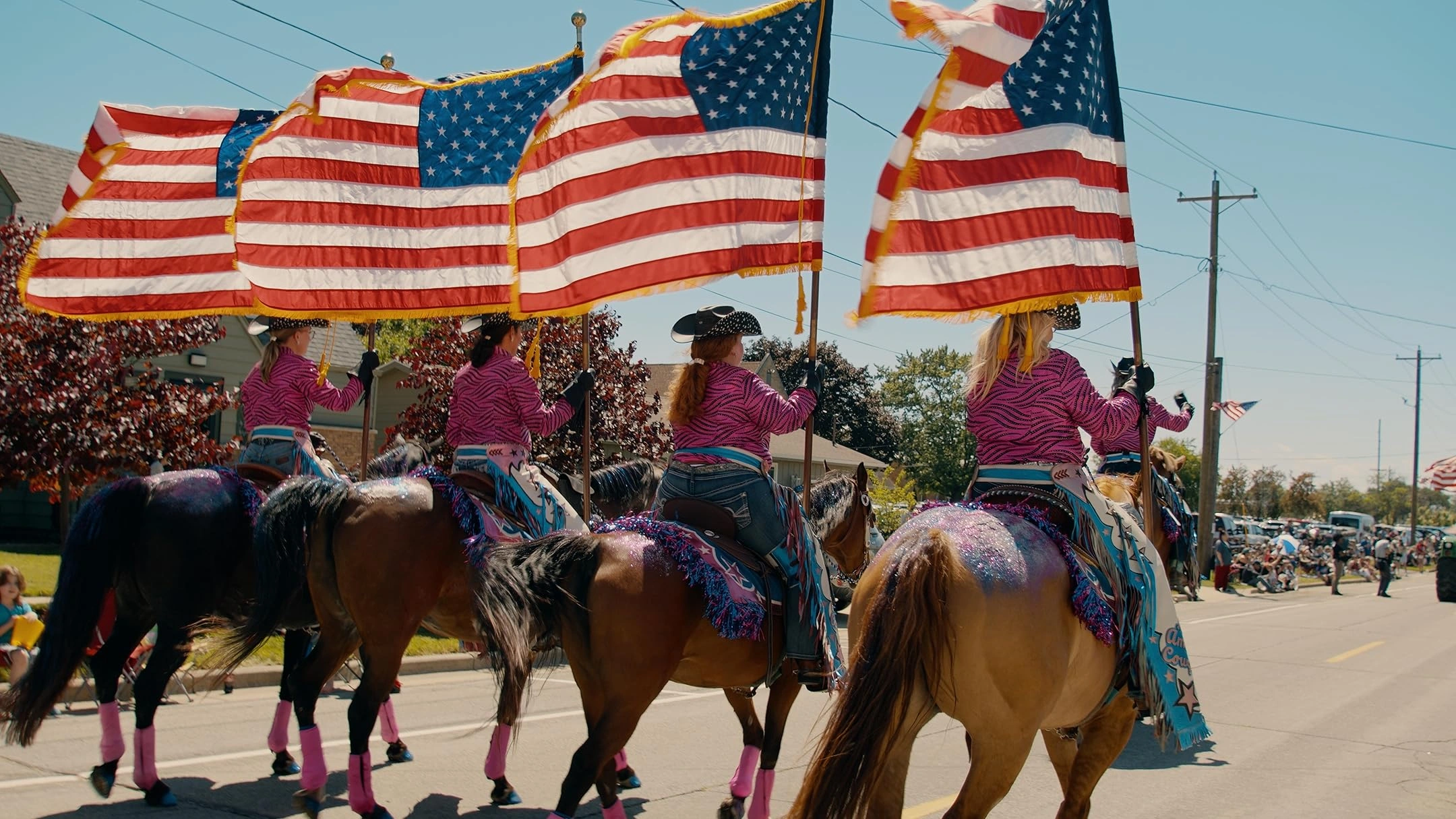
That complexity gives the documentary its bite. The parade gathers people together, yet it also sorts them into visible groups: veterans, tractor clubs, political floats, pageant contestants, drill-team visitors, local elites, and spectators. The image of a Black sheriff candidate greeting a white woman in a Confederate-style jacket captures the film at its sharpest. The exchange is polite, even friendly, yet history presses against the moment. The scene says plenty without editorial pressure.
The tension between tradition and modern life runs through the film like a quiet bass line. Three Oaks wants to preserve a ritual that gives the town identity, while change keeps arriving through shifting demographics, economic pressure, online knowledge, and younger participants whose lives do not always match the old civic script. Even the town’s claim to fame loses some shine once Google reveals how few places stage Flag Day parades with comparable zeal.
The Sheas do not mock Three Oaks, which matters. They view it with affection and clear eyes. Flag Day may look like a simple parade documentary, but its lasting interest lies in how it watches America rehearse togetherness: sincere, messy, charming, imperfect, and oddly moving.
The documentary premiered in limited theatrical release on June 12, 2026. Directed by the husband-and-wife team of Andrew and Melissa Shea, the film is currently screening in select independent theaters nationwide, including special community engagements for Flag Day weekend, and is available for community-hosted civic screenings. Captured in a pure observational style without voiceover commentary, the film chronicles the preparation and execution of the largest annual Flag Day parade in the United States, hosted by the tiny community of Three Oaks, Michigan. Through the experiences of diverse local participants, including veterans, marching band leaders, and beauty queens, the project explores the friction between holding onto deep-rooted American tradition and navigating modern social and political divisions.
Where to Watch Flag Day (2026) Online
Full Credits
Title: Flag Day
Distributor: Abramorama Films
Release date: June 12, 2026
Running time: 75 minutes
Director: Andrew Shea, Melissa Shea
Writers: Andrew Shea, Melissa Shea
Producers and Executive Producers: Andrew Shea, Melissa Shea
Cast: Lyn Isbell, Albert Lee Brayboy, Albert Brayboy Jr.
Director of Photography (Cinematographer): Melissa Shea, Andrew Shea
Editors: Andrew Shea, Melissa Shea
The Review
Flag Day
Flag Day is a warm, observant documentary that finds meaning in small-town ritual without sanding away every contradiction. Its parade scenes carry charm, humor, and civic tenderness, while its strongest moments reveal how patriotism can unite people while leaving old divisions visible. The film is modest in scope, occasionally too familiar in its musical choices, yet its human detail gives it quiet staying power.
PROS
- Intimate observational style
- Strong community portrait
- Moving veteran storyline
- Smart 75-minute pacing
- Rich small-town detail
CONS
- Some soundtrack choices feel obvious
- Certain participants remain lightly sketched
- Familiar Americana imagery can soften sharper tensions