

























![Kingdom Hearts Collection [I-III] Review](https://gazettely.com/wp-content/uploads/2026/10/Kingdom-Hearts-Collection-I-III-1-360x180.webp "Kingdom Hearts Collection [I-III] Review: KHII Holds Steady as Newer Entries Fluctuate 37")



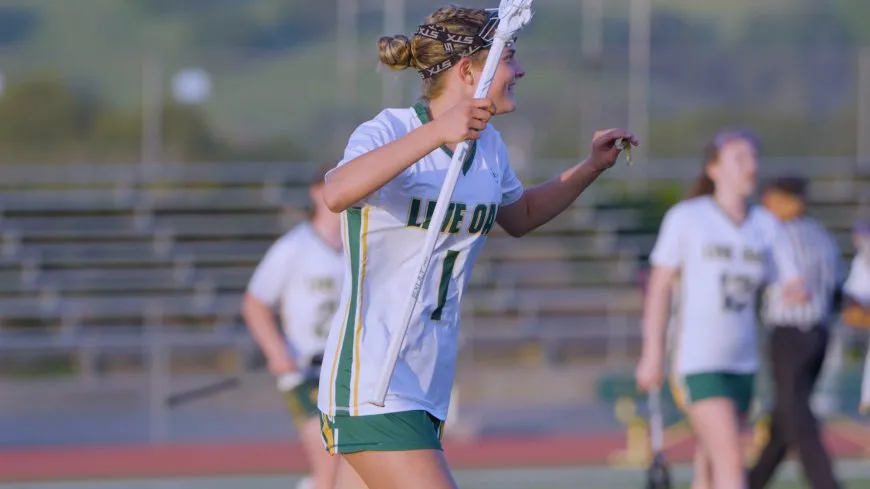

Brendan Harty approaches the sports documentary with a grounded eye in The Mighty Oaks. Set in the quiet town of Morgan Hill, California, the film follows the rise of the Live Oak “Acorns,” a high school lacrosse program created from scratch. The story begins in 2015 and stretches across a ten-year span that arrives at a high-stakes 2024 season. Many sports films chase the adrenaline of a single title run. Harty’s film keeps its attention on the slower work of building something that lasts, one season at a time, one group of kids at a time.
That long view shapes the documentary’s emotional pull. Mentorship sits beside the gradual maturation of young athletes who are staring at their final year of eligibility. This senior class carries a decade of shared history, and that history gives their pursuit of glory real weight. The documentary treats the season like a closing chapter for a group that grew up alongside the sport itself. It also treats lacrosse as a niche activity that becomes a town’s anchor, showing how a local institution survives through patience, repetition, and community investment.
Roots of the Grassroots Movement
The program starts as a backyard dream shared by Brad Ledwith and Gary Rosyski. They bring lacrosse to Morgan Hill at a time when the sport has no local presence, and the film follows how those early efforts grow into both boys’ and girls’ varsity teams. The documentary ties that foundation to personal stakes through the Ledwith family. Nolan and Ben Ledwith stand as living history for the program, having spent their childhoods inside the system their father helped build. That connection gives the team’s growth a sense of continuity that a simple season-by-season recap could not capture.
Head Coach Gavin Herr provides a different kind of throughline. On the sidelines, he brings a distinct energy, calling out vocal tactical cues like “Rambo!” and “Air Traffic Control!” as a way to steer players in the moment. The film frames this as a style of coaching that works like real-time input, immediate feedback, and quick corrections. His philosophy lands in a simple mantra: “heads high, no dipped chins.” The message is about resilience after a loss, and the documentary connects it to a wider program focus on accountability and contributing to the community around the team.
The film also keeps returning to what the program is meant to produce. It points toward character as the real payoff, not financial success or a shelf of trophies. Leadership shows up as shared responsibility, carried by coaches, parents, and senior mentors who pull younger players forward. In that sense, the documentary treats the Acorns like a system that learns and stabilizes over time, moving from improvised beginnings to a structured environment that supports personal growth.
The Human Element Behind the Helmet
The Mighty Oaks works best when it looks past statistics and stays with the people on the field. The documentary presents the players as individuals with lives that extend beyond the jersey, and it builds much of its emotional force through specific stories. Kenyen Castro offers one of the most affecting perspectives as he speaks about his background and his experience with adoption.
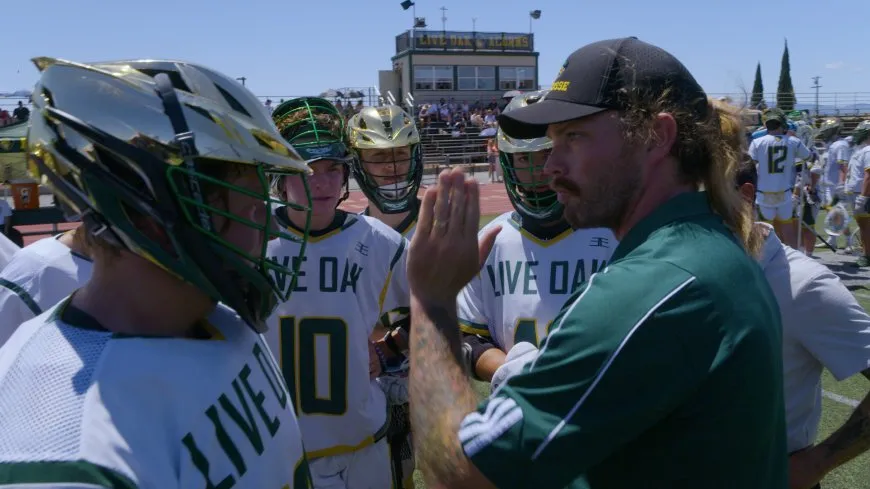
Tanner Holeman carries a quieter intensity, playing each game in memory of his late brother. The film connects these personal experiences to the team’s identity, showing how the sport gives shape to grief and uncertainty through routine, physical discipline, and the steady presence of teammates.
Ryan Forbis adds another angle, offering thoughtful observations about team dynamics and what collective effort asks from each player. These moments keep the documentary from sliding into a simple string of highlights. The team becomes a therapeutic space, a place where difficult feelings can be carried in public without being turned into spectacle. Practices and games read like structure, and that structure becomes part of how the players manage what they are living with.
The film does not treat every perspective with the same depth. A few interviews with parents feel abrupt or thin, yet they still offer a window into the home lives shaping these athletes. By keeping its attention on Castro, Holeman, and the team’s internal bonds, the documentary makes the emotional stakes of the 2024 season easy to understand, even for viewers who arrive without a personal connection to lacrosse.
Capturing the Flow of the Game
The 2024 season functions as the film’s structural spine, tracking the team from February through May. Harty documents key matchups against rivals like Palo Alto, Leland, and Mountain View, and the cinematography gives the games a professional finish. The footage looks sharp, and the speed of play comes through clearly, even if the ball can be hard to follow for an untrained eye. That gap in familiarity becomes part of the film’s design. The documentary brings in professional player Trevor Baptiste to explain the technical mechanics of the face-off, and the sequence plays like a tutorial that teaches the viewer how to read the sport’s rhythm.
Archival material from the program’s early days strengthens the sense of time passing. The film cuts between the small kids of 2015 and the young men of 2024, and that contrast underlines the documentary’s fixation on growth that happens slowly, off the scoreboard, across years. Voice-over narration adds energy to the game footage, including lines like an opponent having “kicked the beehive.” At times, that narration carries the flavor of a reality television script, and that tone can sit awkwardly next to the more somber, natural interviews.
The pacing shows strain in places. Some gameplay passages repeat familiar beats, and the film leaves room for more clarity about league standings and playoff formats. Even with those issues, the visual presentation stays strong, and the focus on the face-off mechanic gives the documentary a rare look at lacrosse strategy, tying technical detail directly to how the season’s tension is built.
The Mighty Oaks is an inspiring documentary that captures the decade-long journey of the Live Oak “Acorns” lacrosse team in Morgan Hill, California. Released on digital platforms on December 9, 2025, the film chronicles the program’s transition from a grassroots passion project in 2015 to a competitive varsity presence during their high-stakes 2024 season. It explores the profound impact of community and mentorship while following the original group of athletes as they compete for a final championship. Viewers can currently watch the documentary on major Video on Demand services, including Amazon Prime Video, Apple TV, and YouTube Movies.
Full Credits
Title: The Mighty Oaks
Distributor: Freestyle Digital Media
Release date: December 9, 2025
Running time: 101 minutes
Director: Brendan Harty
Writers: Brendan Harty
Producers and Executive Producers: Brad Ledwith, Brendan Harty
Cast: Ben Ledwith, Nolan Ledwith, Ryan Forbis, Kenyen Castro, Tanner Holeman, Gavin Herr, Brad Ledwith, Gary Rosyski, Trevor Baptiste, Luke Richey
Director of Photography (Cinematographer): Brendan Harty
Editors: Brendan Harty
Composer: Brendan Harty
The Review
The Mighty Oaks
The Mighty Oaks is a sincere documentary that captures the growth of a community alongside its athletes. While the voice-over and repetitive game footage occasionally mirror reality television, the emotional weight of the players' personal stories provides a grounded perspective. Brendan Harty avoids cheap sentiment, focusing instead on the long-term impact of mentorship and shared responsibility. It is a quiet, effective tribute to the work required to build something lasting from nothing.
PROS
- Deeply moving personal narratives from the players.
- Strong focus on community and character over winning.
- Professional cinematography during high-stakes games.
- Insightful look at the history of a grassroots program.
CONS
- Repetitive gameplay footage in the final act.
- Voice-over narration feels slightly scripted or typical of broadcast TV.
- Some parent interviews feel abrupt.
- Lacks clarity on league mechanics for newcomers.







