

























![Kingdom Hearts Collection [I-III] Review](https://gazettely.com/wp-content/uploads/2026/10/Kingdom-Hearts-Collection-I-III-1-360x180.webp "Kingdom Hearts Collection [I-III] Review: KHII Holds Steady as Newer Entries Fluctuate 37")



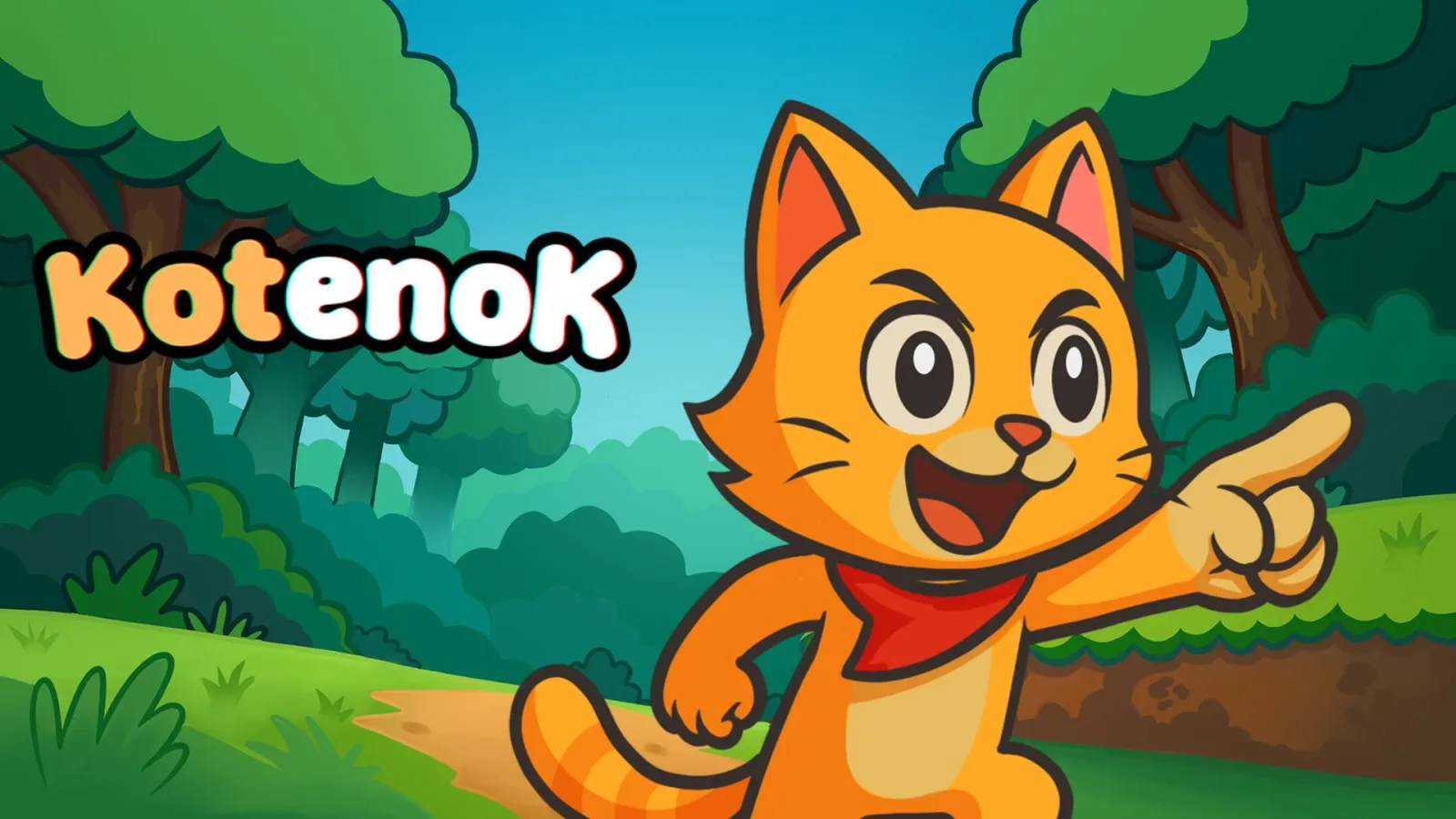

Kotenok, published by EastAsiaSoft and developed by NipoBox, arrives in the busy corner of budget platformers with a title that points toward Slavic roots. The word translates to “kitten” in Russian, a small moment of cultural specificity inside a game that leans on widely shared digital conventions.
Players control a small feline moving through a repetitive forest environment across fifty distinct levels. Each stage follows a rigid, traditional structure where the feline protagonist must reach a flagpole to progress. The scope stays strictly casual, offering a brief experience that ends in under an hour for most players.
That quick run comes with a thin sense of place. The game presents no formal narrative and provides no explanation for the cat’s presence in these woods. Hostile crabs show up in a forest with no water, an unexplained surreal touch that sits on the surface without context. With world-building absent, the design places its attention on traversal itself, leaving timing, spacing, and repetition to carry the experience.
The Friction of Primitive Physics
The mechanical foundation relies on a minimalist input scheme. Movement stays confined to horizontal axes via a D-pad or analog stick, while a single button handles jumping. The double jump serves as the primary tool for agility, providing the vertical control the simple navigation needs. Players occasionally interact with environmental objects like bouncy mushrooms or movable crates to solve basic puzzles, and these moments feel like echoes of established platforming history.
A disconnect emerges between the visual intent and the tactile response of the controls. The jumps carry a floaty quality, and horizontal movement comes with slippery momentum that makes precise landings difficult. That looseness clashes with the demanding placement of hazards, turning ordinary spike runs into repeated corrections.
Combat follows familiar logic where jumping on an enemy’s head defeats it, though the foes simply vanish without flourish. Finicky hitboxes for spikes and enemies often produce failures that feel like technical errors, calling attention to a lack of mechanical refinement.
Structural Rhythms and Stagnant Progression
The obstacle set stays narrow. Static spikes, aggressive crabs, and motion-activated falling boulders make up most of the environmental threats scattered throughout the fifty stages. Difficulty does not settle into a logical or steady upward curve. Later levels sometimes introduce moving platforms or disappearing blocks, yet challenge spikes often arrive through confusing directions or increased level length.
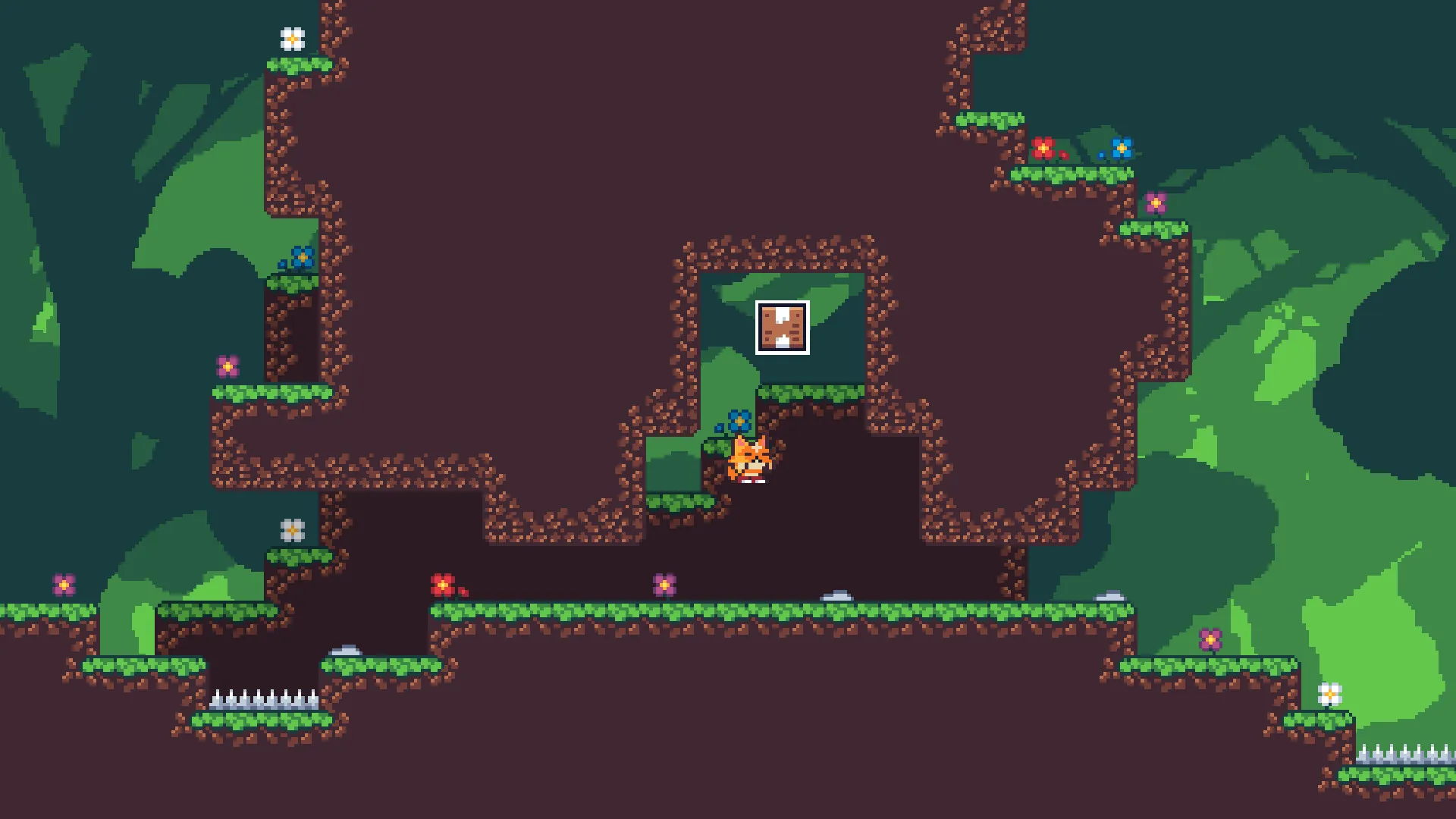
The lack of mid-level checkpoints shapes how those spikes land. A single mistake near the end of a longer stage demands a full restart, creating a redundant loop that tests patience and places little emphasis on skill. Hidden square collectibles appear in sixteen locations, yet these items offer no tangible rewards or gameplay benefits.
They exist solely as markers on a menu screen, stripped of any function that might encourage thorough exploration. Dead ends and paths that lead to empty spaces add to the sense of aimless level architecture. The result reads like a project that favors volume over a carefully crafted difficulty progression and meaningful player incentives.
Aesthetic Dissonance and the Trophy Economy
Visually, the game uses a functional pixel art style that struggles with environmental clarity. A confusing overlap exists between foreground and background layers because the textures used for interactive platforms look nearly identical to non-interactive scenery. This creates a visual trap where players attempt to land on objects that do not exist in the playable plane. The color palette and assets remain static through the entire run, offering no visual reward for reaching the later stages.
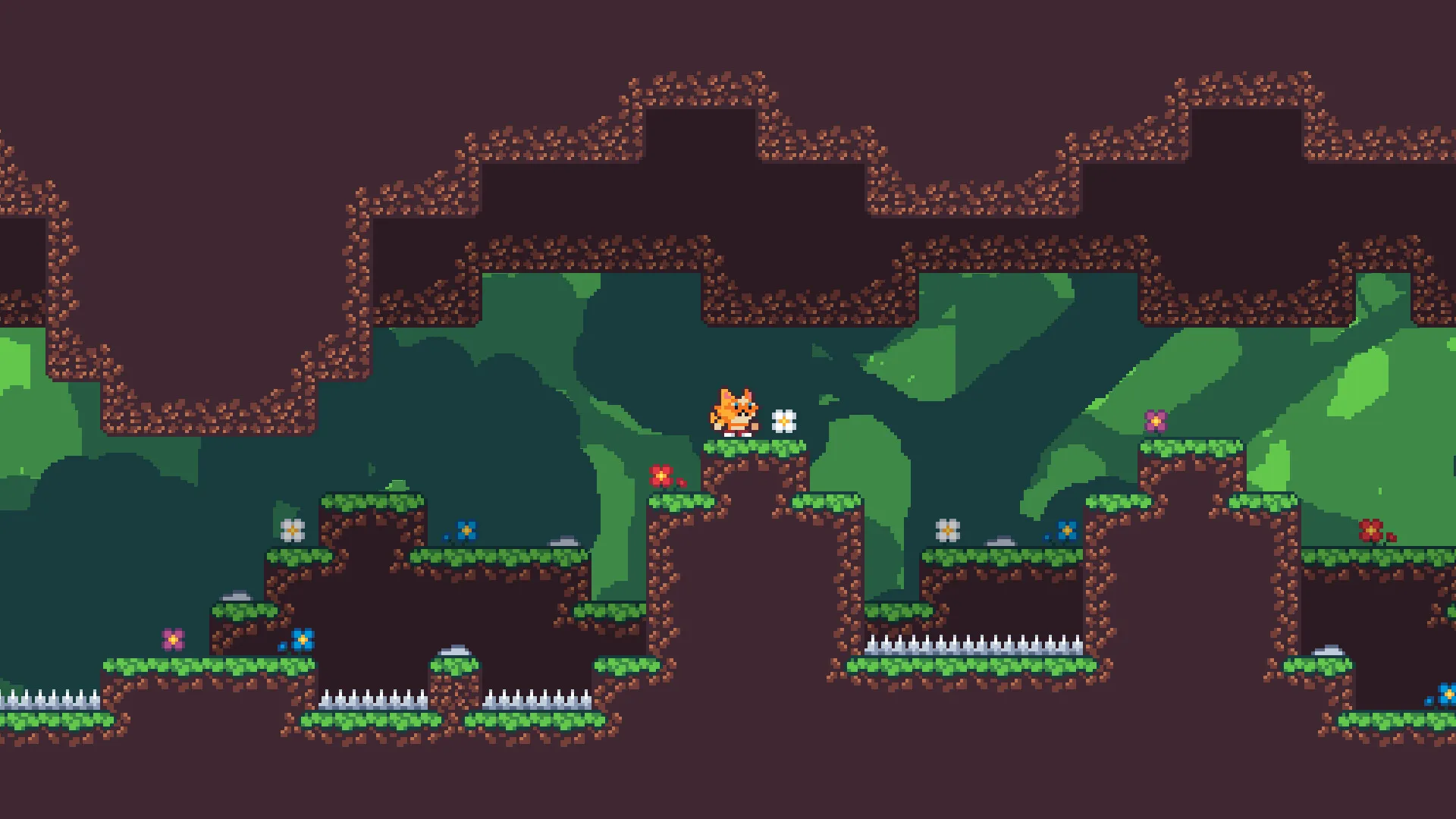
The audio introduces its own inconsistency, as the soundtrack shifts between various tracks that often feel too ominous for the simple forest setting. Technical shortcuts show up in the lack of animations: the screen fades to black upon death, and environmental blocks disappear instantly with no falling-away motion.
The primary value for a global audience lies in the digital trophy economy. Completion of the short campaign yields a Platinum trophy or significant gamerscore, positioning the game as a transactional experience for players who prioritize account statistics over gameplay depth or artistic innovation.
The Review
kotenok
Kotenok functions as a minimalist digital artifact, prioritized for speed and transaction rather than artistic depth. While the Russian title suggests a small window into cultural identity, the lack of narrative cohesion and the repetitive environmental design make it a generic entry in the global platformer market. The loose controls and visual confusion between foreground and background hinder the physical experience of movement. The project finds its only significant purpose as a tool for increasing account statistics, offering little substance beyond its brief, mechanical loop and the linguistic curiosity of its name.
PROS
- Fast completion time.
- Accessible double jump mechanic.
- Large achievement reward for minimal effort.
CONS
- Slippery and imprecise movement.
- Confusing visual layers.
- Repetitive assets across all levels.
- Lack of mid-level checkpoints.







