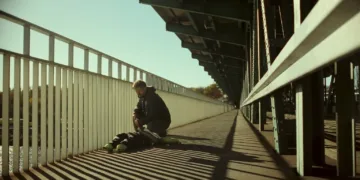


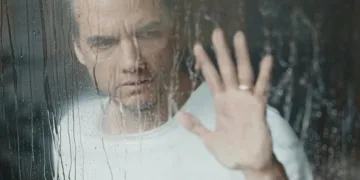


















At 4:00 AM on May 27, 2023, the world grows quieter for the Dymiński family. Sixteen-year-old Krzysztof, known as Chris, walks onto the Gdański Bridge in Warsaw and then slips out of the visible world. CCTV holds on a still, unsettling image: a boy staring down at the Vistula River.
The camera turns away for less than sixty seconds. When it swings back, the bridge is empty. The film frames this as a digital ghost story that starts with a three-word Instagram post: “Thank you, goodbye.” Silence comes next. Director Michał Marczak keeps sentimental documentary habits out of the frame and stays with the immediate aftermath. Childhood photo montages and birthday-party videos never take over.
The film plants itself in the vacuum Chris leaves behind, building a heavy, lingering grief that feels close enough to touch. Marczak clears away the usual biography beats and pins us to the present tense. The bridge, the water, and a child’s sudden absence become the only facts that keep returning.
The Father’s Recursive Search
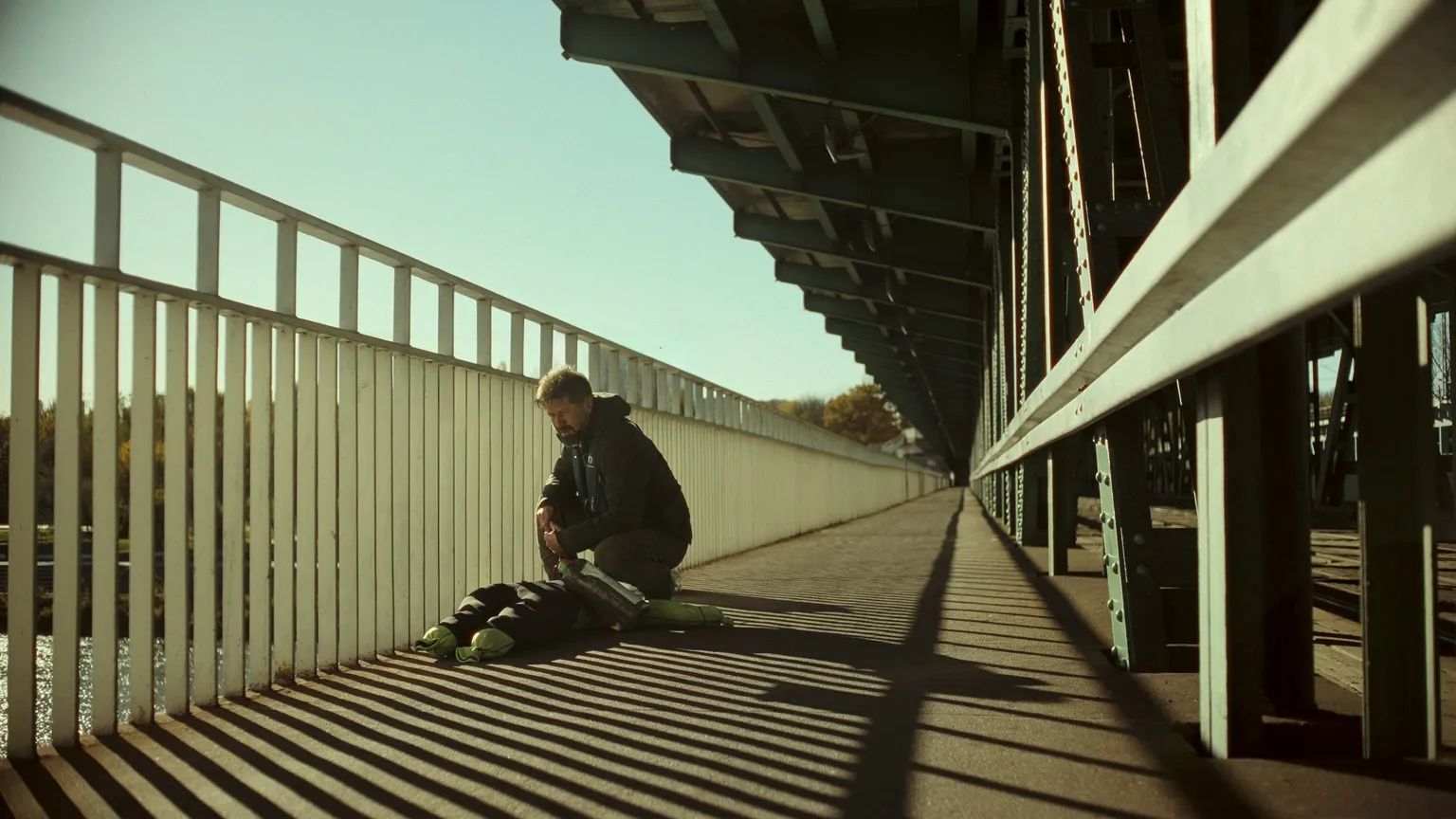
The Vistula River functions as an unforgiving presence in the story. Its brown, murky depths take over the daily life of Daniel Dymiński, Chris’s father. Daniel treats grief like a mechanical problem he can keep working, with the technical precision of a gearhead. He modifies consumer drones into military-grade thermal scanners. He walks the riverbanks with metal detectors.
His method becomes a study in modern desperation, built from tools, signal checks, and repeated passes over the same ground. Alongside that hardware, he turns to folklore: candles placed inside hollowed loaves of bread, sent downstream to trace the current. The ritual carries its own bleak logic, a way to measure movement when answers refuse to surface.
Day after day, dredging the riverbed becomes Daniel’s routine. The physical work puts shape around his pain. He looks for evidence he can hold, the kind that lets a mind stop arguing with itself. A shoe or a set of braces would give him something concrete to attach to his belief that Chris is dead. The search keeps folding back on itself, a loop of scanning, hoping, and returning. That loop gives Daniel purpose, and it also wears him down, one pass at a time.
Also Read






The Domestic Void and Digital Shadows
At home, Chris’s absence becomes a domestic void you can feel in the smallest habits. Every meal comes with an empty seat that speaks louder than conversation. Daniel and his wife, Agnieszka, live inside two different kinds of hope. Agnieszka holds onto the possibility that Chris ran away to start a new life. Daniel stays fixed on the river, pulled by what the water might still hide. Their split captures a familiar anxiety about teenagers and the private lives they build beyond the family’s line of sight.
Daniel turns to the digital trail, spending hours inside Chris’s TikTok algorithm, trying to decode cryptic clips pulled from films like American Psycho. The footprint refuses to translate into a clean explanation. It reads like a confusing mirror of a seemingly normal life, filled with fragments that point everywhere and nowhere.
Watching a parent scroll through that maze can feel painfully familiar; anyone who has tried to understand a loved one through posts and fragments knows how quickly a screen turns into a wall. The film uses this “online self” as a measure of distance, showing how far a parent can stand from a child’s interior world while still sharing the same rooms.
Daniel’s expertise, sharpened by obsession, starts to face outward. He begins helping other grieving families with their own searches. In one sequence, he assists another father in recovering a daughter’s body. The moment forms a tragic community bound by loss and practical knowledge: who to call, where to look, how to keep moving when the days keep repeating. The service carries its own weight, built from the same tools and the same ache that drives Daniel back to the river.
Marczak’s Aesthetic of Decay
Michał Marczak shoots with a visceral style that sits between documentary observation and expressionist art. The visuals shift constantly, moving from GoPro footage down in the riverbed to sweeping drone shots over the Warsaw landscape.
Marczak also makes himself a presence through sound. His voice comes from behind the lens, pushing Daniel to speak the feelings he keeps trying to engineer into solvable parts. That exchange turns the film into a shared act of witness, shaped by the subject’s need and the filmmaker’s insistence.
The sound design lands with particular force through William Basinski’s The Disintegration Loops. The music’s decaying tape texture becomes an audible clock. You hear time wearing down the material itself, and that erosion shadows Daniel’s inner life, along with the physical decay he expects the river to deliver.
Marczak withholds the kind of resolution many true-crime stories train audiences to expect. The film stays with the weight of “not knowing,” letting uncertainty sit in the room without relief. The final images leave a quiet, steady aftershock. The story ends in continued absence, held in place by persistence and love.
Closure premiered at the Sundance Film Festival on January 23, 2026, where it competed in the World Cinema Documentary category. As of today, February 12, 2026, the film is moving through the international festival circuit following its warm reception in Park City. It provides a devastatingly intimate look at a Polish family’s search for their missing son along the Vistula River. While it has not yet moved to a wide streaming release, the involvement of major distributors like Canal+ suggests it will be available on premium platforms and in select theaters throughout 2026.
Where to Watch Closure
Full Credits
Title: Closure
Distributor: Autlook Filmsales, Braidmade Films, Canal+ Poland, France Télévisions, Against Gravity
Release date: January 23, 2026
Running time: 108 minutes
Director: Michał Marczak
Writers: Michał Marczak
Producers and Executive Producers: Monika Braid, Michał Marczak, Rémi Grellety, Katarzyna Szczerba, Karolina Marczak, Danielle DiGiacomo, Brian Levy, Julia Nelson, Christine De Soussa Gelb, Amy Shepherd, Danielle Turkov, James Costa, Trevor Burgess, Gary Hess
Cast: Daniel Dymiński, Agnieszka Dymińska, Krzysztof Dymiński, Patryk Dymiński
Director of Photography (Cinematographer): Michał Marczak
Editors: Anna Garncarczyk
Composer: Paweł Mykietyn, Dirk Dresselhaus, Ilpo Väisänen, Hildur Guðnadóttir, William Basinski
The Review
Closure
Closure is a profound and punishing exploration of the space between hope and grief. It eschews the easy hooks of true-crime thrillers to focus on the textures of a father’s endurance. While the lack of a traditional resolution may frustrate those seeking a tidy mystery, the film finds its power in that very absence. It is a haunting, technically masterful meditation on the love that remains when the person is gone.
PROS
- Visceral, high-contrast cinematography
- Innovative use of sound design and music
- Intimate, respectful access to the family
- Subverts standard documentary tropes
CONS
- Pacing may feel repetitive for some
- Lack of definitive answers
- Emotionally heavy and draining experience