





























Rafael Manuel draws a hard visual line in Filipiñana. The film begins inside the tight shell of a tour bus, where a guide performs a hollow, rehearsed cheer for foreign visitors. That performance soon leads into the main arena: a sprawling, aggressively manicured golf course on the outskirts of Manila.
Manuel frames the club as an engineered oasis, its emerald calm set against a city baked dry by heat and scarcity. Residents stand in long lines under the sun to fill basic water jugs, while the country club spends the same resource freely, feeding sprinklers that keep the grass immaculate. Seventeen-year-old Isabel lives at the rim of this manufactured paradise.
Working as a tee girl, she embodies the unseen labor that keeps the club’s image intact. The film watches power at work with a chilled steadiness, tracking class segregation as routine. The Philippine sun becomes a pressure point, intensifying the feeling of a society locked into a rigid hierarchy. That use of landscape recalls Indian parallel cinema, where setting carries moral weight and the environment reflects systemic inequality.
Echoes of Ilocos and the Wealthy Periphery
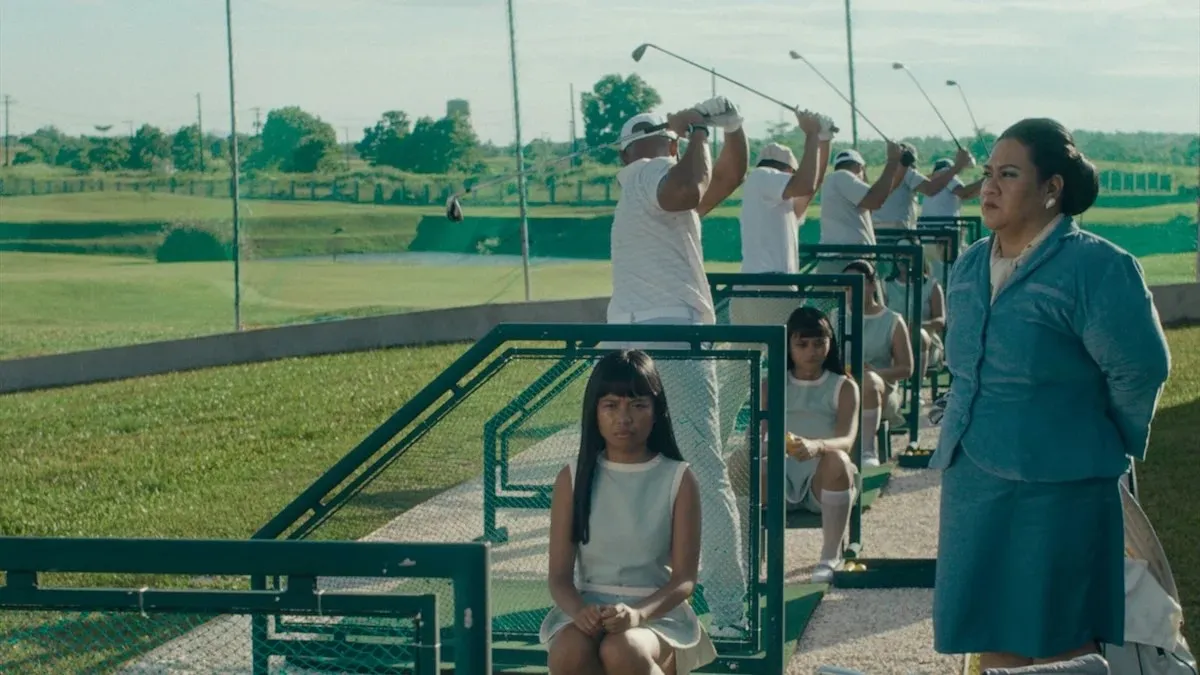
Isabel’s work is built from repetition and submission. In her turquoise uniform, she spends the day crouching inches from the violent follow-through of wealthy men, placing golf balls in position and absorbing the threat of each swing as part of the job. The closeness reads as a daily reminder of distance. She can stand beside the patrons, but she remains far from them in every way that matters.
Isabel feels an uneasy pull toward Dr. Palanca, the club president. Their shared Ilocano heritage offers her a thin strand of recognition inside a space that treats her as an implement. The film keeps that strand fragile, suggesting comfort that can turn into misreading. Dr. Palanca carries the lingering shape of colonial authority, and his entitlement surfaces in controlled gestures that still feel frightening.
Across that axis sits Clara, a Filipina American expat visiting from New York. She reacts to the club with visible awkward revulsion. She also cannot confront her uncle’s business world, leaving her caught between moral discomfort and inherited structure. The situation echoes a familiar diaspora tension in modern global cinema, where the act of returning sharpens identity fractures instead of repairing them.
The club runs on a color-coded labor order. Bright pink caddies move through the frame, and blind musicians provide a steady rhythmic backdrop that turns service into spectacle. Staff members witness every transaction and every indiscretion, collecting details as part of their workday. The patrons stay wrapped in self-absorption, sealed off from the people sustaining their leisure. The resulting upstairs-downstairs friction hangs unresolved, as heavy as Manilan humidity.
The Geometry of Stasis and Sound
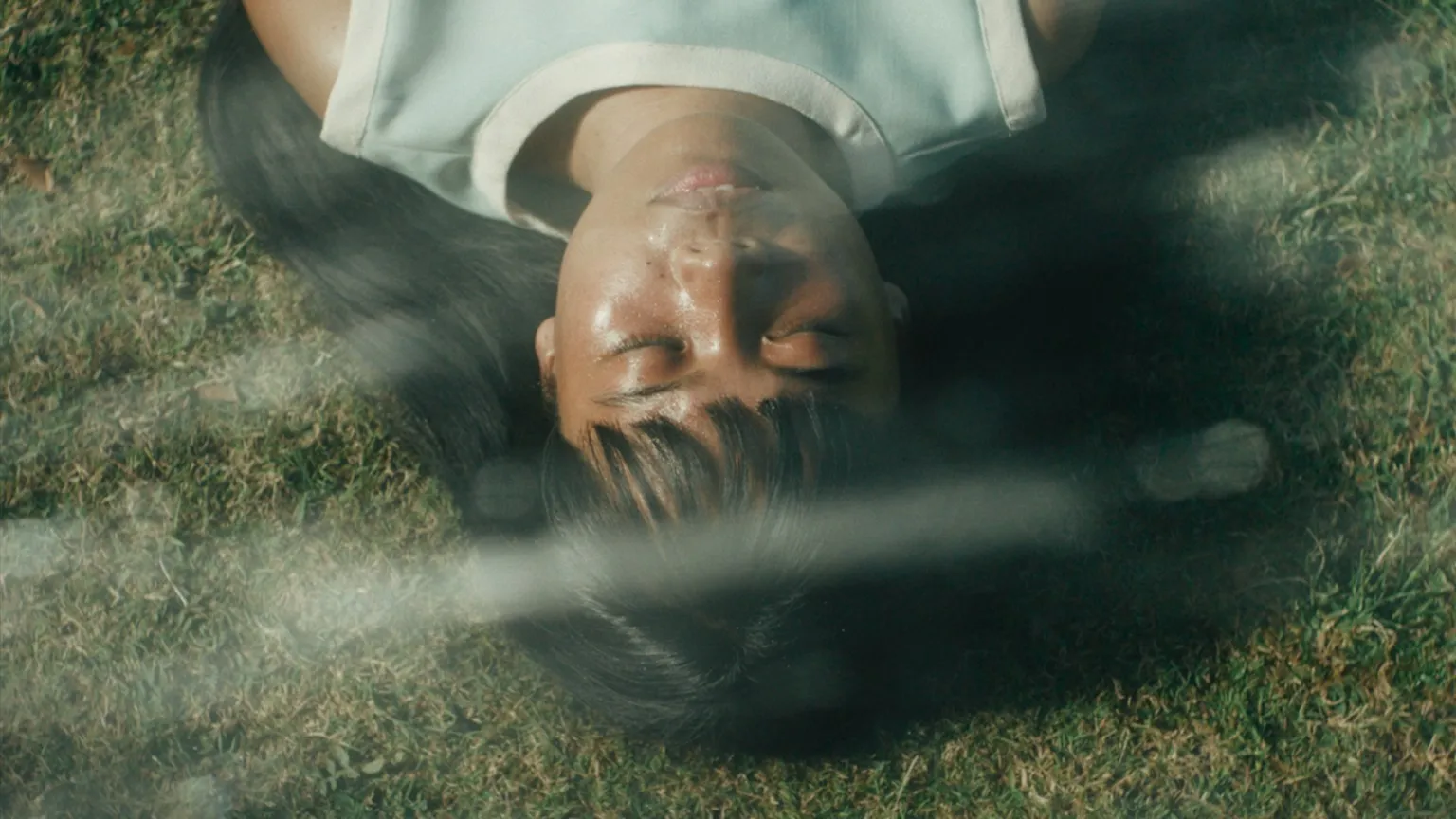
Manuel shoots in a 4:3 aspect ratio, boxing characters into rigid, painterly compositions. The frames sit wide and still, emphasizing physical separation between workers and elites even when they share the same patch of grass. Saturated colors dominate the image, striking in their beauty and unsettling in their artificiality. The club looks like a sealed bubble, cut loose from ordinary life.
Sound completes that sense of design. Golfers strike balls in choreographed unison, and the repeated motion creates a mechanical rhythm that smooths over anything human and messy. Musical performances by staff operate as a polished surface for the guests, part entertainment and part camouflage. The pacing stays lethargic, close to narcotized.
Long takes and extended silences make time feel thick, forcing viewers to sit inside the same slow drift as the characters. In that slowed time, social mobility reads as absent. The stillness points to a world organized around inaction, where the system holds because nothing pushes it. This handling of duration recalls the meditative timing associated with Satyajit Ray, where the camera waits for truth to surface from silence instead of chasing a forced peak.
Erasure on the Fairway
The golf course becomes a symbol of historical forgetting. Imported pine trees, poorly suited to the tropical climate, die and are replaced immediately with identical ones. The cycle reads as maintenance policy and metaphor at once, matching the way workers are treated as interchangeable pieces within a managed landscape. Gentrification appears here as erasure carried out through upkeep and repetition.
Manuel presents structural violence through small signals instead of spectacle. Hints of a darker history, paired with the quiet exploitation of the tee girls, register like the “red ants” beneath pristine grass: present, ignored, and capable of biting through the illusion. Security carts circle the grounds to ensure employees remain in assigned stations, turning class limits into something enforced in plain view.
The ending also plays against familiar Western narrative habits by placing its most vital moments in the closing credits. The choice aligns with Isabel’s position inside the story, where significance exists without recognition. The lawns stay immaculate and sinister, and the colonial torpor that defines the club continues to protect the status quo. The frames keep their beauty, then tilt into menace, until the film lands on a simple, corrosive idea: perfection on display implies violence in the work required to make it look that way.
Filipiñana is a 2026 feature film debut by Filipino director Rafael Manuel, expanded from his award-winning 2020 short film of the same name. It world premiered in the World Cinema Dramatic Competition at the Sundance Film Festival on January 23, 2026, where it received critical acclaim for its visual language and social commentary. Set within the exclusive, artificial landscape of a Manila country club, the film examines deep-seated colonial-class disparities through the eyes of a young “tee girl” named Isabel. The film is currently touring major international festivals, including a scheduled European premiere at the Berlin International Film Festival on February 15, 2026.
Full Credits
Title: Filipiñana
Distributor: Unknown Pleasures Pictures
Release date: January 23, 2026
Running time: 100 minutes
Director: Rafael Manuel
Writers: Rafael Manuel
Producers: Jeremy Chua, Alex Polunin, Bianca Balbuena, Bradley Liew, Nadia Turincev, Omar El Kadi, Rafael Manuel
Executive Producers: Farhana Bhula, Anthony C. Isais, Grace Mariel M. Isais, Maria Sophia Atayde-Marudo, Jossette C. Atayde, Sebastian Raeuber, Francine Raeuber, Jia Zhangke
Cast: Jorrybell Agoto, Carmen Castellanos, Teroy Guzman, Carlos Siguion-Reyna, Isabel Sicat, Nour Hooshmand, Shamaine Buencamino, Agot Isidro, Angeli Bayani, Ruby Ruiz
Director of Photography (Cinematographer): Xenia Patricia
Editors: Rafael Manuel
Composer: Vincent Villa
The Review
Filipiñana
Filipiñana is a haunting, visually masterful meditation on the persistence of colonial structures within the modern Philippines. Rafael Manuel successfully transforms a luxury golf course into a suffocating microcosm of inequality where silence is both a survival tactic and a weapon. While its glacial pacing and sparse narrative may alienate those seeking traditional drama, the film offers a profound sensory experience for patient viewers. It is a bold, uncompromising debut that marks the arrival of a significant new voice in global cinema, even as it risks losing its audience to its own stillness.
PROS
- Every frame is a meticulously composed tableau that functions as a work of art.
- Uses the artificiality of a golf course to brilliantly critique gentrification and erasure.
- The rhythmic, mechanical sounds of the club effectively build a sense of hidden menace.
CONS
- The lethargic, "narcotized" speed of the film can feel indulgent rather than intentional.
- The thin plot and emotional distance from the protagonist make connection difficult.
- Performances are often so restrained that they lack necessary dramatic tension.