


























Beary Arms opens with Beary, a teddy bear who wakes up in a bedroom set inside a surreal, semi-dreamland. That premise signals a clear shift away from the gritty look many bullet hell games lean on. The space grows stranger with Paul Stapleton, a monocle-wearing fox who smokes a pipe and tells you stories from his therapist. Visually, the game commits to a blocky 8-bit style that feels intentionally rough around the edges, leaning into a lo-fi charm that matches the premise.
Sound does as much work as the pixel art. The soundtrack jumps between Soviet choral music, Gaelic folk, and polka layered with lo-fi beats. That mix keeps the mood buoyant even as the difficulty ramps up fast. Storytelling stays light, leaning on puns and small lore mementos you pick up during runs. The tone stays welcoming, even when the mechanics ask for serious focus. A cuddly bear thrown into high-stakes space combat gives the game a playful identity that feels new for the genre.
Precision Combat and the Puns of War
At its foundation, Beary Arms plays as a twin-stick shooter: one stick controls movement, the other controls aim. Staying alive depends heavily on the dash, which grants a brief window of invulnerability. That single move lets you slip through projectile curtains or squeeze through gaps between platforms, turning many near-misses into planned routes.
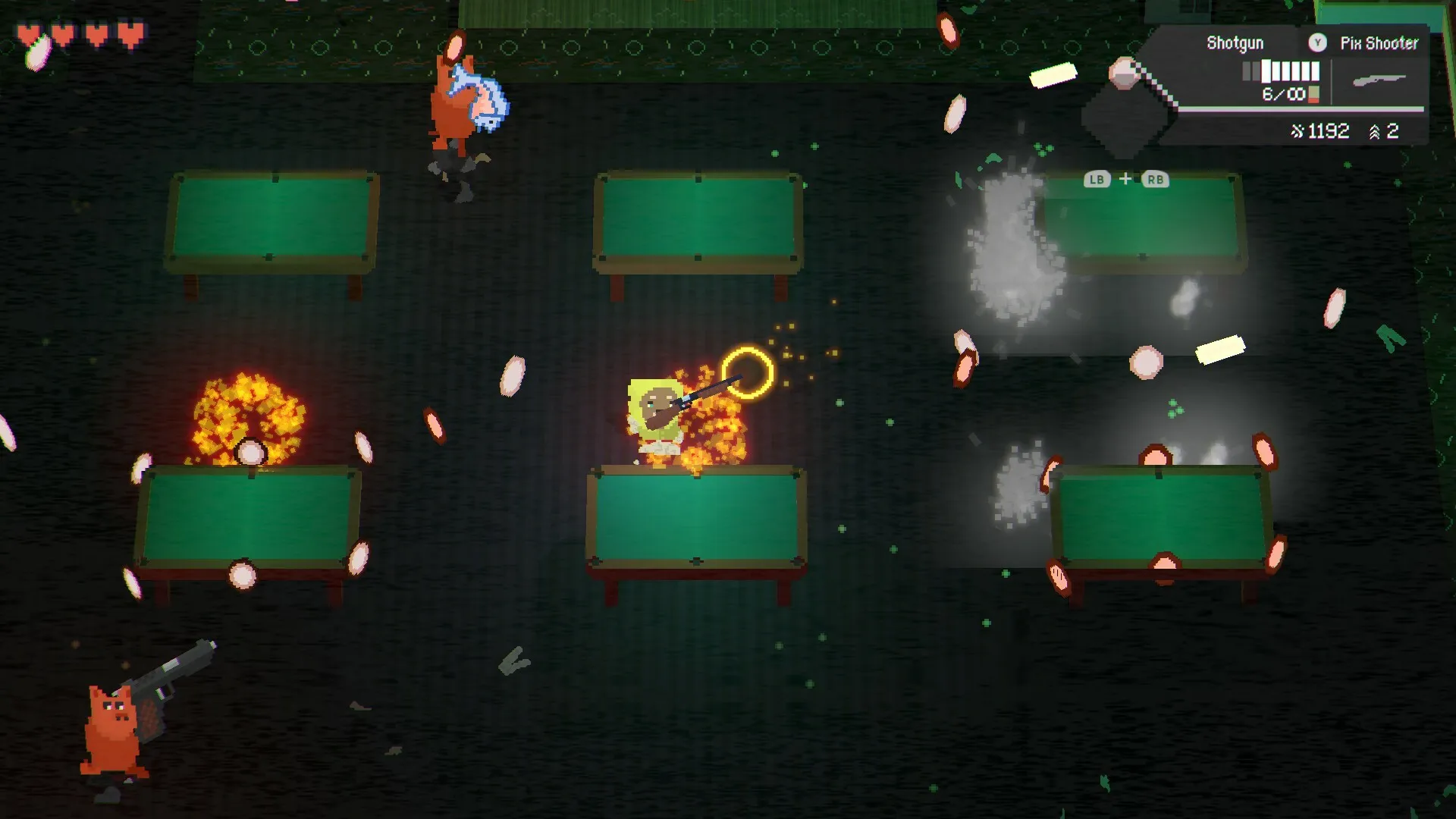
Weapons are one of the clearest strengths, built around variety and joke-heavy naming. Runs begin with simple options like the Squirt Gun, Cap Gun, or Alien Blaster. Over time, you can graduate into heavier firepower, including the Mosin Nagant sniper rifle and the deliberately silly Mac 10 & Cheese. The constant смена of tools keeps the action from settling into one dominant rhythm, since each pickup reshapes how you approach rooms.
The “bullet hell” tag fits, yet the projectiles often move at a calmer pace than the blistering velocity associated with a game like Ikaruga. That pacing creates its own tension: positioning matters because slow-moving shots can pile up until the room becomes a thick field of danger, and a bad angle can leave you boxed into a corner. Combat feel has a few rough spots.
Controller aiming can come across as loose, and enemy hitboxes sometimes lack the crisp visual or audio feedback you get in polished peers like Enter the Gungeon. The game still finds depth through its “Augs,” weapon mods that can significantly change how a gun behaves. With the right Augs, the same base weapon can support very different play styles, which helps the arsenal keep its variety across long sessions.
Galaxies and Choosing Calamities
A standard run moves through procedurally generated “galaxies,” with rooms that lock once you step inside. Progress means clearing enemy waves that can include kamikaze blobs, stationary sentry turrets, and agile spiders. The structure alternates between chaotic combat arenas and quieter corridors, giving you brief stretches to reset your hands before the next spike hits.
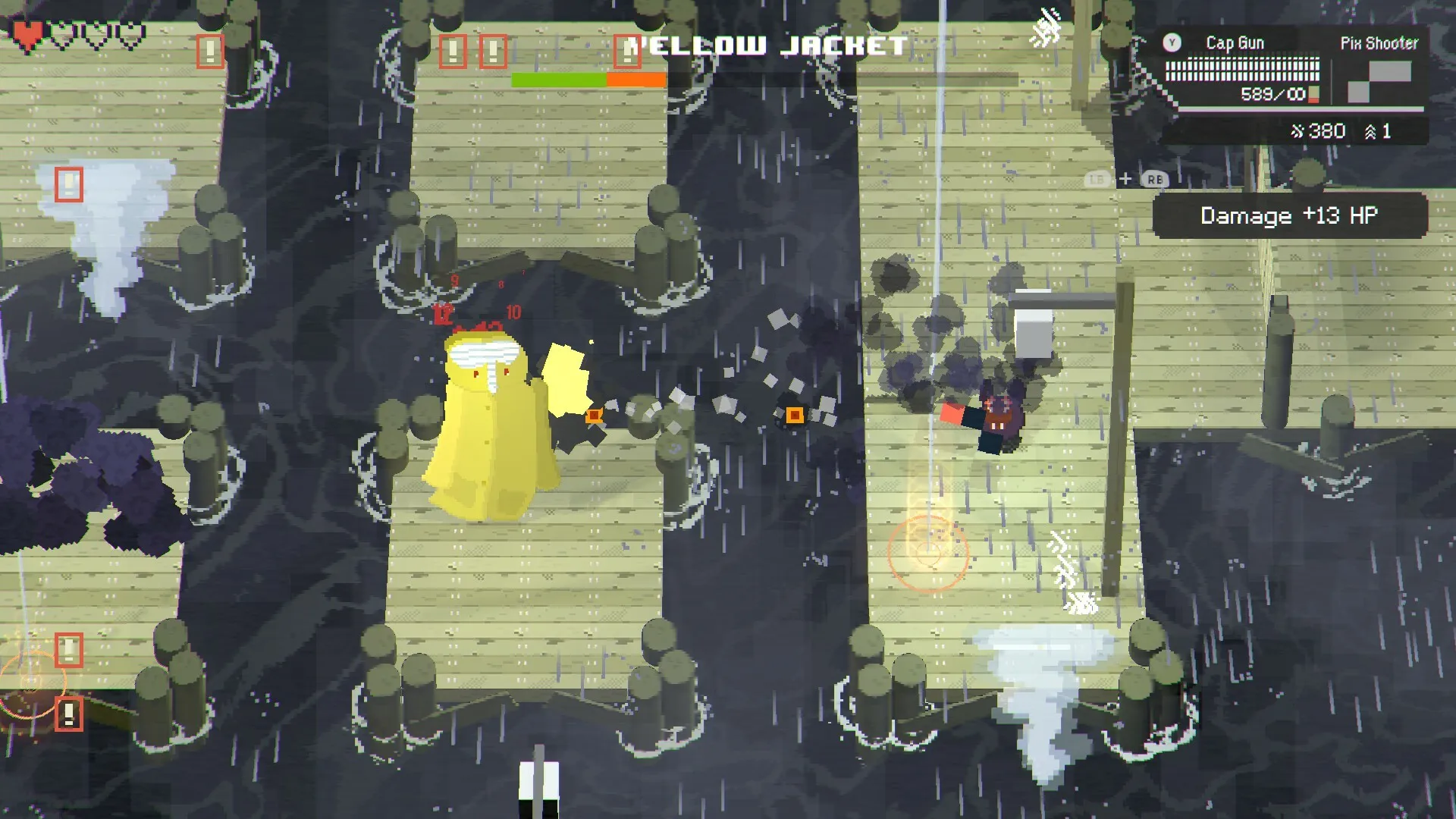
A successful run can demand around thirty minutes of sustained attention, which makes it a bigger time commitment than faster roguelites built for rapid clears. Difficulty stays high throughout, and survival often comes from using cover and playing with patience instead of trying to brute-force every encounter.
The “Calamity” system is the main mechanical hook shaping that pressure. Many games in this space focus on player growth alone; here, you regularly pick a specific penalty that applies to your enemies at the end of certain rounds. Options can include a higher enemy count, faster enemy movement, or a hit to your own firing accuracy.
Each choice functions like a negotiation with the run: you accept a harsher battlefield in exchange for continuing forward with your build intact. Finding a good gun matters, and the Calamity choice can matter just as much, since the wrong pick can turn an otherwise strong setup into a scramble. The system pushes planning into every phase, keeping the tension alive even when your loadout starts to feel powerful.
Growth Through Inspiration and Technical Stability
Between deaths, the “Proove” machine acts as the hub for metaprogression. You spend Inspiration Points, collected during runs, to fill out permanent perk trees. Those upgrades grant practical gains like extra hearts on your health bar and shorter dash cooldowns, and you can unlock stronger default starting gear to make early rooms less punishing.
During runs themselves, a separate currency called “Plu” lets you buy temporary health and weapons from shops. That two-layer economy echoes the structure seen in Dead Cells, where long-term progression supports consistency and run-to-run spending supports moment-to-moment survival.
Console performance stays stable most of the time, yet some problems still show up. Reports mention screen freezes where audio continues but the visuals lock in place, a particularly aggravating failure during a long run. The 8-bit presentation keeps hardware demands low, so these hiccups read as bugs that still need polish.
To support tracking and experimentation, the game includes an extensive Encyclopedia with entries for every weapon, outfit, and buff. It also works as a reference for players who want to understand the gear interactions and keep tabs on the story mementos scattered through the dreamlike stages.
The Review
Rightfully, Beary Arms
Rightfully, Beary Arms is a quirky, punishing twin-stick shooter that thrives on its bizarre personality and unique penalty system. While the surreal music and pun-heavy arsenal create a delightful atmosphere, the early-game grind and loose aiming mechanics can be a barrier to entry. Technical hitches occasionally disrupt the flow, but the deep metaprogression offers enough incentive for players to push through the challenge. It is a solid choice for those seeking a difficult, offbeat roguelite experience.
PROS
- Highly original soundtrack and surreal aesthetic.
- Clever "Calamity" system adds strategic depth.
- Massive variety of humorous, pun-filled weapons.
- Rewarding permanent upgrade tree.
CONS
- Punishing early-game difficulty and grind.
- Occasional technical freezes and bugs.
- Repetitive environment and enemy designs.
- Loose aiming precision and hitbox feedback.