




















![Kingdom Hearts Collection [I-III] Review](https://gazettely.com/wp-content/uploads/2026/10/Kingdom-Hearts-Collection-I-III-1-360x180.webp "Kingdom Hearts Collection [I-III] Review: KHII Holds Steady as Newer Entries Fluctuate 37")



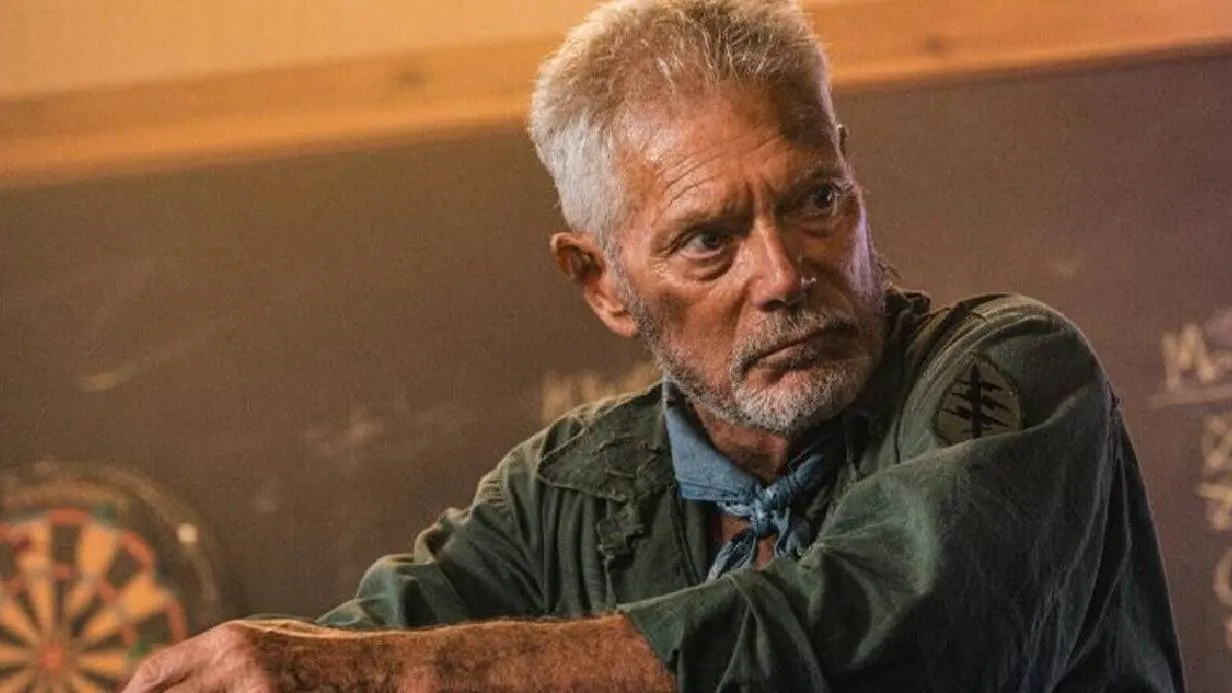

A title card drops you into 1988, and then the grit takes over. The place feels stuck in its own weather. Stephen Lang arrives as a nameless drifter with a backpack, a military past, and the posture of a man who has trained himself to need little. He wants day work. He wants food. The town wants him gone, or at least compliant.
The local cocaine syndicate runs its business through a brewery, which is a tidy piece of American pragmatism. Corruption, packaged and ready for distribution. Owen, the wheelchair-bound saloon owner, gives the drifter labor. Lena watches him like she is keeping inventory. They settle on “Nomada,” a name that plays like a label slapped on an empty folder. It reads as self-erasure turned into myth.
Power here does not need to shout. Harvey Keitel’s Jeremiah governs at a remove, and the distance is part of the menace. His son Clyde functions as the body, the bruising hand that makes the father’s will tangible. Sheriff Wiley completes the triangle, a lawman who keeps the law politely blind.
Nomada clocks the arrangement, stays anyway, and aims his specialized training at the structure holding the town in place. It is the old archetype of the lone righteous man walking into a broken system and trying to force the gears to grind in a fair direction. The moral math sounds simple. The film keeps hinting that simple math can still leave a stain.
Aging Archetypes and the Politics of Stillness
Lang plays Nomada with a weathered physicality and a deliberate quiet. Silence becomes performance. Stoicism becomes a kind of armor he maintains out of habit, or punishment, or both. He refuses charity with stubborn pride, the way a man might refuse a mirror. The character’s internal code feels rigid, and that rigidity reads like survival rather than virtue. A line between dignity and damage keeps wobbling.
Keitel’s Jeremiah offers an eerie counterweight. He remains stationary, reading or playing piano while his empire spills blood elsewhere. Domestic calm, clinical violence. The stillness becomes its own expressionistic framing, a noir trick turned inside out. The king rarely leaves the chair. The town still bows.
Dolph Lundgren gives Sheriff Wiley a weary resignation and a peculiar mustache that signals defeat before the dialogue gets a chance. He looks like a man who misplaced his authority years ago and stopped searching. Clyde, played by Michael Sirow, is impulse made flesh, the kind of volatility that an older villain delegates so he can keep his hands clean and his shirt unwrinkled. Civilian stakes arrive through Scottie Thompson and Chris Mullinax, quiet victims waiting for a savior because waiting is what the powerless do when the powerful have schedules.
Then Johnny Yong Bosch shows up as Zeke and the threat profile sharpens. His martial arts background brings technical clarity, a counterpoint to raw force. The film becomes candid about bodies aging, bodies breaking, bodies trained into weapons. Noir archetypes linger in the casting. Time keeps tugging at their seams. The iconography remains. The metabolism changes.
Harsh Clarity, Pharmacy Light, and Chiaroscuro’s Absence
Isaac Florentine comes in with a martial arts cinema sensibility, and the direction leans into mechanics. Movement matters. Impact matters. The camera watches rather than apologizes. Yet the visual choice that sticks is the refusal of noir shadow. The lighting runs bright, almost antiseptic, like the inside of a 24-hour pharmacy at 2 a.m. A noir film would hide sins in darkness. This one puts them under fluorescent scrutiny. No mystery. No merciful blur. You see the low-budget surfaces, every detail, every scuff.
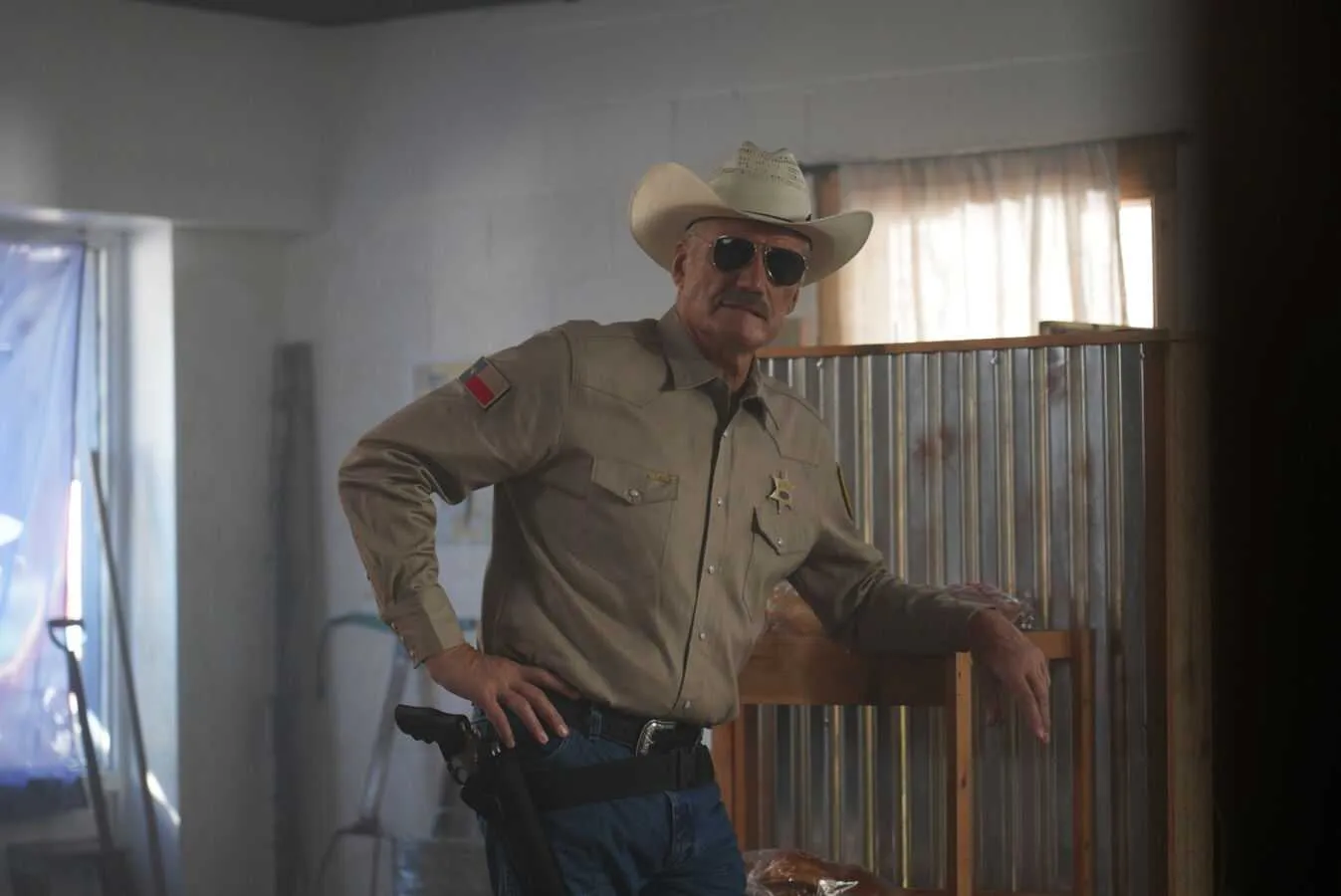
That brightness changes the moral temperature. Chiaroscuro usually lets a story externalize ambiguity through shadow gradients. Here, the ambiguity has to live in behavior, in choices, in what people tolerate. The film’s world looks exposed. Its ethics feel exposed too. The result can be bracing. It can also feel faintly comic in the grimmest moments, like the town has been sentenced to confess under the lighting of a convenience store security camera. The universe has a sense of humor. It keeps it dry.
Sound design follows the same exaggerated logic. Impacts land with a theatrical weight that recalls the stylized punches of the 1960s Batman series. The effect is blunt, even playful, and it nudges the audience’s psychology in a specific direction. Pain becomes punctuation. Violence becomes a rhythm section.
The choreography peaks in the brewery, where Lang and Bosch work hand-to-hand through industrial space. The camera holds steady, letting bodies trace lines through metal and concrete. The production does not hide its limits. Car chases run along desolate rural roads. Gunfights occupy cavernous abandoned factories. The pacing asks for patience, especially in the first thirty minutes, which function as a slow introduction to the local players. That deliberate start does its own work. It lets the stagnation settle in your lungs before the chaos starts swinging.
Wayfaring Souls, Religious Framing, and a Late Moral Disruption
The 1988 setting is announced, then treated like a ghost. Beyond the title card, period markers barely register. Rondo becomes an abstract pocket of the American South, more idea than timestamp. Music carries much of the atmosphere. Stephen Edwards uses “Wayfaring Stranger” as a recurring motif, turning the folk gospel lineage into an anchor for Nomada. Banjo variations. Simple vocal humming. A wandering soul scored as wandering soul.
The script, written by Richard Lowry, keeps returning to the weight of the past through brief flashbacks to Nomada’s military service. The glimpses suggest PTSD without turning it into exposition. Trauma becomes a shadow that the film refuses to render as literal shadow. Lena gives the narrative its religious tint, describing the community as fallen souls and reading the drifter’s arrival as divine intervention. Under that framing, violence becomes cleansing. Sin becomes something you can beat out of a town with training and a weapon.
That belief creates a clean moral universe on paper. The film presents it with confidence, a throwback ideology that trusts the solitary man to rectify systemic rot. Then the final act introduces a twist that changes the stakes and forces a reassessment of what came before. The story’s earlier certainty starts to wobble. Free will starts to look like a story people tell themselves because the alternative feels unbearable. Identity becomes slippery. Ethical gray zones widen.
You can feel the film tugging in two directions at once, toward the comfort of old action-era righteousness and toward the discomfort of a redefined conflict. That tension becomes the real noir inheritance, even under pharmacy lighting: the sense that justice might be a pose, salvation might be a projection, and the drifter’s code might be the cleanest lie in the room.
“Hellfire” is an action thriller that premiered on Digital and VOD platforms on February 17, 2026. Distributed by Saban Films, the movie follows a haunted drifter who wanders into a small town and wages a one-man war against a ruthless crime boss and a corrupt sheriff. Viewers can watch the film on various digital services, including the Apple TV Store, Amazon Video, and the NEON platform.
Where to Watch Hellfire 2026 Online







Full Credits
Title: Hellfire
Distributor: Saban Films, Splendid Film
Release date: February 17, 2026
Rating: R
Running time: 95 minutes
Director: Isaac Florentine
Writers: Richard Lowry
Producers and Executive Producers: Isaac Florentine, Johnny Remo, Sasha Yelaun, Robert Paschall Jr., Daniel Lief, Christian Filippella, Henry Penzi, Joel Cohen
Cast: Stephen Lang, Harvey Keitel, Dolph Lundgren, Michael Sirow, Scottie Thompson, Chris Mullinax, Johnny Yong Bosch, Maurice Compte, Natalie Canerday, Hector Melgoza, Levon Panek, Jason Scott Morgan
Director of Photography (Cinematographer): Ross W. Clarkson
Editors: Paul Harb, Kurt Nishimura
Composer: Stephen Edwards
The Review
Hellfire
"Hellfire" operates as a stark, high-lumen exercise in vengeance that prioritizes physical mechanics over narrative depth. While the production values often mirror the flatness of a generic retail space, Stephen Lang’s granite-faced performance lends the proceedings a necessary gravity. It is a work that embraces its B-movie DNA with a blunt, almost religious simplicity. For those seeking a lean, unapologetic throwback to the era of the lone vigilante, it serves its purpose, even if the execution remains as weathered as its protagonist.
PROS
- Stephen Lang’s commanding, stoic physical presence
- Solid, well-choreographed hand-to-hand combat
CONS
- Harsh, over-bright lighting that flattens the atmosphere
- Predictable script with thin character motivations
- Cartoony sound effects that undercut the tension
- Underutilized supporting cast (Keitel and Lundgren)