


























![Kingdom Hearts Collection [I-III] Review](https://gazettely.com/wp-content/uploads/2026/10/Kingdom-Hearts-Collection-I-III-1-360x180.webp "Kingdom Hearts Collection [I-III] Review: KHII Holds Steady as Newer Entries Fluctuate 40")


Infinite Icon: A Visual Memoir plays like a sensory meditation on the public life of Paris Hilton. Directors Bruce Robertson and JJ Duncan shape it as a biographical documentary, a concert film, and a string of personal vignettes. The film anchors itself to Hilton’s 2024 album, treating the music as the frame for her life story. She moves from the flashbulbs of the 2000s tabloid era toward advocacy.
She positions herself as a musician and survivor, with the socialite image receding into the background. The shift tracks a familiar pattern in global celebrity culture: public figures revising narratives that were once written for them. The film includes Nicole Richie and Kathy Griffin, adding a sense of continuity with the world that first defined her fame.
Hilton aims for total control of her personal history through this project. The structure swings between the high-energy Hollywood Palladium stage and quieter, confessional passages. The rhythm holds the public icon and the private individual in the same frame.
Aesthetics of the Digital Fragment
The memoir’s visual language leans on digital effects and a restless editorial tempo. Rapid-fire cuts and grainy film overlays fill the screen, shaping memory as something fractured and constantly reassembled. That approach fits a global documentary current that borrows music-video grammar to express inner life through surface, speed, and mood.
Indian parallel cinema often reaches for raw, unpolished textures to pin a subject to the physical world and its social textures. Robertson and JJ Duncan choose a heightened palette instead, with high saturation colors and hot pink cursive that treat celebrity artifice as a subject worth celebrating. The editing locks to the beat of the score, turning emotional cracks into sequences with a strict rhythmic pulse.
Glittery concert footage sits beside lo-fi archival clips, measuring time through texture and format. The saturated look calls back to the club kid era while presenting it in a form built for a digital audience. The shifting materials keep the images in motion and the tone elastic. Each frame carries the neon palette linked to Hilton’s early career, and that commitment keeps the aesthetic aligned with her established brand.
Behind the Pink Veil
The film gains weight when Hilton speaks about survival and her time at Provo Canyon School. She addresses the long-term impact of media misogyny with a directness that feels steady and grounded. Her description of ADHD as a superpower offers a lens for her creative life. This kind of reframing sits inside a modern celebrity storytelling pattern, where diagnoses and labels become tools for authorship rather than a fixed verdict.

The film also shows her as a mother and a businesswoman, with brief windows into life away from the stage. Her narration stays flat and stylized, and that tone can soften the immediate force of what she is saying. Her on-camera reactions, though, read as sincere and emotionally present. The result is a portrait of someone trained by fame to perform in every room.
The film studies the pressure of maintaining a persona while reaching for something honest underneath it. It also points to how women in the spotlight get flattened into caricature. Hilton uses these sections to push back against the ditzy archetype she once helped define. Her current persona comes across as carefully built, holding strength and vulnerability side by side.
Soundscapes of Reclaimed Fame
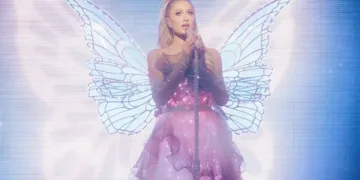
The musical performances drawn from the Infinite Icon album supply the film’s highest voltage. Hilton uses a whisper-chant vocal style that prioritizes atmosphere over traditional power. The choice echoes a strain of campy, self-conscious pop production that has found a cult following across borders. On stage, she performs choreographed numbers with male dancers as empowering slogans flash behind her.
The sequences play as a statement of longevity and an insistence on staying visible on her own terms. The involvement of artists like Sia adds professional legitimacy to the musical portion of the project. The lyrics circle personal themes while staying within familiar pop parameters. Concert footage occupies a large share of the two-hour runtime, and the musical sections reset the pace after heavier biographical material.
The film treats performance as a method of self-actualization. It presents music as a refuge for Hilton during her hardest years. These scenes reinforce her status as a figure who stays relevant through repeated reinvention.
Infinite Icon: A Visual Memoir premiered in select theaters on January 30, 2026, offering a deeply personal look into the life of Paris Hilton. Distributed by CJ 4DPlex, the film serves as both a biographical documentary and a concert film, tracing Hilton’s musical comeback and her journey as a survivor and advocate. Audiences can experience the visually immersive memoir exclusively in theaters, including special 4DX engagements that emphasize the film’s high-energy performance sequences and experimental editing style.
Where to Watch Infinite Icon: A Visual Memoir (2026) Online


Full Credits
Title: Infinite Icon: A Visual Memoir
Distributor: CJ 4DPlex
Release date: January 30, 2026
Rating: PG-13
Running time: 118 minutes
Director: Bruce Robertson, JJ Duncan
Writers: Bruce Robertson, JJ Duncan
Producers and Executive Producers: Paris Hilton, Joanna Studebaker, Megan Jacobi, Omar Lagda, Bruce Robertson, JJ Duncan
Cast: Paris Hilton, Rina Sawayama, Sia, Nicole Richie, Kathy Griffin, Meghan Trainor, Megan Thee Stallion, Heidi Klum
Director of Photography (Cinematographer): Bobby Pavlovsky
Editors: Angus Emmerson, Travis Greene, Guy Harding, Chris Porthouse
Composer: Jesse Shatkin
The Review
Infinite Icon: A Visual Memoir
Infinite Icon: A Visual Memoir attempts to reconcile a manufactured public persona with a vulnerable private reality. The film relies heavily on stylistic flourishes and digital overlays that occasionally obscure the very authenticity it seeks to highlight. While the sequences involving survival and advocacy provide necessary gravity, the overproduced concert segments lean into brand management. It serves as a glossy love letter to a specific era of celebrity culture while wrestling with the scars left behind. Fans will appreciate the immersion. Others may find the surface too polished for true revelation.
PROS
- Striking visual palette capturing early 2000s aesthetics.
- Sincere focus on advocacy for survivors of institutional abuse.
- Engaging integration of music and editorial rhythm.
- Direct exploration of ADHD as a creative influence.
CONS
- Overly polished production can feel like brand advertisement.
- Nearly two hour runtime leads to pacing issues.
- Repetitive whisper chant musical style.
- Scripted narration sometimes feels disconnected from the emotional subject matter.