



























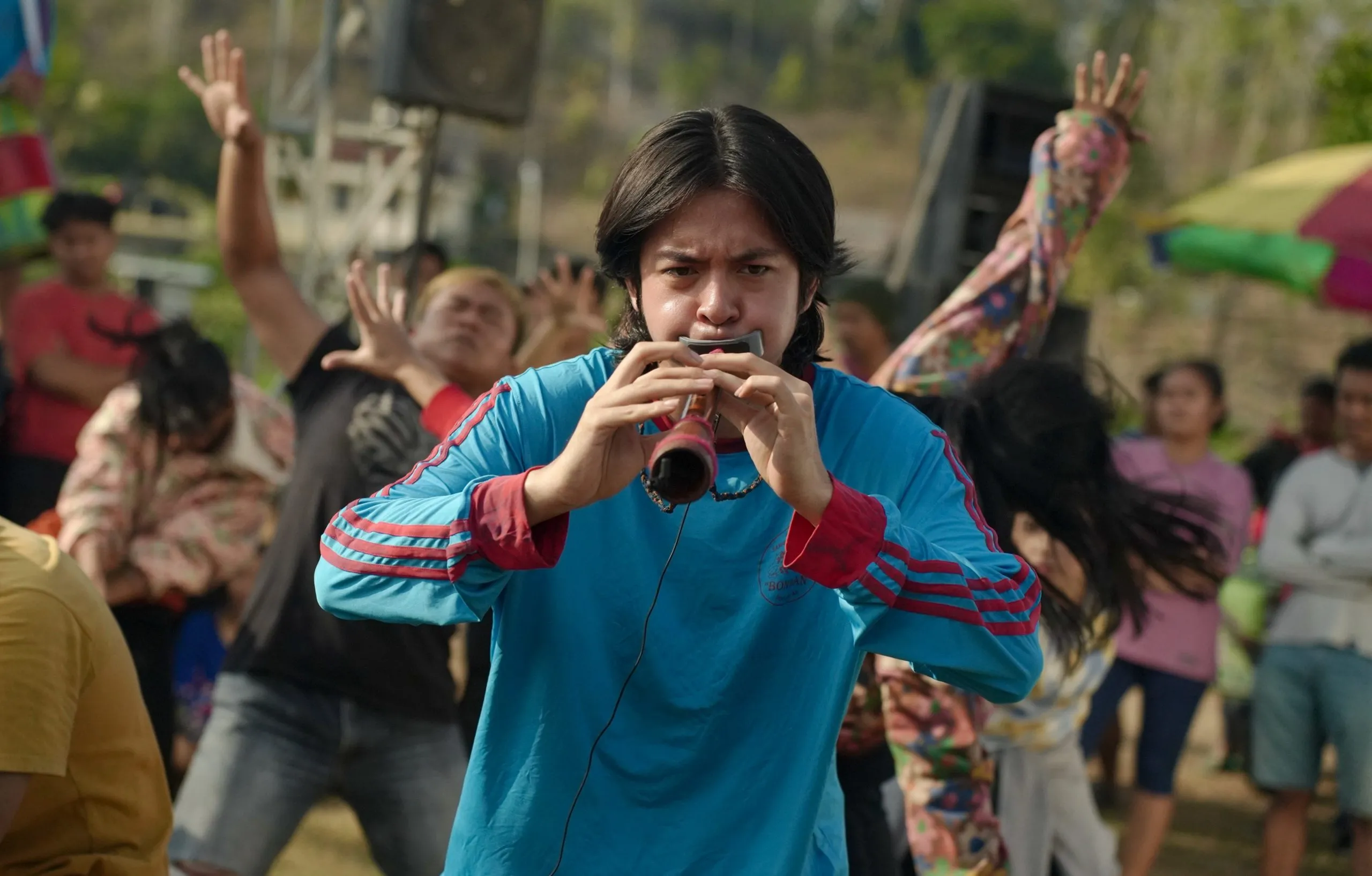

In the Indonesian village of Latas, communal identity takes shape through the steady pulse of trance parties. At these gatherings, spirit channelers use particular musical frequencies to invite animal spirits into residents’ bodies. The practice functions as collective healing and shared pleasure, binding neighbors through a ritual that is both intimate and public. Bayu, a young flute player, wants to rise within this spiritual order, aiming for status inside a system where authority is earned through performance and endurance.
That ambition meets immediate pressure from outside the village. A land development firm plans to take control of the water spring for a hotel project, a move that places local heritage in direct danger. Bayu also lives with conflict at home. His father, worn down by poverty, weighs the idea of selling their property and returning to Jakarta.
Bayu’s unresolved grief over his mother hangs over his daily life and repeatedly disrupts his concentration on music. The story builds toward a high-stakes competition and fundraiser staged by Guru Asri, an event that decides who will lead the rituals meant to protect the village. In that arena, private pain and communal survival collide through sacred performance.
The Visceral Language of the Seance
Director Wregas Bhanuteja, working with choreographer Siko Setyanto, turns possession into a readable physical vocabulary. Bodies become instruments, shaped into the qualities of leeches, tigers, buffalo, and fire ants through disciplined, animal-driven movement. The staging often leans on black box theatrical space and practical effects, creating a controlled environment that echoes the participants’ interior states. Cinematographer Gunnar Nimpuno supports this design with a clear shift in visual grammar between settings.
The village exteriors carry naturalistic lighting that grounds daily life in tangible texture. The rituals move with a fluid, heightened camera style that tracks bodies in motion and amplifies the feeling of entering altered perception. The approach aligns with a parallel-cinema tradition where poverty is rendered plainly, then pierced by moments of spiritual or emotional intensity that demand a different cinematic language.
One of the film’s boldest devices sends the camera through ears or nostrils, pushing into a surreal psychic terrain. It is an image that treats the human body as a doorway, reinforcing the idea that trance is both physical event and mental passage. Sound plays an equal role in shaping the experience. Yennu Ariendra’s score works alongside Bayu’s flute to control pace, tension, and release, with the music operating as a kind of ritual engine.
As the ceremonies spiral into obsession, the film enters body-horror space, using contortions and visceral imagery to stress the danger of surrendering the self to trance. The result is technical rigor that makes the supernatural feel materially present, tied to psychology through movement, editing rhythms, and a soundscape that pushes insistently forward.
Physicality and Presence in Performance
The film’s impact depends on a cast willing to treat physical strain as character work. Angga Yunanda plays Bayu as someone driven by ambition while carrying deep internal turmoil, a duality expressed through posture, breath, and the way his body tightens under pressure.

He contorts with conviction to channel different animal energies, then snaps back into a vulnerability that reads as lived-in pain rather than theatrical display. Anggun, as Guru Asri, provides an essential counterforce. She carries the authority of a spiritual gatekeeper, commanding scenes through stillness and control. Her chanting stands out as a performance tool with structural weight, laying down the rhythmic base that holds the seances together.
Maudy Ayunda gives Laksmi layered presence as Bayu’s partner and a dedicated receiver of spirits. Her role demands sharp emotional shifts and real physical stamina during communal dances, with the choreography turning into an extension of character psychology. Indra Birowo anchors the domestic storyline as the father, bringing pragmatic fear about survival into every interaction.
His perspective keeps the stakes legible in social terms, reminding the viewer that spiritual aspiration exists alongside basic economic need. Across the ensemble, the chemistry between channelers and dancers matters as much as any individual turn. Their shared movement roots the supernatural in collective human connection, echoing a world-cinema tradition where personal stories are carried by the group’s rhythm and the community’s shared breath.
Economic Realities and the Pursuit of Euphoria
The film frames an active collision between indigenous tradition and late-stage capitalist pressure. In Latas, cultural heritage becomes a central instrument of resistance against corporate displacement, with ritual practice serving civic purpose as well as spiritual release. The theme recalls land-rights conflicts often found in Indian parallel cinema, translated here through magical realism and the communal logic of trance.
Bayu embodies the danger of obsession. His pursuit of technical mastery can push him away from the ritual’s purpose, which is communal happiness and collective healing. That tension gives the story friction inside the larger political fight, linking personal ambition to the risks of losing sight of shared responsibility.
Bhanuteja structures the film as genre-shifting work, moving between coming-of-age drama and psychological thriller. The shifts keep the two-hour runtime lively, even while some visual motifs repeat late in the final act. The idea of “spirit addicts” reframes trance as necessity, suggesting a charged form of escape within a harsh economic landscape.
The rituals offer a temporary space where burdens can be set down, bodies can move without shame, and grief can be metabolized through rhythm. The conflict with the developers resists neat closure, keeping attention on preservation as an ongoing act rather than a single victory. The story links present-day joy to a person’s ability to live with the past, leaving emotional weight in the wake of performance rather than in a neatly wrapped resolution.
Levitating (Para Perasuk) premiered at the Sundance Film Festival on January 24, 2026, where it competed in the World Cinema Dramatic Competition and received a thunderous standing ovation. Directed by Wregas Bhanuteja, the film is a supernatural drama set in the Indonesian village of Latas, exploring the intersection of indigenous trance rituals and the encroaching forces of late-stage capitalism. Following its successful world premiere, the film is slated for a wider theatrical release in Indonesia and across international markets later this year. Viewers currently following festival circuits can look for screenings at major global film events, with streaming availability expected to follow its theatrical window.
Full Credits
Title: Levitating (Para Perasuk)
Distributor: Rekata Studio, Momo Film Co, Les Contes Modernes
Release date: January 24, 2026
Running time: 119 minutes
Director: Wregas Bhanuteja
Writers: Wregas Bhanuteja, Defi Mahendra, Alicia Angelina
Producers and Executive Producers: Siera Tamihardja, Iman Usman, Amalia Rusdi, Tan Si En, Patrice Nezan
Cast: Angga Yunanda, Anggun, Maudy Ayunda, Bryan Domani, Chicco Kurniawan, Indra Birowo, Ganindra Bimo, Ivonne Dahler
Director of Photography (Cinematographer): Gunnar Nimpuno
Editors: Ahmad Yuniardi
Composer: Yennu Ariendra
The Review
Levitating
The film succeeds through its audacity and sensory power. It provides a window into a specific cultural world while addressing universal struggles against economic displacement. While the third act feels overstretched, the technical execution and physical acting remain memorable. This is a bold piece of cinema that prioritizes atmosphere and rhythm over traditional narrative logic.
PROS
- Exceptional choreography that physically manifests spiritual states.
- A commanding and visceral performance by Anggun.
- An immersive soundscape that drives the emotional intensity.
- Imaginative visual effects and striking cinematography.
CONS
- Repetitive pacing in the final third of the story.
- Muddled background details regarding specific character histories.
- A runtime that feels slightly bloated due to rhythmic repetition.