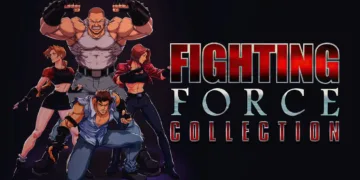


























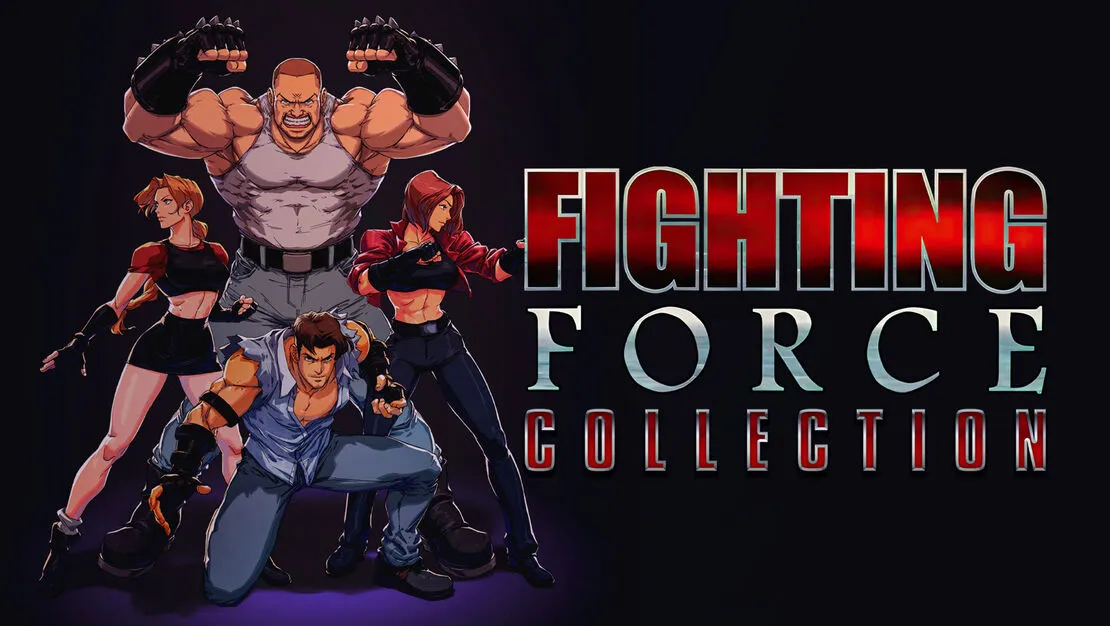

Core Design hit a turning point in the late nineties. After Tomb Raider broke through, the British studio tried to carry the punchy rhythm of the arcade brawler into 3D polygons. Fighting Force began life as a pitch to Sega for a three-dimensional Streets of Rage, then regrouped and found its own lane on the PlayStation. This re-release, put together by Limited Run Games and Square Enix, treats that moment as something worth archiving, pairing the 1997 original with the 1999 follow-up.
The story wears its era openly. Dr. Zeng reads the Y2K panic as unfinished business. He pins the failure of his apocalypse plan on a clerical error and responds with brute-force escalation, fielding a private army to manually bring the end of the world back on schedule.
Players step in as mercenaries hired to dismantle that corporate militia the direct way, with fists, feet, and whatever can be ripped from the street. Taken together, these two 32-bit titles play like a snapshot of a genre trying to move forward without losing the crowd-pleasing clarity that made it travel so well between regions, platforms, and play spaces.
The Mechanics of Urban Combat
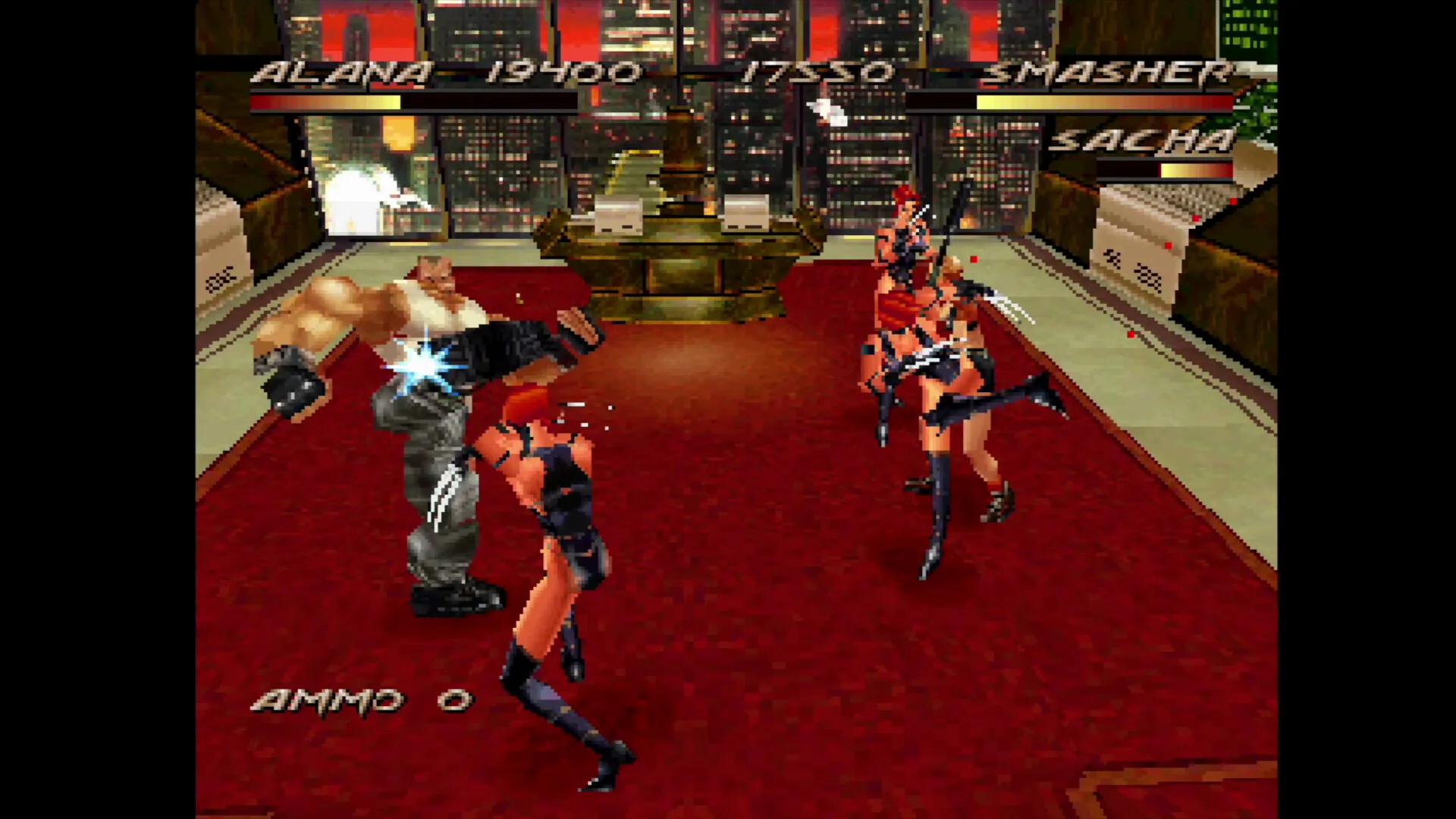
The first game acts like a hinge between side-scrolling muscle memory and a three-dimensional future. You choose from four fighters: Hawk Manson, Mace Daniels, Alana McKendricks, and Ben “Smasher” Jackson. Each one carries a different sense of weight.
Smasher leans into raw power, including the ability to hurl car engines at enemies. Alana leans into speed, built around agility and rapid strikes. That range gives the roster a small but meaningful cultural echo of arcade character design, where identity is often expressed through silhouette and physicality before a line of dialogue lands.
Underneath, the rules stay plain on purpose. Combat orbits punches, kicks, and grapples, with a special move that buys breathing room in a crowd while draining your own vitality. The simplicity makes the action legible in the same way classic brawlers stay legible. You read the room, pick targets, manage spacing, and accept that survival sometimes comes from spending health to regain control.
The environments push an ethic of destruction. Shopping malls, subway stations, and public parks turn into interactive stages where the city itself becomes part of the moveset. You tear apart the surroundings to uncover weapons, including lead pipes and firearms. Vending machines and cars sit there as invitations, and breaking them has a practical payoff. The wreckage hands out bonus points that matter for progression, giving the chaos a score-chasing spine.
Local two-player play is where this design clicks into its most social form. Coordinating with a partner against waves of enemies captures the nineties arcade spirit, transplanted into a living-room setting. It can feel communal and messy in a good way, the kind of shared rhythm that turns a straightforward beatdown into a small performance between two people.
That invitation comes with an honest price tag: the limits of early 3D. Movement carries tank-like rigidity, and the fights land at a deliberate, heavy pace. The clunkiness stays true to the original PlayStation hardware and its technical constraints from roughly thirty years ago.
The stiffness also teaches a quiet lesson about spatial depth, about how developers handled a new axis before camera language and control standards settled. This system cares about impact and commitment, while many contemporary releases chase rapid combo flow and quick correction. Here, the game asks you to live with your choices for a beat longer.
A Departure into Stealth and Firearms
The sequel makes a sharp turn away from what came before. Core Design drops the communal brawling roots and rebuilds the follow-up as a solo action-adventure. The timing tracks with an international drift toward cinematic, stealth-oriented experiences, a mood associated here with Metal Gear Solid. Fighting Force 2 also changes its visual temperature, shifting into a sterile cyberpunk future where Hawk Manson returns, recast as a lone government operative.
The mechanical priorities change with that setting. Gunplay and the search for electronic keycards form the backbone, and the first game’s party energy gives way to a methodical approach to infiltration. You move through large industrial complexes that can blur together in their architectural layout, and the longer campaign stretches the format in ways that feel at odds with the earlier game’s tight focus.
This is also where the fit between story and systems starts to strain. The movement remains rigid, and aiming firearms becomes a cumbersome task. Slow turning speeds make sudden threats from behind a serious problem, turning basic situational awareness into a struggle against the controller. The game wants the player to feel like a capable operative; the control scheme often makes you feel like you are wrestling the geometry.
Losing multiplayer changes the identity in a fundamental way. Playing alone throws the early third-person shooting limitations into sharper relief, and the absence of a partner removes the cooperative problem-solving that helped the first title’s rough edges read as part of the charm. The narrative pushes toward a more serious tone, yet the gameplay systems have trouble carrying that ambition with consistency. The result captures a moment when studios chased the momentum of three-dimensional shooters and accepted tradeoffs that reshaped an established property.
Modern Enhancements and Fidelity
Limited Run Games adds tools meant to bridge 1997 and 2026 without rewriting what these games are. The most meaningful addition is a rewind feature that lets you reverse a fatal mistake instantly. It also helps you sidestep the sequel’s frustrating fall damage. Four dedicated save states per title further reduce friction in campaigns that still expect patience from the player.
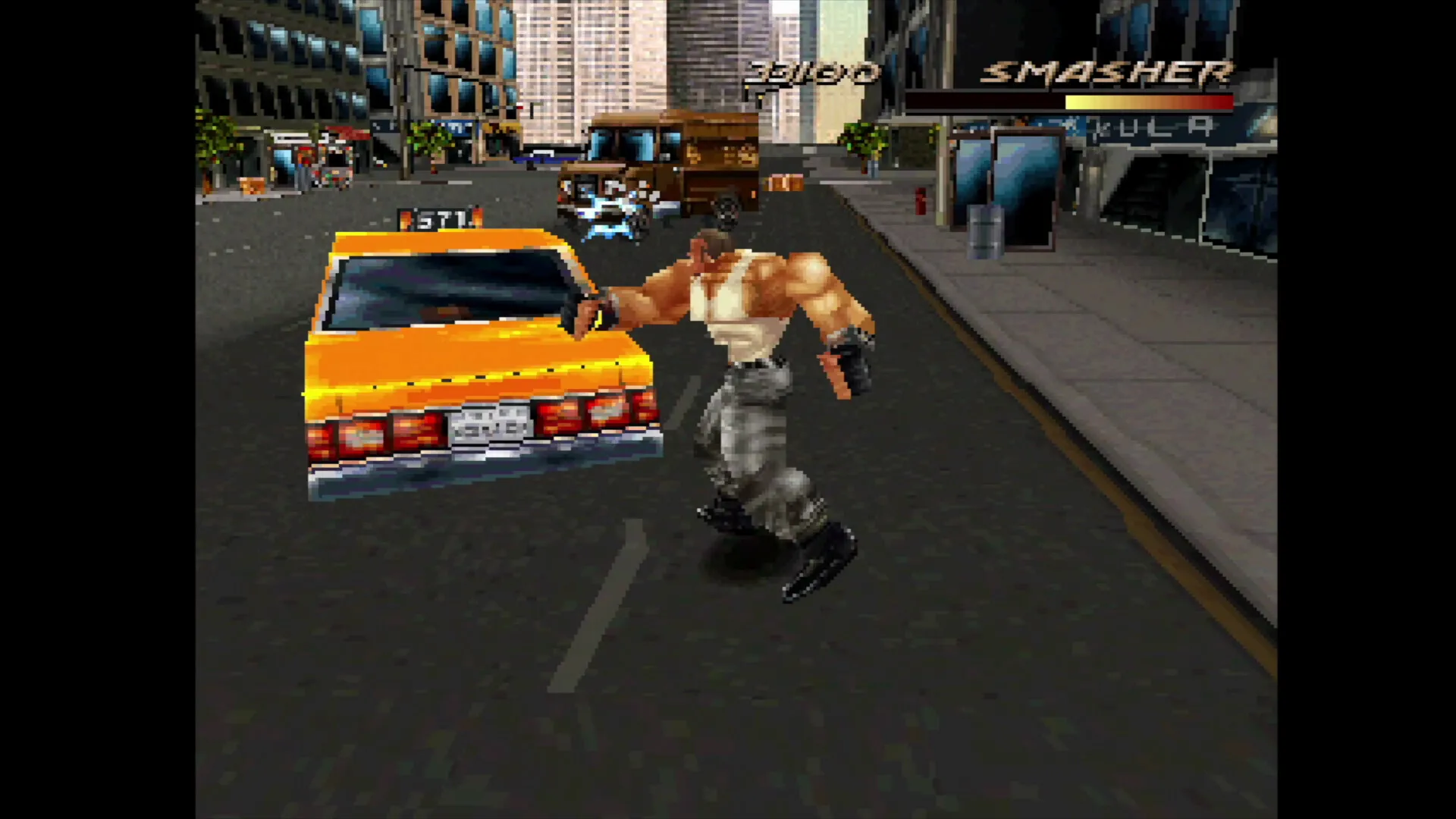
Presentation options let you choose how to view these low-polygon spaces. CRT filters simulate the curvature and scanlines of older television sets. An upscaling toggle smooths the jagged edges of character models, offering a cleaner look on high-definition displays. Load times see a major boost, while the original loading screens remain as a stylistic choice. Stage transitions now move with near-seamless speed, which changes the rhythm of play without changing the content of each stage.
A gallery of more than thirty pieces of production art adds another angle on the games’ creation, including concept sketches and promotional renders. The emphasis sits heavily on the first game. Online play and digital sharing features are absent, keeping the focus on a local experience and preserving the couch-based feel that suits a brawler’s roots. As a package, it reads as a careful restoration of a specific phase in gaming’s evolution, with all its ambition, awkwardness, and historical texture intact.
The Review
Fighting Force Collection
This collection serves as a preservation of a messy, ambitious era where 3D gaming was still finding its rhythm. While the first title remains a charmingly clunky example of cooperative brawling, the sequel is an experimental misstep that lacks the soul of its predecessor. Modern conveniences like the rewind feature make these relics more approachable, but they cannot hide the dated mechanics and repetitive design. It is a sincere time capsule best enjoyed by those seeking a specific dose of 1990s nostalgia.
PROS
- Authentic preservation of 32-bit history
- Satisfying local co-op in the first game
- Useful rewind and save state features
- Sharp upscaling and nostalgic CRT filters
CONS
- Clunky, tank-like movement and controls
- Fighting Force 2 lacks multiplayer and identity
- No online play or Steam Remote Play support
- Repetitive level design and industrial settings