
























![Kingdom Hearts Collection [I-III] Review](https://gazettely.com/wp-content/uploads/2026/10/Kingdom-Hearts-Collection-I-III-1-360x180.webp "Kingdom Hearts Collection [I-III] Review: KHII Holds Steady as Newer Entries Fluctuate 37")




The sun bleeds across the rugged coast of Catalonia, illuminating a modernist villa where the Taylor family persists in expensive stasis. This American clan lives inside a sanctuary of glass and concrete, insulated by a fortune that feels infinite and suffocating. An unnamed father, blind and enthroned, keeps a perverted grip on his four adult children. Edward, Anna, Jack, and Robert drift through these halls like ghosts haunting their own lives.
Their history is stained by the bizarre death of their mother, a woman said to have perished in the jaws of wolves. The hush inside the house fractures when Jack, the one sibling carrying a flicker of conventional sanity, attempts to sever the umbilical cord of the estate.
He brings in Martha, a classical guitarist whose presence moves through the villa like a foreign pathogen in a sterile body. Her arrival forces the family to face its own sealed-in cruelty. The story plays as a pitch-black comedy, watching the hollow rituals of the ultra-rich through a lens of existential dread.
Mirrors of Stunted Desire
Edward serves as our guide through this mansion of vanity, a man who traded literacy for a series of cryptic, invented adages. His narration has a stilted quality, like a voice learning to impersonate thought. It reflects a psyche flattened by unearned luxury, an inner life made thin by a life made easy. Riley Keough portrays Anna with feral, possessive energy.
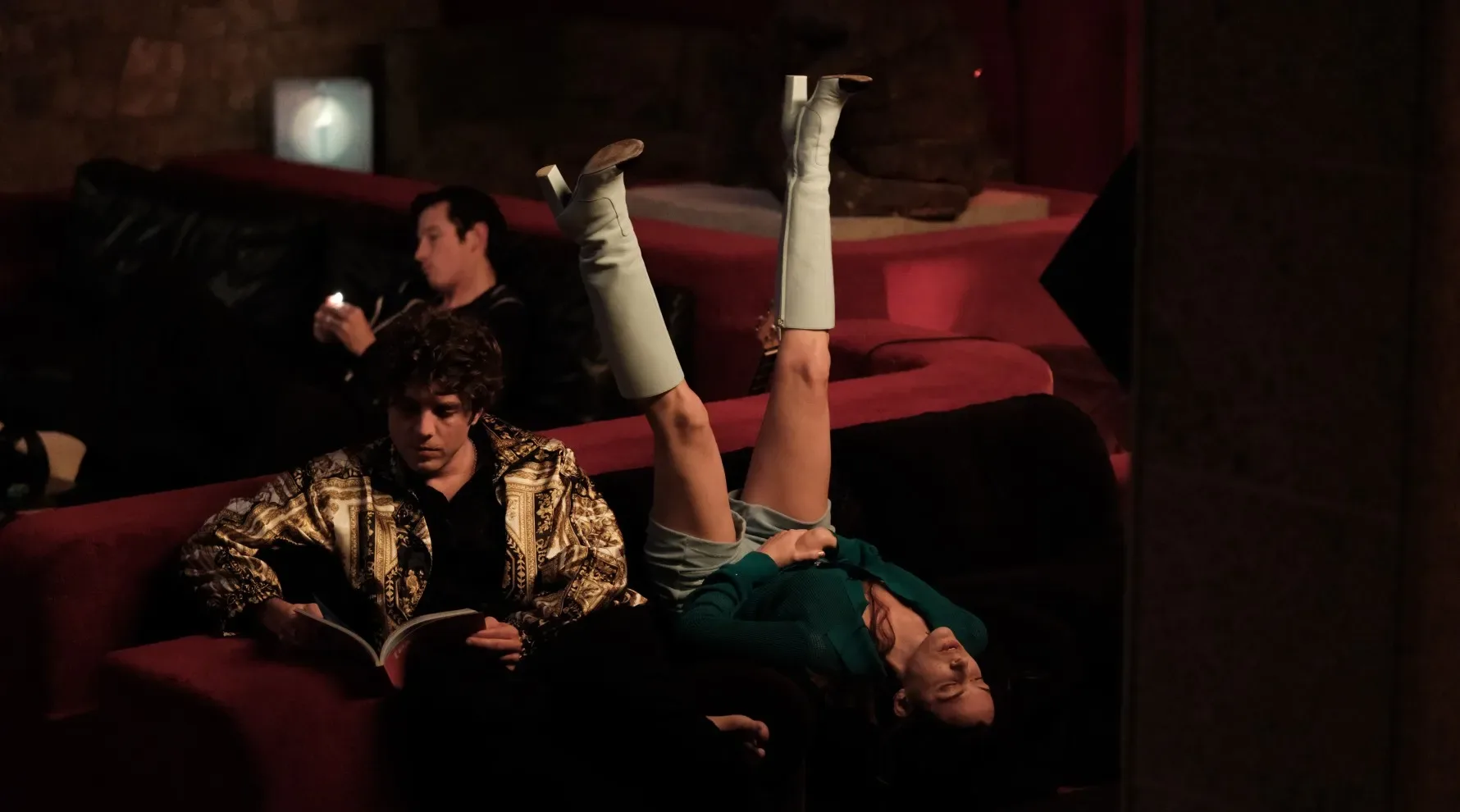
She stalks the villa in baby blue go-go boots, a sartorial insistence on remaining in the nursery of her father’s influence. The friction between Anna and Martha feels visceral. Anna weaponizes her wardrobe, sneering at Martha’s high street dresses while she clings to the armor of designer labels, dressing like someone bracing for impact in a room where nothing ever truly happens.
Robert exists in a quiet collapse, his devotion to his older brother Jack pressing against something transgressive. The affection has the air of a vow taken in secret, then forgotten, then repeated out of habit. Tracy Letts anchors this dysfunction as the patriarch, a man who uses his sightlessness as permission for voyeuristic, tactile control over his offspring.
The blindness becomes a tool in his hands, a rationale for proximity, for contact, for access. Elle Fanning provides the necessary anchor for the viewer. Her Martha watches the Taylors with a growing, palpable horror, her face turning into a map of the audience’s own revulsion as the family’s psychosexual knots tighten and tighten again. The film suggests that wealth can buy silence, then teaches that silence can rot into appetite.
The Texture of Shallow Opulence
The visual language arrives as a masterclass in aggressive beauty. Hélène Louvart fills the widescreen frame with colors so saturated they feel predatory, with a recurring crimson that hints at violence simmering beneath the surface. The villa becomes an altar to surfaces, lit like a showroom and sealed like a tomb.
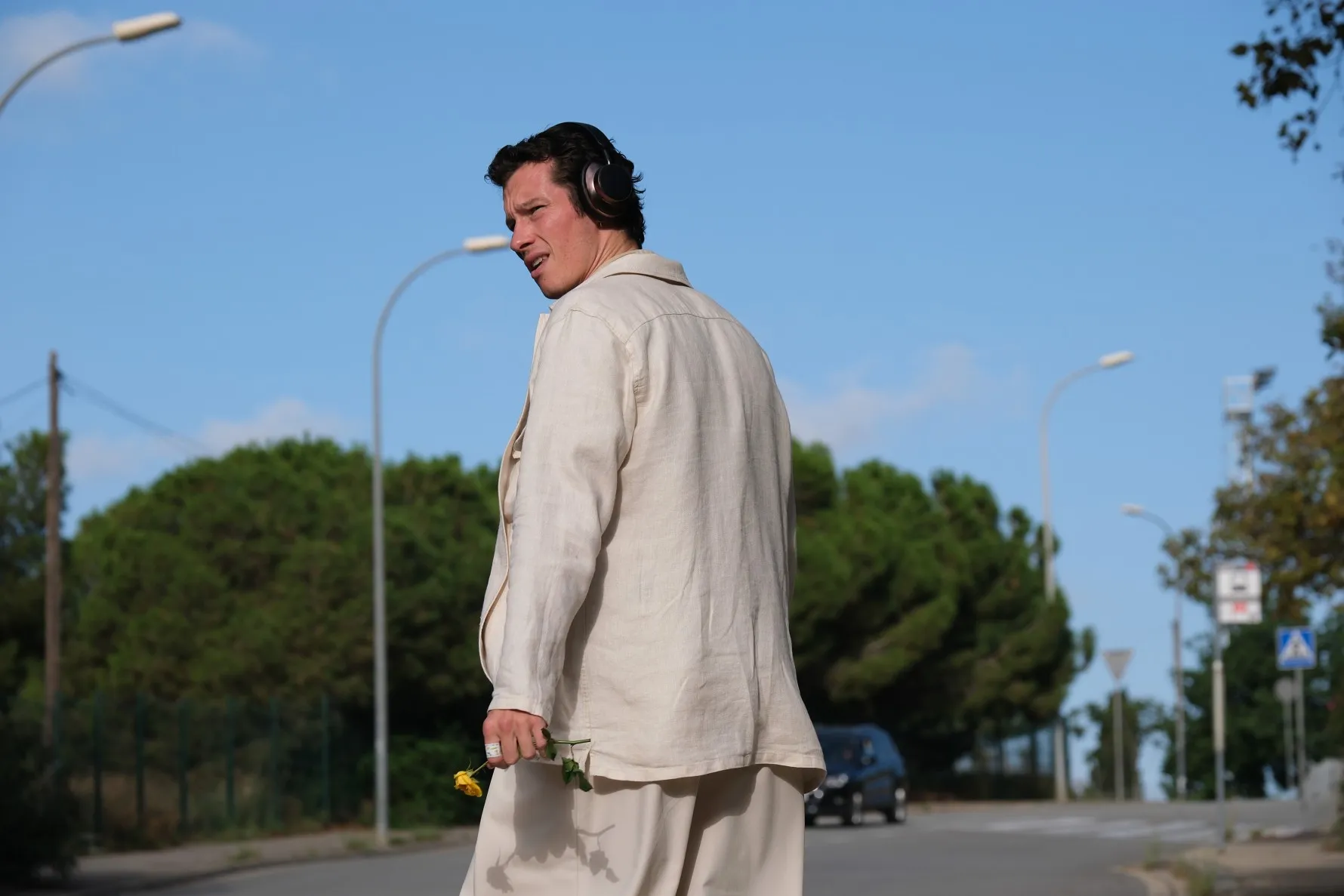
The production design renders the home as a sterile mausoleum, a place where every Bottega Veneta loafer and Cartier ring seems more vital than the pulse of a human heart. Objects keep winning. People keep losing. The camera treats luxury like a climate, something you breathe until you forget the air ever belonged to anyone else.
Bina Daigeler’s costumes function as psychological barricades. These clothes carry the weight of selfhood for the siblings, serving as the only vocabulary they have left to express worth. Even their textures feel defensive, soft in the way padding is soft. Matthew Herbert’s score frequently spirals into a frantic orchestral state, mirroring the internal panic of characters who have everything and still live with the sensation of having nothing.
The inclusion of the Pet Shop Boys’ “Paninaro” provides a rhythmic heartbeat for their superficiality. The synth-pop anthem celebrates a culture of pure aesthetics while mocking the hedonism it accompanies, like a smile that keeps showing teeth. The film presents a world where the sheen becomes so blinding that rot starts to look like design.
Pruning the Ancestral Vine
The rosebush stands as the central metaphor, suggesting that a family survives by shedding its own blood. Pruning becomes a literal mandate as the siblings seek to maintain their hermetic seal against the world. Their bond forms an incestuous knot, a refusal to look beyond the mirrors of their shared history.
The script draws heavily from a specific tradition of absurdist European cinema, using stilted dialogue to sharpen the alienation of the elite. The words land with an intentional wrongness, speech that sounds rehearsed for an audience that never arrives. These characters have lost the ability to handle reality, replacing genuine emotion with transactional cruelty. Feeling becomes a purchase. Affection becomes leverage. Harm becomes routine.
Jack’s desire for a normal life threatens the status quo, and the narrative descends into calculated violence. The film uses transgressive imagery to show a spiritual decay that no amount of wealth can mask. Extreme boredom gives birth to a particular malice, and the film watches it bloom with the patience of someone studying mold. Desire, untethered from necessity, turns inward and devours itself.
The final acts of “pruning” arrive with cold indifference. In the realm of the ultra-rich, survival reads like another form of fashion, and that idea lands with a chill that lingers. I cannot decide if the film is laughing at them, mourning them, or confessing that the distance between those responses stays uncomfortably small.
Rosebush Pruning premiered on February 14, 2026, at the 76th Berlin International Film Festival, where it competed for the prestigious Golden Bear. Directed by the acclaimed Karim Aïnouz and written by Efthimis Filippou, the film is a biting satirical thriller that serves as a modern reimagining of Marco Bellocchio’s 1965 classic Fists in the Pocket. The story delves into the psychosexual and existential rot of an incredibly wealthy American family residing in a luxurious modernist villa in Catalonia. As of its premiere, the film is distributed by MUBI and is slated for a wider theatrical and streaming release later in 2026, making it accessible to global audiences through the MUBI platform.
Where to Watch Rosebush Pruning
Full Credits
Title: Rosebush Pruning
Distributor: MUBI, Vision Distribution
Release date: February 14, 2026
Running time: 94 minutes
Director: Karim Aïnouz
Writers: Efthimis Filippou, Marco Bellocchio
Producers and Executive Producers: Michael Weber, Viola Fügen, Simone Gattoni, Annamaria Morelli, Andreas Wentz, Vladimir Zemtsov, Efe Çakarel, Gabriel Amaral, Catherine Boily, Matthew E. Chausse, Alessandro Del Vigna, Fernando Loureiro, Sarah Nagel, Mitch Oliver, Lorenza Veronica, Isabell Wiegand, Jason Ropell, Zane Meyer, Samuele Mazzoli, Lota Dascioraite, Kateryna Merkt, Pietro Caracciolo
Cast: Callum Turner, Riley Keough, Elle Fanning, Jamie Bell, Tracy Letts, Pamela Anderson, Elena Anaya, Lukas Gage
Director of Photography (Cinematographer): Hélène Louvart
Editors: Heike Parplies, David Jancso, Ilka Janka Nagy
Composer: Matthew Herbert
The Review
Rosebush Pruning
Rosebush Pruning acts as a shimmering, crimson mirror reflecting the vacuum of inherited wealth. Karim Aïnouz crafts a world where aesthetics have entirely swallowed the soul, leaving behind a family that exists as a series of curated gestures. The film finds its strength in its unapologetic embrace of the grotesque, yet it often mistakes provocation for profundity. It is a stylish, hollow monument to a dying patriarchy, offering a view of a beautiful prison where the inmates are too bored to notice their own decay. It remains a striking, if ultimately shallow, descent into absurdity.
PROS
- Hélène Louvart captures the Catalonian landscape with predatory, saturated beauty.
- Riley Keough and Elle Fanning navigate the film's stilted reality with total commitment.
- Matthew Herbert’s music creates a palpable sense of frantic, high-fashion dread.
CONS
- The narrative frequently prioritizes shock value over meaningful character growth.
- The script often feels like a pale imitation of earlier Greek Weird Wave landmarks.
- The story stalls in its second act, wallowing in the family’s repetitive dysfunction.







