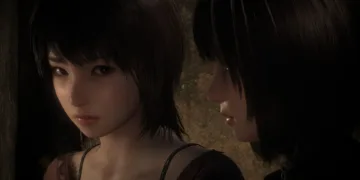



















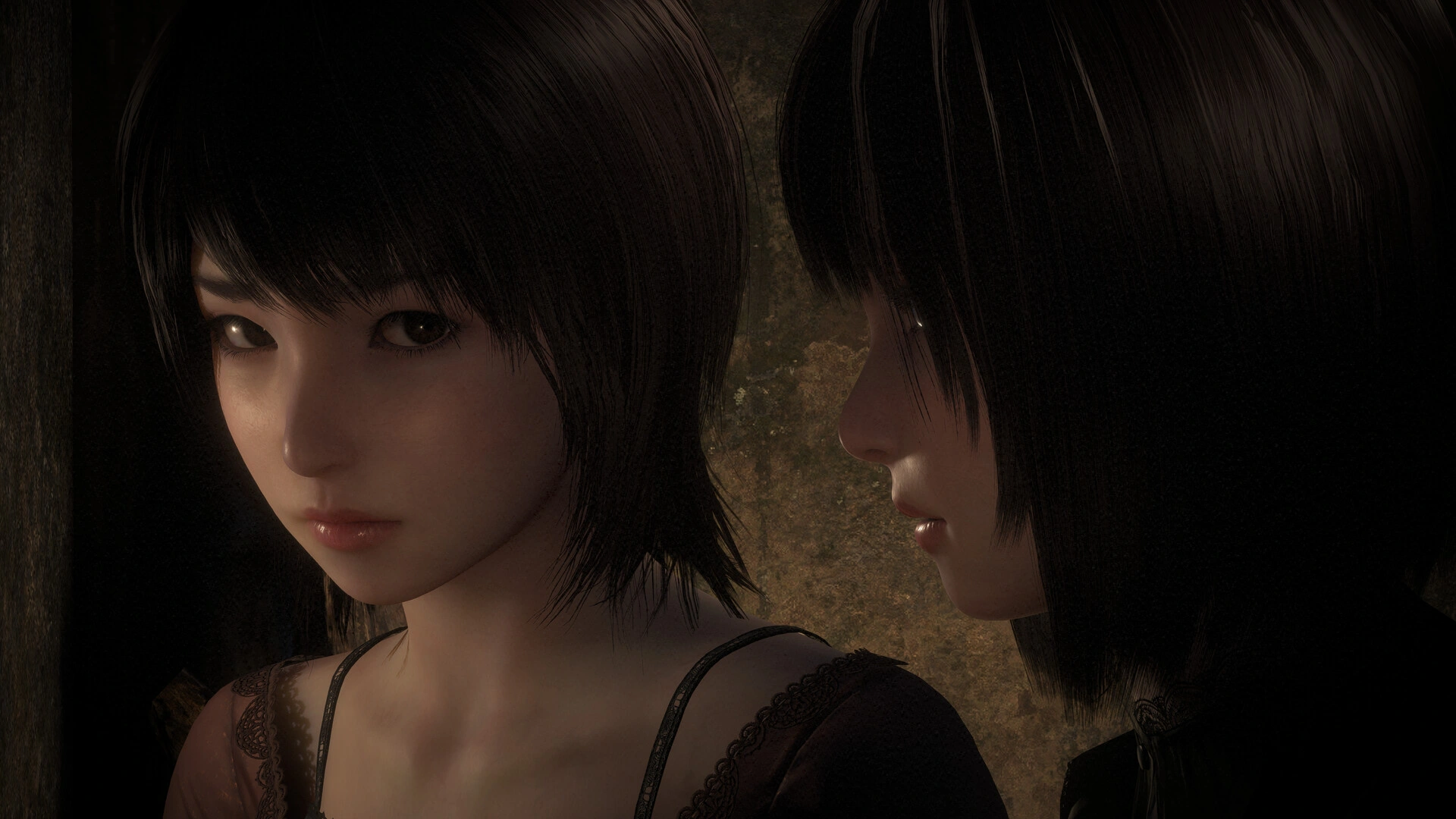

Fatal Frame II: Crimson Butterfly Remake draws players back into the fading Minakami Village. This fog-heavy valley traps twin sisters Mio and Mayu Amakura inside a cycle of ancient sacrificial rites. After following a ghostly crimson butterfly, the pair enters a place where time loses shape and the dead remain restless.
Their survival depends on the Camera Obscura, a strange device that can capture the spirits haunting the village’s decaying Japanese architecture. This remake rebuilds the dread of the 2003 original with contemporary systems fitted onto a classic survival horror frame.
The village still feels built from shadows, diaries, and half-heard grief, where every opened door threatens another haunting. Mio has to protect her sister while uncovering the truth behind the Crimson Sacrifice. The horror grows through quiet spaces and the slow recognition of old tragedies. Photography becomes the sisters’ defense against ancestral guilt that has taken physical form.
Inherited Guilt and the Architecture of the Past
The story focuses on the fragile bond between Mio and Mayu. Their return to the childhood stream carries the weight of Mio’s unspoken guilt over a past accident that left Mayu with a permanent limp. That emotional wound gives the supernatural material its anchor.
Minakami Village works as a temporal trap. It appears to people who lose their way in the forest. Its history is shaped by the Crimson Sacrifice, a brutal ritual meant to appease the Abyss beneath the ground. Twins are forced into a ceremony where one must kill the other to preserve the spiritual seal.
The remake broadens the lore through integrated side stories. Players discover traces of other victims who were drawn into the village. These stories appear through discarded diaries and “stone voices,” spirit recordings left inside crystals. These additions give players a clearer sense of the people who lived and died there.
The environmental storytelling remains one of the game’s sharpest tools. Small details in the Kurosawa and Osaka houses suggest ordinary lives broken by the failed ritual. A new ending gives returning players another perspective on the sisters’ fate, creating a fresh reason to follow the story through again.
The physical structure of the village changes as the story moves forward. Houses that feel safe in early chapters grow hostile later. Returning to a familiar room often triggers a new spectral event. The village’s density makes it feel inhabited, abandoned, and rotting at once. That sense of place matters for a game built around escape from a history that keeps forcing itself back into the present.
The Shift to Modern Perspective
The move to an over-the-shoulder camera changes the basic feel of exploration. The original used fixed angles to hide threats and create cinematic dread. The new perspective pulls the camera closer to Mio and increases the feeling of personal vulnerability. Narrow hallways and dark corners press in harder from this viewpoint.
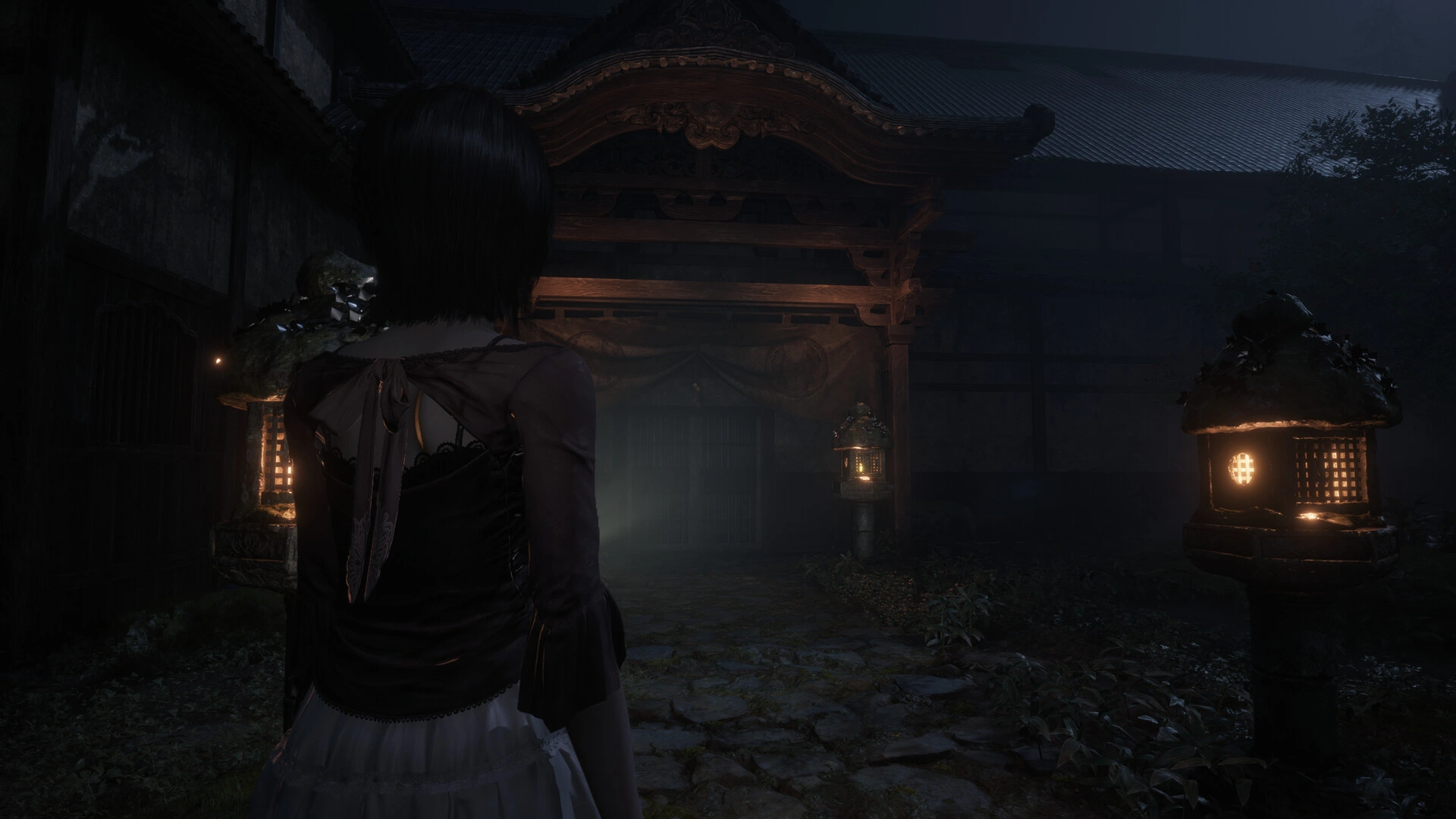
Environmental interaction becomes a steady source of tension. Opening a door or collecting an item no longer feels safe. A ghostly hand can grab Mio during these actions. The mechanic trains players to pause before reaching for resources, turning small interactions into risk calculations. The lighting system leans on deep shadows and flickering sources to strengthen the mood. Wooden beams and paper doors now show a level of decay that the original hardware could not render.
Sound design carries much of the atmosphere. Distant moans and footsteps scraping in another room create the sense of being hunted. Silence often lands with greater force than noise. Navigation is supported by the titular butterflies and a map that tracks objectives, keeping players from staying lost in the woods for too long. Backtracking remains common, yet old areas receive new ghost encounters that keep movement through the village tense. The space changes with the time of day and the progress of the ritual.
Combat Through the Viewfinder
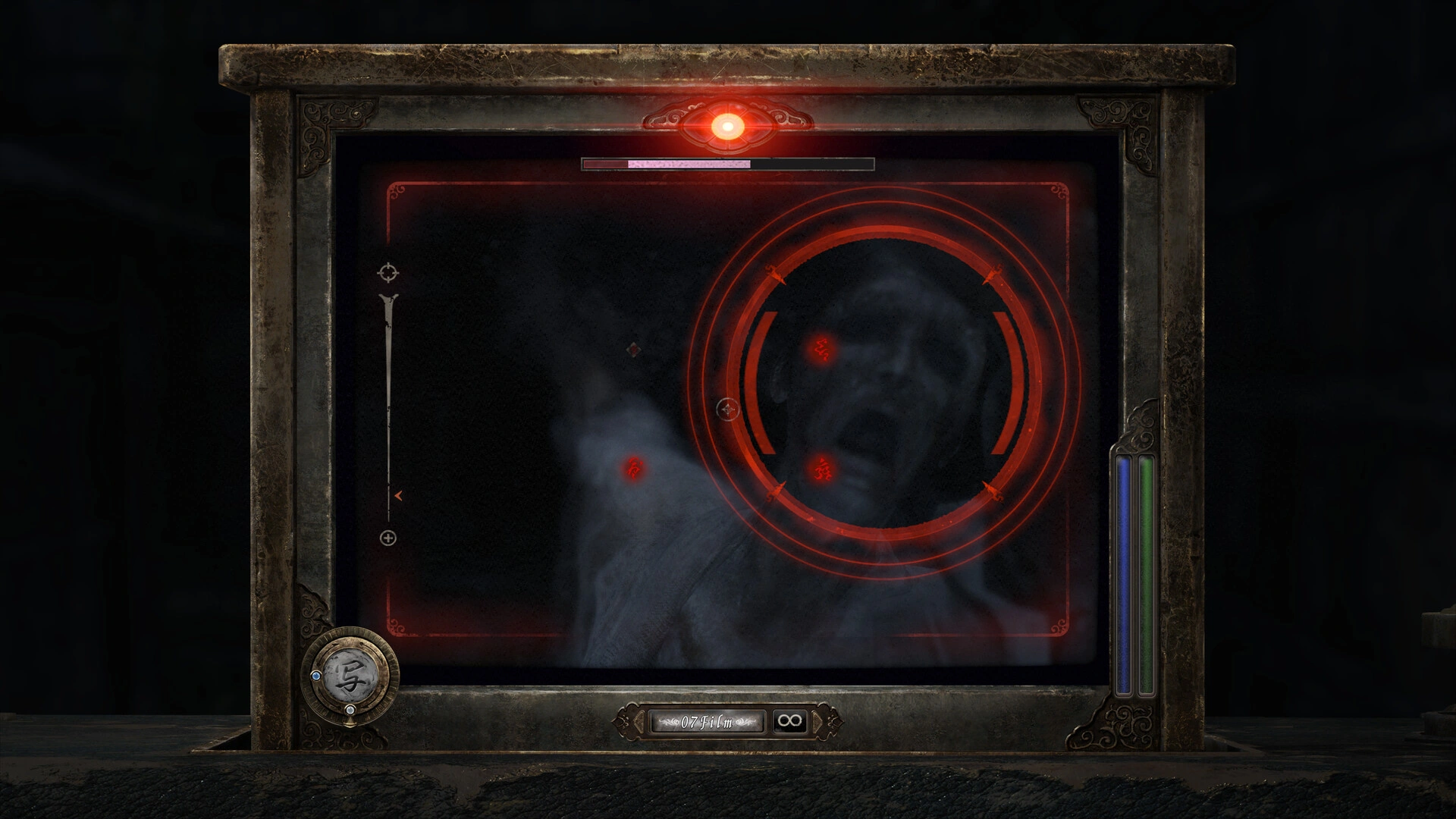
Combat depends on the Camera Obscura. It is a technical system built around patience, timing, and observation. Players look through the viewfinder to damage spirits. Shot composition affects damage. Centering a ghost and focusing the lens strengthens the photo. Different film types add a strategic layer. Type-07 film is infinite and weak. Type-90 and Type-00 film are rare and powerful. Players must choose when to spend stronger film and when to rely on weaker stock.
High-level play depends on the Fatal Frame mechanic. Players wait for a ghost to begin an attack. A red light flashes on the camera at the moment of peak vulnerability. Taking the photo at that exact instant stuns the spirit and deals major damage. The remake adds Fatal Time, a state that allows a rapid-fire sequence of shots after a successful timing window. This speeds up larger encounters and gives skilled timing a stronger mechanical payoff.
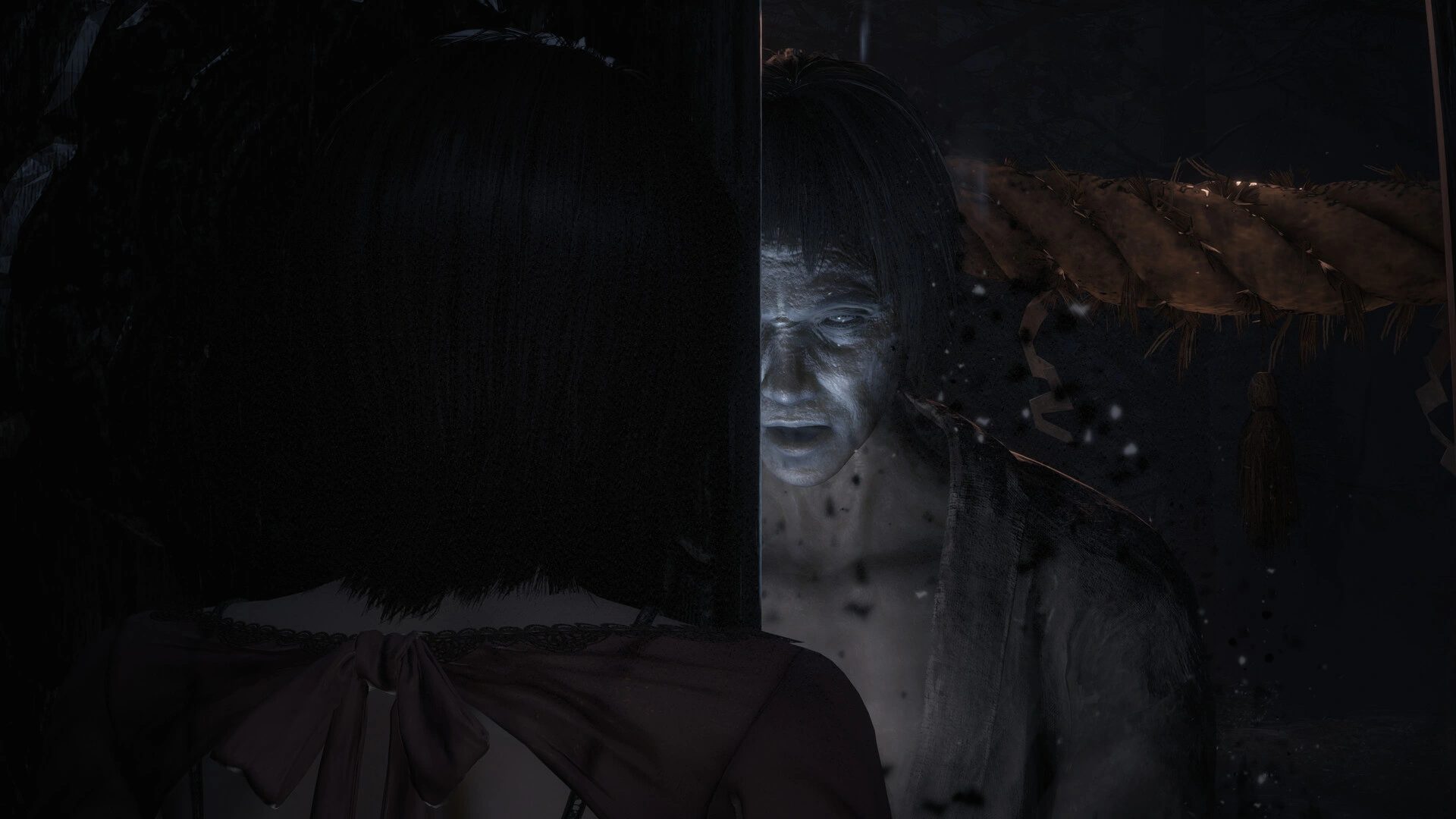
The ghosts have clear behavioral patterns. The woman in the box moves with erratic, jerky motions that make focusing difficult. The drowned woman on the bridge floats through the air as if underwater. Some spirits teleport behind the player or hide inside walls.
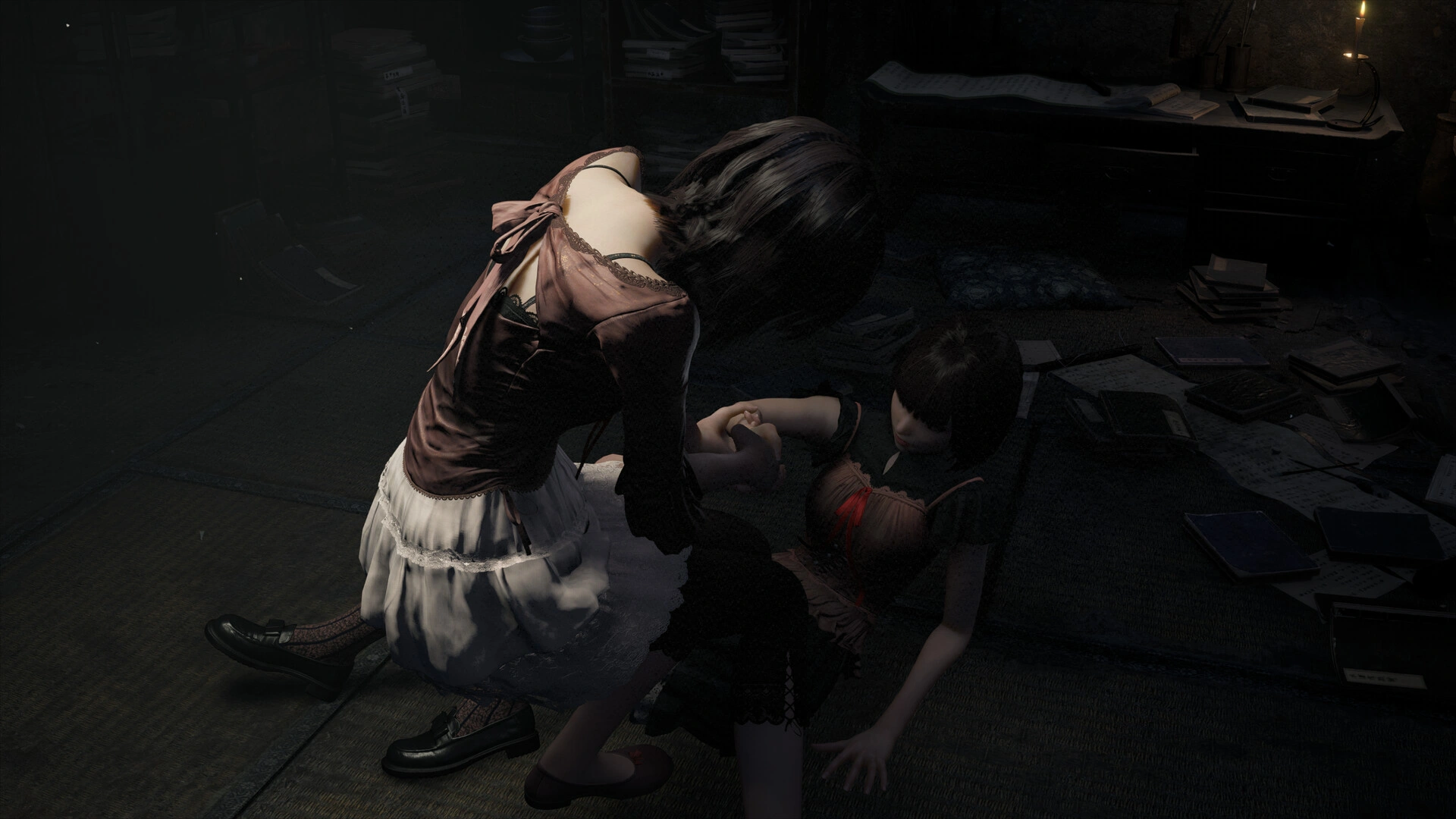
These enemy patterns demand constant movement and attention. Protecting Mayu increases the pressure. Mio often has to prioritize spirits attacking her sister. That requirement turns their bond into a playable system. Survival forces the player to face each horror directly through the lens.
Upgrades and the Will of the Camera
The remake adds a filter system and new progression mechanics. Filters change how the camera interacts with the world. The Standard filter works as a balanced tool for most fights. The Paraceptual filter lets Mio see traces of ghosts through walls, helping players track hidden spirits. The Radiant filter hits hardest, with heavy damage balanced by short range. Filters also serve environmental puzzles. Some doors are sealed by blood and require a specific filter to open.
Character progression comes through prayer beads and charms. These items upgrade camera stats such as reload speed and damage. Willpower is a new resource shown through a meter that Mio spends on special shots. These shots can stun or slow enemies. Running away or taking damage reduces the meter, which creates a cost for players who prefer to flee.
Twin dolls scattered through the environment provide rewards at save points. This encourages careful exploration of every room. The ability to hold Mayu’s hand is one of the most meaningful mechanical additions. This action restores health and willpower for both sisters, with slower movement as the tradeoff. It turns their reliance on each other into an active gameplay choice. The mechanic gives the story’s emotional pressure a direct role in exploration and survival.
Performance and the Friction of Combat
The combat’s technical execution exposes some balance problems. Ghosts can enter an “Aggravated” state during fights. A spirit may turn red and regain part of its health. This state makes the ghost faster and more aggressive. The added challenge can lead to repetitive loops. Encounters that should move quickly can stretch toward ten minutes because an enemy keeps healing.
The camera can feel weak on standard difficulty settings. Basic ghosts need many shots before they fall. Fear can slide into endurance testing during these battles. Late-game upgrades such as the Radiant filter can push the balance too far in the opposite direction. A fully upgraded camera can make boss fights feel too easy. This move from vulnerability to power can reduce the horror, giving the game the texture of a supernatural action title at points.
Technical performance is limited by a 30fps cap. This makes camera movement feel sluggish during fast encounters. Visual pop-in creates another distraction. High-resolution textures sometimes load when Mio is already a few feet away. Cobwebs and shadows can appear suddenly in the middle of a room.
These flaws disrupt the atmospheric world. The experience stays consistent across platforms, yet the lack of a higher frame rate is easy to notice. These technical hurdles and balance choices hold the remake back from its strongest possible form. The core experience still carries force as a study of grief, guilt, and ghosts.
The Review
Fatal Frame II: Crimson Butterfly Remake
This remake successfully reconstructs the chilling atmosphere of the original. It strengthens the emotional foundation of the Amakura sisters while providing deeper lore through expanded side stories. However, the combat balance falters because enemies act as sponges for health and the frustrating aggravated mechanic triggers too often. Technical limitations like the 30fps cap and texture pop-in hinder the visual polish. It is a faithful restoration that occasionally prioritizes modern gameplay systems at the expense of horror pacing.
PROS
- Exceptional atmospheric lighting and sound design
- Meaningful narrative expansions and side stories
- Strategic depth in film and timing mechanics
- Strong emotional connection between the protagonists
CONS
- Aggravated ghost mechanic creates repetitive combat loops
- Performance issues including a 30fps cap and pop-in
- Weapon upgrades can eventually diminish the horror
- Slow camera movement affects responsiveness