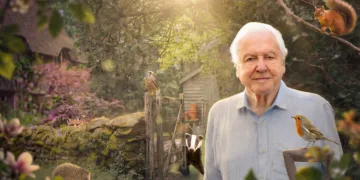




















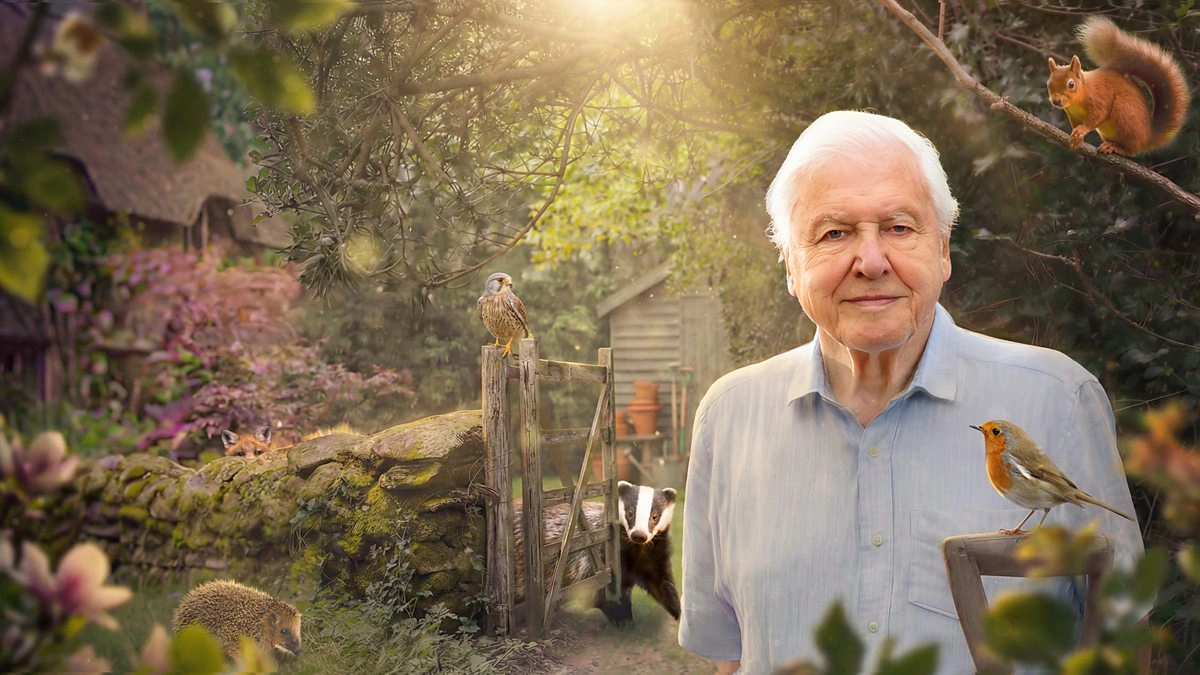

David Attenborough has reached 100, and his curiosity still cuts through the air with a falcon’s focus. In Secret Garden, he swaps the huge sweep of the Serengeti for the sunlit corners of middle England. He murmurs among purple alliums, wanders past sheds, and grants the same grand seriousness to garden life that he once gave to mountain gorillas. The premise is clean and instantly persuasive. The production team brings the high-resolution equipment used in the Amazon to the wild world hiding under our noses.
The focus lands on an Oxfordshire mill house owned by Henry and Sara. Their garden forms a lush little kingdom ringed by river water, moving between clipped lawns and flooded tangles. Attenborough proposes that a British backyard can contain biodiversity comparable to a tropical rainforest.
That is quite a pitch for a place many associate with lawnmowers, deck chairs, and tea. The show locates awe in ordinary ground. It peels back the familiar surface and reveals the ruthless survival games taking place in the grass. Attenborough’s presence creates a hush of intimacy. He makes the viewer feel invited into a secret world with the air of a very polite accomplice.
High-Def Hedgehogs and Aquatic Optics
The visual style depends on patience, precision, and a level of technical obsession that borders on heroic. Super-high-resolution cameras expose movements the human eye would miss. The garden starts to look newly built. A kingfisher settles on a branch, staring into the river. The show uses visual effects to explain how the bird sees through surface glare. Special oils in its eyes filter reflection, a feat humans cannot copy.
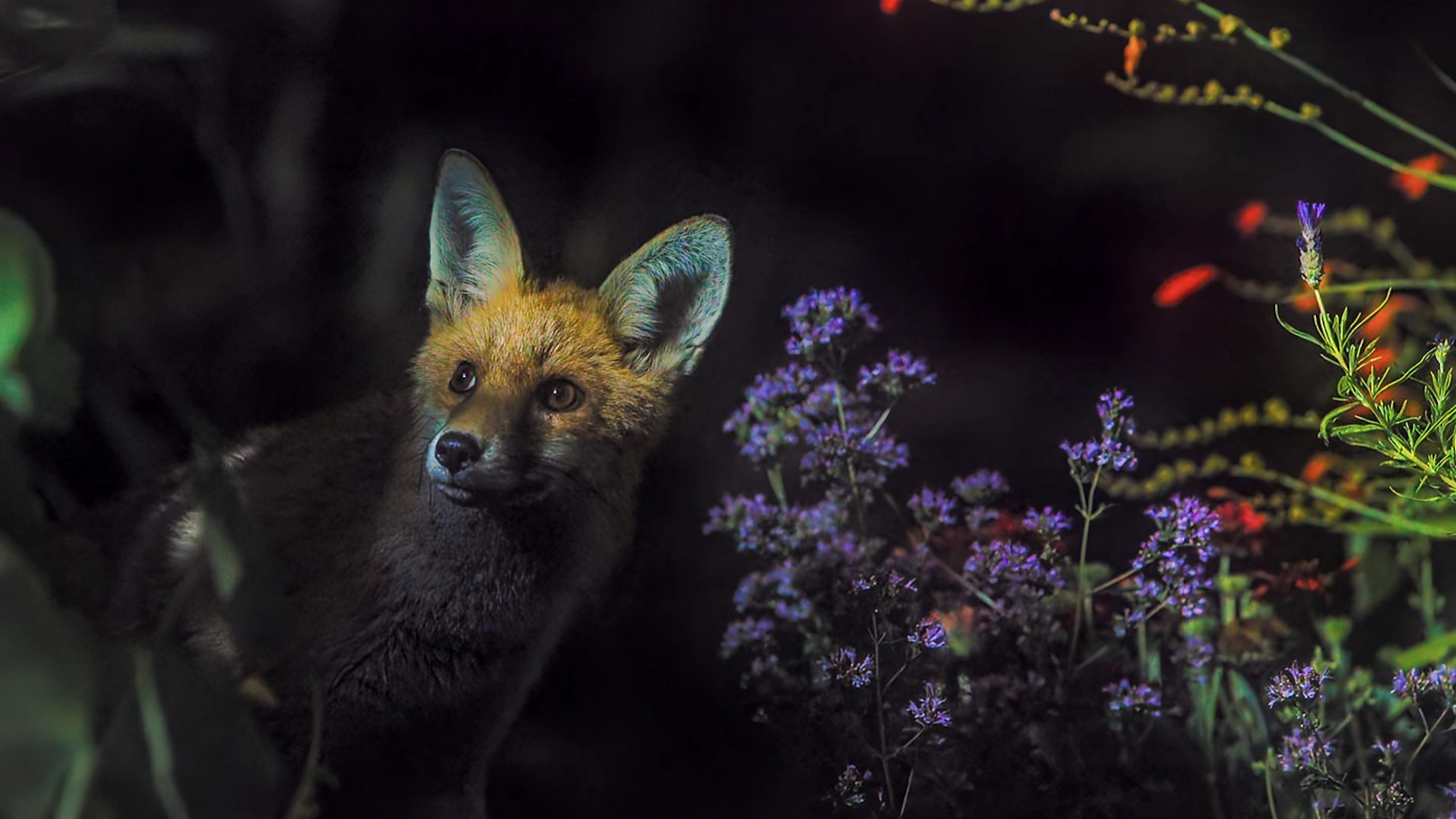
The crew’s dedication comes through clearly. They pitch tents in riverbeds, shiver in the mud, and wait for one shot with the grim faith of people who know nature has terrible scheduling habits. The effort gives the storytelling its scale. Birdsong creates a rich natural soundtrack, taking the place of the standard orchestral surges found in weaker documentaries.
A vole darting through grass receives the tension usually reserved for a lion on the hunt. A few square feet of Oxfordshire soil become a vast and hazardous terrain. Every frame asks us to inspect the familiar with fresh attention. We see the microscopic engineering of a wing and the predatory concentration of a snake. The editing keeps the pace sharp, so the slow-motion beauty never turns self-satisfied.
Soap Operas of the Soil
The garden becomes a stage for domestic drama with life-and-death stakes. Animals emerge as protagonists in an ecological soap opera. Doris the mallard steals the episode. She has nine chicks and faces the grim truth that few ducklings survive to adulthood. The tension spikes as her newborns take a frightening leap from a high willow tree to the ground. They are tiny, exposed, and toddling after a mother who must outwit every danger around them.
The main threat is the otter. It functions as the lion of this ecosystem, lurking in the empty spaces beneath the floorboards of the humans’ living room. That closeness creates a chilly connection between the cozy interior and the wild outside. The otter hunts with quiet underwater accuracy. In one breathless encounter, Doris uses her body as a decoy to pull the predator away from her brood.
It is maternal courage with blockbuster force, minus the cape and the marketing campaign. Smaller clashes fill the surrounding space. Pink, hairless vole pups hide from a prowling grass snake, their survival hanging by a thread. The mayfly hatch brings a brief, glittering pause. Hundreds of insects dance in the light, their full adult lives compressed into one day. Their shining wings carry a fragile beauty that appears for a moment, then vanishes.
Tea, Scones, and Survival
The series studies the parallel lives of humans and wildlife. Henry and Sara serve as the quiet supporting players. Henry mows the lawn or rakes leaves while transformative events unfold nearby. One shot catches him drinking coffee and reading the Financial Times inside the house. Through the window, a duck family races across the lawn in panic. The humans often miss the survival theatre taking place right outside their door.
Henry and Sara practice a gentle form of stewardship. They let parts of the land grow wild or flood, giving these creatures shelter. The point lands softly: nature flourishes when people step back. They have lived there for 30 years, yet they have seen the local otters twice. The documentary reveals what patient observation can uncover.
The finale turns to a garden party. Guests enjoy Victoria sponges and bunting in golden sunshine. At the same time, the natural world keeps fighting its daily battles. The light catches the mayfly dance beside the decorations. The image carries a crisp vision of coexistence. Escape and magic sit close to home. The wild is already here, waiting for notice. How many dramas are playing out in the shadows of our own sheds?
Secret Garden is a five-part nature documentary series that premiered on BBC One and BBC iPlayer on April 5, 2026. Narrated by Sir David Attenborough to celebrate his 100th birthday, the series reveals the extraordinary wildlife dramas occurring within the private backyards of the British Isles. Viewers can currently watch the entire series on BBC iPlayer, where it highlights the hidden biodiversity of urban and rural gardens from Oxfordshire to the Scottish Highlands.
Full Credits
Title: Secret Garden
Distributor: BBC One, BBC iPlayer
Release date: April 5, 2026
Rating: TV-G
Running time: 60 minutes
Director: Matthew Clements, Alex Minton, Euan McDonald Smith, Bill Markham
Writers: David Attenborough, Bill Markham
Producers and Executive Producers: Bill Markham, Martha Holmes, Mark Brownlow, Grant Mansfield
Cast: Sir David Attenborough, Henry, Sara, Chris, Liz, Robin, Laura, Matt
Director of Photography (Cinematographer): Tom Walker, Jamie McPherson, Warwick Sloss
Editors: Nigel Walk, various
Composer: Barnaby Taylor
The Review
Secret Garden
Secret Garden stands as a masterclass in domestic wonder. It demonstrates that a British backyard holds as much tension as any distant wilderness. By focusing on the microscopic and the mundane, the production elevates local wildlife into epic figures. Attenborough’s intimate narration guides us through a landscape of survival hidden behind picket fences. It is a visually arresting reminder to look closer at the world right outside our doors. Every frame crackles with life.
PROS
- Incredible high-resolution cinematography that reveals hidden details.
- Effective characterization of garden wildlife as dramatic leads.
- Fascinating educational insights into animal sensory perception.
- Natural sound design that creates an immersive atmosphere.
CONS
- The setting represents a rare, elite type of garden environment.
- Urban viewers might find the focus somewhat narrow.