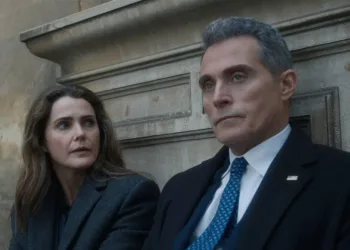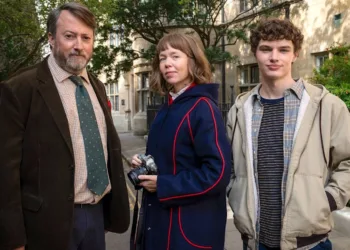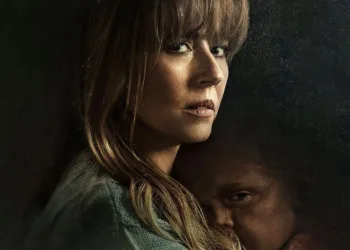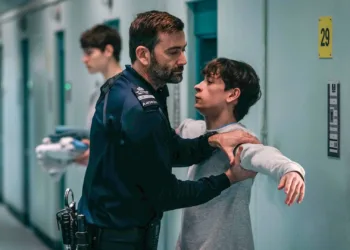















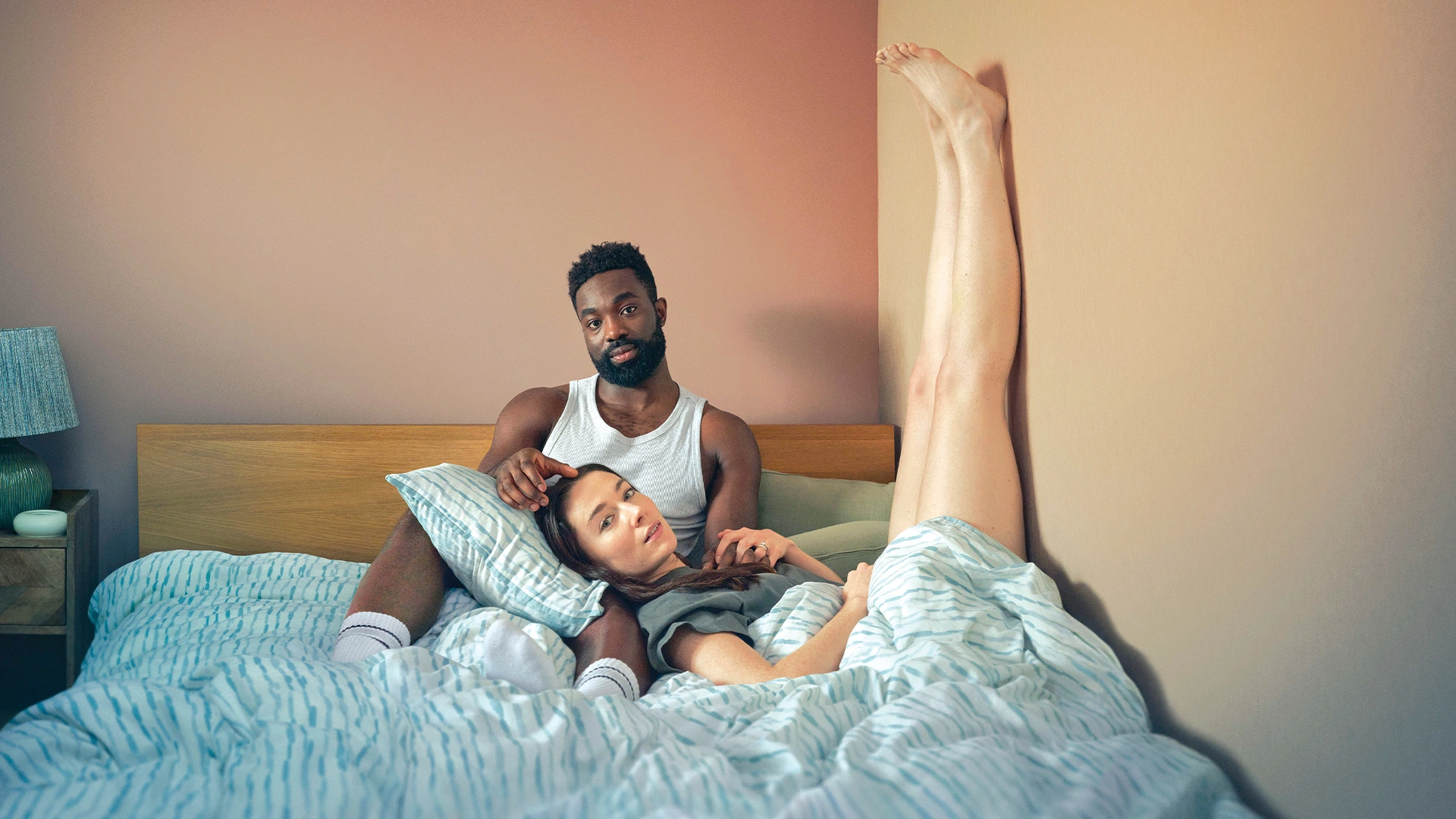

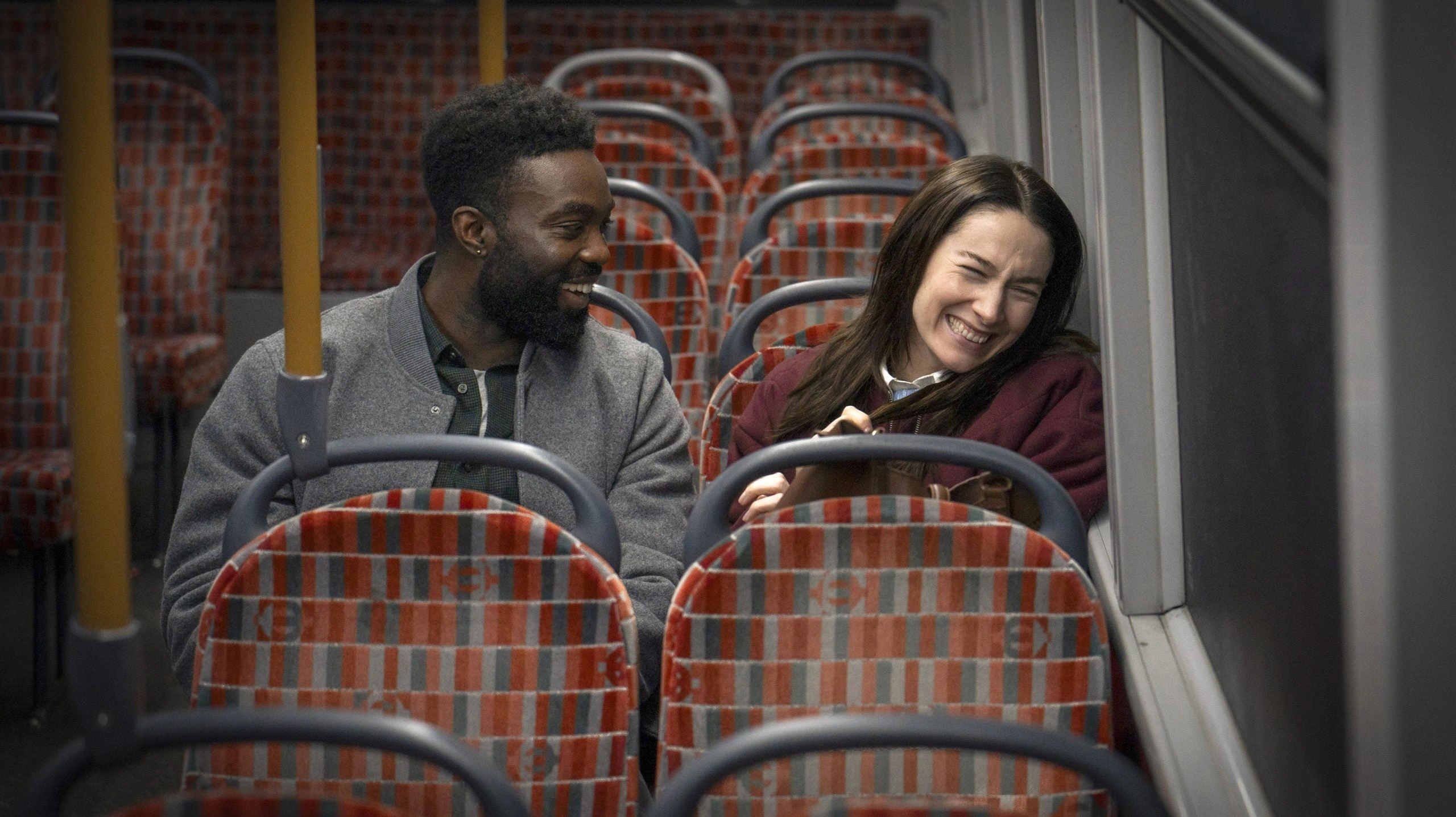
Stefan Golaszewski continues his study of the domestic interior with Babies, a six-part BBC drama set amid the residential streets of London’s E17. The series follows Lisa and Stephen, a thirtysomething couple played by Siobhán Cullen and Paapa Essiedu, whose lives have narrowed around the quiet, punishing pursuit of parenthood. The story resists the theatrical peaks of conventional television melodrama. It sinks into the muffled air of a private emergency, where grief has no dramatic lighting cue and despair arrives through ordinary rooms.
The pressure comes from the couple’s recurrent miscarriages and the deep fatigue left by repeated loss. Alongside them are Stephen’s friend Dave and his partner Amanda, whose story gives the central pain a sharper social echo. The writing remains attentive to small wounds: the sterile unease of medical appointments, the polite cruelty of watching peers build families, the ache contained in routines that once felt harmless. This is a study of people living after imagined futures have vanished, set in a world of tea, toast, and grief too heavy for speech.
The Biological Stagnation of Hope
The narrative takes on a rhythmic, almost mechanical pulse as it depicts the exhausting cycle of infertility. It records the clinical labor of conception: ovulation dates tracked with dutiful precision, supplements swallowed, plastic test sticks studied like tiny oracles that keep refusing to speak kindly. These gestures become the weight of daily life, each one small enough to look ordinary and heavy enough to bruise.
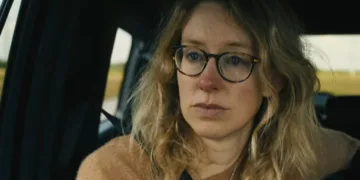
Stephen responds with a kind of militant optimism. He uses jokes and a repeated insistence on looking forward as armor against despair. Lisa bears a different wound. Her collapse is physical, psychic, and visible, unfolding slowly across the series with terrible clarity. The drama finds its most devastating register in the hospital, especially during a twelve-week scan where the absence of a heartbeat is answered by a flat, terrifying silence.
Realism here comes through the accumulation of mundane humiliations. An NHS consultant offers hollow encouragement about staying positive. Jellybeans are eaten in a waiting room with a furtive, almost absurd tenderness. These scraps of behavior carry the dread sitting beneath every exchange. The series presents trauma without sentimental varnish. It shows biological betrayal turning hope into a source of fear. Each loss becomes part of the drama’s structure, forcing the viewer to sit inside the stillness and quiet violence of a body that will not answer a couple’s deepest longing.
Masculine Silence and the Puerile Shield
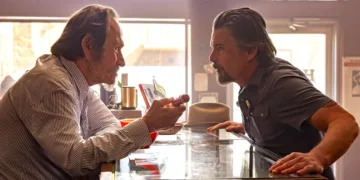
The parallel story of Dave and Amanda gives the series a cutting study of modern masculinity and its cramped emotional vocabulary. Dave lives in a state of performed adolescence, using banter as a shield against sincerity and feeling. His relationship with Amanda, an acquisitions manager with a cool, reserved manner, stays trapped in the physical. Intimacy has no language between them, so desire becomes their bluntest form of contact.
Dave’s arrested state is clearest in his fatherhood. He barely knows his own son, Daniel. Through these men, the title gains a harsher charge. They become the babies of the series, emotionally unfinished, stranded in habits that keep them from offering real care. Their social lives unfold in the pub and the social club, noisy rooms built for false cheer. Everyone performs wellness while quietly falling apart.
This refusal to speak has an inheritance. A scene between Stephen and his father reveals a shared history of silence. They trade heavy exhales in place of sentences, glugging pints with ritualistic avoidance. The effect is almost anthropological in its precision, a portrait of men trained to swallow pain until it hardens into custom. Golaszewski’s world leaves them marooned inside themselves, unable to name their own suffering or meet the anguish of the women beside them with anything solid enough to hold.
Forensic Observation and Temporal Shift
The craft of the series deepens its severe naturalism. The dialogue has forensic precision, catching hesitations, abandoned thoughts, awkward vocal tics, and the broken music of actual speech. Conversations feel lived in because they resist polish. People speak in fragments, evasions, false starts, and small tonal betrayals.
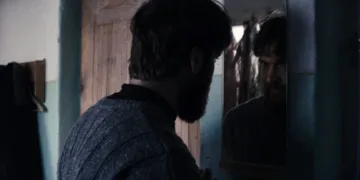
The direction often keeps its distance. The camera stays outside the emotional room, peering through a cracked bedroom door or holding back from the scene’s rawest point. This distance gives the series a charged sense of privacy. The viewer becomes an intruder, placed near the most fragile moments of a marriage without the comfort of theatrical framing. The soundtrack, made of raw, busker-like songs written and performed by the creator himself, gives the domestic tragedy a spare, unvarnished accompaniment.
The final episode brings a significant structural break, using rapid cuts to move between the present day and a period twenty years ahead. The leap gives the story a sense of survival, allowing change to appear without softening the pain that came before it. The earlier chapters remain full of immediate agony, yet the later material shows endurance as something earned through time, repetition, and damage.
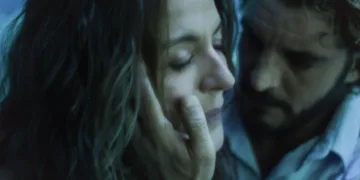
Siobhán Cullen and Paapa Essiedu hold the series together with performances of striking depth. They create a marriage that feels worn by time, built from affection, irritation, tenderness, and exhaustion. Their intimacy becomes one of the few sources of light in a drama shaped by shadow. Babies stays fixed on silence, loss, and the stubborn human capacity to keep living after hope has become dangerous.
Babies is a six-part BBC drama series. It premiered on March 30, 2026, on BBC One and BBC iPlayer. The show captures the emotional complexities of pregnancy loss. It follows thirtysomethings Lisa and Stephen. They manage the recurring heartbreak of miscarriage. They maintain their bond through humor and love. Viewers in the United Kingdom can stream all six episodes as a box set on the BBC iPlayer platform.
Full Credits
Title: Babies
Distributor: BBC One, BBC iPlayer
Release date: March 30, 2026
Rating: 15, TV-MA
Running time: 60 minutes
Director: Stefan Golaszewski
Writers: Stefan Golaszewski
Producers and Executive Producers: Stefan Golaszewski, Ruth Kenley-Letts, Neil Blair, Richard Laxton, Danielle Scott-Haughton, Lyndsay Robinson, Kelly Duffell
Cast: Paapa Essiedu, Siobhán Cullen, Charlotte Riley, Jack Bannon, Zion Veerapen-Bernard, Ryan McKen, Gary Beadle, Nia Anisah, Nadine Marshall, Luke Norris, Rosie Raven, Gary Pillai, Lewis Hart, Marianne March, George Potts, Gary Lilburn, Noah Marullo, Lottie Amor, Laura Matthews, Victoria Blunt, Tracy Anne Green, Richard Teverson, Michael Jinks, Arabella Smith-James
Director of Photography (Cinematographer): Nadim Carlsen
Editors: John Dwelly, James Taylor
Composer: Stefan Golaszewski
The Review
Babies
Babies functions as a rigorous examination of biological and emotional endurance. It rejects the comfort of traditional narrative arcs to dwell in the uncomfortable silence of recurring loss. While the pacing occasionally falters under the weight of its own realism, the central performances offer a profound study in marital intimacy. It is a demanding work that prioritizes honesty above accessibility.
PROS
- Authentic performances from Siobhán Cullen and Paapa Essiedu.
- Hyper-realistic dialogue that captures the exact rhythm of speech.
- Unflinching look at the physical and emotional cost of infertility.
- Sharp critique of how men use humor to avoid pain.
CONS
- The six-hour runtime feels stretched for the amount of plot.
- Repetitive and polarizing theme music.
- Late plot developments feel slightly heavy-handed.
- The relentless focus on trauma makes for a difficult viewing experience.