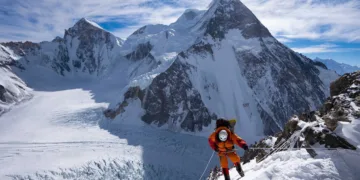


















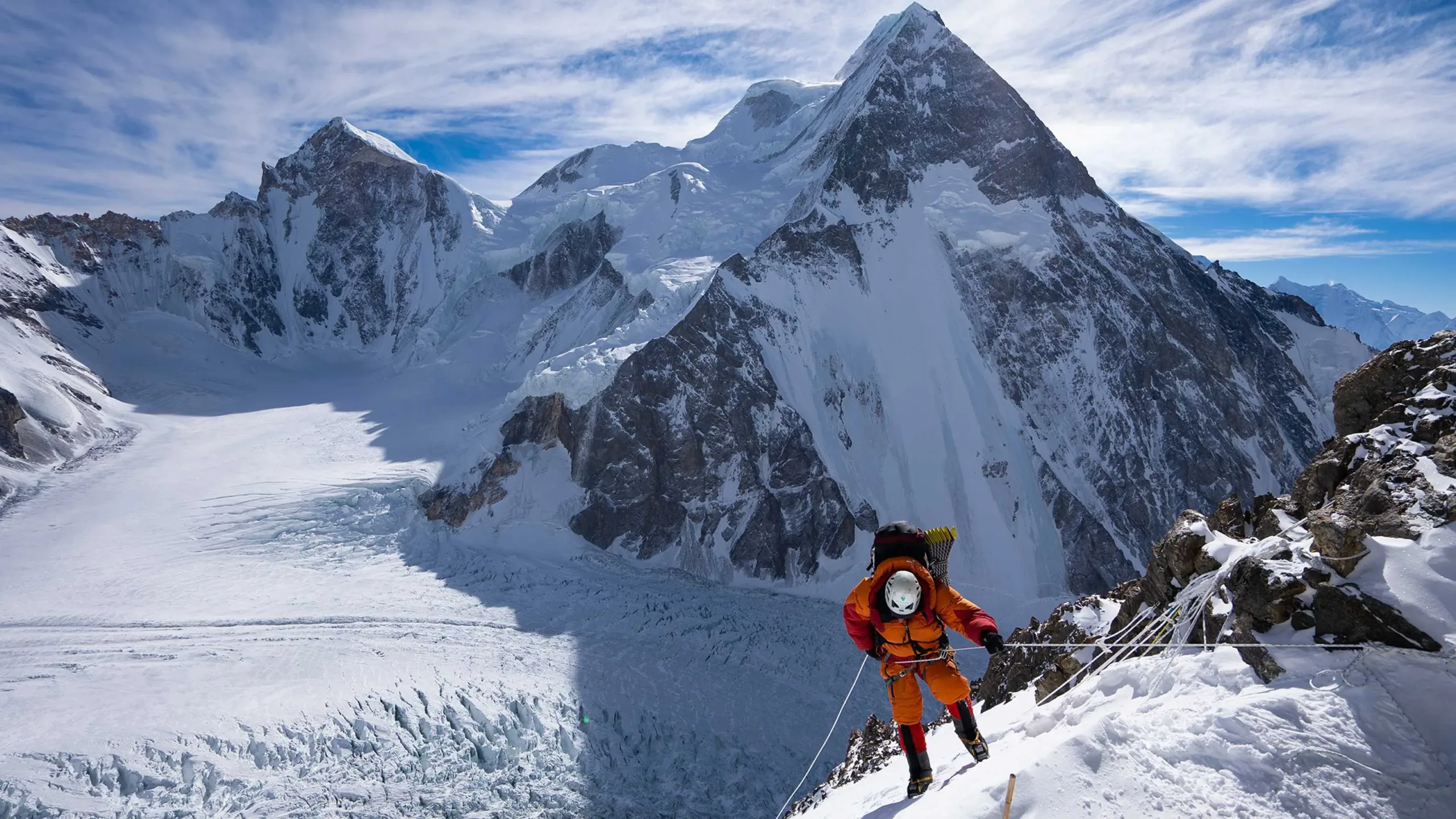

K2 rises like a broken fang under a bruised sky, a place where air seems to forget its duty to the body. Amir Bar-Lev follows the winter attempts of 2020 and 2021 with attention that stays fixed, even as the mountain insists on looking back. At 8,611 meters, K2 stands as blue ice welded to rock, demanding a ritual of endurance that feels closer to penance than sport. People call it the Savage Mountain, and the nickname carries weight here.
The peak feels predatory in the film’s language: vertical ice walls, winds that throw stones, a terrain that treats every upward step as an intrusion. Before this expedition was recorded, no one had reached its summit in winter. Base camp drops to minus 50 degrees Celsius. Ambition arrives and freezes into an artifact.
The film frames a moment when global restrictions pressed restless energy toward a final trophy, turning the desire for ascent into a kind of fever. Bar-Lev stitches professional cinematography to the raw grain of phone footage, letting polish and panic share the same space.
He follows John Snorri Sigurjónsson and the Pakistani climbers Ali Sadpara and Sajid Sadpara. The story turns away from the usual halo of triumph and settles into something darker: a close study of miscalculation, ego, and the thin line between conviction and denial. Five lives disappear into the white silence. The camera does not build monuments. It watches a collision between nature’s indifference and human self-mythology.
The Architecture of National Pride
Snorri, a father of six from Iceland, speaks to the abyss as if it offers shelter. Domestic life exists in the review’s phrasing as rhythm and safety, and he treats the mountain as an exit from that pulse. His sense of self gathers strength near mortality, as though danger grants him a clearer outline. The film’s portrait makes his fixation feel intimate and severe, a chosen dependence on exposure and risk.
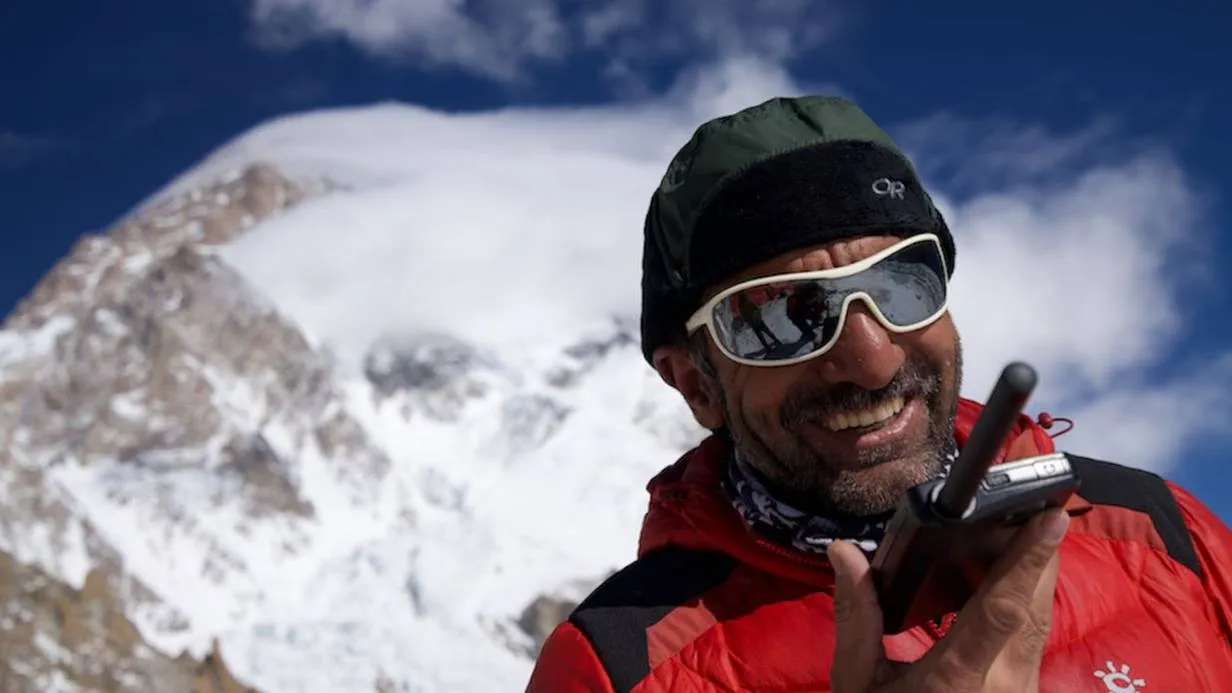
Ali Sadpara and his son Sajid carry a different texture. They embody the quiet labor of the Karakoram, presented here as Pakistan’s premier climbers. Weeks of preparation at base camp become their proof of seriousness: careful work, patient time, an understanding that survival begins long before the summit push. Then Nirmal Purja arrives later with the aura of a Himalayan rockstar, moving with helicopters and a large support staff. The contrast is not framed as style. It becomes an ethical pressure test, since thin air exposes the weakness of promises people make at lower altitudes.
The teams planned to share ropes, a practical pact against a landscape built to erase cooperation. That plan decays into suspicion. National identity hardens into armor, and the film treats this shift as a kind of existential drift: when survival feels scarce, meaning retreats into flags and legacies.
Nims carries the idea of a reclaimed history for Nepal, chasing a victory meant to answer the long shadow of Western exploration. His team climbs in darkness and reaches the summit in secrecy. Snorri is left to search for his own route. A broken word becomes the film’s wound, and the claim of a singular legacy turns the peak into a marketplace of pride.
The mountain remains unmoved by this theater. Ice holds no allegiance. Men still risk death to plant symbols. The rivalry reads as identity performed in a place described as soulless, an arena where the self tries to become permanent through a brief, brittle act. Snorri moves through that machinery like a ghost, present and yet treated as expendable. The stakes swell beyond altitude into something existential: the need to be seen, the need to own a narrative, the need to turn a mountain into proof.
The Mechanics of Systemic Negligence
Seven Summit Treks appears as a force that turns vertical space into product. Arnold Coster leads dozens of novices upward, and the pandemic-era hunger for revenue reshapes adventure into a transaction. Money demands motion. Judgment thins out around 7,000 meters. The review’s details are blunt: no tents waiting at the high camps, bodies packed together in freezing darkness, no true rest, no recovery. Exhaustion stops being a symptom and becomes a resident presence, something that climbs alongside them.
Vanity joins the load. Snorri seeks validation through social media, needing an audience to witness his struggle. The film treats this desire as part of the equipment list, a psychological weight that drains attention from the body’s limits. Elia Saikaly arrives to shape a story and pushes Ali Sadpara toward a national narrative, searching for a hero fit for the screen. The review ties that urge to a moral failure: the story machine keeps turning, even as lives narrow down to oxygen, temperature, and time.
Five people die. Sergi Mingote falls on the jagged slopes. The cameras keep rolling. Strangers fight for the right angle, crowding around a corpse for footage they can feed into their digital streams. The film frames this as a crisis of the modern self: a world where death becomes content, where breath can be exchanged for attention. The tragedy is described as preventable, and the decision to remain on the mountain carries an ugly, lingering logic that never becomes convincing.
Negligence hangs over these choices. The mountain turns into a stage for shallow impulses, and empathy freezes along with everything else. Corporate interest in success outweighs basic human needs, and the review positions that imbalance as systemic, built into the commercial structure that sells risk while stripping away care. The body becomes collateral. The summit becomes a receipt.
The Weight of the Static Sky
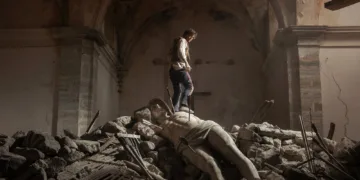
The images carry their own gravity. Professional shots meet the harsh grain of phone footage, and the blend forms a visual language that feels both intimate and merciless. A sequence shows the kick-step method: boots biting into sheer ice, each movement a small negotiation with physics. The climb becomes a slow prayer for survival, measured in breath and friction.
Joe Carey shapes the footage with steady control, and walkie-talkie audio stitches distance between camps into a continuous thread. That sound becomes a kind of haunted intimacy: voices traveling through cold air, promises and warnings carried by static. The film holds bleakness without flinching. One in four winter climbers die on K2, a statistic presented as a cold fact that refuses comfort.
The review treats the mountain like a narcotic, a high that strips away moral orientation. Near the summit, people lose their humanity. They make decisions that would feel impossible at sea level. They abandon others in the snow. They choose the image over the person. Bar-Lev’s film stands as a record of a tragedy described as avoidable, and that idea sits in the mind like an unanswered accusation.
It premiered at the Sundance Film Festival, and it leaves the viewer in disbelief. The mountain remains indifferent. The dead remain absent. Altitude exposes a darkness in the soul, showing how quickly another life can be treated as expendable in service of a peak. The film works as a warning in the language of dread. It asks what people will sacrifice to be first, and what remains of a person after that choice.
The Last First: Winter K2 premiered as the opening night film of the 2026 Sundance Film Festival on January 22, 2026. This harrowing documentary investigates the tragic 2021 winter expedition to K2, the world’s second-highest and most dangerous peak, which resulted in the deaths of five climbers. The film explores the “last great prize” in mountaineering through a blend of professional cinematography and raw, first-person footage captured by the climbers themselves. It is currently making its debut on the festival circuit, with wider streaming and theatrical distribution expected later this year following its successful Sundance premiere.
Full Credits
Title: The Last First: Winter K2
Distributor: Ventureland, Object, Propagate, Cinetic Media
Release date: January 22, 2026
Running time: 98 Minutes
Director: Amir Bar-Lev
Writers: Amir Bar-Lev
Producers and Executive Producers: John Battsek, Sean Richard, Sarah Thomson, Howard T. Owens, Ben Silverman, James Packer, Taylor Levin, Kerstin Emhoff, Amir Bar-Lev, Ali Brown, Will Kane
Cast: John Snorri Sigurjónsson, Muhammad Ali Sadpara, Sajid Sadpara, Nirmal Purja, Tamara Lunger, Sergi Mingote, Elia Saikaly, Colin O’Brady
Director of Photography (Cinematographer): Will Pugh
Editors: Joe Carey
Composer: Tom Hodge
The Review
The Last First: Winter K2
The Last First: Winter K2 is a chilling autopsy of ambition. It strips away the romanticism of mountaineering to reveal a hollow core of ego, corporate greed, and digital vanity. Bar-Lev documents a tragedy that felt inevitable, turning the lens on the climbers and the audience alike. It is a haunting, necessary look at how the quest for a legacy can lead to a total abandonment of humanity.
PROS
- Exceptional use of raw, multi-source footage to create a sense of presence.
- A nuanced exploration of the political and nationalistic tensions on the mountain.
- Avoids the clichés of the genre by focusing on moral failure rather than triumph.
- Masterful editing that weaves disparate perspectives into a cohesive tragedy.
CONS
- The sheer volume of subjects occasionally dilutes the focus on specific personal stories.
- The grim, relentless tone may be difficult for viewers seeking an inspirational narrative.