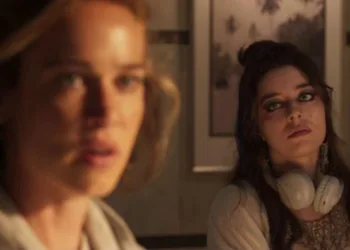
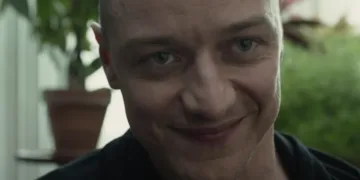













Toni Fleischer spends his nights in a Berlin basement imagining the stage life that keeps slipping away. At thirty-eight, he works among dough and delivery boxes, with his music ambitions reduced to a low hum beneath the pizza oven. That fragile routine collapses through a string of events involving a tree, a duck, and a lightning strike that kills his mother, Wera.
Her death sends him out of the city and back to Kacken on the Havel, where the series turns homecoming into an encounter with everything he failed to escape. The return has a blunt narrative function. It forces Toni into direct contact with old disappointments, old habits, and a place that has barely moved in twenty years. He arrives ready to handle the funeral and disappear back to Berlin.
The story blocks that exit at once with the discovery of a thirteen-year-old son he never knew he had. From there, the towing business becomes a holding pen, and the season builds its central pressure from two competing pulls: a possible record deal and a boy who expects his father to stay put long enough to matter.
Social Hierarchy and the Geography of Stagnation
The social order in Kacken runs on a form of rural absurdity that the series understands very well. Johnny Carrera generates much of the friction inside the Fleischer family. He is Toni’s stepfather, Wera’s widower, and younger than Toni by several years. The joke lands quickly, though the show uses it for character work rather than a single punchline. Johnny speaks to Toni with the confidence of a paternal figure, and Toni has to absorb advice from a man young enough to make that arrangement feel faintly ridiculous. That imbalance matters because it reduces Toni’s sense of control. He returns home hoping to act like a passing adult with a city life waiting for him. His family sees him as somebody who left and returned unchanged.
His sisters sharpen that loss of status. Nancy serves as the town’s only police officer while helping run the family towing business, which tells you nearly everything about how Kacken works. Public duty and family business occupy the same cramped space. Kaia and Karo carry older wounds, and one of them keeps a ruined wedding alive as a grievance long past its expiration date.
The writing gives each sibling a clear position in the family machine, so Toni’s return feels less like a reunion than a reinstatement into an old hierarchy. That is a smart structural choice. The show needs resistance from every direction, and it finds that resistance in domestic routines, old resentments, and the sheer indignity of being known too well.
Kacken itself earns enough attention to register as a character rather than a backdrop. The name signals the show’s comic instincts early, and the setting follows through. A hair salon shares space with a funeral home. The police station operates alongside a pedicure business. These arrangements are funny on sight, though they also tell a story about a town where distance, privacy, and professional decorum have collapsed into one another.
The gold Trabant outside the towing business works as a relic and a family emblem. It keeps the past in view. So does the mayor, whose vanity has swollen into a civic faith. Streets and buildings carry her name, and the town treats her with a level of reverence that turns local politics into satire. The series sketches Kacken as a place where time has stalled and ego has filled the gap. That makes Toni’s Berlin fantasies feel very far away, which is exactly what the narrative needs.
Paternal Responsibility and the Industry Clock
Charly’s arrival gives the season its strongest line of dramatic movement. A secret child can be a blunt device, and the show knows that, so it works hardest on how Toni responds to the revelation. He sees fatherhood as a logistical crisis. The timing offends him. His music career appears to be stirring at the exact moment a thirteen-year-old son enters the frame and demands attention. Charly is written with care. He is sincere, meticulous, and awkward in ways that echo Toni’s own habits. That mirroring gives their scenes shape. Toni keeps trying to present himself as a hard-edged Berlin artist; Charly wants consistency, honesty, and a father who shows up when he says he will.
That conflict drives the season more effectively than the larger comic machinery around it. Toni begins from vanity and inconvenience. He treats Charly as an obstacle, a disruption, a problem to file away until the music situation resolves itself. As the episodes continue, Charly becomes the person who strips away Toni’s self-mythology.
He pushes Toni toward songs rooted in lived experience rather than performance of an image. The series handles this shift with patience. It does not give Toni a sudden awakening. It lets his ego wear down scene by scene, through embarrassment, failure, and the slow recognition that his son sees him more clearly than he sees himself. That is where the writing is strongest. It understands that character change works best when it feels irritating before it feels redemptive.
The deadline from Cutie Heart Records gives the season a firm clock. Dalia Muller-Muller wants a hit in two weeks, and that demand supplies momentum whenever the family story threatens to sprawl. Toni has to write music while dealing with grief, unresolved family ties, and a son who refuses to stay at the edge of the frame. The satire of the music business has bite. The label traffics in emotional pop and organ transplants, which turns industry exploitation into a literal business model. The joke is broad, though it lands because it connects to Toni’s fear that talent will be treated as raw material and sold back to him as opportunity.
The Berlin material and the Brandenburg material also speak to each other in useful ways. Toni has long defined himself through struggle in the city. Once he is removed from that environment, the identity he built around it starts to look flimsy. The series keeps pressing that point. Toni thought hardship made him an artist. Kacken exposes how much of that identity rested on pose and repetition. The season’s arc follows his gradual recognition that a record deal means very little if he earns it by dropping every human obligation in reach. That is a familiar trajectory, though the show gives it enough specificity through Charly to keep it from feeling prepackaged.
Narrating Ducks and Asparagus Schemes
A baby duck named Tupac narrates parts of the story, which tells you immediately that the series has little interest in staying inside plain realism. The device is risky, and the show commits to it. Tupac comments on events, speaks in a female voice, and carries a pointed dislike of Toni. The duck functions as a reminder of Wera’s death, a disruption of realism, and a running critique of the story’s own methods.
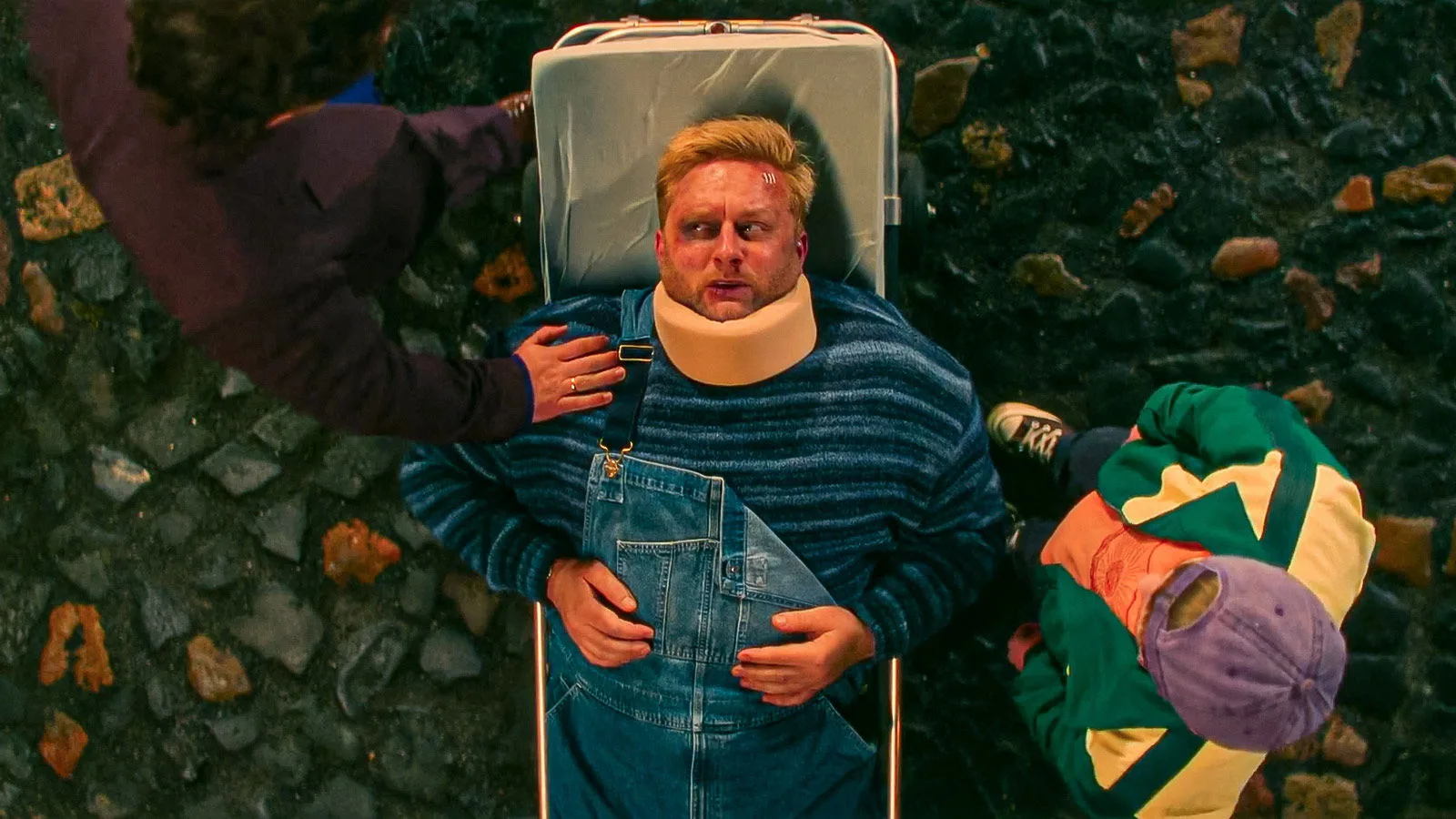
By letting this strange observer break the fourth wall, the series prevents its grief material from settling into soft sentiment. That matters because Toni’s story could easily drift toward familiar beats about family healing. Tupac keeps the tone unstable. The show becomes willing to interrupt itself, mock itself, and undercut emotional certainty just as it begins to settle in.
Wera’s ghost appears as well, offering guidance from beyond death. This supernatural thread serves a clean dramatic purpose. Toni gets a way to confront unresolved feelings toward his mother without the series having to rely entirely on memory or exposition. In Kacken, the dead remain active participants in the lives of the living. The show treats that fact as ordinary, which fits the world it has built. The strange elements do not sit apart from the family story. They are woven into the town’s logic, and that gives the narrative permission to move between grief, fantasy, and mockery without stopping to explain itself each time.
The asparagus drug ring gives the season a second engine. The mayor and her son use the local asparagus harvest for illegal business, producing a fake drug known for its pungent smell. The setup parodies police drama with a pleasing lack of restraint. Nancy investigates with complete seriousness, which sharpens the joke because the crime itself remains gloriously foolish. The smell-based premise turns the whole operation into a visual and tonal gag aimed at petty power and local vanity. The mayor sees herself as a grand figure; the series answers with asparagus narcotics. Fair enough.
This subplot does useful work beyond comic relief. It sends a small pulse of danger through the season and reflects Toni’s own internal disorder. The town he feared as suffocating turns out to be as unstable and corrupt as the city life he idealized. That parallel gives the series a stronger frame. Kacken is not a simple symbol of provincial decay. It is a place with greed, ambition, pettiness, and fantasy operating at full volume. In a series where ducks narrate failed rappers and ghosts offer advice, an asparagus crime network feels entirely native to the setting.
Artistic Identity and Cinematic Boldness
Anton Schneider gives Toni shape without asking the audience to excuse him. That is the performance’s best quality. Toni carries his own inflated view of himself into nearly every scene, and Schneider lets that vanity sit beside fatigue, insecurity, and the physical wear of a man who has spent years delivering pizzas while telling himself a larger story. The musical material gains credibility from that grounding. Toni looks and moves like somebody who has lived inside stalled ambition for a long time.
Sky Arndt gives Charly a steady, quiet force that holds the season together. The performance avoids precocious charm and leans into persistence. Charly keeps pressing his father for attention, presence, and honesty, and Arndt makes that insistence feel human rather than schematic. The scenes between Schneider and Arndt carry the series through its weaker stretches because both actors understand the same dramatic line. Toni wants to maintain distance. Charly keeps closing it.
Dimitrij Schaad brings a bright, emotionally open energy to Johnny, which makes Toni’s cynicism look thin by comparison. Johnny could have been a one-note comic creation. Schaad gives him enough feeling to make the character useful in family scenes and funny in social ones. Veronica Ferres takes the mayor into caricature with full confidence. Her performance fits the town’s swollen self-image and gives the political satire a face bold enough to match the script’s exaggeration.
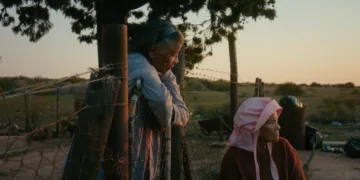
The visual style serves the material well. The Brandenburg landscapes are flat, open, and oddly suffocating, which suits Toni’s sense of being stranded in a place that never changed. Interiors feel cramped. Shared storefronts and the towing business press characters close together, which turns awkwardness into part of the frame. Across nine episodes, the pacing stays steady. Each episode moves the story far enough forward to earn its time, and the shift toward the mayor’s criminal activity in the middle stretch keeps the father-son material from circling the same emotional point too many times.
Alex Schaad and Jano Ben Chaabane direct with a rough, lived-in visual sensibility. The series avoids the glossy finish common in streaming comedy and chooses something looser, worn, and slightly decayed. That choice fits a town stuck in its own habits. It also supports the show’s genre play. Slapstick, family drama, grief, satire, and surreal interruption all occupy the same frame. The series gains much of its identity from that tonal restlessness. It refuses to settle, and in this case that refusal works in its favor.
The German comedy series Crap Happens (originally titled Kacken an der Havel) premiered globally on Netflix on February 26, 2026. The story follows Toni, a struggling Berlin rapper and pizza delivery driver who is forced to return to his eccentric childhood home in Brandenburg following the bizarre death of his mother. Created by brothers Alex and Dimitrij Schaad, the nine-episode first season balances surreal humor—including a narrating baby duck—with a grounded emotional arc as Toni discovers he has a teenage son and faces a high-stakes deadline for a career-defining record deal. As of today, March 2, 2026, the full season is available for streaming exclusively on Netflix.
Where to Watch Crap Happens Online


Full Credits
Title: Crap Happens (Original title: Kacken an der Havel)
Distributor: Netflix
Release date: February 26, 2026
Rating: TV-MA
Running time: 33–37 minutes per episode
Director: Alex Schaad, Jano Ben Chaabane
Writers: Alex Schaad, Dimitrij Schaad, Jano Ben Chaabane, Mats Frey, Gemma Michalski, Isaiah Michalski, Susann Schadebrodt
Producers and Executive Producers: Richard Lamprecht, Bernd von Fehrn, Kristina Löbbert, Karolin Wanger
Cast: Anton Schneider (Fatoni), Sky Arndt, Dimitrij Schaad, Jördis Triebel, Sophia Münster, Jana Münster, Marc Hosemann, Sherine Ciara Merai, Ruth Reinecke, Vincent Redetzki, Taneshia Abt, Matthias Brandt, Edin Hasanovic, Veronica Ferres
Director of Photography (Cinematographer): Fabian Rösler, Tobias Koppe
Editors: Christoph Otto, Felix Schekauski
Composer: Martina Eisenreich, Michael Kadelbach, Fatoni, Dexter
The Review
Crap Happens
Crap Happens succeeds because it treats its absurdity with absolute sincerity. Toni Fleischer’s struggle feels authentic even with the presence of a talking duck. The narrative avoids easy resolutions. It chooses instead to explore the friction between ego and responsibility. While the pacing occasionally stumbles during the criminal subplots, the emotional core remains firm. It offers a sharp look at provincial life and the cost of late-blooming ambition.
PROS
- Strong lead performance by Anton Schneider.
- Bold use of meta-narrative through the duck narrator.
- Sharp satire of small-town politics and the music industry.
- Authentic emotional development between father and son.
CONS
- The asparagus drug plot occasionally distracts from the main arc.
- Some middle episodes feel slightly stagnant.