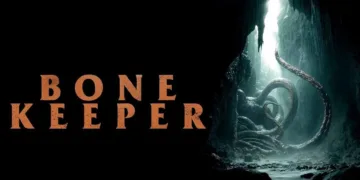









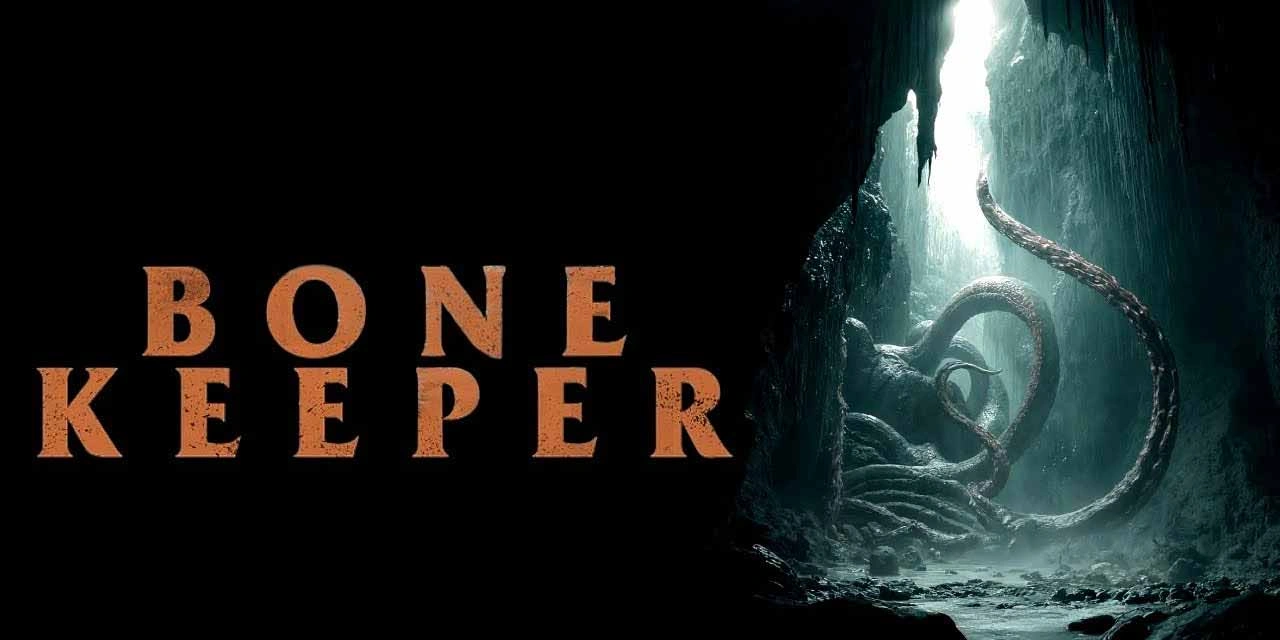

Bone Keeper is a British independent horror film that fuses extraterrestrial origins with underground terror. Directed and written by Howard J. Ford, the story follows Olivia, a young woman still marked by the mysterious disappearances of her journalist grandfather in 1976 and her mother in recent years.
Both vanished during investigations into a remote cave system said to contain a deadly legend. Olivia gathers friends and a social media influencer for a trek into the Welsh wilderness, searching for answers in dark limestone depths. The film sets its stakes early, linking a tentacled predator to a prehistoric meteorite strike.
The premise follows a familiar survival horror path, and the production gives that framework renewed force through atmosphere and creature design. This is a story shaped by family inheritance and the peril of awakening ancient things kept out of sight. Ford uses the harsh British landscape to anchor a high-concept sci-fi idea, tying modern investigative trauma to a primordial threat older than human civilization.
Temporal Layers and the Descent into Darkness
The film begins with a cosmic prologue that gives the story a sense of deep time, showing a meteorite impact that brings a predatory life form to prehistoric Earth. This sequence works as a narrative hook, giving viewers knowledge of the danger before the protagonists reach the wilderness.
The shift to 1976 through grainy Super 8 footage adds historical gravity, echoing the folk horror traditions often associated with British cinema. This found-footage device links the ancient past to Olivia’s present-day search, giving the film a textured structure that rewards close attention.
As the group travels from the misty openness of the Welsh mountains into the tight reality of the cave system, the visual approach changes from wide landscapes to narrow, airless framing. Olivia’s drive is emotional, rooted in her need to resolve a generational pattern of loss. Her companions bring different energies into the expedition. Nadia and Ravi embody the scientific perspective, trying to explain the irrational through reason, and other members of the party supply the friction required for a survival narrative.
The middle act moves at a deliberate pace. It stresses the physical strain of spelunking and the mounting psychological pressure of isolation. This slow-burn method builds tension through the caves’ geography. The limestone walls become an enemy in their own right, matching the creature as a source of fear. The script uses these quieter stretches to sharpen the group’s vulnerability, so the eventual hunt feels earned through physical and mental depletion.
Human Stakes and the Modern Influencer
Sarah Alexandra Marks anchors the film with a performance built around internal grief rather than familiar horror excess. She plays Olivia as a woman carrying a legacy of disappearance, which makes her determination feel credible even when the plot demands doubtful choices.
Marks keeps a grounded presence as the supernatural chaos intensifies. The supporting cast occupies the archetypal roles the genre needs, and the actors give those roles a lived-in chemistry. Louis James brings a cynical edge to Ethan, playing a character whose early abrasiveness makes his later reaction to the crisis stronger.
Sarah T. Cohen’s character, a TikTok influencer known as the Bitch-Hiker, adds pointed cultural commentary. Her presence reflects the modern urge to turn danger into digital content, a subject with global reach in an age shaped by viral attention. The character clashes with the sincerity of Olivia’s mission, exposing the strain between private grief and public spectacle.
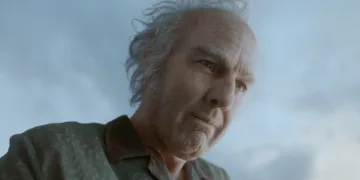
John Rhys-Davies gives Professor Harrison considerable weight. His performance draws on the classic “harbinger of doom” role common in regional horror, and his screen authority gives the exposition force. He links the creature to village folklore, placing the horror within a local setting that makes the threat feel tied to this specific part of the UK.
The Architecture of the Creature and Its Environment
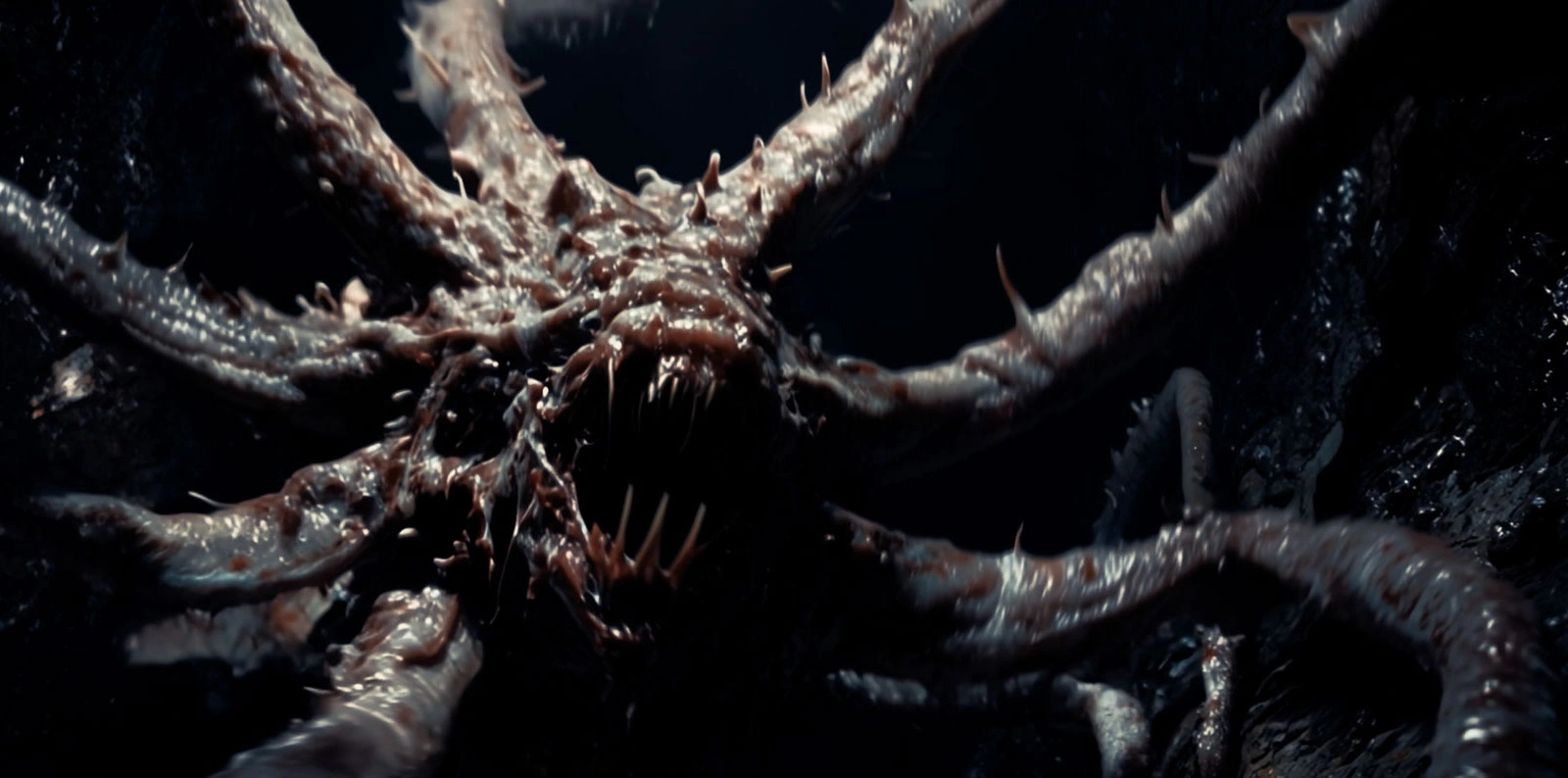
The Bone Keeper’s design is one of the film’s strongest elements, presenting a shifting, tentacled entity that recalls the body horror of late twentieth-century classics. It reflects a design approach familiar from John Carpenter’s creature features, where the monster feels alien and strangely organic.
The creature stays largely hidden in early encounters, allowing viewers to imagine the grotesque details. When the film reveals it fully, it uses practical effects and digital work. Some CGI moments expose the limits of an independent budget, yet the monster’s physical presence remains effective.
The Welsh locations create a cold, oppressive backdrop that deepens the sense of entrapment. The cinematography uses the natural textures of the cave walls to form a disorienting space where any shadow could conceal a limb or tentacle. This spatial design recalls survival games in which the environment becomes a puzzle under pressure.
The sound design strengthens the trap by setting the creature’s wet, rhythmic noises against the underground silence. The soundtrack avoids constant jumpscare cues, building a steady hum of dread that mirrors the protagonists’ rising panic. The technical execution works because it respects the physical reality of the setting, making the supernatural intrusion feel like a violation of the natural order.
Traditional Frameworks and Indie Resilience
The film works within the familiar traditions of the “pick-them-off” survival horror subgenre. It follows the structural rules of the remote-location thriller, then seeks its identity through prehistoric mythology. That commitment to genre conventions gives horror fans a recognizable framework, and the British flavor gives the film a distinct identity. The narrative does not try to reinvent the wheel. It concentrates on controlled tension and gore, delivering the visceral payoffs expected from an independent creature feature.
The final act leaves several narrative threads open, suggesting a threat larger than a cave-dwelling monster. The film clearly aims to widen its lore, hinting at an ecological or global catastrophe if the entity reaches a populated area. This open ending shows confidence in the creature’s design and its ability to support a larger franchise.
As part of the UK’s independent horror scene, the film shows commitment to high-concept storytelling with limited resources. It draws power from the meeting point of local folklore and cosmic dread, showing how a focused narrative and memorable monster can still leave a strong impression. The film affirms the lasting appeal of the creature feature, offering a satisfying mixture of physical horror and existential mystery.
Bone Keeper is a British independent horror film that held its world premiere at FrightFest Glasgow on March 6, 2026. Following its festival debut, the movie was released to a wider audience on major UK digital platforms on April 6, 2026. Viewers can currently watch the film via digital download and on-demand services provided by Plaion Pictures. The story follows a group of explorers who venture into a remote cave system to investigate a series of disappearances, only to encounter an ancient, extraterrestrial predator.
Full Credits
Title: Bone Keeper
Distributor: Plaion Pictures
Release date: April 6, 2026
Rating: 15 (BBFC)
Running time: 91 minutes
Director: Howard J. Ford
Writers: Howard J. Ford
Producers and Executive Producers: Howard J. Ford, Sarah Alexandra Marks, Sarah T. Cohen, Rikke Ennis
Cast: Sarah Alexandra Marks, Louis James, Tiffany Hannam-Daniels, John Rhys-Davies, Sophia Eleni, Danny Rahim, Tyler Winchcombe, Sarah T. Cohen
Director of Photography (Cinematographer): Howard J. Ford
Editors: Howard J. Ford
Composer: Julian Gallant, David Tobin, Jeff Meegan
The Review
Bone Keeper
Bone Keeper is a gritty, atmospheric survival horror that succeeds through its impressive creature design and grounded performances. While the pacing occasionally falters in the middle act and the digital effects reveal budget constraints, the film effectively leverages its Welsh setting to create a sense of primordial dread. It honors the traditions of independent British cinema by prioritizing tension and practical textures over generic tropes. It is a solid recommendation for genre enthusiasts seeking a monster movie with weight and a lingering, unsettling mystery.
PROS
- Unsettling and creative creature design.
- Strong lead performance by Sarah Alexandra Marks.
- Oppressive, authentic subterranean atmosphere.
- Effective blend of cosmic sci-fi and local folklore.
CONS
- Inconsistent CGI in well-lit scenes.
- Slow pacing during the middle act dialogue.
- Familiar character archetypes.




Ain’t no way you’re calling that ai slop ‘cgi’. This article reads like it’s ai, too.