























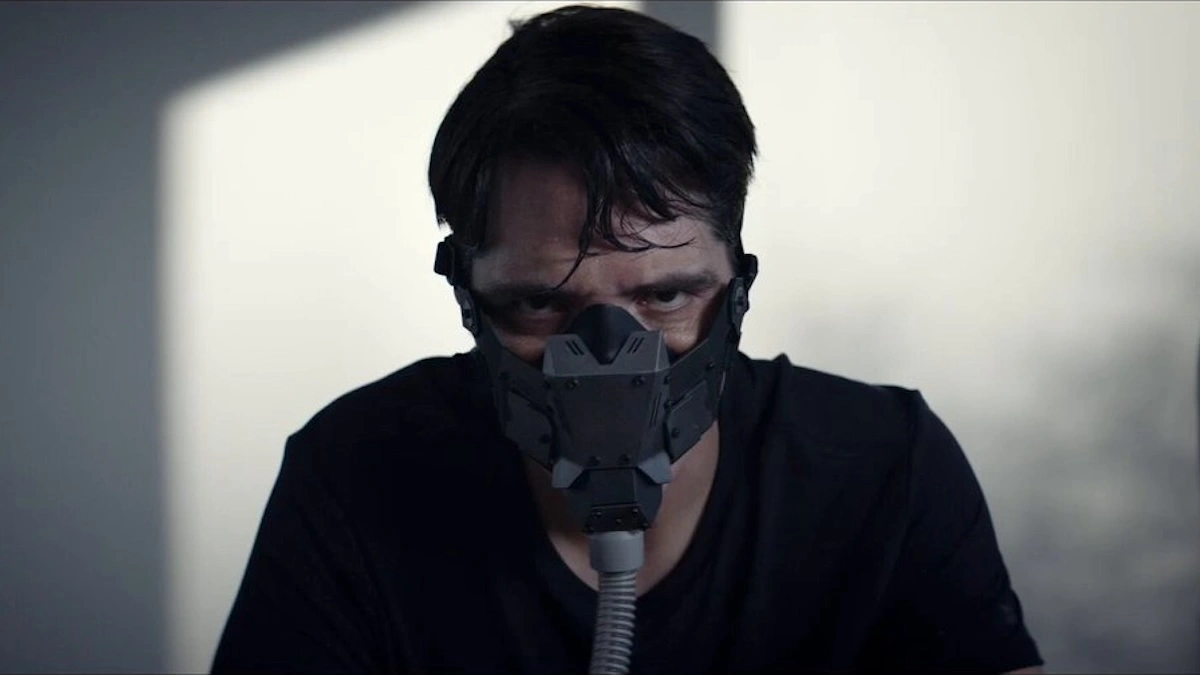

The Malibu coastline becomes a false paradise for Ally Braun, a teenager enclosed within the high-resolution walls of a glass-and-steel refuge. At sixteen, she lives inside a curated infirmary, a vast estate arranged as palace, clinic, and private experiment for her debilitating Lupus. The place has the polish of a home and the soul of a containment unit. Her hairless, frail body is watched with the precision reserved for a prized asset, every movement measured, every risk converted into parental policy.
Her adoptive parents, Jeff and Georgia, move through this sterile habitat with philanthropic poise, the kind that seems designed for an expensive profile spread. They give Ally comfort, treatment, and protection, while keeping freedom outside the gates. Her rare condition becomes the permanent rationale for isolation. Then Ally slips past security and reaches the beach, where she meets Brooke, a rebellious peer whose rough, unvarnished energy disrupts the managed purity of Ally’s life like a speck of grit in a surgical tray.
That encounter starts the film’s descent into medical gaslighting and the grotesque entitlement of the ultra-wealthy. The Malibu mansion functions as a specimen jar, a clean container for a dirty moral equation. Youth feeds age. Care masks ownership. Love becomes a legal fiction with good lighting.
The Performative Weight of Survival
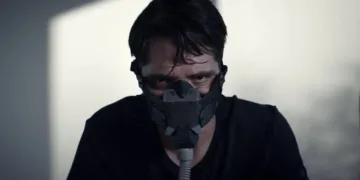
The film’s strongest asset is Samantha Cochran’s physical commitment as Ally. She plays her as a porcelain figure held together by medication, surveillance, and fear, with makeup emphasizing a sickly pallor and the mobility chair carrying the weight of a sentence. Cochran makes Ally’s fragility tactile. Then the performance begins to harden. Her metamorphosis has a visceral charge, as the passive patient gives way to a sharper, self-directed presence. The autonomy feels earned, scraped out from beneath years of control.
David Dastmalchian and Ashley Greene work opposite her with frightening synchronization. Dastmalchian gives Jeff a quiet, high-frequency menace. His line readings about health and safety arrive with surgical detachment, as if Ally’s body were a luxury vehicle requiring careful maintenance. A grimly efficient man. Probably terrible at family game night.
Greene’s Georgia supplies a cold aesthetic counterpoint. She plays a modern wicked stepmother filtered through calculated wellness culture, looking like someone untouched by biological stress. Her composure has the gleam of a spa brochure printed on poisoned paper. Together, Jeff and Georgia share a silent language of control, a choreography of glances, pauses, and managed concern. They embody an existential horror in which parental affection and property management occupy the same emotional address.
Sydney Taylor gives the film needed friction as Brooke. Her raw, unrefined energy cuts through the Braun household’s lacquered menace. She serves as the viewer’s surrogate once she begins detecting the rot under the mansion’s expensive floorboards. Her scenes with Cochran carry the film’s most human charge, offering breath, warmth, and suspicion in a story otherwise governed by calculation.
Cinematic Hygiene and Narrative Atrophy
Director Nancy Leopardi and cinematographer Andrew Russo approach the setting with a clinical, unblinking gaze. The film resists the heavy shadow play often associated with thrillers and classic noir. Chiaroscuro gives way to overexposure. Moral darkness survives under bright light, which may be the film’s sharpest visual joke.

The Malibu mansion is lit with a high-key glare that makes every surface look scrubbed, expensive, and faintly hostile. This lighting scheme mirrors the film’s fixation on hygiene and clean living. Secrets have nowhere to hide, so the household simply trains everyone to ignore them.
The camera movement stays static and deliberate, reinforcing the rigid architecture of Ally’s existence. Frames feel arranged, monitored, sealed. Expressionistic framing appears less through distortion than through sterile symmetry, a modern noir grammar built from glass walls and wellness minimalism.
That visual precision cannot fully conceal the script’s structural weakness. At ninety minutes, the film should move with a sharper pulse, yet the second act frequently loses pressure. Repeated sequences of Ally and Brooke sorting through old home movies create a loop that feels like narrative stalling. The tension should tighten. It idles.
The sound design is sparse, and the lack of a stronger score leaves several slower passages without the dread needed to carry them. Audience perception in thrillers depends on rhythm, pressure, and carefully managed sensory information. Here, silence sometimes works as unease, then starts to feel like empty space. Suspense needs oxygen, certainly, yet it also needs a hand on the throat.
The film’s internal logic also falters. One scene presents the parents as digital ghosts, then a later search reveals abundant public data that should have surfaced much earlier. The gap weakens the mystery. Strange vignettes create further drift, including a beach-side encounter with a deranged woman that feels like a remnant from a stranger, more experimental draft. The moment vanishes without payoff, leaving a faint aftertaste of unrealized ambition. The film looks expensive, yet its narrative corners are cut so tight that the seams begin to show.
Bio-Hacking the Fountain of Youth
The final act shifts from domestic captivity drama into satire about elite obsession with life extension. The medical mystery resolves with a reveal that is predictable and conceptually potent: Ally is not sick in the way she has been told. She is a harvest. Her rare blood sustains her parents’ unnatural youth, aligning the film with modern bio-hacking fantasies and the “blood-boy” transfusion fixation associated with the tech elite.
The violent confrontation arrives fast and without apology. Ally’s recovery after stopping her medication happens with startling speed, a choice that trades medical realism for the blunt satisfaction of revenge. As genre mechanics go, it is efficient. As medicine, best left off the brochure.
The hidden underground facility gives the film a needed visual break from the polished surfaces above. The cold industrial space beneath the Malibu dream literalizes the film’s moral architecture: luxury on top, extraction below. This is where the thriller lineage sharpens. The mansion’s clean light gives way to a harsher underworld, and the story’s ethical gray zones become physical space. Ally’s arc turns on identity and free will, since her entire sense of self has been manufactured through diagnosis, dependency, and fear. Her escape becomes an act of self-definition.
The film stumbles in its final moments by revealing a vast warehouse of clones. The stinger aims for scale, yet it weakens the personal victory Ally has just won. A tight psychological thriller about parental betrayal suddenly opens into an expansive sci-fi premise with little room for examination. The eat-the-rich sentiment remains clear, though its force thins once the film gestures toward franchise architecture.
By the credits, the film has exposed the moral bankruptcy of Jeff and Georgia while leaving Ally inside a world far worse than she understood. The ending reaches for a cinematic gasp and lands closer to a shrug. The questions raised by the scale of the operation receive too little space to breathe. The thematic line survives, yet the emotional payoff is offered up to a cheap cliffhanger, which feels fitting in a story about people who treat youth as a renewable resource. Even the ending wants another body.
The Cure premiered in early 2026 as a biotech-themed psychological thriller that explores the intersection of medical ethics and the extreme wealth of the billionaire class. Centered on a chronically ill teenager who suspects her parents’ philanthropic exterior hides a darker genetic agenda, the film was released theatrically and on VOD platforms like Amazon and Apple TV by Vertical. You can currently stream or rent the movie on most major digital storefronts, where it has gained attention for its satirical take on life-extension technology.
Where to Watch The Cure (2026) Online







Full Credits
Title: The Cure
Distributor: Vertical, Signature Entertainment, Front Row Filmed Entertainment
Release date: March 20, 2026
Rating: R
Running time: 91 minutes
Director: Nancy Leopardi
Writers: Jonathan Bernstein, James Greer
Producers and Executive Producers: Nancy Leopardi, John Ierardi, Rock Jacobs, Natalie Marciano, Bo Youngblood, Steve Bencich, Michael Breen, Luke Daniels, Michael Leon Cassault
Cast: David Dastmalchian, Ashley Greene, Samantha Cochran, Sydney Taylor, Tyler Lawrence Gray, Alex Veadov, Marisa Echeverria, Bunny Levine
Director of Photography (Cinematographer): Andrew Russo
Editors: Anders Hoffman
Composer: Roy Mayorga
The Review
The Cure
The Cure operates as a sleek, clinical examination of the dark side of longevity. It benefits immensely from the physical commitment of Samantha Cochran and the calculated menace of David Dastmalchian. While the visual storytelling effectively utilizes its Malibu setting to create a sense of gilded isolation, the narrative frequently stalls during its middle act. The final shift into sci-fi expansion feels more like an attempt at a franchise stinger than a cohesive thematic conclusion. It remains a polished, watchable thriller that unfortunately sacrifices psychological depth for a predictable, oversized twist.
PROS
- David Dastmalchian and Ashley Greene deliver chilling, high-frequency performances as the adoptive parents.
- The high-key cinematography by Andrew Russo perfectly captures the sterile, "wellness" obsession of the elite.
- Samantha Cochran provides a visceral, physically demanding portrayal of survival and transformation.
- The "eat-the-rich" satire regarding bio-hacking is timely and conceptually sharp.
CONS
- The 90-minute runtime is hampered by repetitive pacing and narrative stalling in the second act.
- Internal logic flaws regarding digital footprints and unexplained vignettes distract from the tension.
- The final clone revelation feels tacked on and undermines the personal stakes of the protagonist.
- The score is practically absent, leaving many scenes feeling emotionally hollow.