








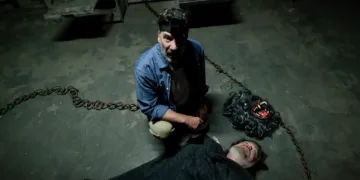


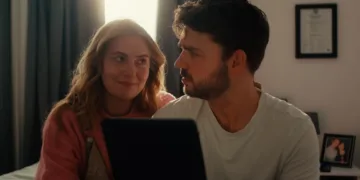


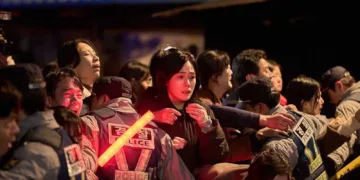



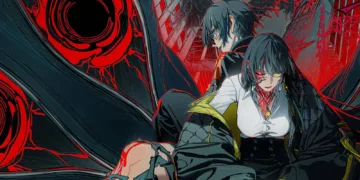




Girl From Nowhere: The Reset ushers Nanno back into the fray, with Becky Rebecca Patricia Armstrong donning the mantle of the karmic mirror. In this new chapter, she ventures across various educational settings, exposing the rot festering beneath humanity’s surface.
This iteration retains the anthology format, providing a fresh start for the series, with the focus shifting to a supernatural entity who travels between schools, illuminating the malice embedded in human nature. Through Nanno’s unsettling presence, students and faculty alike face the fallout of their hidden sins.
A consistent figure in this season is Sky, a student whose path intersects with Nanno’s across multiple episodes, suggesting an ongoing thread. The stories explore themes such as brutal bullying, digital harassment, and institutional corruption.
Nanno serves as both a catalyst for chaos and a mirror, forcing characters to confront their darkest instincts through intricate psychological traps. With its dark and cynical worldview, the series emphasizes how the pursuit of justice only reveals deeper layers of depravity within the institutions designed to protect the youth. Schools, in this lens, become sites for moral dissection.
Retribution and Redemption: The Struggle of the Self
The series shifts its thematic focus to the delicate balance between retribution and redemption, a concept made evident in the season opener. Sky, a victim of horrific abuse at the hands of Jom, contemplates suicide. Enter Nanno, who arrives as an aloof observer rather than a savior. Sky’s refusal to embrace the typical revenge narrative marks a pivotal moment in the season’s exploration of human resilience.
His choice to seek peace rather than violence stands in stark contrast to the narrative arcs we often encounter in stories about victimhood. Nanno is not there to offer salvation, but instead, she facilitates tests that encourage characters to ruin themselves. The election episode captures this dynamic well, with Paradorn presented with a moment to preserve his honor during a power struggle. Instead, he succumbs to his ego, illustrating the insidious nature of human desire for power.
The corruption within academic institutions is laid bare at every level. We see a principal willing to protect his son, even in the face of clear violations of privacy. A university dean, on the other hand, treats student donations as his personal reserve. Authority figures, it seems, are often the architects of the very misery they purport to solve.
The series exposes the judgment through public shaming, where humiliation is enacted through seemingly innocuous events like a Mother’s Day celebration or the spread of a digital hashtag. The display of these falls becomes a form of “Social Guillotining,” a deliberate spectacle of public ruin. The series mirrors the idea that society revels in these moments of degradation, much like Nanno herself. The audience, much like the perpetrators, is rarely innocent.
The Digital Battlefield: Victimization and Virtual Justice
Modern technology emerges as both a tool for victimization and a means of dispensing justice. The rivalry between Nanno and Blossom lays bare the ethics of content creation. Blossom, employing the rhetoric of “my body, my choice,” gains influence, only to turn around and report Nanno for engaging in the very same acts she claims to support.

This hypocrisy illustrates the hollowness of digital empowerment, revealing how it can mask a deeper need for attention. For these characters, engagement becomes the ultimate currency, and they sacrifice their values in pursuit of higher follower counts.
The conflict between Hongtae and Jamie delves into the weaponization of anonymity. Hongtae, feeling invisible, uses fake accounts to destroy Jamie’s reputation, demonstrating how easily a single person can manipulate public outrage. Digital harassment spreads like a virus, facilitated by what can be termed the “Invisibility Ego-Complex,” a psychological barrier provided by the keyboard. The show starkly captures the reality that the digital harassment we see online results in very real-world consequences.
Privacy infringement, meanwhile, looms as a constant threat. Male students exhibit an unsettling sense of entitlement, utilizing hidden cameras to exploit their peers. The institution, predictably, places the blame on the victims, accusing them of “tempting” their aggressors.
This mirrors the broader societal tendency to maintain the status quo, even at the expense of individual safety. In a particularly ironic twist, Hongtae’s efforts to ruin Jamie only result in Jamie becoming more famous. Meanwhile, Hongtae’s own life unravels once his actions are exposed. The fragility of digital success is clear: it is a house of cards, built on the ever-shifting sands of public opinion. The screen, in this context, becomes a mirror that reflects the ugliness of the observer.
Nanno and Sky: A Dance of Opposites
Becky Rebecca Patricia Armstrong delivers a subtle yet compelling performance as Nanno, who in this iteration plays a largely passive role. Rather than being the primary aggressor, Nanno operates as a manipulator, crafting environments where people destroy themselves.
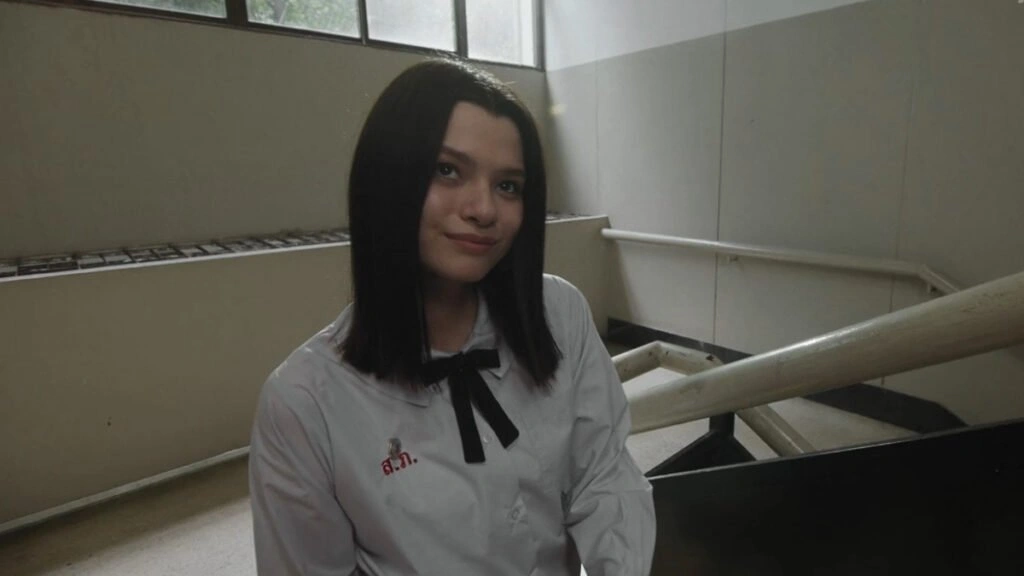
Sky, as a human counterpoint, offers a stark contrast to her cold logic. Initially, he is a victim of intense bullying, yet he gradually transforms into someone who seeks Nanno out, across different settings, as if drawn to her. Sky represents a “Sanctity Variable” in the calculations of Nanno’s twisted morality.
The series introduces the possibility of Nanno seeking a protégé, testing whether a human can withstand the level of influence she wields. Her skepticism toward Sky’s belief in hope becomes palpable at the close of the first episode. She brushes off his optimism, hinting that she may be evaluating his potential. The tragic conclusion arrives in the finale when Sky dies while attempting to protect her.
His death is the final proof of Nanno’s assertion about human power struggles: even those with good intentions are crushed when the system collapses. Sky’s demise serves as a cold reminder that Nanno is no hero. She functions as a force of nature. And nature does not concern itself with human aspirations. It only cares about the outcome.
A Gritty Realism and Institutional Collapse
This season adopts a more grounded, gritty aesthetic, departing from the stylized visuals of earlier seasons. The settings of the schools feel lived-in, and the violence strikes with a visceral quality. The shift toward realism sharpens the sense of moral decay, rendering the breakdown of institutions immediate and unsettling.
With escalating incidents, the show builds tension, and the failing school buildings themselves serve as metaphors for institutional failure. The collapse is both literal and figurative, a fitting climax to a season focused on hidden corruption.
Some episodes, like the election storyline, can feel chaotic in comparison to the more tightly constructed premiere. Paradorn’s descent into villainy feels abrupt, and the narrative begins to lack the precision it once had. While it was once fascinating to watch Nanno manipulate her subjects, in this season, the testing phase occasionally feels too obvious, even futile. By the end, there is little emotional investment left in Sky’s fate.
Justice, as presented in this series, is unpredictable. Several episodes close with an uneasy sense of ambiguity. While individual villains receive their punishment, the broader societal issues persist unresolved. The show offers no easy answers, leaving viewers with a deep sense of emptiness. It reflects the reality of a world where institutions are irreparably broken. The “Karmic Reset,” then, is never a clean slate. It is an aftermath, messy and unresolved. The show hints that human nature is a cyclical pattern of mistakes, one that we repeat in new digital spaces.
Girl From Nowhere: The Reset premiered on March 7, 2026, marking a significant reboot of the cult-favorite Thai anthology series. This new iteration stars Becky Rebecca Patricia Armstrong as the enigmatic Nanno, a supernatural entity who transfers between schools to expose the dark impulses and moral failings of students and faculty alike. The series is currently available to stream globally on Netflix, featuring an uncut version of its six episodes, while the local Thai broadcast aired on the ONE31 channel and the oneD app. As of today, April 19, 2026, the entire first season has concluded its initial run, offering a fresh, cynical perspective on the complexities of justice and human nature in a modern, digital landscape.
Where to Watch Girl From Nowhere: The Reset Online


Full Credits
Title: Girl From Nowhere: The Reset
Distributor: ONE31, oneD, Netflix
Release date: March 7, 2026
Rating: TV-MA
Running time: 36–46 minutes
Director: Pairach Khumwan, Sittisiri Mongkolsiri, Patha Thongpan, Siwaroj Kongsakul, Eakasit Thairat, Wasuthep Ketpetch
Writers: Phitchaya Prachayabun, Tinnapat Banyatpiyapoj, Kongdej Jaturanrasamee
Producers and Executive Producers: Phawit Chitrakorn, Ekachai Uekrongtham, Boosaba Daoruang, Paiboon Damrongchaitham, Jina Osothsilp, Somrote Vasupongsotorn, Vacharee Siriwachiwat, Nataya Srivicha, Nalina Chaiyasombat, To Chai-a-nan Soijumpa, Hlung Kamthorn Lorjitramnuay, Bom Watthana Rujirojsaku
Cast: Rebecca Patricia Armstrong, Prudtichai Ruayfupant, Methika Jiranorraphat, Kantapon Jindataweephol, Nuttawatt Thanathaveeprasert, Pisitpol Ekaphongpisit, Punnavich Sirikiatvanit, Alexander Buckland
Director of Photography (Cinematographer): Bhurin Treetampinich
Editors: Jennifer Jean Cacavas, Buzz Cut
Composer: Chaibovon Seelukwa
The Review
Girl From Nowhere: The Reset
Girl From Nowhere: The Reset functions as a brutal autopsy of the digital age. It exchanges the surrealist flair of its predecessors for a gritty, often exhausting realism. Nanno remains a chillingly effective vacuum for human ego (the "Ego-Void"), yet the narrative occasionally stumbles into predictability. Sky provides a rare pulse of human empathy in a cold system, but his fate underscores the show’s bleak outlook. It is a calculated, if uneven, examination of how quickly our institutions and screens betray us.
PROS
- Becky Rebecca Patricia Armstrong provides a subtle, observant performance that grounds the supernatural.
- The inclusion of Sky as a recurring moral anchor provides a necessary emotional weight.
- Sharp commentary regarding digital anonymity and the hypocrisy of social media influencers.
- A visceral visual style that makes the school settings feel authentic and lived-in.
CONS
- The loss of the high-art surrealism that defined the earlier seasons might alienate long-time fans.
- The "Karmic Trap" formula becomes predictable toward the middle of the season.
- Pacing issues in the election and construction episodes hinder the narrative flow.
- The sudden villainous shifts in the final act feel rushed and lack sufficient development.