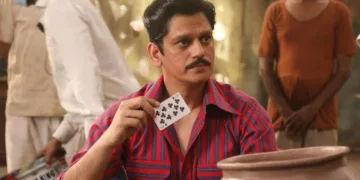





























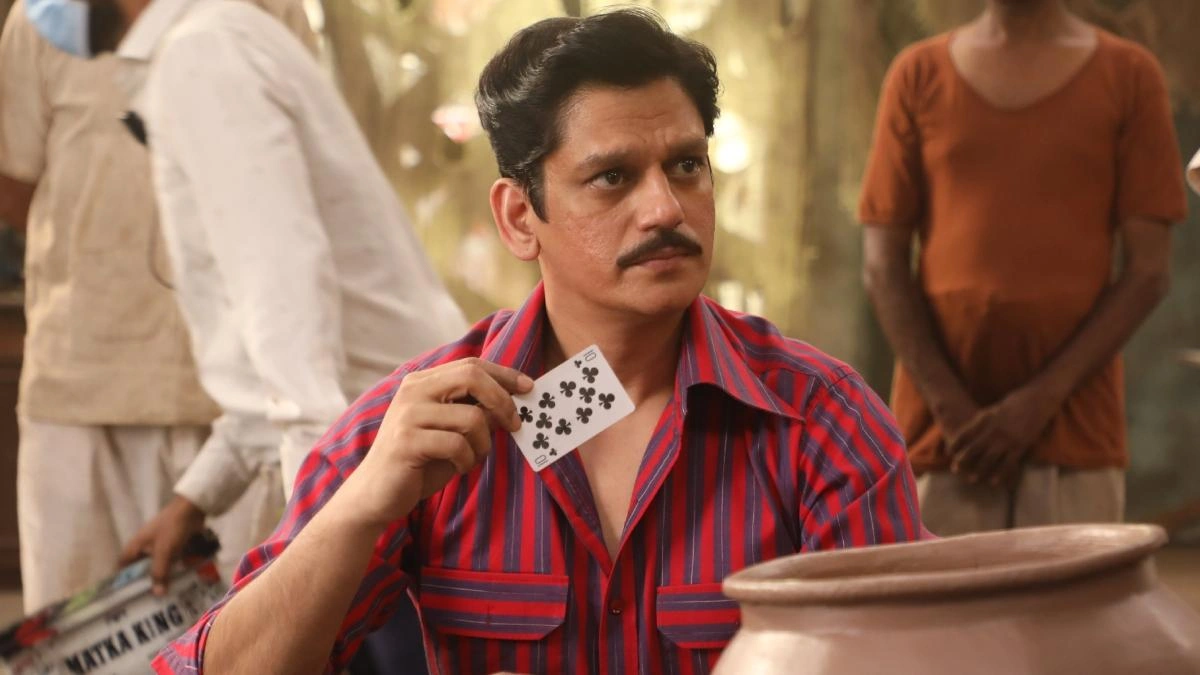

Matka King is a period drama set against the shifting landscape of Bombay in the 1960s and 1970s. The series follows Brij Bhatti, a cotton trader portrayed by Vijay Varma, whose past as a Partition refugee influences his path. Brij works under the demanding Lalji Bhai, but as he observes a gap in the gambling market, he seizes an opportunity.
While wealthy individuals participate in high-stakes bets at racecourses, the working class is exploited by local games in the textile mills. Motivated by personal financial struggles and a desire to disrupt the established order, Brij transforms the simple earthen pot, or matka, into a powerful gambling empire.
He introduces a new system based on transparency, allowing low-wage workers to engage in betting with a fair chance of winning. Over the course of eight episodes, the series tracks Brij’s rise, from the decaying chawls to the mansions of the elite, examining how his “honest” hustle disrupts the socio-political fabric of the city.
The Paradox of the Honest Hustle
Brij democratizes gambling by distancing himself from the dishonest schemes of the textile mills. His innovation involves drawing numbers in front of the public, creating a sense of trust in the process. The matka becomes a national obsession, with people eagerly awaiting the nightly drawing. This shift reflects a transformation in how the working class interacts with risk and reward.
Brij views himself as a messiah for the masses, offering them a chance to break free from their fixed fate. His refusal to align with corrupt gangsters or officials becomes central to his character. The 1960s Bombay setting serves as a character in itself, with the struggles of mill workers and the influence of trade unions forming the backdrop for the increasing involvement of the underworld and politicians.
The series presents a shift from what began as a harmless outlet for the poor into a system that breeds addiction and competition. The escalating consequences of this transformation lead to personal losses for Brij, culminating in betrayal and isolation. As his ambition grows, so does the toll on those around him. The story examines the moral decay that accompanies his financial success, with Brij’s ego growing as his brother Laxman, portrayed by Bhupendra Jadawat, becomes weary of living in his shadow.
The Human Cost of a Gambling Empire
Vijay Varma delivers a performance marked by restraint and intensity, portraying Brij as a man who reshapes his own morality to justify his actions. Siddharth Jadhav plays Dagdu, Brij’s loyal right-hand man, whose physical disability as a disgraced ex-soldier contrasts with his steadfast support for Brij.
Dagdu provides a human perspective on the emotional cost of Brij’s ambition. The women in Brij’s life reflect his changing social status. Barkha, played by Sai Tamhankar, struggles with his growing notoriety, feeling increasingly alienated and trapped. Gulrukh, portrayed by Kritika Kamra, is a wealthy Parsi widow who becomes his accomplice, symbolizing his entrance into high society.
Lalji Bhai represents the old, greedy order, while Maqsood plays a superstar who exploits Brij for film funding. The supporting characters help shape the narrative, revealing the complex social hierarchies of the time. Their performances ground the drama, offering emotional depth without falling into melodrama.
A Cinematic Ode to Vintage Bombay
Director Nagraj Manjule adopts a socially aware lens in this crime genre piece, embracing a slow, deliberate tone. He prioritizes character development over excessive violence, drawing on the pulpy style of 1970s cinema. Sudhakar Reddy’s cinematography emphasizes the contrast between the smoky atmosphere of gambling dens and the rundown chawls.
The opulent homes of the rich provide a visual counterpoint, highlighting the stark differences between the classes. The use of green-screen for scenes with vintage cars reflects the aesthetic of the era, while numerous extras contribute to the sense of scale in the city. The series takes its time, gradually building the mechanics of the gambling world across eight episodes.
This patient pacing creates a richly textured environment, with the soundscape and theme music echoing the rise-and-fall rhythm of the narrative. The technical choices aim to recreate a bygone Bombay, capturing both the frustrations and aspirations of the common man. The editing maintains a steady tension as Brij’s empire grows, and the visual language underscores the class struggles at the heart of the story. Manjule crafts a world that feels rooted in history, yet speaks to present-day discussions of power and inequality.
Matka King premiered just two days ago, on April 17, 2026, as a highly anticipated addition to the Indian digital landscape. You can currently stream the entire eight episode season on Amazon Prime Video. Set against the vibrant and volatile backdrop of 1960s Bombay, the series chronicles the meteoric rise of Brij Bhatti, a humble trader who revolutionizes the underground gambling scene. By introducing transparency and accessibility to the masses, he creates a betting empire that challenges the existing social hierarchy and catches the attention of both the underworld and the government.
Where to Watch Matka King Online


Full Credits
Title: Matka King
Distributor: Amazon Prime Video
Release date: April 17, 2026
Rating: 13+
Running time: 45 to 60 minutes per episode
Director: Nagraj Popatrao Manjule
Writers: Nagraj Popatrao Manjule, Abhay Koranne, Ashish Aryan
Producers and Executive Producers: Siddharth Roy Kapur, Nagraj Popatrao Manjule, Gargi Kulkarni, Ashish Aryan, Ashwini Sidwani, Rahul H. Gandhi
Cast: Vijay Varma, Sai Tamhankar, Kritika Kamra, Gulshan Grover, Siddharth Jadhav, Bhupendra Jadawat, Girish Kulkarni, Bharat Jadhav, Kishore Kadam, Jamie Lever
Director of Photography (Cinematographer): Sudhakar Reddy Yakkanti
Editors: Nitin Baid
Composer: Ajay Jayanthi, Ketan Sodha, Amit Trivedi
The Review
Matka King
Matka King stands as a grounded character study of Brij Bhatti. It avoids common genre tropes by focusing on the social mechanics of 1960s Bombay. The deliberate pacing allows for a deep examination of class struggle. The narrative occasionally feels overlong. The performances anchor the drama regardless. It provides a sobering look at how ambition transforms a refugee into a kingpin. The series offers a clear-eyed view of systemic corruption.
PROS
- Vijay Varma delivers a controlled and intense performance.
- Authentic recreation of the 1960s Bombay atmosphere.
- Strong supporting roles, particularly Siddharth Jadhav as the emotional center.
- Thoughtful exploration of economic exclusion and trade union history.
CONS
- The eight-episode runtime feels stretched in certain chapters.
- Noticeable green-screen visuals during car scenes.
- The pacing slows down significantly during the middle of the season.
- The screenplay provides a slightly romanticized view of Brij's morality.