

















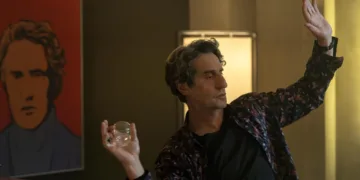












Vladimir arrives as an eight-episode limited series set inside a small liberal arts college, where erotic fixation, faculty scandal, status anxiety, and public performance bleed into each other. The title gestures toward a handsome younger professor, yet the real subject is the woman watching him. Rachel Weisz plays an unnamed English professor whose life is already under strain when she becomes fixated on Vladimir, a newly arrived colleague played by Leo Woodall. Her husband John, played by John Slattery, faces formal scrutiny over past sexual relationships with students.
Julia May Jonas shapes the series as a dark campus drama with comic poison in its bloodstream. The show uses direct address, fantasy inserts, and a tone that keeps slipping between seduction and humiliation. That mix gives Vladimir a restless pulse. It places the viewer inside a mind that wants desire to feel liberating, then keeps colliding with shame, vanity, and self-deception. The series is strongest when it studies power, complicity, and middle-aged longing. Its weaker stretch lies in how unevenly it turns obsession into erotic heat.
Rachel Weisz Holds the Series Together
Leaving the protagonist unnamed is a smart choice. It gives her an air of self-invention, as if she is still drafting her own persona while the world around her starts to reject the version she prefers. She speaks straight to the camera with the confidence of a woman used to controlling the room, yet the show keeps finding small cracks in that performance. The effect is intimate and faintly theatrical. We hear her shape her own legend, then watch the frame expose vanity, panic, and need.
This is where Weisz proves vital. She plays the character as witty, reckless, needy, intelligent, and faintly absurd, often all in the same scene. Her control of rhythm is especially sharp. A line can begin with academic poise and end in naked desperation. A simple glance can carry lust, embarrassment, and disbelief at her own behavior. There is excellent physical comedy here too, from desperate posture adjustments to those flashes of self-awareness that land half a second too late. Weisz makes the protagonist embarrassing without turning her into a joke. She keeps the character alive even during moments when the writing circles familiar beats of obsession.
The fourth-wall device works largely because Weisz knows how to use it. Her voice invites trust, then quietly undercuts it. One of the pleasures of the series lies in the distance between her narration and what the camera reveals. She calls attention to her powers of perception, yet she is often reading the room through ego, longing, or resentment. The show is sharper at capturing impulsiveness than genuine unreliability. It rarely leaves the viewer truly unsure of reality. The fantasies are vivid, yet they are clearly fantasies. The misdirection operates through emotion, leaving the narrative structure itself intact.
That choice still serves the central portrait. Vladimir treats female desire as messy, self-flattering, humiliating, and deeply tied to status. Her longing extends well past physical desire. She craves being chosen, envied, seen, and restored to a former sense of importance. The series understands that lust can carry competitiveness, nostalgia, loneliness, and fear of erasure in the same breath. In Indian parallel cinema, female interiority often arrives through silence, gesture, or domestic routine. Vladimir takes the opposite route. It externalizes private hunger through confession, fantasy, and social disaster. The result is louder, harsher, and often funny in a wince-inducing way.
Academic Rot, Public Shame, and the Politics of “A Different Time”
John’s misconduct case gives Vladimir its sharpest dramatic frame. His hearing hangs over the season like a storm cloud, turning campus life into a theatre of whispers, career calculations, and moral posturing. Faculty relationships become tactical. Every conversation carries self-interest. The protagonist is pushed into managing fallout for a scandal she did not create, asked to soothe administrators, shape public perception, and absorb pressure from every direction. The series is very good on that old social habit of making women clean up male recklessness.
John himself is written with clever nastiness. Slattery plays him with breezy entitlement, the kind that can pass for charm until scrutiny strips it bare. He feels like a relic of a campus order built by men who assumed their appetites would be forgiven if they stayed witty enough. His repeated reliance on the idea that “it was a different time” gives the show one of its main threads. That phrase becomes a shield, a confession, and a sign of moral decay all at once.
What lifts this material is the show’s refusal to sort the campus neatly into villains and saints. Older academics rationalize old conduct through memory, rank, and habit. Younger people bring sharper ethical language, yet the series also notes the performance built into public righteousness. Student opinion matters here in a very practical way. Complaints, class enrollment, and reputation shape careers as surely as committee decisions do. The university becomes a site where ideology, prestige, desire, and self-protection collide.
There is a useful cross-cultural angle here. Indian campus stories on screen often place authority in plain sight, held by professors, family structures, or institutional hierarchy. Vladimir presents a liberal arts setting that speaks the language of progress while remaining warped by hierarchy. The decor is contemporary. The power logic is old. That tension gives the series bite. It is interested in the gap between what people say about ethics and what they do when status, pension, desire, or humiliation enter the room.
Vladimir as Fantasy Object, and the Limits of the Heat
For a series named after him, Vladimir remains surprisingly elusive. That seems deliberate. He functions as a projection surface for the protagonist’s panic and longing. The show gives him the outlines of a fully realized man and fills them with deliberate ambiguity. He is young, attractive, mildly flirtatious, culturally admired, and professionally gifted enough to stir fantasies of renewal. His arrival brings the promise of escape, reinvention, and erotic validation. From her viewpoint, that is enough.
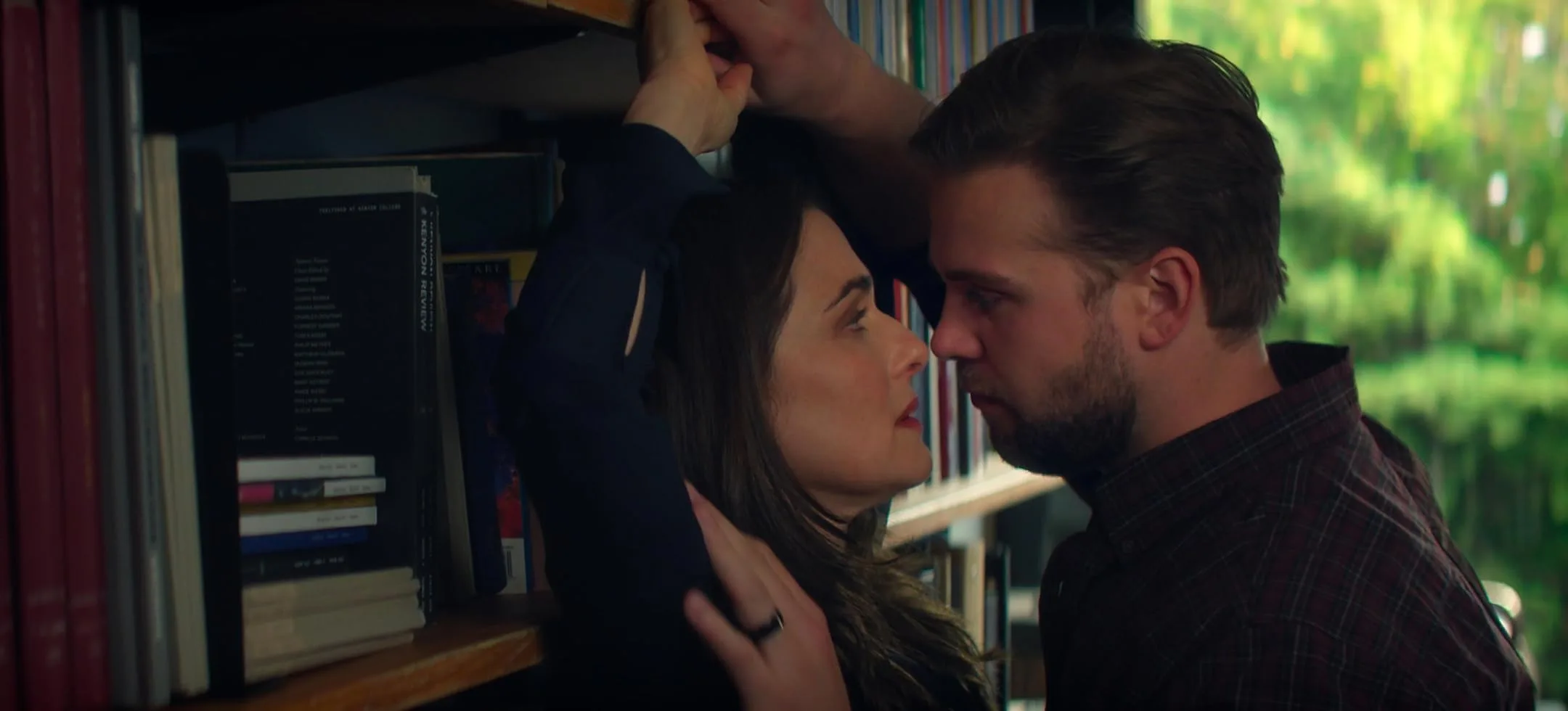
Leo Woodall has the right ease for the role. He carries himself with soft assurance and enough ambiguity to keep suspicion alive. The show clearly understands his value as an object of attention. It frames him as the type of figure who would disturb a room simply by entering it. Yet there is a limit to how far surface charm can take a story built on fixation. Vladimir’s sketchy inner life may fit the protagonist’s blinkered gaze, though it also leaves the central obsession a little undernourished.
The fantasy scenes show both the strength and weakness of the series. They reveal a mind caught between desire and self-dramatization. They give visual form to craving, shame, and the thrill of imagined surrender. At first, these sequences create comic tension and a sense of dangerous slippage. After a while, repetition dulls their power. The series keeps returning to the same imaginative register, and the charge starts to flatten.
That leads to the major reservation hanging over Vladimir. It is a story about lust, fantasy, taboo, and social risk, yet it often feels awkward where it needs to feel feverish. One reading is that this is the point. Embarrassment defines the dominant texture, with sensual abandon pushed far to the margins. Seen that way, the muted chemistry becomes part of the design. The series is showing desire warped by ego, panic, and projection. Still, a drama like this needs the obsession to feel persuasive. At several points, the script asks the viewer to invest in a fixation that remains conceptually interesting yet emotionally cooler than expected.
A Jagged Tonal Mix with a Finale Aiming for Control
The supporting cast helps keep the series lively. Slattery gives John a smug lightness that makes his selfishness sting. Jessica Henwick’s Cynthia has a quiet presence that suggests a richer subplot lurking just outside the frame. Ellen Robertson’s Sid adds family friction and reminds the protagonist that age registers as a lived reality, pressing in through every changed relationship, every failed attempt to hold a prior version of oneself in place. Around them sits a faculty world full of vanity, passive aggression, and comic farce.
Tonally, Vladimir keeps slipping between dark comedy, psychosexual drama, satire, and slow-burn suspense. That instability is often productive. It lets the show laugh at academic absurdity while tracing genuine emotional collapse. There are scenes that play like cringe comedy and others that hum with dread. The half-hour structure helps. Episodes move quickly, and the season has enough snap to keep the social risks mounting.
Still, the pacing is uneven in the middle stretch. The series can feel caught in loops of fantasy, embarrassment, and near-transgression. It remains watchable because Weisz keeps finding fresh shades inside the spiral, yet the narrative does not always deepen at the same pace as her performance.
The ending reaches for reclamation through chaos. It wants to tie the protagonist’s spiraling self-image to a final gesture of control, reinvention, or self-authorship. Parts of that landing are playful and sharp. Parts feel as though they rely on narrative groundwork that has not been strengthened enough. Even so, the finale fits the series’ main concerns. Vladimir is fascinated by how people rewrite themselves after humiliation, how desire can become a private script for survival, and how power survives in distorted forms long after prestige begins to fade.
Desire, Age, and the Stories People Tell About Themselves
The discomfort inside the erotic plot lingers longer than the plot itself. This is a series about middle-aged longing, institutional hypocrisy, gendered labor, fantasy, and the strange theatre of educated self-justification. Its best material comes from irony and moral unease. Almost nobody here is innocent. Almost nobody is fully honest. That refusal gives the show its edge.

At its finest, Vladimir works as a study of a woman trying to recover relevance in a world that no longer mirrors back the authority she once assumed was permanent. The campus scandal widens that personal crisis into something social. Desire becomes one symptom among many. Vanity, fear, and professional decay sit right beside it.
The result is intelligent, biting television with a deliberately abrasive texture. The key question for viewers lies in how they respond to the imbalance running through the series. The writing has a firm grasp on obsession as an idea. The feeling of obsession lands less cleanly. That tension defines the series, and it gives the show much of its strange, uneasy character.
The TV series Vladimir is an American comedy-drama limited series that premiered on Netflix on March 5, 2026. Based on the acclaimed novel by Julia May Jonas, the story follows a provocative and complex narrative centered on a woman’s obsession with an attractive younger coworker, set against the backdrop of a college campus embroiled in scandal. Led by high-profile performances from Rachel Weisz and Leo Woodall, the eight-episode series explores themes of power, desire, and professional ethics. As of today, April 16, 2026, the entire first season is available for streaming globally on Netflix.
Where to Watch Vladimir Online


Full Credits
Title: Vladimir
Distributor: Netflix
Release date: March 5, 2026
Rating: TV-MA
Running time: 27–32 minutes per episode
Director: Shari Springer Berman, Robert Pulcini, Francesca Gregorini, Josephine Bornebusch
Writers: Julia May Jonas, Susan Soon He Stanton, Matthew Capodicasa, Jeanie Bergen, Colette Burson
Producers and Executive Producers: Chris Pavoni, Sharon Horgan, Jason Winer, Jon Radler, Julia May Jonas, Stacey Greenberg, Kira Carstensen, Robert Pulcini, Shari Springer Berman, Rachel Weisz
Cast: Rachel Weisz, Leo Woodall, Jessica Henwick, Ellen Robertson, John Slattery, Matt Walsh, Miriam Silverman, Kayli Carter, Milton Barnes, Elisa Moolecherry, Mallori Johnson, Tattiawna Jones, Kari Matchett
Director of Photography (Cinematographer): Tim Orr, Francois Dagenais
Editors: John Grenham, Tim Streeto, Ken Eluto, Meg Reticker
Composer: Tim Phillips
The Review
Vladimir
Vladimir is a sly, uneasy campus drama lifted by Rachel Weisz and a keen eye for power, shame, and middle-aged desire. Its satire bites, its social observations sting, and its lead performance keeps the series alive even when the central obsession lacks full heat. Best approached as a sharp character study with a jagged comic edge.
PROS
- Rachel Weisz delivers a fearless, layered lead performance
- Sharp satire of campus politics and sexual hypocrisy
- Strong atmosphere built through awkward tension and unease
- Intelligent treatment of age, desire, and status
- Brisk episode length keeps the drama moving
CONS
- Vladimir remains too thin as a character
- Central chemistry feels weaker than expected
- Fantasy scenes grow repetitive across the season
- Middle stretch loses some dramatic urgency
- Ending reaches higher than the setup supports