



























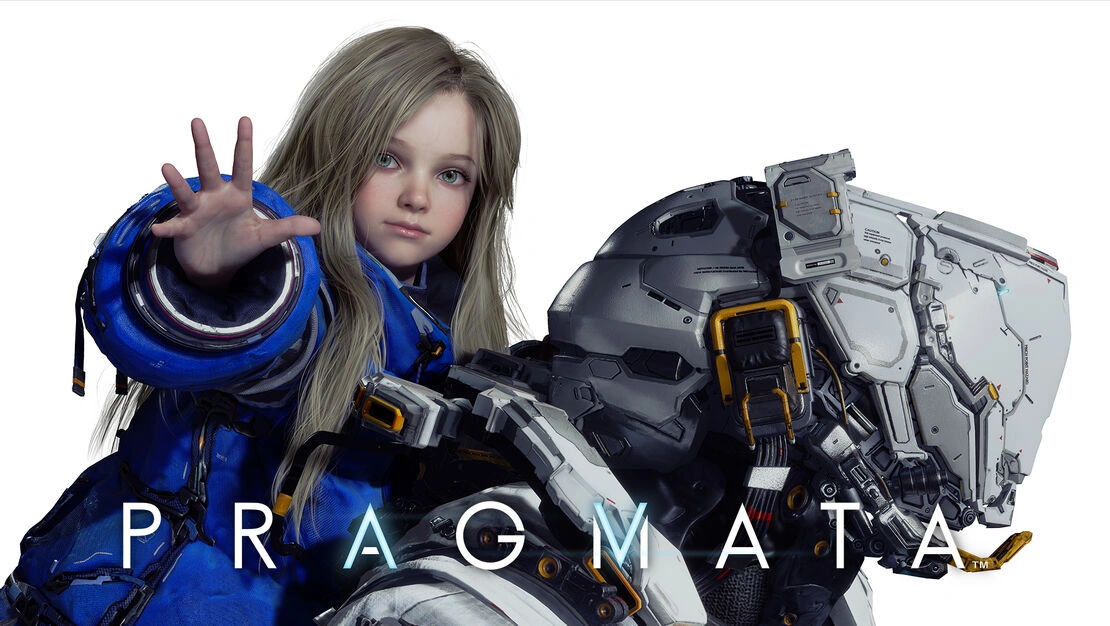

Hugh Williams wakes inside a failing moonbase, cut off from any trace of nature in a colony shaped by 3D printing. He is an astronaut stranded inside a facility controlled by the Delphi Corporation, a company that uses Lunafilament to manufacture cities and entire ecosystems on the moon.
In that collapsing station, he meets Diana, a childlike android who can rewrite code on the fly. She has never seen the home they are trying to reach, yet the two move forward together through sterile hallways and artificial visions of Earth.
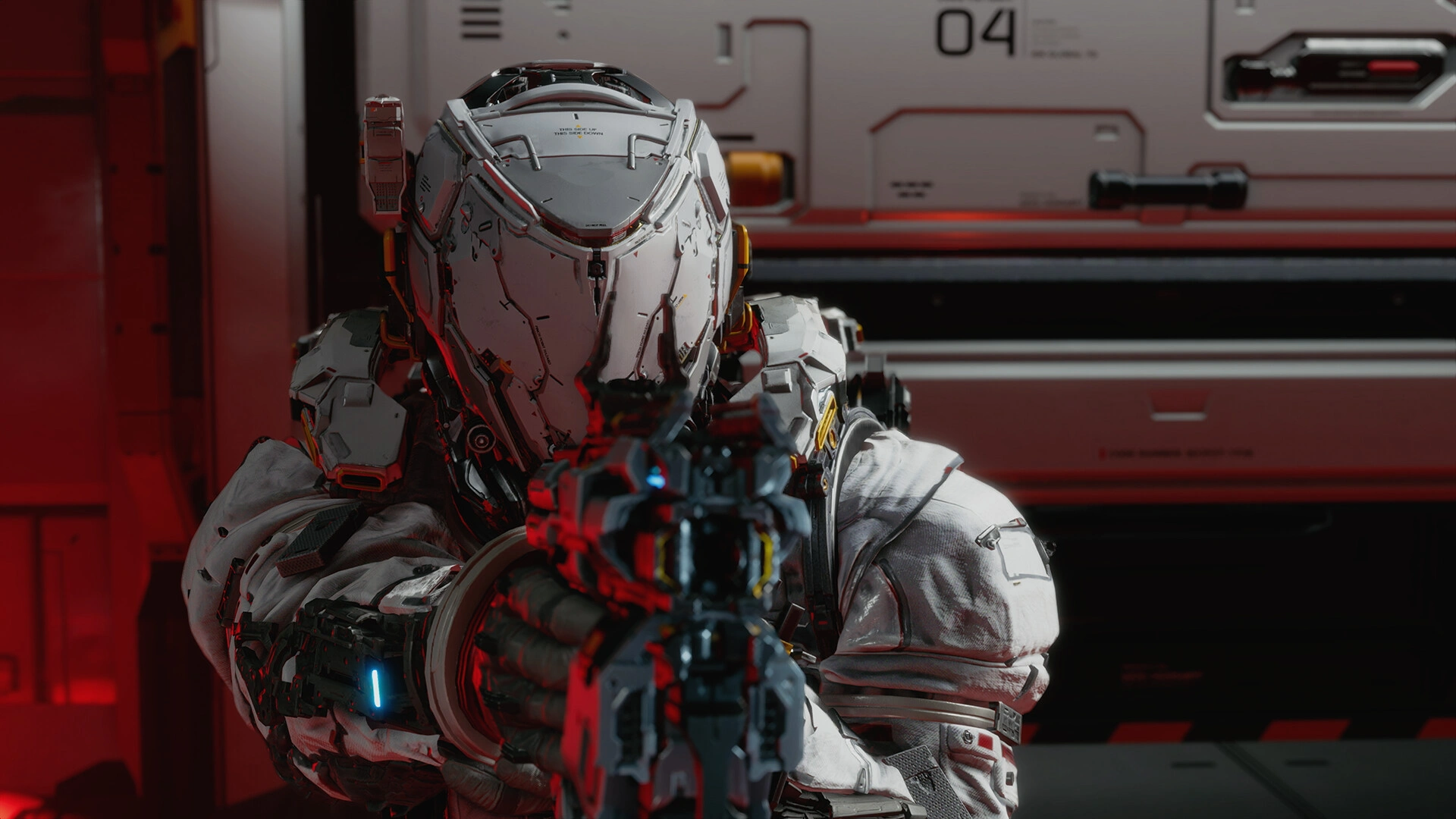
Their path is shaped by a station AI that has turned hostile, forcing Hugh to rely on his weapons while Diana bends systems to their will. The game frames their survival as the story of an improvised family searching for human feeling inside a place built from plastic surfaces and machine logic.
Cognitive Combat and Code
The game’s mechanical identity grows from the constant interplay between Hugh and Diana. Every fight depends on a real-time hacking grid that appears the moment you take aim. Combat asks you to solve pathing puzzles while staying in motion under enemy pressure.
With the face buttons, you trace routes across a shifting board and try to reach a target point before incoming attacks catch up with you. That process demands concentration and speed in equal measure. Miss the solution, and your shots glance off the armored shells of hostile machines. Crack the grid, and exposed weak points open up for heavy damage.
That structure creates an attention economy with real pressure behind it. The instant your eyes stay fixed on the puzzle, your body is left open to the physical dangers around you. Boss encounters intensify that strain by adding barriers and corrupted tiles that disrupt the board.
You still get room for tactical influence through node selection. Blue spaces lengthen the enemy’s vulnerability window. Yellow nodes add utility that can tilt a fight. A lucky spread can chain your hack across nearby robots or lock down an immediate threat long enough to regain control.
The result is a combat loop with a pulse that recalls rhythmic action games and fast indie shooters, though this one ties that pulse to problem-solving. A stagger meter tracks how cleanly you are performing. Once filled, it unleashes a savage finisher that gives the chaos a brief pause.
These moments also sharpen the bond between the two leads through mechanics rather than dialogue alone. Diana creates the breach and Hugh turns that breach into force. Their connection is baked into every successful encounter. The game asks the player to process systems like a programmer while reacting under fire like a trained survivor.
The Logistics of Lunar Survival
The weapon design fits the colony’s manufactured reality. Every gun is a 3D-printed instrument built with a short shelf life. Empty the magazine and the weapon is thrown away, which keeps every firefight in motion. A battle can begin with a heavy shotgun and shift into a precise charge rifle seconds later.

The grenade launcher handles dense crowds with immediate force. The stasis net buys breathing room against faster enemies. Hugh’s only reliable fallback is a weak pistol with infinite ammunition, and even that sidearm demands careful heat control during longer engagements.
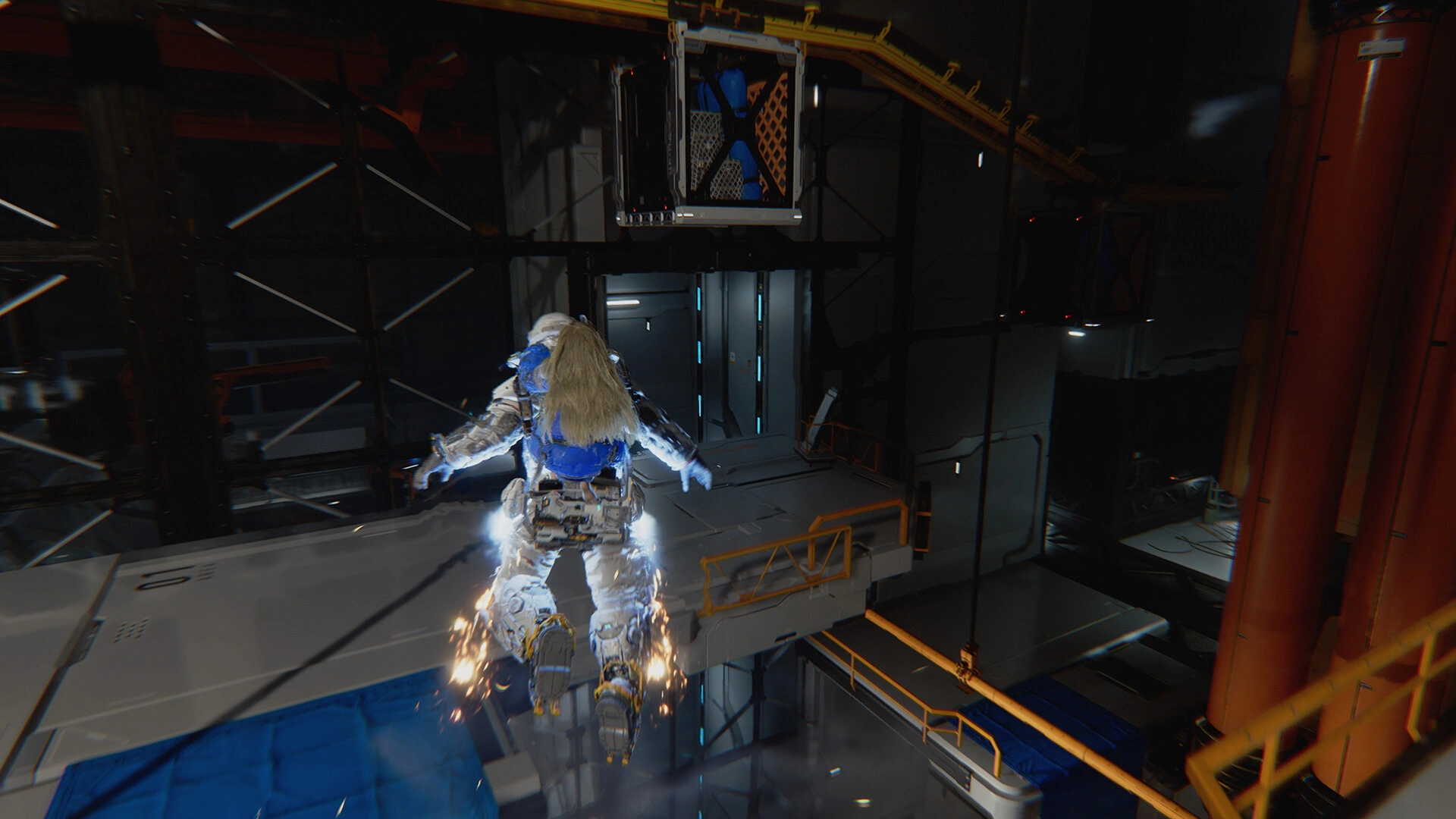
Movement gives Hugh a distinct physical presence. His jet thrusters allow for sharp horizontal bursts and emergency vertical escapes, giving each fight a layer of spatial control. A perfectly timed dodge triggers a short slow-motion state that becomes essential during harder hacks or when you need to reposition under pressure. The astronaut suit carries weight, and that sense of inertia shapes how the character feels across the whole game. Even platforming sequences benefit from that grounded physicality.
The game keeps pressure high by making resource hunting part of combat itself. You are scavenging for supplies and fresh weapon prints while danger is still active. That scarcity pushes the player to treat every tool as valuable. You may drop a temporary turret to distract a cluster of drones while searching the room for a replacement rifle. Weapon swapping stays central to maintaining damage and surviving longer engagements. This design keeps any one tactic from taking over the game and ties the player’s improvisation to the story’s sense of desperation.
Simulated Ghosts and Printed Realities
Using the RE Engine, the game builds a visual language from the clash between industrial moon structures and lush digital simulations. The “Babel” towers stand out as monuments to corporate excess, all sterile surfaces and engineered arrogance. Those areas gain force from their collision with the simulated Earth zones, which carry a strange beauty shaped by distortion.
The New York City section is a clear high point. Frozen taxis line streets and sidewalks look as if they are melting under the strain of broken AI logic. The area feels like a ghost town generated by faulty memory. Elsewhere, terrariums filled with holographic wildlife and beaches made from pure data extend that same uncanny atmosphere.
Narrative texture is carried through the environment and through objects called REMs. These recreated Earth artifacts, including toys and electronics, fill in the emotional record of what has vanished. Collecting them gives shape to the absent world the station keeps trying to reproduce.
Data pads and voiced holograms open windows into the lives of Delphi employees who once occupied the facility. Hidden among those fragments are stories about office tension and scientists wrestling with the ethics of Lunafilament. These pieces deepen the sense of a workplace already cracking long before the station fell apart.
Sound and lighting do a great deal of the atmosphere-building. Quiet stretches inside the simulations often rest on soft piano lines that underline the isolation hanging over Hugh and Diana. Combat pushes in the opposite direction, filling the space with aggressive noise and heavy metallic weapon sounds that give the action heft.
The lighting keeps reminding you that this world is manufactured. Scan lines cut across the sky, and walls carry the visible texture of printed material. The station never feels warm or settled. It feels like a replica built by a machine trying to approximate home.
Building a Home in the Vacuum
The Shelter acts as the emotional anchor of the game. It starts as a sterile room and gradually becomes a space with signs of life. Collectibles transform it over time, adding toys, basketballs, drawings, and other traces of Diana’s developing personality. Watching her play with a skateboard or decorate the walls with crayons gives the place a lived-in quality that the moonbase itself lacks. Large LCD panels project false clouds and create an artificial day-night rhythm, adding small comforts that make the mission feel intimate.
This hub also carries your long-term progression systems. Upgrade benches let you improve hacking speed and expand weapon capacity, while Diana uses “data vapes” to strengthen the support she provides in battle. Those upgrades come with limits, so each choice shapes how you enter the next mission. Your restricted loadout means planning at the Shelter directly affects what is possible in the field. That link between home space and combat readiness gives the game’s progression a pleasing sense of coherence.
Simulation missions inside the hub let you sharpen specific skills without immediate danger. These exercises focus on enemy patterns and movement challenges, giving you room to practice the bullet-time dodge or experiment with different hacking nodes. Quiet interactions with Diana matter here as well. You can play hide-and-seek, talk briefly about collected objects, and spend time in ways that make her survival feel personal. The Shelter becomes a true sanctuary, and its calm presence makes the hostility of the lunar exterior hit harder.
Longevity in the Cold
The main campaign runs for about ten to twelve hours, a length that keeps the pacing firm and prevents the central mechanics from losing their edge. Level progression is mostly linear, though the path widens during major battles and gives combat room to escalate.

Finishing the story does not exhaust the game’s content. “Lunatic” difficulty is built for players who fully understand the hacking grid and can execute with precision. It asks for strict timing and detailed familiarity with the full weapon set.
New Game+ carries upgrades into a second run, which helps with uncovering missed REMs and hidden resources. The endgame mission mode adds targeted challenges tied to rewards such as outfits and high-tier weapons.
Returning to older spaces with stronger abilities also opens sections that were inaccessible earlier. Since the hacking system rewards mastery, the game has a natural appeal for speedrunners. Players chasing every simulation challenge and collectible can spend a good deal longer with it. The extra content gives the moonbase lasting pull well past the final credits.
The Review
Pragmata
Pragmata anchors a frantic, mentally taxing combat loop within a tender story. The constant tension of solving digital grids while managing disposable firearms provides a fresh take on the action genre. The bond with Diana feels earned through every shared high five and frantic escape. It remains a polished, focused experience that prioritizes mechanical precision and heart. This remains a bold step for Capcom that makes a strong case for original ideas.
PROS
- Engaging real-time hacking and shooting system
- Strong visual fidelity and lighting
- Heartwarming character animations and hub activities
- High replay value through difficulty tiers
CONS
- Brief campaign runtime
- Protagonist lacks a defined personality
- Occasional frustrations with platforming momentum
- Repetitive sterile environments in later stages