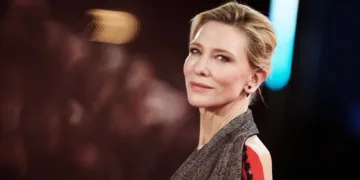

























Cate Blanchett has co-founded RSL Media, a public benefit non-profit that aims to give every person — from A-list actor to anonymous creator — a legally legible way to control how artificial intelligence uses their work, voice, image, and identity.
The organization launches as a public benefit non-profit built on the principle that human consent must come first, with a free public registry scheduled to open in June that will allow anyone to formally declare their AI permissions. The system works like a traffic light: creators can mark their work as “allowed,” “allowed with terms,” or “prohibited” for AI use. The other co-founders are Nikki Hexum, Doug Leeds, and Eckart Walther.
The rollout draws support from some of the industry’s most recognizable names. Advocates include Javier Bardem, George Clooney, Viola Davis, Tom Hanks, Helen Mirren, Steven Soderbergh, Kristen Stewart, Meryl Streep, Emma Thompson, Creative Artists Agency, and the Music Artists Coalition.
Blanchett has been direct about the urgency. “AI technologies are expanding rampantly, essentially unchecked and unregulated,” she said. “RSL Media is a simple, effective and free solutions-based technology for facilitating and activating consent. It’s also the industry’s first practical solution where people everywhere, not just public figures, can assert control over how their work is used by AI.”
RSL Media extends the Really Simple Licensing open protocol, which defines machine-readable AI usage rights for content. The new standard applies that same architecture to personal identity, likeness, voice, characters, and other human-centered rights. CEO Nikki Hexum framed the mission as closing a fundamental gap: “AI can’t respect rights it can’t see, and this means human consent is virtually invisible in this new digital era.”
CAA co-chairman Kevin Huvane called the launch a “ground-breaking step toward empowering artists with clear, enforceable control” over how their work and likenesses are used by AI technologies.
Also Read




Skeptics raise legitimate questions about the standard’s teeth. Whether AI services will face any legal consequences for ignoring registry settings remains unresolved — observers point out that the data broker industry in the U.S. hasn’t been meaningfully restrained by the mere existence of privacy rights. RSL Media enters a crowded field, competing with protocols including TDM AI, Spawning’s ai.txt, and AI Preferences, among others, though its celebrity backing may give it a distinct edge in gaining adoption.
The launch extends Blanchett’s established record on the issue. Earlier this year she joined more than 700 artists, writers, and creators — including Scarlett Johansson and Joseph Gordon-Levitt — behind the “Stealing Isn’t Innovation” campaign, which accused tech companies of exploiting copyrighted work without permission or payment.
Anyone can now reserve a Consent ID and become a trusted partner ahead of the full registry launch next month.