

























![Kingdom Hearts Collection [I-III] Review](https://gazettely.com/wp-content/uploads/2026/10/Kingdom-Hearts-Collection-I-III-1-360x180.webp "Kingdom Hearts Collection [I-III] Review: KHII Holds Steady as Newer Entries Fluctuate 37")





There is a particular silence in the rural Midwest, a silence that seems packed with everything people refuse to say. Aengus James catches that charged quiet in his three-part Paramount+ series. The production is built around the disturbing claims of Lucy Studey McKiddy.
She says her father, Donald Studey, was a prolific murderer who took scores of lives across several decades. According to Lucy, these events happened on a large property in Bartlett, Iowa. She recalls helping her father place bodies in deep wells on the land beginning in 1973.
She was four years old during those first memories. Her description of using lye to dissolve remains has the kind of awful clarity that lingers after the credits end. Donald died in 2013 at 75. He was never charged with these crimes.
The series uses interviews and physical searches to test if the land can confirm what Lucy remembers. I have driven through similar stretches of farmland and wondered what stories sit beneath those neat rows of corn. This documentary tries to pull those stories into the light.
A Family Fractured by Differing Truths
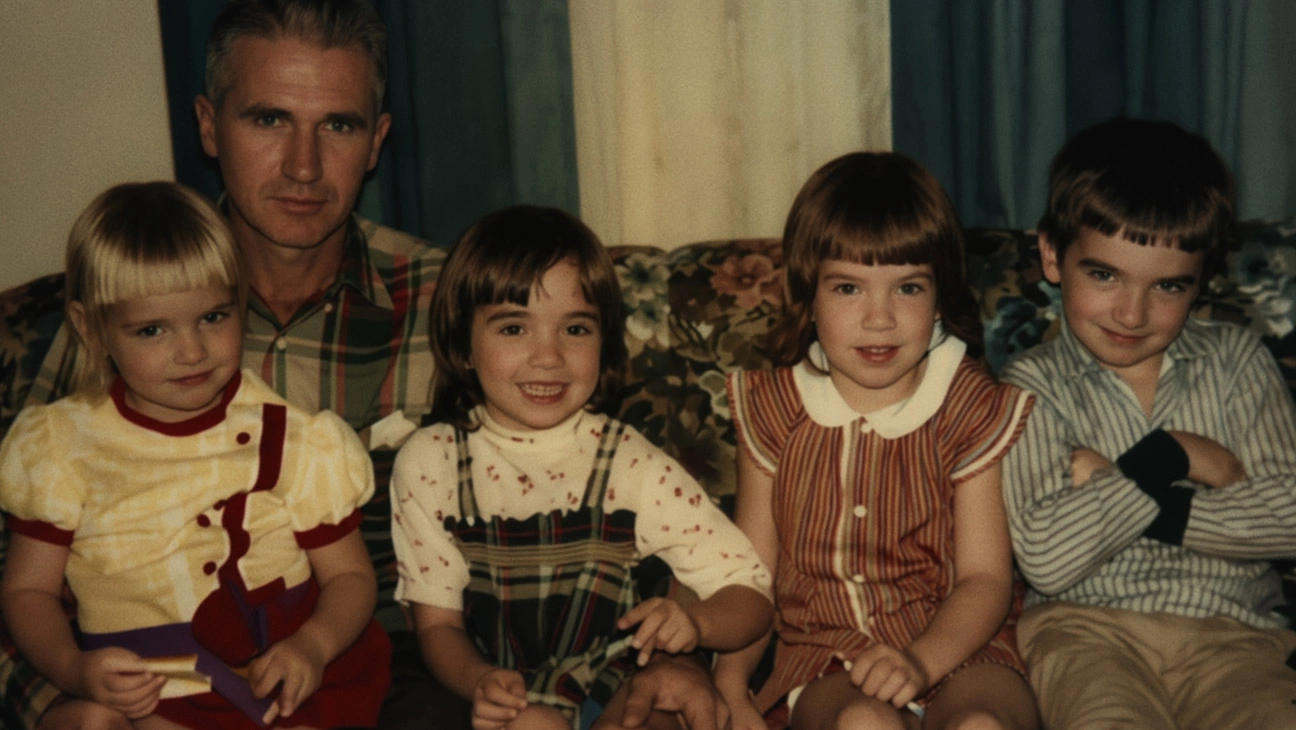
The main narrative pressure comes from the sharp split between Lucy and her sister Susan. Susan remembers a loving father without a violent temper. She brings out happy family photos as evidence of an ordinary childhood. A smiling picture can hide the real state of a home. I have seen many polished family images conceal terrible private histories.
Other relatives describe a far darker family life. Marilyn Studey Kepler gives a confession before her death. She believes Donald killed his third wife. Linda Bryant recalls the brutal abuse she suffered from her uncle. Lucy says her father murdered at least four people every year across a long span of time. Her son David supports her search, carrying a steep financial and emotional burden with her.
The family divide shows how trauma can split memory into separate versions of reality. The documentary treats memory as fragile, shaped by fear, loyalty, and survival. It asks us to think about the stories we build around the people who raised us. One sister sees a protector. The other sees a monster. That fracture gives the series much of its unease. It reflects how hard shared truth becomes after violence has passed through a family.
Technical Precision and the Ethics of the Hunt
The series moves through a clean three-part structure with episodes titled The Women, The Wives, and The Wells. Family tree graphics help track Donald’s complicated history with his five wives and partners. For a story crowded with names, accusations, and timelines, that visual guidance matters.
The production examines the suspicious deaths of Lucy and Charlotte, both listed as suicides many years earlier. Forensic pathologists Erin Linde and Jan Gorniak study the remaining evidence and find reasons to question those rulings. Charlotte’s daughters describe a life marked by severe physical abuse.
The filmmakers make a controversial decision by funding the second round of digging on the land and Charlotte’s exhumation. That choice creates a very contemporary blur between true-crime entertainment and criminal justice.
Anthropologist William R. Belcher and reporter Eric Ferkenhoff bring a technical lens to the search. They discuss a 612-page FBI file on Donald that remains unavailable to the public. The cinematography uses the flat, gray light of Iowa to deepen the mood.
The editing keeps the pace controlled, giving the technical details room to register. The result feels like a cold case file shaped with the momentum of a modern thriller. Sound design keeps a steady pressure under the search, giving even quiet moments a nervous pulse.
The Heavy Legacy of Unspoken Trauma
The series studies the lasting force of childhood pain through Lucy’s behavior. She is volatile, often breaking into sudden rage. Aengus James notes that her anger mirrors traits people associated with her father. That comparison creates a grim reflection for the viewer. Robert Mason tells a story about helping Donald move a body in the eighties. His account is detailed and frightening.
Still, the search produces no names and no bodies. The wells are empty after days of difficult labor. The series leaves us questioning the quality of the original police investigations. The final fight between Lucy and Susan becomes a chaotic release of raw emotion. It gives neither the family nor the viewer a clean answer. Truth here sits under layers of local lore, childhood terror, and years of silence.
The series becomes a study of a family living under a shadow that refuses to lift. It reflects the burden of a past that remains painfully hard to prove. The story stays fixed on the lasting weight of family trauma. It shows how one man’s alleged actions can haunt several generations after his death. The absence of closure makes the experience even more unsettling for anyone who follows the search to its end.
The three-part docuseries My Killer Father: The Green Hollow Murders premiered on April 28, 2026. The series delves into the harrowing allegations made by Lucy Studey McKiddy against her late father, Donald Dean Studey, whom she claims was a serial killer responsible for dozens of murders in rural Iowa. Directed by Aengus James and produced by See It Now Studios, the documentary features forensic investigations and emotional interviews as it explores the impact of these claims on the Studey family. You can stream all episodes of the series exclusively on Paramount+.
Where to Watch My Killer Father: The Green Hollow Murders Online





Full Credits
Title: My Killer Father: The Green Hollow Murders
Distributor: Paramount+
Release date: April 28, 2026
Rating: TV-MA
Running time: ~48 minutes per episode
Director: Aengus James
Writers: Aengus James, Paul Lima
Producers and Executive Producers: Aengus James, Paul Lima, Susan Zirinsky, Terence Wrong, John Trefry, Haley Crutcher, Aysu Saliba, Cara Tortora, Brandice Deveau
Cast: Lucy Studey McKiddy, Susan Studey, David McKiddy, Robert Mason, Erin Linde, Jan Gorniak, William R. Belcher, Eric Ferkenhoff, Marilyn Studey Kepler
The Review
My Killer Father: The Green Hollow Murders
This series functions as a grim look at how trauma can distort memory and fracture a family. It succeeds as a character study even when the forensic investigation fails to provide answers. The lack of physical evidence makes the experience feel hollow but the emotional weight remains heavy. This is a haunting look at how the past stays alive in the minds of survivors. The truth remains elusive.
PROS
- Deeply emotional interviews with family members.
- High technical quality in forensic pathology segments.
- Effective use of atmospheric cinematography to capture the Iowa landscape.
- Strong focus on the psychological impact of childhood abuse.
CONS
- Complete absence of physical evidence or identified victims.
- Uncomfortable ethical choices regarding production funding for investigations.
- Pacing slows down significantly during the final hour.
- Lack of closure regarding the central mystery.







