























![Kingdom Hearts Collection [I-III] Review](https://gazettely.com/wp-content/uploads/2026/10/Kingdom-Hearts-Collection-I-III-1-360x180.webp "Kingdom Hearts Collection [I-III] Review: KHII Holds Steady as Newer Entries Fluctuate 36")




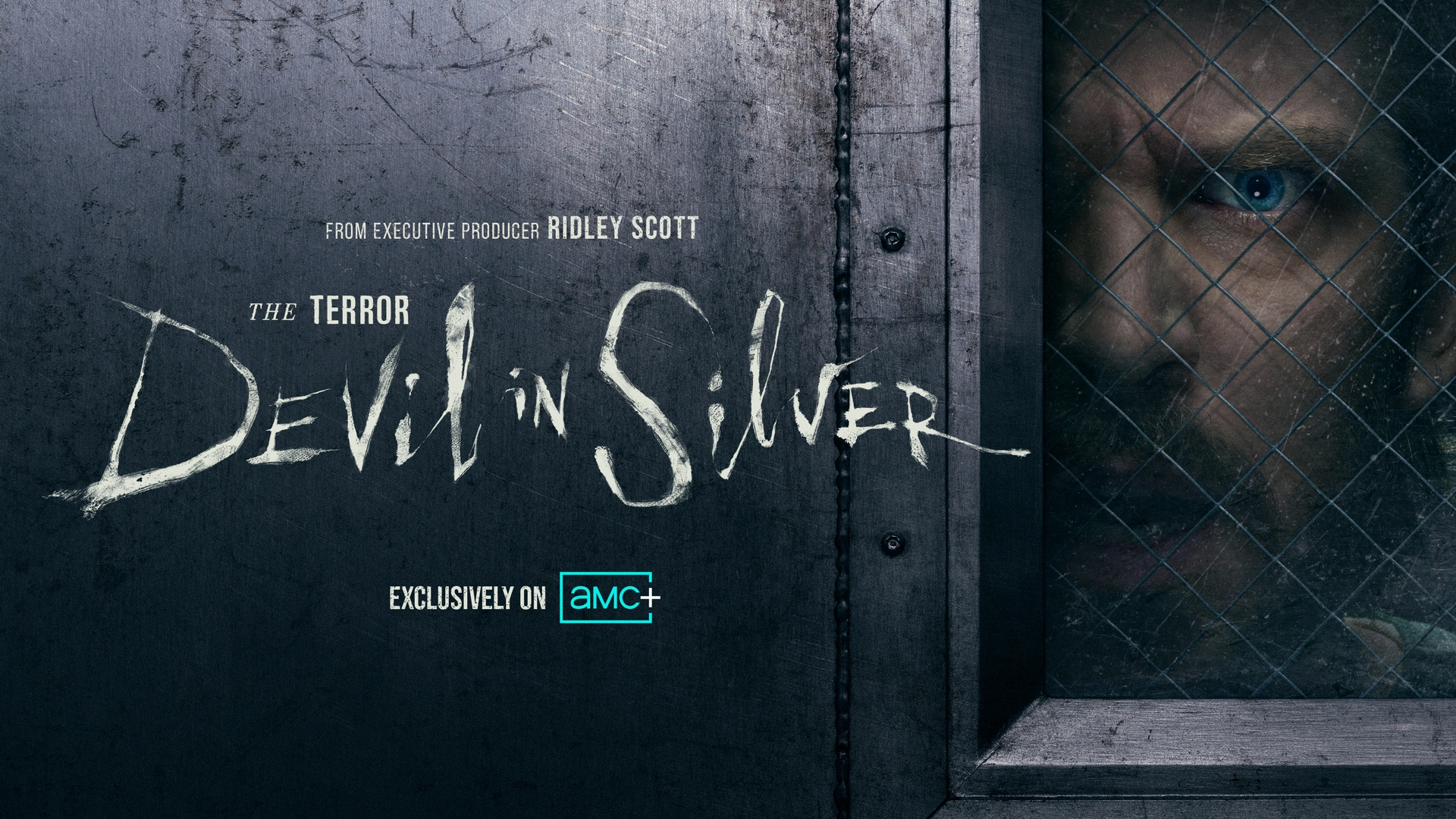

The third season of AMC’s horror anthology abandons the frozen wastes of the 19th-century Arctic and the barbed wire of World War II internment camps. Its terrors, this time, are located within the sterile, peeling walls of a modern psychiatric ward. A shrewd pivot. Previous seasons weaponized the sublime, turning landscape itself into an antagonist of geological indifference. Castaways turns inward, and the claustrophobia is immediate, almost aggressive in its refusal to let the viewer breathe.
Victor LaValle’s prose provides the season’s foundation, and one can feel the literary sensibility pressing against the television format at every seam. Pepper (Dan Stevens), a Queens-based moving man and former heavy metal drummer whose entire personality seems anchored to a battered Iron Maiden shirt, is a figure of precarious stability. He teaches drum lessons, or hopes to.
He loves his girlfriend, imperfectly. When he defends her from a harassing ex-boyfriend, the intervention of three plainclothes officers sets the machinery in motion. They choose administrative convenience over formal booking and commit Pepper to New Hyde Hospital for a mandatory 72-hour observation period.
Seventy-two hours. A weekend. It sounds almost reasonable. Which is precisely the point.
The show replaces vast, external threats with the crushing weight of a medical facility in terminal decline. Pepper enters New Hyde convinced he simply needs to “play nice” and return to his life. The institution perceives him as a line item in a ledger of administrative tasks. This gap in perception is where the season lives.
The Architecture of Stagnation
Filmed at the Arthur Kill Correctional Facility, New Hyde carries a heavy, carceral weight that no amount of institutional signage can fully disguise. Stained linoleum floors, flickering fluorescent tubes, drooping ceiling tiles: a place where time has, as one character might say, curdled.
The visual identity of the ward is defined by a specific kind of rot, one that feels less like decay and more like arrested development, a building that stopped trying to be a hospital sometime around 1987 and has been maintaining the pretense ever since.
This environment serves as the perfect stage for what one might call the “compliance-trap,” the administrative machinery that replaces genuine healing with legal loopholes dressed up as medical protocol. Dr. Anand and Miss Chris promise Pepper a swift release contingent on his cooperation.
The promise is, structurally, a falsehood. The hospital administers a powerful sedative that forces Pepper into a deep, multi-day slumber. Unconscious, he misses his mandatory daily medication doses. The administration labels him “non-compliant.” His stay extends indefinitely.
It is a catch-22 designed to maintain occupancy numbers for funding purposes, and the show has the intellectual honesty to present it without melodrama, as though it were simply how things work. Which, of course, it often is.
The staff members function as cogs in this failing machine. Dr. Anand operates as a harried middle-manager, prioritizing budgetary viability over recovery. Miss Chris embodies what one might term “degraded decency,” a facade of religious devotion and professional care hollowed out by a chronic absence of resources.
Even “Scotch Tape,” the orderly whose nickname reflects his role in physically holding the building together, is a casualty of the same underfunded reality. These figures are not evil. They are exhausted by the requirements of a broken system, which is, in its own way, far more disturbing than villainy.
Aggro-Vulnerability and the Lost Collective
Dan Stevens anchors the series with a performance that balances manic energy against a fluctuating Queens accent (the accent, frankly, takes some adjustment) and brings what one can only describe as a “vulnerability-glitch” to the character: a hair-trigger temper sitting directly adjacent to a state of profound, bewildered resentment.

Pepper begins his tenure at New Hyde as a man convinced of his own heroic status. The realization that his self-perception sits at a considerable distance from his actual history of mistakes arrives slowly, then all at once, which is how most meaningful reckonings tend to operate.
His progression from lashing out at his surroundings to finding a shared language with his fellow patients provides the emotional spine of the narrative. The supporting ensemble populates New Hyde with lives that feel lived-in and tragic.
Dorry (Judith Light), a long-term resident whose presence suggests the supernatural dimensions of Pepper’s arrival, claims he was “summoned,” a claim punctuated by her physical manifestation of grief, which includes crying actual blood. Judith Light does something remarkable with this role: she makes the mystical feel banal, and the banal feel catastrophic.
Coffee (Chinaza Uche), a structural engineer, keeps a meticulous binder of the facility’s physical failures while making futile phone calls to government representatives. He is the show’s most quietly devastating figure, a man applying professional rigor to a situation that has no professional solution.
Loochie, a non-binary artist, begins as a hostile, withdrawn presence before becoming a core member of the patient collective, their arc illustrating the necessity of communal bonds within an environment designed to atomize its inhabitants.
Dr. Badger (Stephen Root), leading a book club that assigns One Flew Over the Cuckoo’s Nest and Jaws to the ward’s patients, seems almost too on-the-nose until one realizes that self-awareness, in this context, is its own form of paralysis. The spectral image of Dr. Walter hangs in portraits throughout the ward, a relic of the institution’s past enforcing a philosophy of compliance over care from beyond the grave, or perhaps simply from beyond the budget cycle.
The Buffalo in the Crawlspace
The supernatural threat of the season, a creature lurking behind a locked silver door, described by the patients as bearing the head of a buffalo and the body of a man, is the season’s most audacious formal gamble. The creature moves through shadows and ceilings, preying on residents during the night. Its physicality is, ultimately, secondary to its function as a manifestation of systemic neglect: a being that feeds on the “castaways” of society, those individuals the state has deemed invisible or disposable.
The directors adopt a “predator-obscura” strategy, keeping the monster largely hidden in the early episodes. This choice heightens the anxiety for characters already grappling with the side effects of heavy medication, and it forces the viewer to sit with the same uncertainty the patients inhabit, unsure of what is real, what is medicated, what is simply the building settling in the night.
The horror of the buffalo-headed man is a loud, bloody echo of the quiet horror of the American healthcare industry. One breaks limbs. The other breaks spirits by ignoring them. The monster thrives in New Hyde because the facility is a site of abandoned empathy.
It is a byproduct of institutional rot, an invader drawn to a vacuum where care used to be. This connection keeps the supernatural elements grounded in the season’s social critique, a grounding that prevents the creature feature elements from ever fully escaping the gravity of the human story.
There will be those who find the metaphor labored. They are not wrong to feel that way. They are also, one suspects, missing a significant portion of the point.
The Red Line and the Intimate End
Karyn Kusama’s direction in the opening episodes is where the season’s visual ambition is most fully realized. High-contrast lighting and deep shadows make New Hyde feel like a living organism, breathing and hostile. A single red line runs down the center of the floor, separating the “compliant” from the “non-compliant.”
It resembles a pristine trail of blood cutting through institutional beige. As a visual motif, it is almost offensively legible, a constant reminder of the boundary between freedom and confinement rendered in the language of a fire-drill evacuation route.
The six-episode format forces a brisk pace, creating what one might call a “slow-burn-accelero” effect: tension accumulating steadily before erupting into a frantic climax that feels both earned and slightly rushed in the same breath. A few supporting characters receive less attention than a longer season would permit, though the focus remains sharp enough that this reads as a structural constraint rather than a failure of imagination.
The final moments constitute the season’s most deliberate formal choice. The narrative moves away from supernatural spectacle and settles into a quiet, intimate conversation between two characters. Pain, carefully articulated. Human connection, improbably sustained.
The bonds formed in the dark, the show insists, are more significant than the monster that lurked there. Whether one finds this conclusion moving or merely convenient will depend, perhaps, on how much one believes that institutions can be survived by the people they fail.
The season, on balance, is a precise and unsettling piece of television that understands something its predecessors occasionally obscured: the most effective horror does not arrive from outside. It is built into the infrastructure.
The third season of the anthology series features a shift to a contemporary setting, focusing on the claustrophobic environment of a psychiatric ward. The story follows Pepper, a man from Queens who is committed to New Hyde Hospital after a violent encounter. He must find a way to survive the institution and a malevolent entity that stalks the residents at night. This six-episode limited series is scheduled to premiere on May 7, 2026. Viewers can watch the show on AMC+ and Shudder, with a later linear release planned for the AMC channel.
Where to Watch The Terror: Devil in Silver Online










Full Credits
Title: The Terror: Devil in Silver
Distributor: AMC+, Shudder, AMC
Release date: May 7, 2026
Rating: TV-MA
Running time: 60 minutes
Director: Karyn Kusama
Writers: Chris Cantwell, Victor LaValle
Producers and Executive Producers: Ridley Scott, David W. Zucker, Clayton Krueger, Alexandra Milchan, Guymon Casady, Brooke Kennedy, Chris Cantwell, Victor LaValle, Karyn Kusama, Dan Stevens
Cast: Dan Stevens, Judith Light, CCH Pounder, Aasif Mandvi, John Benjamin Hickey, Stephen Root, Michael Aronov, Marin Ireland, Chinaza Uche, Hampton Fluker, Juani Feliz, Celia Keenan-Bolger, Andrea Syglowski, Hayward Leach, Teagan Meredith, Phillip Ettinger, Maureen Sebastian, b
Director of Photography (Cinematographer): Marcell Rév
Editors: Philip Bergstrom
Composer: Daniel Hart
The Review
The Terror: Devil in Silver
This installment succeeds as a sharp critique of institutional neglect. It trades the expansive dread of previous seasons for a localized, administrative nightmare. Dan Stevens delivers a volatile performance that anchors the more nebulous supernatural elements. While the horror beats occasionally lack the visceral impact of the first season, the human connections provide a lasting core. The series proves that a failing system is more frightening than any creature in the walls. It remains a cerebral, if slightly rushed, entry to the anthology.
PROS
- Intense, erratic performance by Dan Stevens.
- Stark, effective production design in a carceral setting.
- Biting social critique of the American healthcare system.
- Strong supporting cast that bolsters the patient collective.
CONS
- Abbreviated six-episode runtime leads to a hurried finale.
- Supernatural elements feel less impactful than the human drama.
- Certain background characters lack sufficient depth.