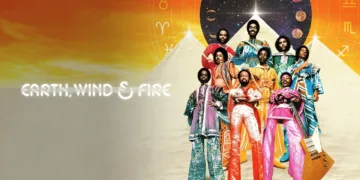


























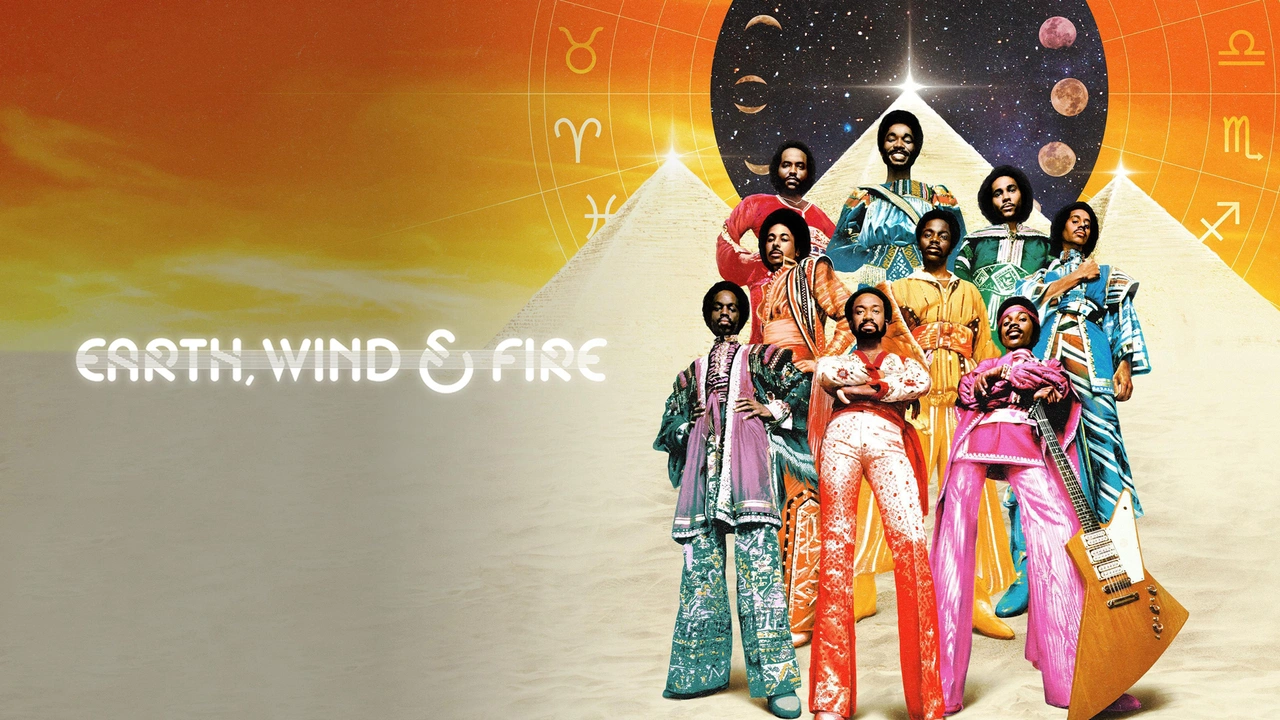

Earth, Wind & Fire (To Be Celestial vs. That’s the Weight of the World) treats music as a form of weather: invisible until it moves through bodies, unmistakable once it arrives. Ahmir “Questlove” Thompson’s documentary centers on Earth, Wind & Fire, yet its deepest gravitational pull comes from Maurice White, the bandleader whose spiritual hunger shaped one of pop music’s most radiant catalogs.
The film understands the group as a grand act of synthesis. Funk, soul, jazz, gospel, R&B, pop, African rhythms, and theatrical spectacle are gathered into a language of uplift. Horns flare like sunlight. Choreography turns rhythm into architecture. Costumes transform the stage into a moving cosmos. Still, the documentary never lets that glow become simple mythology.
The title carries the film’s central tension. White wanted celestial release, a music that could lift people above suffering. The world kept pressing back through money, ego, illness, abandonment, betrayal, and control. Questlove’s film lives in that pressure point, where joy becomes both escape and evidence of pain.
Maurice White’s Vision: Spirituality, Control, and the Price of Genius
Maurice White enters the documentary as a man looking for a key to a locked room inside himself. Born in Memphis in 1941, left by his mother as a child, then later folded into a larger family in Chicago, he seems to have carried abandonment as both wound and engine. The film does not overstate the psychology, yet the pattern is hard to miss. White wanted to build a family he could direct, protect, and command.
His early career gives that need a musical shape. At Chess Records and with the Ramsey Lewis Trio, he learns discipline, groove, and the strange humility of serving a song. Then he walks away from security and heads west, where Los Angeles becomes a laboratory of self-invention. Astrology, meditation, numerology, Egyptology, metaphysics, and Afrofuturist imagery feed his imagination. Earth, Wind & Fire, named through his own astrological elements, becomes a band and a cosmology.
Questlove treats these beliefs with respect. The film never reduces White’s spiritual language to period eccentricity. It sees how deeply those ideas structured the music, from the kalimba’s earthy shimmer to album art that looked toward Africa, space, myth, and liberation.
Still, transcendence had a bill attached. White’s leadership could turn severe. He fired early members, underpaid collaborators, withheld credits, and strained the trust of singers and players who helped make the sound immortal. Philip Bailey’s anger gives the film moral weight. Marilyn White’s reflections open a quieter wound, especially around infidelity and emotional distance. White emerges as a man who preached harmony while often failing to practice it privately. That contradiction does not cancel the art. It darkens the light around it.
Sound, Stagecraft, and the Earth, Wind & Fire Identity
Questlove is at his best when the film listens closely. He has a musician’s instinct for structure, for the tiny hinge where a groove becomes revelation. “Shining Star” receives the kind of attention a sacred object might receive in another film: the scratchy funk of its opening, the lift of its chorus, the sudden feeling that the song has stepped off the floor and found air. Stevie Wonder’s admission that it fed into “I Wish” becomes less a trivia point than a sign of musical contagion, one genius catching fire from another.
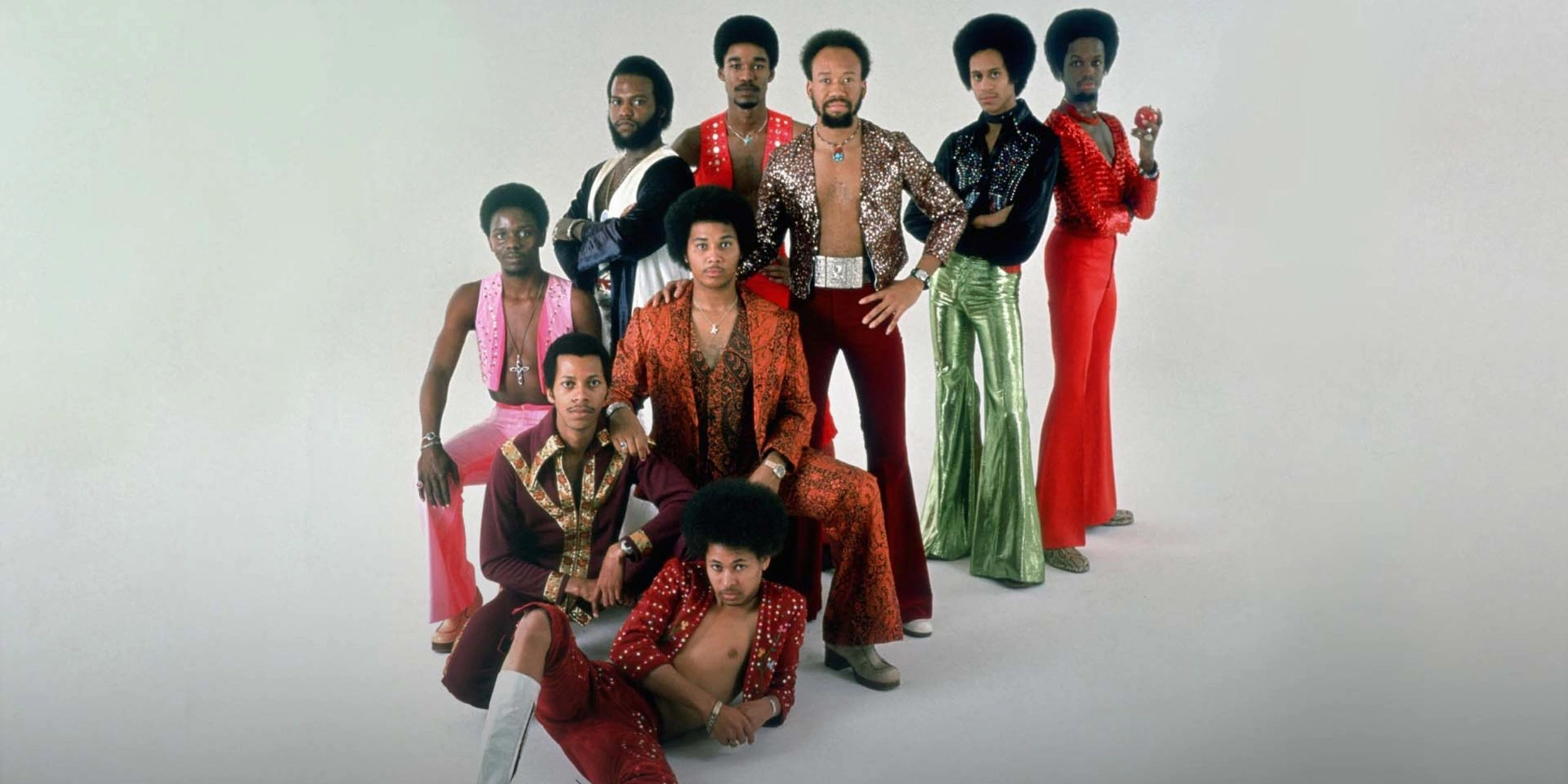
“That’s the Way of the World” carries a gentler ache. The film frames it as balm, philosophy, and quiet protest, a song that understands innocence as something the world corrodes. “Fantasy” lets White’s cosmic imagination bloom fully, while “Boogie Wonderland” reveals the risks of chasing the market without losing the pulse. “September,” held back until late, lands like communal memory made audible.
The band’s identity came from this fusion of ground and sky. Their rhythms could be sweaty, physical, almost stubbornly terrestrial. Their harmonies looked upward. The church was there, so was jazz, so was pop craftsmanship, so was an African diasporic sense of motion and return. Questlove translates that fusion visually through archival performances that seem to burst with color and heat.
The stagecraft matters. George Faison’s choreography, the horn section’s precision, Doug Henning’s illusions, the sculptural costumes, Verdine White levitating while playing bass, all of it turns performance into ceremony. The film grasps that Earth, Wind & Fire concerts were designed as spaces where spectacle and belief touched. The body danced. The mind wandered toward stars.
Documentary Craft, Legacy, and Limitations
Questlove’s filmmaking here is polished, affectionate, and musically alert. He uses archival footage, vintage interviews, recent conversations, concert material, and reflections from Barack Obama, Michelle Obama, Stevie Wonder, Lionel Richie, H.E.R., Flea, Philip Bailey, Verdine White, Ralph Johnson, and members of White’s family. The result has the density of an archive with the pulse of a mixtape.
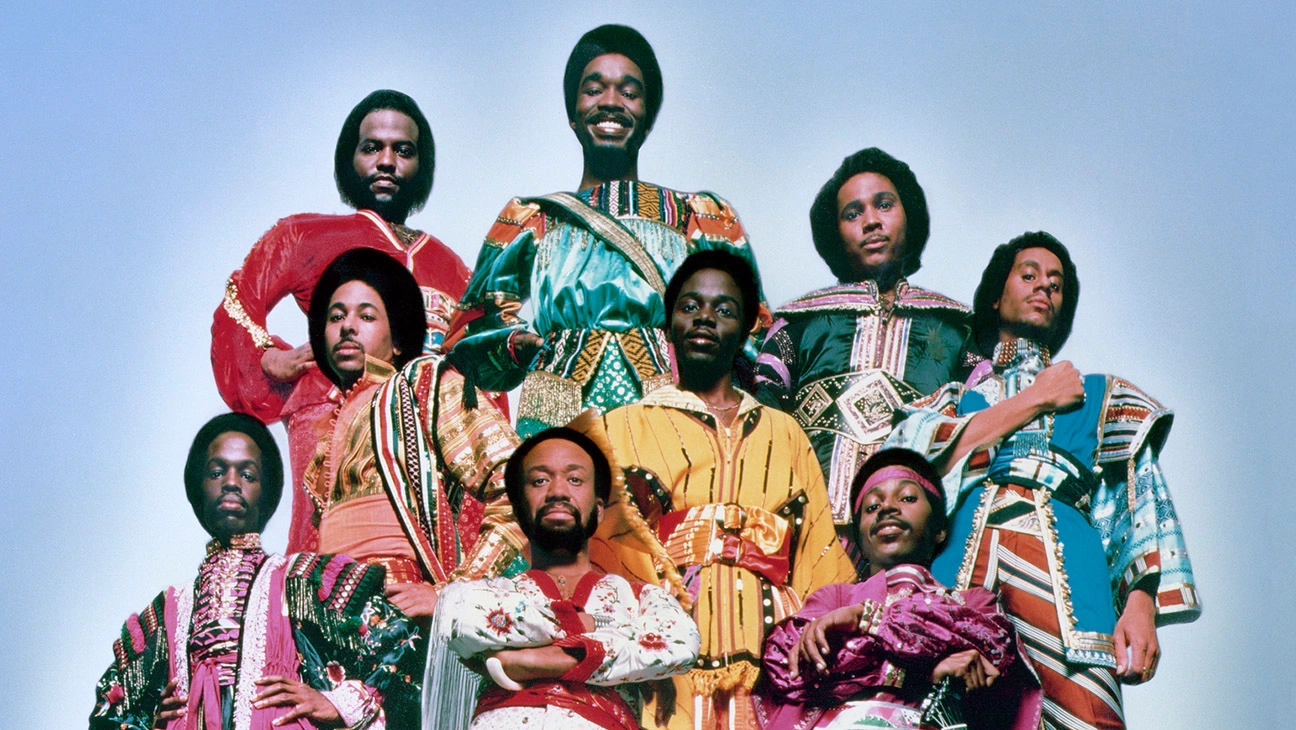
The documentary is most persuasive when it argues through rhythm rather than explanation. A cut, a needle drop, a crowd shot, a horn blast, a face remembering youth: these moments make the band’s legacy feel alive. Earth, Wind & Fire’s music remains embedded in hip-hop samples, R&B textures, pop arrangements, film scenes, weddings, cookouts, clubs, and private rituals of survival. Their songs function as public joy, yet also as shelter from private weather.
The film can feel long, and its orbit around Maurice White leaves certain band members waiting at the edge of the frame. Philip Bailey’s solo path deserves deeper treatment. The later group dynamics, the commercial decline, the smaller venues, and the post-breakup years could breathe with greater room. Questlove’s devotion to White gives the film shape, yet it narrows the field.
Still, that narrowness has a purpose. By placing White’s celestial longing beside his failures of care, the documentary finds its shadow. It recognizes a hard truth: art that heals crowds can come from people who hurt those closest to them. Earth, Wind & Fire made joy sound eternal. Questlove lets us hear the human cost vibrating underneath.
Earth, Wind & Fire (To Be Celestial vs. That’s the Weight of the World) is an American documentary feature directed by Oscar-winning filmmaker Ahmir “Questlove” Thompson that serves as the celebratory opening night selection for the 25th Tribeca Festival on June 3, 2026. The film explores the profound musical, cultural, and metaphysical legacy of the legendary band, tracing their evolution from humble beginnings to their massive pyrotechnic stadium shows. Crafted with exclusive access to the band’s extensive personal visual, audio, and written archives, the production combines rare footage with insights from musical luminaries and prominent figures to capture the timeless joy of their art. Viewers can watch the documentary premiere on television and online platforms through HBO and Max starting June 7, 2026.
Where to Watch Earth, Wind & Fire (To Be Celestial vs. That’s the Weight of the World) (2026) Online


Full Credits
Title: Earth, Wind & Fire (To Be Celestial vs. That’s the Weight of the World)
Distributor: HBO, HBO Documentary Films
Release date: June 3, 2026 (Tribeca Festival world premiere), June 7, 2026 (Television and streaming premiere)
Rating: TV-MA
Running time: 119 minutes
Director: Ahmir “Questlove” Thompson
Producers and Executive Producers: Dave Sirulnick, Samantha Grogin, KB White, Arron Saxe, Ahmir “Questlove” Thompson, Jon Kamen, Cheo Hodari Coker, Karla Zambrano, Zarah Zohlman, Shawn Gee, Tariq “Black Thought” Trotter, Amos Newman, Nancy Abraham, Lisa Heller, Sara Rodriguez
Cast: Philip Bailey, Verdine White, Ralph Johnson, Barack Obama, Michelle Obama, Stevie Wonder, Lionel Richie, H.E.R., Flea, Maurice White
Director of Photography (Cinematographer): Emily Topper
Editors: Andrew Morrow, Matt Cascella, Tim Ziegler
Composer: Ahmir “Questlove” Thompson, Ray Angry
The Review
Earth, Wind & Fire (To Be Celestial vs. That's the Weight of the World)
Earth, Wind & Fire (To Be Celestial vs. That’s the Weight of the World) is a radiant, thoughtful documentary that finds the ache beneath the groove. Questlove honors the band’s musical brilliance while allowing Maurice White’s flaws, wounds, and hunger for transcendence to complicate the glow. It can feel slightly overextended and too fixed on White, yet its archival force, musical insight, and emotional honesty give it lasting power.
PROS
- Rich archival footage and electrifying concert material
- Strong focus on Maurice White’s creative vision
- Honest treatment of conflict, ego, money, and personal damage
- Excellent use of music to shape emotion and memory
- Captures the band’s spiritual and cultural identity with care
CONS
- Slightly long in places
- Some band members receive limited attention
- Philip Bailey’s solo career could use deeper focus
- Later years feel somewhat compressed
- White’s perspective can dominate the group portrait